REVIEW · BARCELONA
Barcelona & Chocolate Amatller History and Culture + Activity and Tasting
Book on GetYourGuide →Operated by Chocolate Amatller · Bookable on GetYourGuide
One small door in El Born, then chocolate magic. This 40-minute Amatller session pairs Chocolate Amatller history with hands-on tasting that doesn’t feel like a lecture. I like that you actively taste and make a chocolate base; I also like the guided pacing in a small group. The main drawback to note is the allergen reality: this is not a safe choice if you have nut allergies.
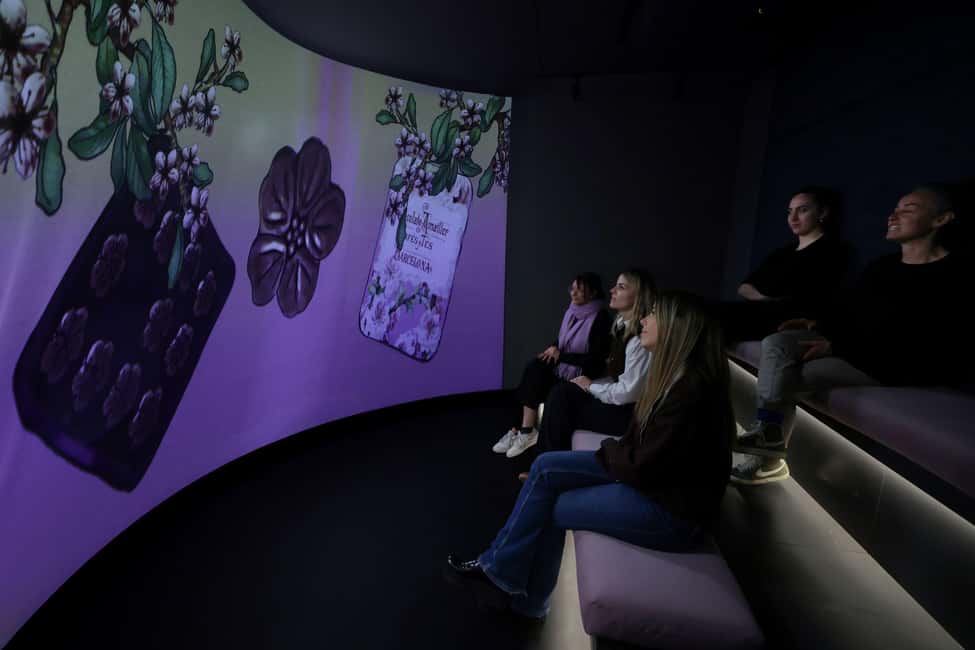
You start at Plaça de les Olles, at the Amatller shop itself, in the neighborhood where the brand’s story began. You’ll watch an audiovisual journey back to the 18th century, then switch gears to taste chocolate through a kit designed for aromas, textures, and flavors. Guides—people like Sam, Gina, Georgina, Lluna, Elena, Mar, and Aida—have a knack for keeping things friendly and clear, and that matters when you’re standing over chocolate and learning what to look for.
One more practical note: the whole experience is short (about 40–45 minutes) and stays inside the shop environment. If you’re craving a long, multi-course food tour, you might want to pair this with a walk through El Born afterward.
In This Review
- Key things I’d underline before you go
- Where El Born and Amatller history meet
- The 40-minute format: film first, then you taste and make
- Journey to the Barcelona of Chocolate Amatller: what the presentation does for you
- Five-sense chocolate tasting kit: learning how to taste, not just eat
- Hands-on cocoa elaboration: the part your hands remember
- Barcelonese hot chocolate tasting: the classic that changes the mood
- The store portion in Plaça de les Olles: samples and browsing with purpose
- Price and value: what $17 really buys you in Barcelona
- Timing, group size, and what to expect on the day
- Who this experience suits best (and who should skip)
- Should you book Chocolate Amatller in El Born?
Key things I’d underline before you go
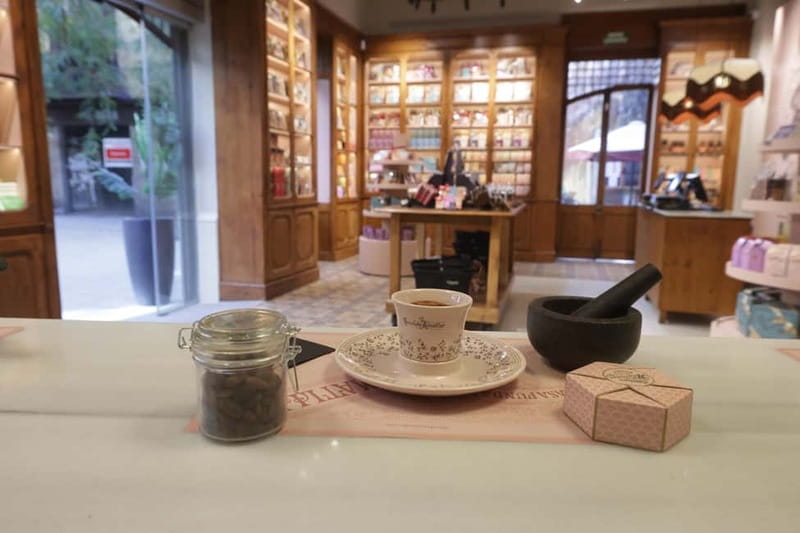
- El Born starting point: Plaça de les Olles, 9, right at the Amatller shop where it all started.
- Audiovisual 18th-century story: a guided film-style journey titled Journey to the Barcelona of Chocolate Amatller.
- Five-sense tasting kit: designed to help you taste chocolate through aroma, texture, and flavor cues.
- Hands-on cocoa process: you’ll make chocolate/cocoa with your own hands using the provided materials.
- Original Barcelonese hot chocolate: a dedicated tasting of the classic style.
- Store access for samples: after the workshop, you can keep exploring the brand collections in-shop.
Where El Born and Amatller history meet
Barcelona’s El Born is the kind of place where you can turn a corner and still feel like the city has layers. This experience uses that setting in a smart way: Chocolate Amatller is presented as an old Barcelona brand, with a continuous story reaching back to 1797.
Instead of treating chocolate as a “just dessert” activity, the session frames it as a local craft. That’s why the audiovisual part matters. You’re not only learning what Amatller makes—you’re learning how chocolate culture in Barcelona evolved, and why the brand positioned itself in the city’s food life.
You can also read our reviews of more food & drink experiences in Barcelona

The 40-minute format: film first, then you taste and make
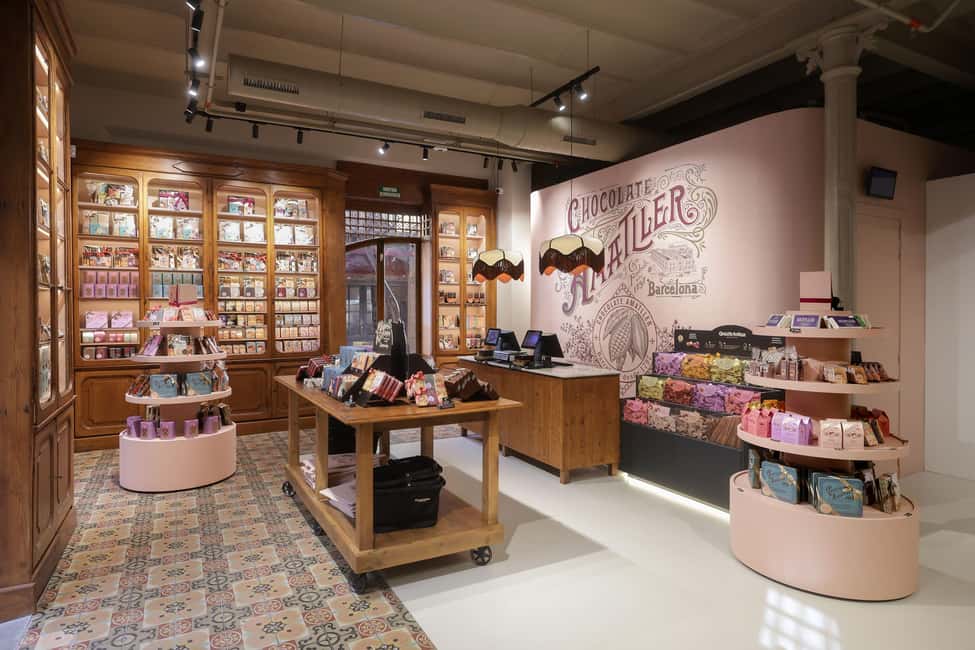
The session runs about 40–45 minutes, and it moves in a clear sequence. You go in directly to the shop, then you start with the audiovisual presentation. This is the part that sets the tone: the pace is controlled, and the visuals help connect the dots between the past and the tasting you’re about to do.
This matters for value. At $17 per person, the experience can’t be all talk. The good news is that it doesn’t stay theoretical for long. After the film, you get a tasting kit and an experimental workshop with the necessary materials. You’re doing things, not just watching them.
Tip: If you want the history to stick, pay attention during the film to the idea of chocolate as both drink and craft in Barcelona. Then, when you taste later, you’ll have a better “map” in your head for what you’re experiencing.
Journey to the Barcelona of Chocolate Amatller: what the presentation does for you
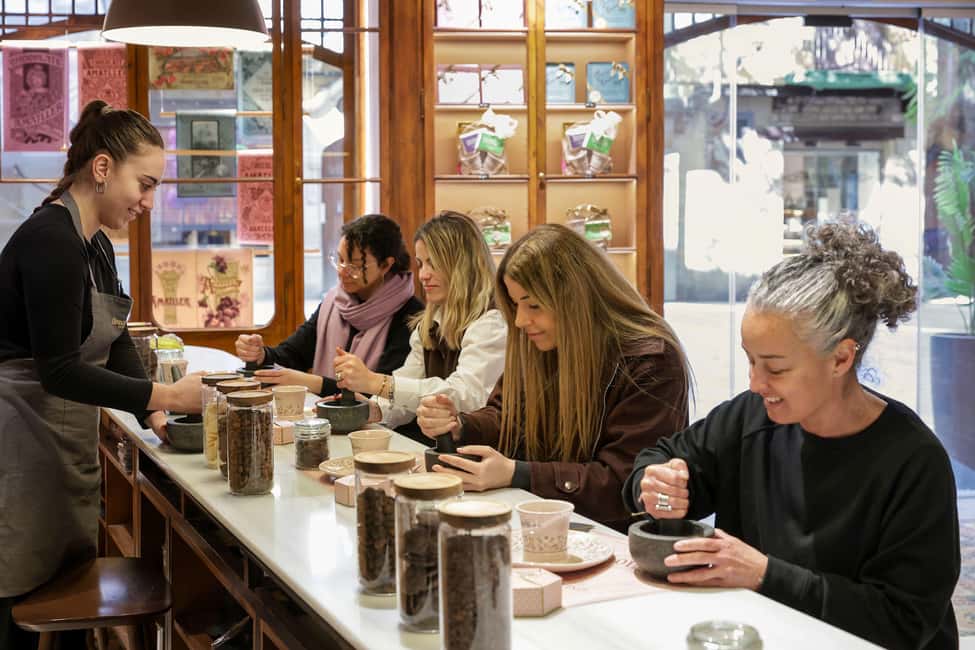
The audiovisual portion, Journey to the Barcelona of Amatller Chocolate, is built like a time travel lesson aimed at real taste moments later. You’ll travel back to the 18th century to learn about the origins of the Amatller brand and its long connection to the city.
One nice detail is that it doesn’t treat chocolate history like a separate topic. The presentation helps explain how chocolate consumption and drinking worked in Barcelona in earlier times, including how people ate and drank it in the 17th century. Then the session gives you a direct tasting that connects to that story.
If you like food history, this is a good use of your time. If you don’t, it still works because it tees up what comes next: tasting by senses and a classic Barcelonese-style hot chocolate.
Five-sense chocolate tasting kit: learning how to taste, not just eat
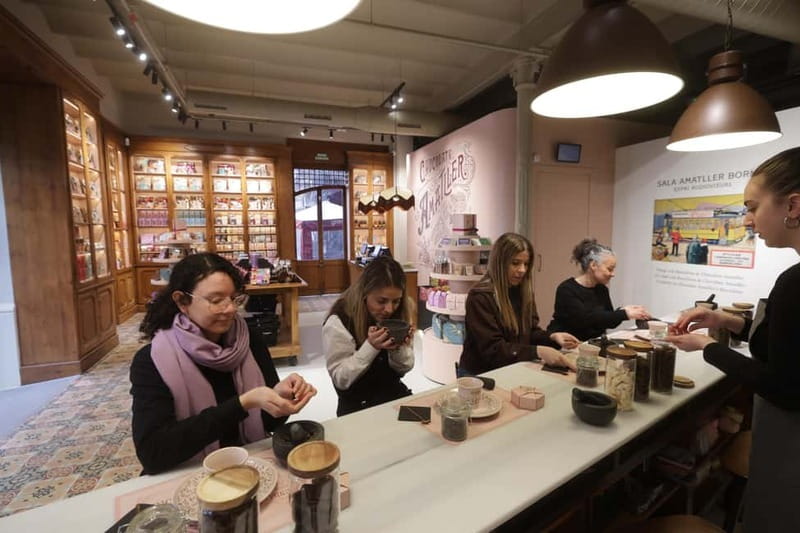
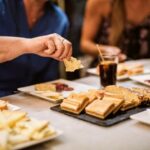
This is one of the most praised parts, and for good reason. You taste chocolate through a personalized kit, focusing on aroma, texture, and flavor. The structure helps you notice differences instead of simply rating everything as good or very good.
The kit uses iconic Amatller products, including Flors and Hojas Finas. Those names matter because you can connect what you’re tasting to recognizable branded pieces, which makes the experience feel more “real” than generic tasting samples.
During the tasting, the guide leads you through what to pay attention to—how chocolate smells before it melts, how it changes on the tongue, and what texture cues can tell you about the ingredients and style. People have also highlighted the guides’ clear explanations and warm teaching style, like Sam and Gina, which makes it easier to participate even if you’re not a chocolate expert.
Small reality check: The chocolate you’ll taste may contain traces of milk, peanuts, and tree nuts. If you’re sensitive, take this seriously.
Hands-on cocoa elaboration: the part your hands remember
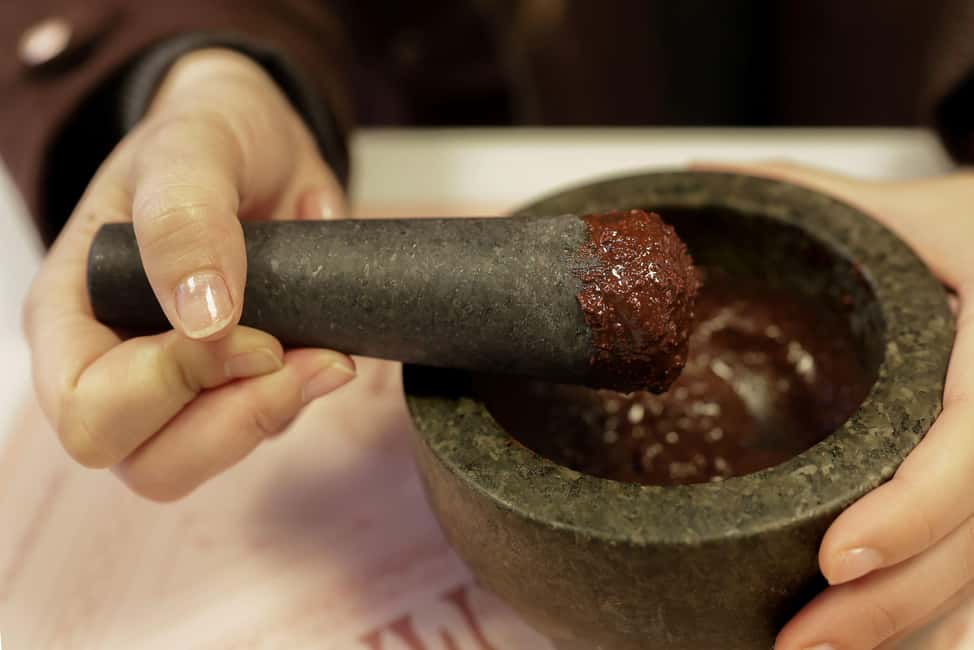
Then comes the workshop, where you experience cocoa elaboration with your own hands using the provided materials. This isn’t just “make something and pose for a photo.” The goal is to understand the process well enough that your later tasting makes more sense.
Some participants have described hands-on steps that include grinding roasted cacao beans into a paste using a heated stone mortar. Even if your specific setup differs slightly day to day, the common point is the same: you’re not just eating chocolate—you’re helping create a chocolate base.
That’s a big reason the value feels strong. For $17, you’re getting a film, guided instruction, multiple tastings, and a practical workshop component. A lot of similar “food experiences” stop at tasting. This one goes one step beyond.
Also, the hands-on portion is where guides like Lluna, Georgina, and Elena have been credited with keeping things friendly and easy to follow. When a guide explains what you’re doing as you do it, the process feels smoother and less intimidating.
You can also read our reviews of more historical tours in Barcelona


Barcelonese hot chocolate tasting: the classic that changes the mood
The experience includes an original hot chocolate tasting in a Barcelonese style. This is a smart inclusion because it shifts chocolate from solid to drinkable, which forces you to experience flavor and texture in a totally different way.
You’ll also get a chance to learn first-hand how chocolate was consumed and drunk in Barcelona in earlier centuries, and then you taste the modern version designed to match that original formula. It’s not just a bonus sample; it’s part of the story arc.
One practical benefit: if it’s hot outside, the indoor shop setting can feel like a relief. Several people have mentioned enjoying the controlled environment, which makes this a solid plan in peak summer.
How to enjoy it more: take a moment before your first sip to smell it. Hot chocolate often carries spice notes and aroma depth that you miss when you rush.
The store portion in Plaça de les Olles: samples and browsing with purpose
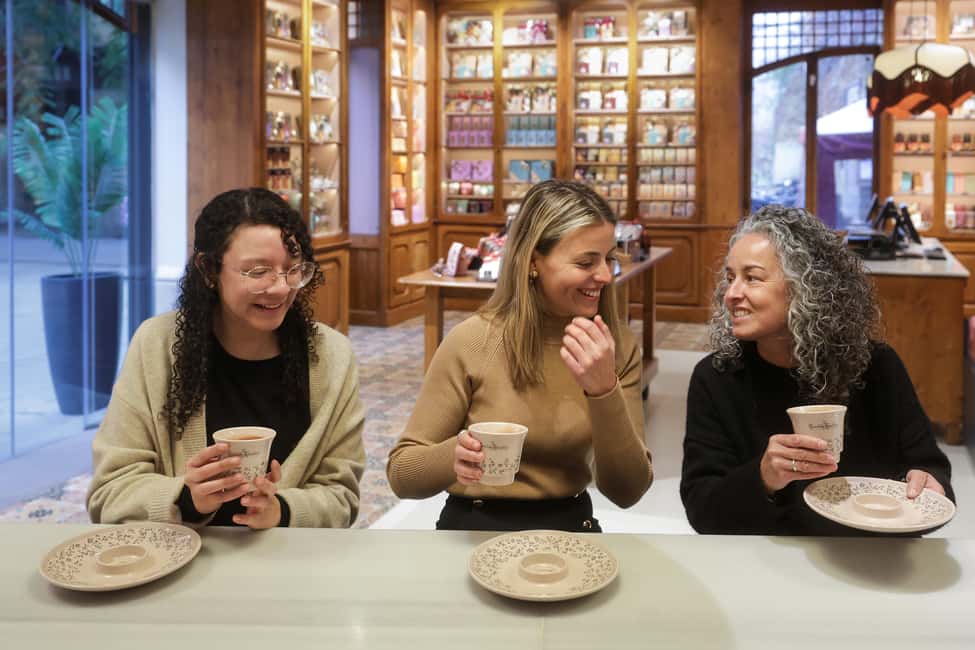
After the guided visit, you get free access to the gourmet store where you can keep discovering and tasting the brand’s emblematic collections.
This can be a love-or-hate part depending on your shopping style. If you’re the type who enjoys tasting in small amounts and then walking away, you’ll likely like this. If you only came for the workshop and want a clean exit, you may feel a little “left in a store” at the end.
Still, for many people, this is where the experience becomes more personal. You can compare what you made and what you tasted in the session with what’s offered in the shop collections. That turns your workshop knowledge into actual buying confidence.
Budget note: You’re not required to purchase anything beyond the ticket. But do plan to treat yourself if a chocolate clicks. Chocolate in tourist-heavy areas can run pricey, so tasting first helps you decide what’s worth it to take home.
Price and value: what $17 really buys you in Barcelona
At $17 per person, you’re paying for more than chocolate samples. You’re getting:
- an audiovisual presentation (a structured history piece),
- a guided tasting kit focused on multiple senses,
- a hands-on experimental workshop with materials,
- an original Barcelonese hot chocolate tasting,
- and free in-store access with tasting.
In Barcelona, it’s common to spend money on “see a thing” tours that are mostly watching. This one is closer to “learn a skill + taste like a local.” The short duration (40–45 minutes) keeps it efficient, and the small group size (limited to 10 participants) means you’re more likely to get attention during tasting and workshop steps.
So the math works when you want a compact activity that feels hands-on. If your schedule allows only one food-related experience, this is a strong contender.
Timing, group size, and what to expect on the day
You’ll likely appreciate the small-group setup if you care about questions and quick guidance. Limited to 10 participants, it’s not a cattle-car format, and that helps with the tasting component where everyone needs a turn and enough time to notice differences.
Language options are also a plus: live tour guide available in Spanish, Catalan, and English. That matters because this isn’t just a food tasting; it’s a guided experience with sensory language. Guides—like Sam, Gina, Georgina, Lluna, Elena, Mar, and Aida—have been highlighted for keeping the session clear and welcoming.
Practical note: Audio recording is not allowed.
Who this experience suits best (and who should skip)
This is a great fit if:
- you like food history that connects to what you taste,
- you enjoy hands-on activities more than lectures,
- you want a short indoor plan you can do year-round,
- you like guided tastings with clear instructions.
It’s not the best choice if:
- you need a longer, heavier food itinerary (this is 40–45 minutes, not a full meal experience),
- you have nut allergies. People with nut allergies are listed as not suitable, and chocolates may contain traces of milk, peanuts, and tree nuts,
- you have visual impairment. It’s listed as not suitable for visually impaired people,
- you’re traveling with very young kids. Children under 5 years aren’t suitable.
Pets aren’t allowed either (assistance dogs are allowed).
Should you book Chocolate Amatller in El Born?
Yes, if you want a chocolate activity that feels like Barcelona culture, not just dessert. I’d book it when you want a short, guided experience with tasting instruction and a real workshop component. The combination—history film, five-sense tasting kit, hands-on chocolate making, and Barcelonese hot chocolate—hits a lot of bases for the price.
I’d skip it if your number-one goal is a long, open-ended food crawl, or if allergies and dietary safety are a concern. Also, if you need accommodations beyond what’s listed, you’ll want to double-check fit before committing.
If you’re making a tight Barcelona plan, this one is easy to place: do it earlier in the day, then use the El Born location to keep exploring after your tasting—walk, browse, and let the cocoa theme carry you through the neighborhood.