REVIEW · BARCELONA
Barcelona Expert Tour with Local Guide in Eco Tuk Tuk Private
Book on Viator →Operated by Eco Tuk Tuk - Spain · Bookable on Viator
Gaudí highlights look better when you’re not stuck in line. This private, electric eco tuk-tuk tour is built for fast orientation and smart sightseeing, with a local guide calling out what to notice as you glide through Barcelona’s classic modernisme streets. I especially love the starts without queues or waiting part and the pre-selected photo stops that keep your time from turning into random wandering.
The main thing to consider is that you can’t change the stops. The ride also uses an overhead cover, which can limit your sightlines for big façades in some spots, and the shorter durations may feel more like a guided driving overview than a stop-and-stretch tour.
In This Review
- Key things to know before you go
- Eco Tuk-Tuk Comfort: Quiet, Covered, and Actually Practical
- Getting Started at Carrer de Casp: Easy Meeting, No Guesswork
- A Route Built Around Gaudí: Sagrada Familia, La Pedrera, and Casa Batlló
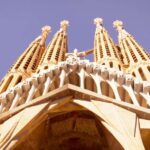
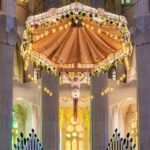
- Sagrada Familia: Seeing the Scale From the Right Angle
- Casa Milà (La Pedrera): A Quarry-Textured Apartment Building
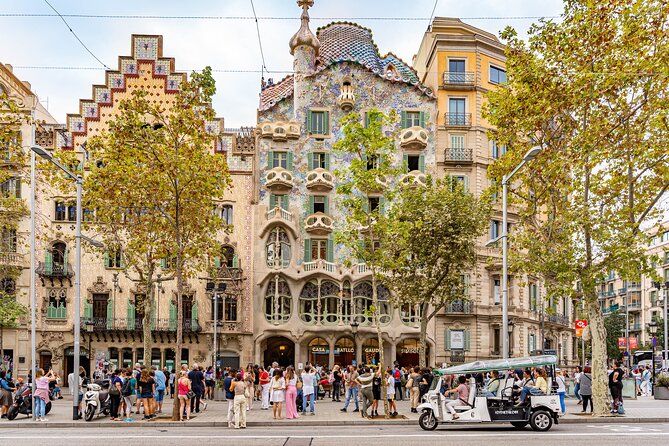
- The Batlló House: The Modernisme Facade You Can’t Miss
- Beyond Gaudí: Hospital de Sant Pau and a Bullring with Big-City Character
- Hospital de la Santa Creu i Sant Pau: Catalan Modernisme with a Purpose
- Plaza Monumental: The Bullring’s Long Timeline
- Eixample to Downtown: Plaça Catalunya and Plaça d’Espanya
- Plaça de Catalunya: A Transportation Hub That Feels Like a Crossroads
- Plaça d’Espanya: 1929 World Fair Origins
- Montjuïc Viewpoint Time: How Tour Length Changes the Stops
- If you book 60 minutes
- If you book 120 minutes
- If you book 180 or 240 minutes
- The Sea and Sports-Era Barcelona: Old Port, Barceloneta, and the Olympic Port
- Old Port: Two Thousand Years of Tradition
- Barceloneta Beach: The Oldest Beach in the City
- Olympic Port: The Marina by the Olympic Village
- Citadel Park and Arc de Triomf: Green Space and Exhibition-Era Drama
- Ciutadella Park: A Former Fortress Ground Turned Public Park
- Arc de Triomf: A 1888 Exhibition Entrance
- Photo Stops and What You Can Expect From the Timing
- Price and Value: Is $28.67 a Good Deal for Barcelona?
- Guides Matter: The Human Touch You’ll Notice
- Who This Tour Suits Best (And Who Might Want to Skip It)
- Should You Book This Barcelona Expert Eco Tuk-Tuk Tour?
- FAQ
- Does the 60-minute option include stops?
- What language is the tour offered in?
- Is the tour private?
- Where do I meet the driver?
- Is the vehicle electric and covered?
- Can I get a refund if plans change?
Key things to know before you go
- Private tuk-tuk for your group with a local companion guide-driver, so you can ask questions and set your pace a bit.
- Electric and covered seating, plus rain/wind protection blankets, which matters in Barcelona’s swingy weather.
- Queue-free start and pre-selected stops for photos, so the tour stays efficient.
- Gaudí first, then city center, then views and sea, depending on how long you book.
- Most stops are iconic from the street, with a couple of timed breaks (not a free-for-all).
- Guides you might get include Roger, Marco, Diana, Marti, Miquel, Victor, and Raul, based on the guide names repeatedly praised.
Eco Tuk-Tuk Comfort: Quiet, Covered, and Actually Practical
This tour is designed around one simple idea: you shouldn’t waste your Barcelona time stuck in slow logistics. The vehicle is 100% electric, so it’s a calmer ride through busy streets, and it’s private for your group. That matters, because you’re not sharing your guide’s attention with strangers trying to ask their one big question at the same time.
Barcelona can be hot, windy, or both in the same afternoon. The tour includes protective layers and blankets for rain and wind, so you’re not scrambling for a jacket at the last second. You also get a helpful setup for older travelers: the vehicles are suitable for older people, and the drivers will assist getting on if needed.
One more practical detail: tuk-tuks are reserved to match group size up to the legal limit of 4 passengers per tuk-tuk. So if you’re a group of 6 or 7, you won’t be forced into cramped seating.
You can also read our reviews of more guided tours in Barcelona
Getting Started at Carrer de Casp: Easy Meeting, No Guesswork
You’ll meet at Carrer de Casp, 13, Eixample (08010), opposite the ME Barcelona hotel. The pick-up point is near the lift access to the Interparking Novedades car park, at street level. The driver-guide meets you there, and you can contact them by phone or WhatsApp (+34 696 997 889) if you’re running late.
That location is handy because you’re already in the Eixample area, close to major roads and a lot of hotel clusters. It’s also the right staging point for the route that sweeps past the big modernisme landmarks without wasting time backtracking.
If you arrive late, the tour time may be reduced based on lost minutes, and the activity can be cancelled if the delay runs past 15 minutes with no refund. So I’d treat this meeting time like a museum ticket: show up on purpose, not just eventually.
A Route Built Around Gaudí: Sagrada Familia, La Pedrera, and Casa Batlló
If you’re new to Barcelona, this is the part you’ll be grateful for. The tour leans hard into Gaudí, and it does it in the order that makes sense visually: start with the most dramatic church, then move to the sculptural residential works along Passeig de Gràcia.
Sagrada Familia: Seeing the Scale From the Right Angle
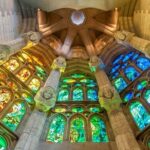
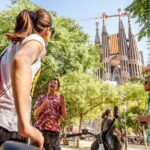
The Expiatory Temple of the Sagrada Familia is still under construction, and that’s part of its story. What you should notice on a guided pass is how the basilica feels both ancient and futuristic—built as a unified idea, not a pile of random additions.
Even if you’re spending limited time in Barcelona, you’ll get the benefit of having someone point out what you’re looking at instead of guessing. The big win here is orientation: once you’ve seen the main façade and you know what to expect, going deeper later is much easier.
Casa Milà (La Pedrera): A Quarry-Textured Apartment Building
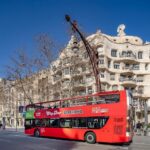
Casa Milà, known as La Pedrera because of its rough, quarry-like exterior, is a must. It was Gaudí’s last major civil work before he devoted himself more fully to the Sagrada Familia, and that shift shows in the building’s confidence and experimentation.
From a tuk-tuk, you get a strong street-level sense of the façade and the idea of the building as sculpture. If you plan to return for an interior visit, this is the moment that helps you understand why the place is famous beyond just the photo.
You can also read our reviews of more private tours in Barcelona



The Batlló House: The Modernisme Facade You Can’t Miss
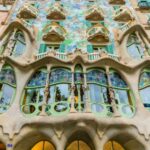
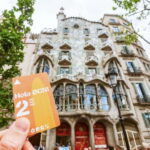
Near Passeig de Gràcia, you’ll see the famous Batlló family residence. It’s designed at the height of early 20th-century modernisme, and it hits you fast: the façade is the star.
I like this stop for one reason that’s hard to explain until you see it: Barcelona is full of beautiful buildings, but this one feels like it’s built to be stared at. A guided orientation helps you notice the symbolism and design choices without needing to study Gaudí for weeks.
Beyond Gaudí: Hospital de Sant Pau and a Bullring with Big-City Character
Barcelona isn’t only about Gaudí, even if the marketing is. The tour also includes two major landmarks that widen your view of the city’s identity.
Hospital de la Santa Creu i Sant Pau: Catalan Modernisme with a Purpose
This hospital complex was designed by Lluís Domènech i Montaner, a major name in Catalan modernism. The key here is that it’s not just decorative. Hospitals are functional spaces, and Domènech i Montaner’s work shows how modernisme can serve real life, not only impress.
A good guide helps you see the complex as a designed system: buildings, gardens, and the modern idea of patient-focused architecture. If you think modernisme is only façades and curves, this stop nudges you to see it as an urban plan.
Plaza Monumental: The Bullring’s Long Timeline
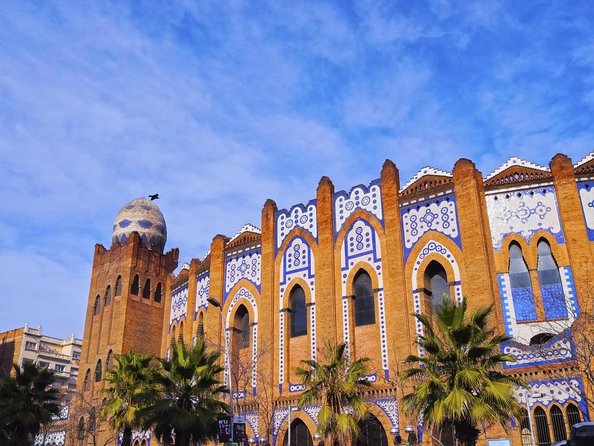
The Plaza Monumental de Barcelona (originally Plaza de El Sport, later renamed in 1916) is an old-school Barcelona institution. Even if bullfighting isn’t your thing, it’s worth seeing because it’s part of how cities organized entertainment and identity in the early 1900s.
On a fast tour, I treat this as a cultural contrast stop: it tells you what Barcelona was and how it organized public space.
Eixample to Downtown: Plaça Catalunya and Plaça d’Espanya
After the modernisme hits along the key streets, the route shifts toward Barcelona’s civic heart. This is where you get your bearings.
Plaça de Catalunya: A Transportation Hub That Feels Like a Crossroads
Plaça de Catalunya links Ciutat Vella and the Ensanche district and acts like a convergence point for important streets and public transport. From the tour, you’ll get the sense of how the city’s neighborhoods connect, not just where the famous buildings are.
I like this stop because it helps you map the rest of your trip. Once you understand where this square sits in the larger grid, choosing later walking routes becomes easier.
Plaça d’Espanya: 1929 World Fair Origins
Plaça d’Espanya was built for the International Exhibition of 1929, with a project tied to Josep Puig i Cadafalch and Guillem Busquets and completed by Antoni Darder. That World Fair context matters: it explains why the square has that grand, event-built feel.
Even if you don’t spend hours here, you’ll leave with a clearer sense of Barcelona’s 20th-century momentum.
Montjuïc Viewpoint Time: How Tour Length Changes the Stops
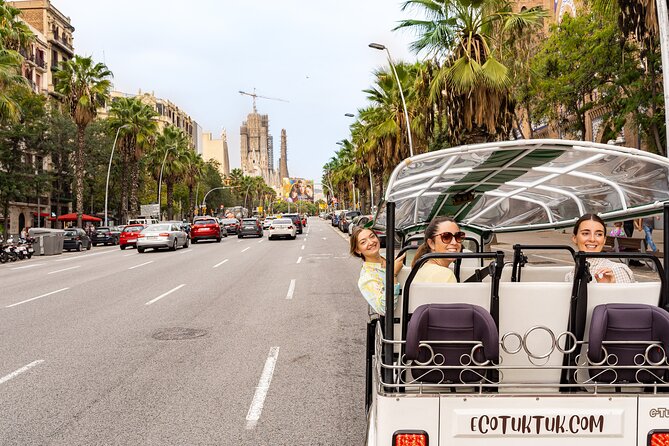
Montjuïc is the mountain neighborhood above the city, and it’s not just a scenic word in postcards. The tour includes a Montjuïc stop (about 10 minutes), and the info notes admission ticket free for that segment.
If you book 60 minutes
Expect a focused driving overview. The important catch: the 60-minute tour does not stop.
If you book 120 minutes
You should plan for a stop in Montjuïc. That’s the window when you get quick viewpoint time rather than only passing by.
If you book 180 or 240 minutes
You’ll also stop at additional points farther out, including the Olympic Port and Pedralbes.
Practical takeaway: if you want photos and a real breath of air at a viewpoint, lean toward the 120-minute option or longer. If you just want a first-day orientation through iconic sights, the shorter ride can work, but you’ll be moving more than stopping.
The Sea and Sports-Era Barcelona: Old Port, Barceloneta, and the Olympic Port
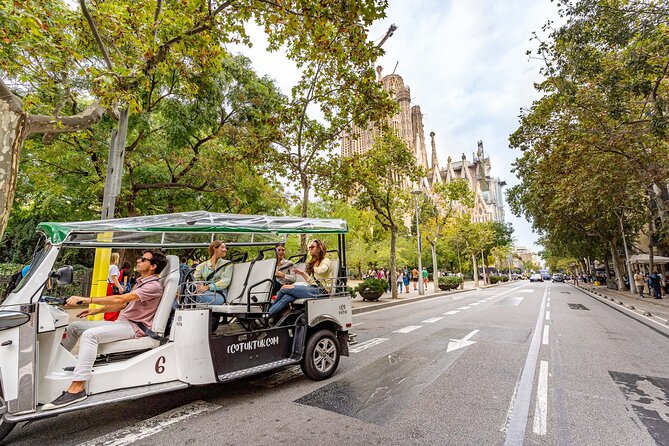
This is where the tour feels like it’s exhaling. You go from architecture and squares to the waterfront, where Barcelona is more relaxed and the air changes.
Old Port: Two Thousand Years of Tradition
The Old Port is the oldest part of the Port of Barcelona, with a history stretching back over two thousand years. It sits behind a breakwater, and it’s a classic example of how Barcelona layers old and modern at the same time.
From the tour perspective, this is a useful switch. After heavy modernisme exposure, the port gives you a different kind of landmark to process: maritime Barcelona.
Barceloneta Beach: The Oldest Beach in the City
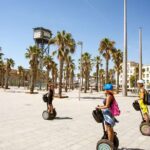
Barceloneta is the oldest and most famous beach in Barcelona, remodeled just before the 1992 Olympic Games. Even if you don’t plan to swim, it’s a key slice of local life.
A good guide can help you see it as more than a beach stop. It’s a neighborhood identity. On a short day, it’s also a fast way to understand why the city’s waterfront culture matters.
Olympic Port: The Marina by the Olympic Village
The Olympic Port sits between Barceloneta and Nova Icària, in the San Martín district. It’s managed by the city’s municipal company on behalf of Barcelona City Council.
The Olympic-era context gives you a different angle on Barcelona’s transformation: this wasn’t only about building attractions, it was about creating a lasting urban waterfront.
Citadel Park and Arc de Triomf: Green Space and Exhibition-Era Drama

If you’re looking for a moment to feel the city’s scale at a walking-friendly pace, the end-zone matters.
Ciutadella Park: A Former Fortress Ground Turned Public Park
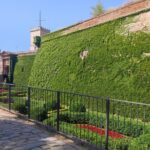
Citadel Park is in Ciutat Vella and has long been the city’s main public park. It’s traced on the former grounds of the Citadel fortress, and it was laid out with an image of Paris’s Luxembourg Garden in mind.
That origin story changes how you see the greenery. You’re not only looking at trees and paths; you’re looking at a repurposed site, which is one of Barcelona’s recurring themes.
Arc de Triomf: A 1888 Exhibition Entrance
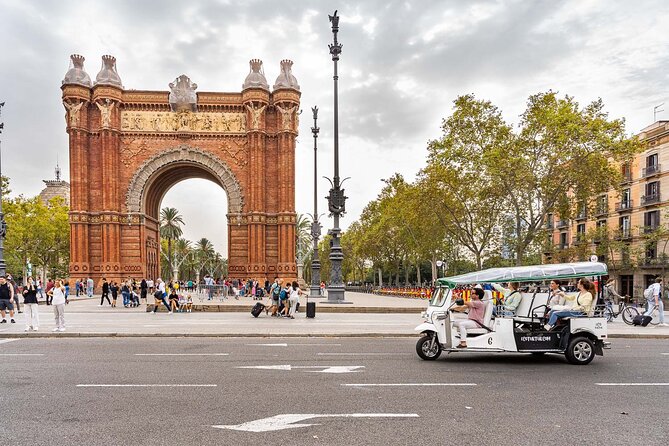
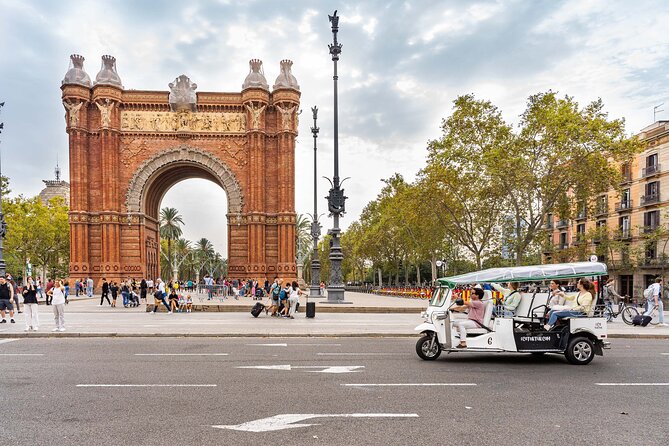
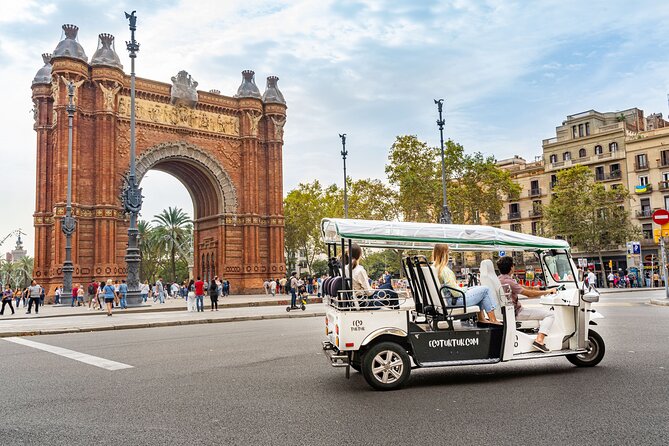
Arc de Triomf is located at the confluence of Paseo de Lluís Companys, Paseo de San Juan, and Ronda de Sant Pere. It was designed as the main entrance to the Barcelona Universal Exhibition of 1888.
This is the kind of monument that makes more sense when you understand why it was built. If you’re the type who likes connecting buildings to the events that created them, this stop clicks.
Photo Stops and What You Can Expect From the Timing
A strong value point here is that the tour includes pre-selected stops for photographing. That means you’re not left guessing where the best angles are. The downside is you can’t request extra stops or change the route on the fly.
Also remember the tour duration detail: the 60-minute option does not stop, while longer options build in specific stopping segments (including Montjuïc and, depending on length, parts related to the Olympic waterfront and Pedralbes).
If you’re hoping to pop out for long museum-style visits during the tour itself, this isn’t that format. Think of it like a guided highlights drive with timed photo breaks, followed by your independent exploration after.
Price and Value: Is $28.67 a Good Deal for Barcelona?
At about $28.67 per person, this sits in the value zone for a private guided tour format. The key isn’t only the price tag—it’s what you get for that money in real travel terms:
- you get an orientation route that hits the big hitters quickly
- you start without queue friction
- you have a local guide companion in the vehicle so you can ask questions while you’re seeing the city
- you travel in a private vehicle that reduces the bus-stress factor
If your days are packed and you need a first-day map, the value feels clear. If you only want scenic views from the best vantage points and you’re picky about photo angles, the covered vehicle and fixed stop structure can feel limiting, and that’s where the cost might feel heavy.
A practical strategy: book this early in your Barcelona trip. Let it show you what grabs you most, then go back later on foot or with a museum ticket once you’re sure.
Guides Matter: The Human Touch You’ll Notice
Even in a short tour, the guide can make a big difference. The names repeatedly praised—Roger, Marco, Diana, Marti, Miquel, Victor, and Raul—point to a common theme: people like the blend of safety, pacing, and clear explanations tied to what you’re seeing.
One review theme that matches what you should look for: you want a guide who doesn’t just recite facts, but helps you understand what to look for and what it means in Barcelona’s story. This tour is built for that kind of guidance.
If your group includes someone who needs a slower pace, the tour’s structure seems to handle that better than a group bus tour. The drivers assist with getting on, and guides have been praised for adjusting pace based on needs.
Who This Tour Suits Best (And Who Might Want to Skip It)
This experience fits best if:
- you have limited time and need a reliable highlights run
- you want Gaudí plus the broader city context in one day
- you like asking questions while you’re moving, not only during a museum stop
- your group includes older travelers who benefit from comfortable transit
It might not fit as well if:
- you mainly want open-air panoramic viewpoints and lots of long photo stops
- you strongly prefer everyday neighborhoods over landmark-focused architecture
- you expect the tour to be customizable like a private car with free reign to stop anywhere
That fixed route is the tradeoff. It keeps the tour efficient, but it also means your best plan is to choose the right duration upfront, then use your free time afterward for anything you want to linger on.
Should You Book This Barcelona Expert Eco Tuk-Tuk Tour?
If you’re arriving in Barcelona for a short visit, I’d say yes—especially for the 120-minute option or longer, when you get actual stop time in Montjuïc and more varied city sections. The queue-free start, the electric private vehicle, and the structure of photo stops make it a solid “get your bearings fast” choice.
Book it when you want a guided highlights route you can trust. If you’re the kind of traveler who needs maximum flexibility or expects big interior time during the tour itself, you’ll probably enjoy this more as a pre-planning orientation, then follow up on your own.
FAQ
Does the 60-minute option include stops?
No. The 60-minute tour is a driving experience and does not stop. Longer options include timed stops.
What language is the tour offered in?
The tour is offered in English.
Is the tour private?
Yes. It’s private, so only your group participates.
Where do I meet the driver?
Meet at Carrer de Casp, 13, Eixample, 08010 Barcelona. The pick-up point is at the lift access to the Interparking Novedades car park, opposite the entrance of the ME Barcelona hotel.
Is the vehicle electric and covered?
Yes. It uses a 100% electric vehicle, and it includes blankets and protective layers against rain and wind.
Can I get a refund if plans change?
You can cancel for a full refund if you cancel at least 24 hours before the experience starts. Free cancellation is available up to 24 hours in advance.