REVIEW · BARCELONA
Barcelona Gothic Quarter Walking Tour
Book on Viator →Operated by Turisme de Barcelona · Bookable on Viator
Stone streets hold Barcelona’s secrets. This Barcelona Gothic Quarter walking tour strings together medieval alleys and Roman leftovers, so the area feels readable instead of random. I also like that you get a guide-level narrative right from the start point, with real energy from guides such as Alberto.
I love the small-group size (up to 20), because it makes it easier to hear details and still enjoy the squares at your own pace between stops. You’ll also hit the big anchors fast: MUHBA Temple d’August, Plaça del Rei, and the Barri Gòtic streets that first-time visitors always struggle to map out.
One possible drawback: if you want a strictly “walk, see, move on” tour, the time spent around central landmarks like the cathedral area may feel long. That’s fixable in your head beforehand: treat this as an explanation tour, not a sprint.
In This Review
- Quick hits in the Barri Gòtic
- Why the Barri Gòtic needs a guided walk
- Price and timing: what $33.26 buys you
- Starting at Pla de la Seu: your 2-hour game plan
- Barri Gòtic streets and squares: more than just medieval scenery
- Temple d’August (MUHBA): Barcelona’s Roman layer, up close
- Plaça del Rei and Santa Agata: medieval power in one stop
- Guides, headsets, and hearing clearly in narrow streets
- Practical tips for walking the Barri Gòtic comfortably
- Who this tour fits best (and who should think twice)
- Should you book this Barcelona Gothic Quarter Walking Tour?
- FAQ
- How long is the Barcelona Gothic Quarter walking tour?
- Where does the tour start and end?
- Is this tour offered in English?
- How big is the group?
- Do I need to buy tickets for the stops like Temple d’August and Plaça del Rei?
- Can I get a refund if I cancel?
Quick hits in the Barri Gòtic
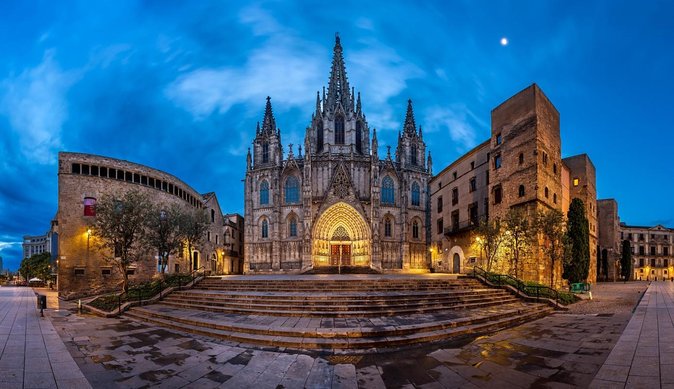
- Max 20 people means a calmer walk through tight streets
- Temple d’August (MUHBA) is one of the best-preserved Roman remnants in Barcelona
- Plaça del Rei + Santa Agata chapel adds a medieval power-and-faith layer to the walk
- Stops are marked admission-free, so you can budget mainly for your own snacks and drinks
- Local guides with standout storytelling: Alberto, Pilar, Alex, David, and Feliciano are all named in the feedback
- ~2 hours total that returns you to the same starting point
Why the Barri Gòtic needs a guided walk
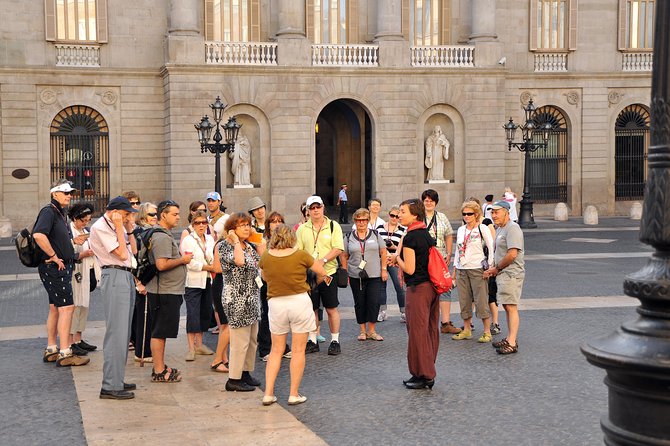
The Gothic Quarter looks simple from far away. Up close, it’s a maze of narrow lanes, doorways, and squares that all seem important. A guide helps you connect the dots so you’re not just taking photos of walls, but understanding why they’re there.
What makes this tour work well is the mix of time periods. You’re not only looking at medieval Barcelona. You’re also seeing how the Roman city layer peeks through later streets, so the quarter feels like it has continuity instead of being a museum set.
And because you’re on foot for about two hours, it’s a good fit when your Barcelona schedule is tight. You get the core geography and the main landmarks without spending your whole morning turning in circles.
You can also read our reviews of more walking tours in Barcelona



Price and timing: what $33.26 buys you
At $33.26 per person, you’re paying mostly for two things: a live guide and focused time in one of Barcelona’s most confusing areas. For that price, you’re also getting a route that includes major points like MUHBA Temple d’August and Plaça del Rei, with stops listed as admission ticket free.
Here’s the value equation I like: if you’re the kind of traveler who reads plaques and still feels lost, a guided approach is often worth it. If you’re the kind of traveler who prefers to wander with a map app and a few guidebooks, then you might question the cost. This tour sits squarely in the first camp.
One more timing note: it’s commonly booked about 36 days in advance on average. If you’re traveling in peak season or you have a narrow window in your schedule, book early so you’re not stuck with an awkward start time.
Starting at Pla de la Seu: your 2-hour game plan
You start at Pla de la Seu, 2 (Ciutat Vella). That matters because it puts you in the right part of the quarter from the first minute. The tour also returns you to the same meeting point, which is a small convenience but a real one when you’re trying to keep the rest of your day moving.
You’ll have a mobile ticket, and confirmation comes at booking time. The tour is offered in English, so if you’re planning with friends or family, align your language needs early.
It’s also described as near public transportation, which helps a lot if you’re connecting from another neighborhood or if you want to reset afterward and grab lunch nearby. Most travelers can participate, and service animals are allowed—always a plus in a dense, crowded old city.
Barri Gòtic streets and squares: more than just medieval scenery
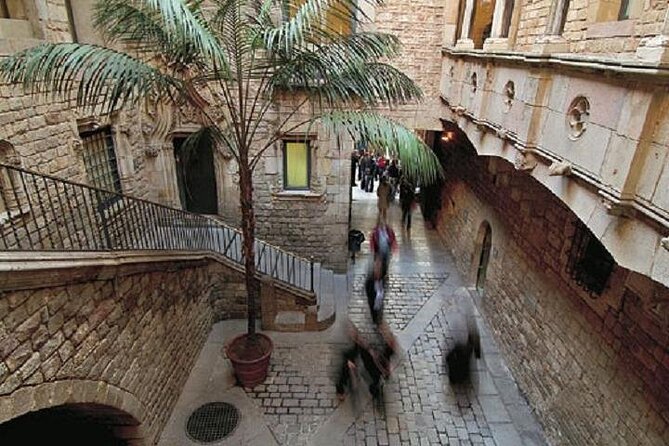
This walk centers on the Barri Gòtic district itself—its streets, squares, and older buildings. The “what” is obvious: you’ll be surrounded by architecture that looks medieval. The “so what” is what you’re paying for.
A good guide turns the area into a story. The feedback highlights that guides like Alberto and Pilar explain how people lived, why spaces developed, and what changed over time. That’s the difference between seeing old stone and actually understanding it.
One review-based consideration to keep in mind: some guests felt the route spent too long near the cathedral area and wanted less time there. If you’re the type who wants maximum walking distance and minimal stopping, consider setting your expectations: this tour is designed around key stops and explanations, not a long “route march.”
On the upside, the pace is often praised as smooth and easy to follow, including time for photos. And the small group size helps you avoid feeling like you’re in a crowded human conga line.
Temple d’August (MUHBA): Barcelona’s Roman layer, up close
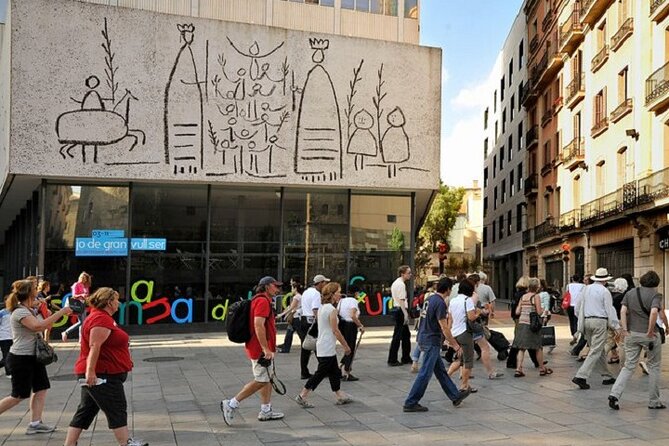
Then you move into the Roman layer of the city at MUHBA Temple d’August. This stop is highlighted as one of the city’s last remaining Roman relics, and it’s described as the best preserved Roman piece in Barcelona.
Why this matters on a Gothic Quarter tour: the quarter is famous for medieval architecture, but Barcelona’s story doesn’t start there. With Temple d’August, you see that earlier city life sits underneath later building waves, and that gives the whole quarter a deeper timeline.
Practically, this is also a nice change of pace. After walking narrow streets, it’s a focused stop that gives your eyes (and brain) a different kind of “wow”—not just height and stone details, but archaeology and survival of older structures.




Plaça del Rei and Santa Agata: medieval power in one stop
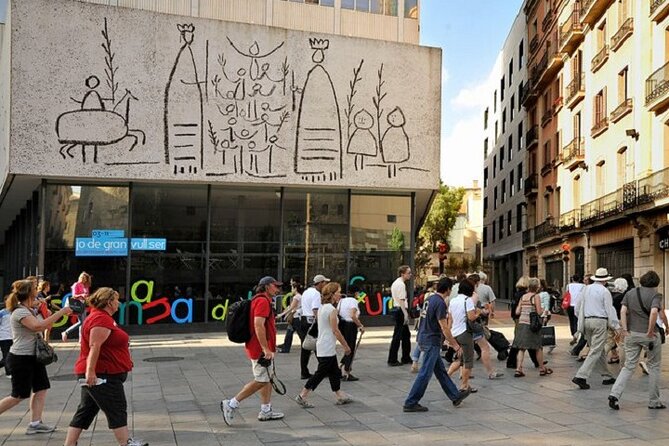
Plaça del Rei is one of those squares where you feel the weight of history. You’ll see medieval buildings around the square, including the Palatine chapel of Santa Agata.
This stop is valuable because it helps you understand how the Gothic Quarter wasn’t just a pretty background. It was tied to authority, religion, and the kinds of spaces where decision-making and ceremony took place. A guide’s job here is to connect what you’re seeing (architecture and layout) with what it likely meant to the people who lived there.
It also works well for photos, because squares in old Barcelona tend to frame buildings naturally. Even if you’re not an architecture superfan, a square like Plaça del Rei usually gives you that “okay, I get it” moment.
Guides, headsets, and hearing clearly in narrow streets
Narrow lanes can be noisy, and groups can get spread out. A recurring theme in the feedback is that guides found ways to keep everyone connected—one review specifically mentioned an ear piece set that helped the guide stay audible even from further back.
That matters more than people think. If you can actually hear the explanation, you remember more, and the tour feels worth it. If you miss key facts, the walk becomes just another sightseeing stroll.
You’ll also notice that different guides bring different styles, but the strengths show up repeatedly. Alberto is described as enthusiastic and passionate, with lots of history details. Pilar is praised for being friendly, professional, and clear. Feliciano is mentioned for bringing the Gothic Quarter to life with humor. That blend—facts plus personality—is what keeps two hours from dragging.
If you’re traveling with kids, one comment singled out that an 8-year-old managed close to two hours without complaint. That’s a decent signal that the storytelling is often paced for non-experts too.
Practical tips for walking the Barri Gòtic comfortably
This tour is about walking and stopping, so your comfort matters. Wear shoes you trust on uneven pavement and plan for lots of turns—this area is full of corners that look similar until a guide points out what’s different.
Bring a light layer. Even if the weather is fine when you start, old city stone can make it feel cooler in shade. One guest noted that the guide managed to keep things comfortable during heat, which suggests the route includes breaks and shade-aware pacing.
Rain happens. A review mentioned that the tour continued in rain and the guide still shared details. So pack a small umbrella or a light rain jacket if you’re visiting in shoulder season.
Also, since food and drinks aren’t included, have a plan for a snack or coffee after the tour. Two hours in the Gothic Quarter can work up an appetite fast, especially once you’ve stopped for photos and history pauses.
Who this tour fits best (and who should think twice)
You’ll like this tour if:
- You’re in Barcelona for a first pass and want structure in the maze of the Barri Gòtic
- You care about how different time periods overlap, especially Roman remnants next to medieval landmarks
- You want a guide to point out details you’d likely miss if you were solo
You might think twice if:
- You prefer long, uninterrupted walking with minimal stopping
- You dislike spending extended time near major cathedral surroundings and would rather keep moving
- You’re more of a DIY traveler who enjoys reading at your own speed without explanations
There’s also one outlier caution from the feedback: there was a report of a guide not showing up. To protect yourself, arrive a bit early at the meeting point and keep your booking details handy in case you need to check in quickly.
Should you book this Barcelona Gothic Quarter Walking Tour?
If you want the Gothic Quarter to make sense fast, this is an easy yes. For around $33.26, you get a tight, two-hour route with major sights—Temple d’August and Plaça del Rei—plus context that turns stone and squares into a story you can carry with you after the tour.
I’d book it especially if you’re short on time, traveling with family, or you just want someone else to do the heavy lifting of interpretation. If you know you’ll find cathedral-area stops frustrating, or you’re chasing maximum walking distance over explanations, then pick your expectations carefully—or save your money for a more self-paced plan.
FAQ
How long is the Barcelona Gothic Quarter walking tour?
It runs for approximately 2 hours.
Where does the tour start and end?
It starts at Pla de la Seu, 2, Ciutat Vella, 08002 Barcelona, Spain, and ends back at the same meeting point.
Is this tour offered in English?
Yes, it is offered in English.
How big is the group?
The tour has a maximum of 20 travelers.
Do I need to buy tickets for the stops like Temple d’August and Plaça del Rei?
The stops are listed as admission ticket free, so you likely won’t need to purchase separate entry tickets for those specific parts.
Can I get a refund if I cancel?
No. This experience is non-refundable and cannot be changed for any reason.