REVIEW · BARCELONA
Barcelona in 2 Hours: Guided Walk Through History and Sights
Book on Viator →Operated by Carpe Diem Tours · Bookable on Viator
Barcelona stories click when you walk them. In just about two hours, this guided route through Ciutat Vella links famous names and big political moments to the streets you see today. It’s the kind of walk that helps you understand why Barcelona looks the way it does, not just where the landmarks are.
What I like most is the mix of art and identity: you’ll hear how places like Els 4 Gats connect to the creative world around Picasso and Gaudí, then swing over to Catalan history stitched into squares and street art. Another stand-out is the way religion and legend are handled with real specifics, like the Cathedral’s story of Eulalia and the martyr details that shaped local memory.
One thing to plan for: two key churches are not included in admission (Catedral de Barcelona and Basilica de Santa Maria del Mar). You’ll still get the guide, context, and stops, but you may need to pay extra if you want to go inside.
In This Review
- Key highlights you’ll actually feel during the walk
- Getting oriented in Ciutat Vella without wasting your first day
- Els 4 Gats: where art talk meets real Barcelona texture
- Pont del Bisbe and the Gothic legends people still repeat
- Catalan history you can stand next to: El Mon Neix En Cada Besada
- Quiet squares with heavy stories: Plaça Sant Felip Neri and Plaça de Sant Jaume
- Plaça del Rei: where royalty met the dark machinery of the Inquisition
- Cathedral time: Catedral de Barcelona and St. Eulalia’s martyr story
- Casa de l’Ardiaca: the small architectural stop that feels bigger than it is
- Plaça de l’Àngel: grain trading to a renamed story of an apparition
- MUHBA – El Call: narrow streets and the medieval Jewish quarter
- Basilica de Santa Maria del Mar: maritime Barcelona at the finish
- Guides shape the experience: what I’d pay attention to
- Price and value: $22.99 for a history shortcut
- Who this tour suits best
- Should you book Barcelona in 2 Hours?
- FAQ
- What is the duration of the tour?
- How much does the tour cost?
- Is the tour in English?
- Does the tour include entry tickets to all stops?
- What are the start and end points?
- How big is the group?
- Can I cancel for a refund?
Key highlights you’ll actually feel during the walk
- A tight 2-hour route focused on Gothic Quarter and El Born so you get oriented fast
- Els 4 Gats explained beyond the postcard photos, including its Art Nouveau personality
- Catalan history in plain sight, from the Sept. 11, 1714 connection to the Diada storyline
- St. Eulalia details at Catedral de Barcelona, with story context behind what you’re seeing
- Roman-era leftovers at Casa de l’Ardiaca, including remnants tied to water for Roman Barcino
- Small-group format (max 20) that leaves room for questions and back-and-forth
Getting oriented in Ciutat Vella without wasting your first day
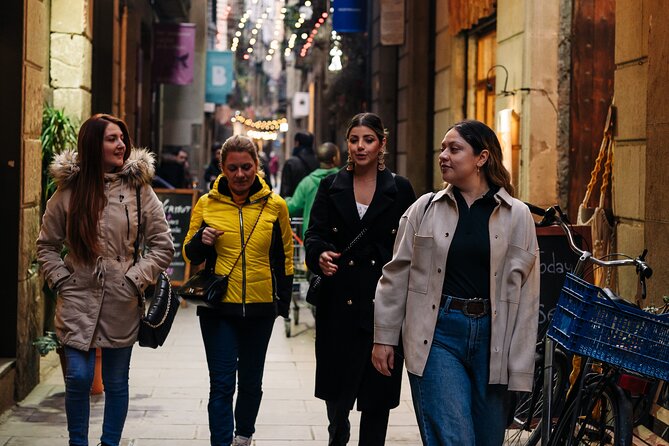
If you’re arriving in Barcelona and you want your bearings fast, this kind of walking tour earns its keep. You start in the heart of Ciutat Vella at Plaça del Vuit de Març, then end at Basilica de Santa Maria del Mar in the same district zone. That end point matters because it drops you near one of the most atmospheric areas of the city for wandering after the tour.
The pace is built for a two-hour window. Each stop is brief (around 10 minutes), so you’ll get a clear snapshot and the story behind the scene, then move on before your attention goes stale. With a maximum of 20 people, it’s also easier to hear explanations and spot details the moment your guide points them out.
Language is English, and the tour uses a mobile ticket. That’s helpful when you’re juggling jet lag, busy streets, and trying to avoid standing in line later. Also, group discounts are mentioned, which is worth noting if you’re traveling with another person or small party.
You can also read our reviews of more walking tours in Barcelona



Els 4 Gats: where art talk meets real Barcelona texture
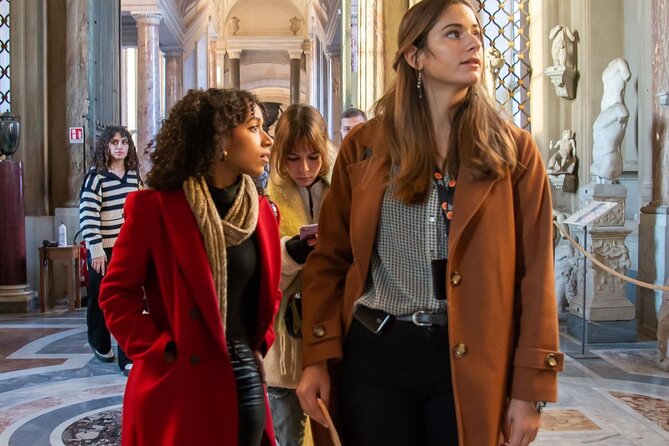
Most first-time visitors spot Els 4 Gats because it looks distinctive. What makes this stop better is the context. You’ll learn why this historic café and restaurant mattered as a meeting place for thinkers and how it connects to the creative circle loved by tourists and locals alike, including references to Pablo Picasso and Antoni Gaudí.
The exterior’s Art Nouveau character isn’t just decoration. It’s part of why this address became a symbol of artistic Barcelona. In a short 10 minutes, you don’t just get a photo moment. You get the “why would anyone care?” answer, which makes the building feel more like a living part of the city instead of a random stop on a map.
Practical note: because you’re outside for this one, wear what you’d wear for a normal city walk. If it’s hot, you’ll be glad you brought sun protection. One recurring bit of advice from guide-led walks is to show up with comfortable shoes and sunscreen.
Pont del Bisbe and the Gothic legends people still repeat
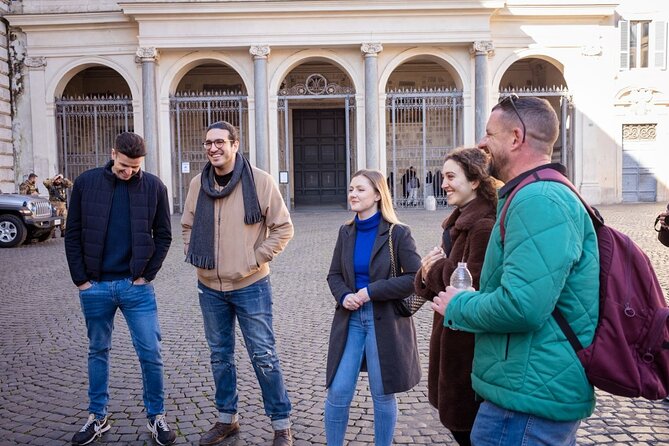
From Els 4 Gats, the walk later reaches Pont del Bisbe (Bishop’s Bridge), a spot that’s famous for being photographed. The guide angle here is the legend. You’ll hear the version that involves superstition—plus the chance to think critically if you’re the skeptical type.
Why does that matter? Because in old cities, the stories often explain how people behaved, not just what they saw. A bridge is a physical crossing, but it also becomes a social boundary. Legends help turn a small piece of stone into something you remember and talk about later.
At this stage of the walk, you’re also already seeing the rhythm of the Gothic Quarter: tight lanes, sudden squares, and stonework that looks like it’s been in place forever. Bishop’s Bridge sits right in that feeling zone.
Catalan history you can stand next to: El Mon Neix En Cada Besada
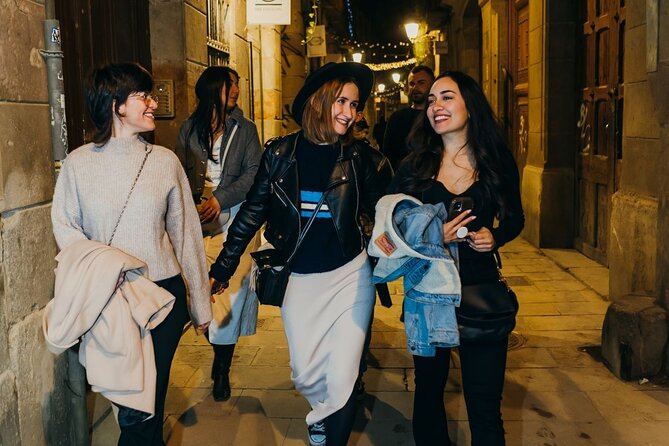
One of the stops that does more than look pretty is El Mon Neix En Cada Besada. Yes, it’s tied to the kind of photo people love for social media. But the important part is the story underneath it: the street art connects to the Catalan defeat on September 11, 1714, and how that event sparked the celebration of La Diada (Catalonia Day).
This is where the tour earns its identity. Barcelona isn’t only architecture and museums. It’s political memory in public space. When you connect a mural’s imagery to a specific date and what it meant, the street becomes more than scenery. It becomes a timeline you can read with your feet.
If you’re visiting during Catalan holidays, you’ll probably notice how strongly these symbols show up in the city’s everyday language. Even if you aren’t, this stop gives you the background to recognize what you’re seeing.
Quiet squares with heavy stories: Plaça Sant Felip Neri and Plaça de Sant Jaume
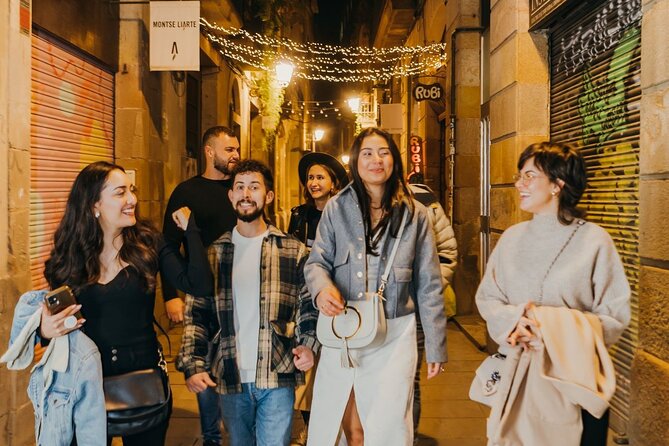
Two of the stops lean into tragedy and civic emotion rather than beauty alone.
Plaça Sant Felip Neri is described as a more sombre square tied to the desire for Catalan independence, carrying scars from a tragic past. Even when you only spend about 10 minutes here, the stop gives you a key: Barcelona’s Gothic core contains places where locals remember power struggles, not just royal pageantry.
Then Plaça de Sant Jaume brings you to the civic heart. It’s the main square where the seat of the Catalan government and City Hall is located. The tour frame is also honest about the square’s dual role: celebration and protest. You’re standing where politics becomes theater, and the guide explains why.
This combination works well because it doesn’t treat Catalonia as a trivia topic. It treats it like something that shaped daily life, which is exactly what you want when you’re walking through older districts.
You can also read our reviews of more guided tours in Barcelona


Plaça del Rei: where royalty met the dark machinery of the Inquisition
You’ll also reach Plaça del Rei, a square tied to the Royal Palace and a darker chapter connected to the Spanish Inquisition. This isn’t framed as shock value. The point is historical atmosphere: old cities don’t have clean edges, and Barcelona’s center reflects that reality.
For you, that means you’ll likely walk away noticing more than just the stone and the angles. You’ll start reading the city like a record of shifts in power—who decided, who punished, who benefited.
Cathedral time: Catedral de Barcelona and St. Eulalia’s martyr story
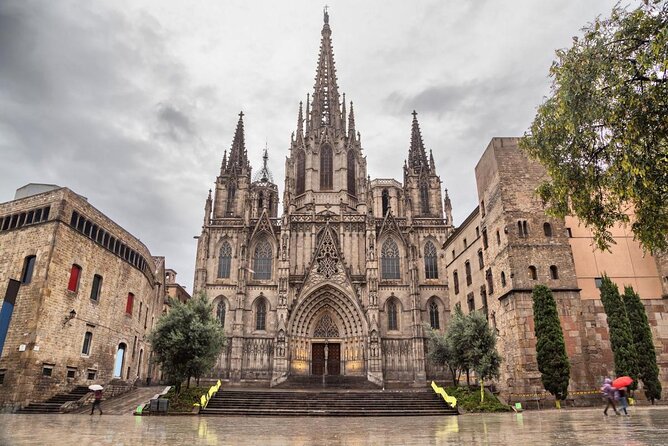
The Catedral de Barcelona stop is a major mental anchor in the walk. This is Gothic-style church architecture built over centuries, and the guide’s focus isn’t just on design. You’ll learn about Eulalia, Barcelona’s patron saint, and how the Cathedral illustrates her life and death, including details of her martyrdom.
Because admission isn’t included here, you’ll have a choice depending on what you prefer. If you love religious art and want the interior context, you’ll likely consider buying the ticket. If you’d rather keep your time for street wandering, you can still enjoy the exterior and the guide story without committing to the indoor visit.
Either way, hearing the Eulalia story gives shape to what you’re standing in front of. Gothic buildings can feel like visual puzzle boxes. Stories help you solve them.
Casa de l’Ardiaca: the small architectural stop that feels bigger than it is
Casa de l’Ardiaca is easy to miss if you’re just walking for photos. The tour helps you spot why it matters: it’s a small architectural marvel in the Gothic Quarter that blends elements of Gothic and Renaissance design.
The big value here is the Roman connection. You’ll be guided toward remnants tied to Roman times, including wall leftovers and arcades related to an aqueduct that once supplied Barcino with water. That water angle is more than trivia. It’s how old cities survived.
When you understand that infrastructure drove where people could live and trade, you start seeing Barcelona’s “pretty” spaces with respect for what they enabled.
Plaça de l’Àngel: grain trading to a renamed story of an apparition
Next comes Plaça de l’Àngel, once known as Wheat Square because it was a hub for grain trading. That detail alone brings a grounded, everyday side to the district—this wasn’t only ceremony and church bells.
Then the square’s name shift is tied to a story of a heavenly apparition that appeared during the procession of Saint Eulalia’s body. In other words: commerce first, then religious narrative layered over the same place.
This stop helps you understand something important about historic Barcelona. Names change, but the street still carries its earlier function in its bones.
MUHBA – El Call: narrow streets and the medieval Jewish quarter
MUHBA – El Call is another stop that adds real depth without needing a long museum day. You’ll walk through a district known for medieval architecture and narrow streets connected to the city’s former Jewish population.
This is the kind of area where the scale can feel human. You’re not sprinting from hall to hall. You’re moving through layers, seeing how the street plan and building shape reflect a community that once lived there.
Because the stop is time-limited, you won’t get a full historical lecture. But you will leave with a clearer sense of how Barcelona’s old town held more than one cultural thread at once.
Basilica de Santa Maria del Mar: maritime Barcelona at the finish
The walk finishes at Basilica de Santa Maria del Mar. Like the Cathedral, admission isn’t included for this stop, but the guidance sets up why it matters: it’s described as a breathtaking Gothic basilica and a key part of the El Born neighborhood, also tied to Barcelona’s maritime history.
This ending point works well because it encourages you to keep exploring after the guided portion. Once you’re dropped near the basilica, you’re placed where people actually linger—outside, along lanes, and in the in-between spaces that make neighborhoods feel like neighborhoods.
If you want the full effect, consider pairing the stop with a quick plan for afterwards: a slow walk, a coffee, and a relaxed wander through El Born while the history is still fresh.
Guides shape the experience: what I’d pay attention to
The guide quality is clearly a big part of why this tour earns strong ratings. Names that come up in reviews include Darren, Petra, Jorge, Sonia, Lydia, Sarah, Vanessa, Rolene, and Mariah. Across these accounts, the consistent theme is clarity and energy, with guides acting like storytellers rather than reciters.
A few practical takeaways for you:
- Ask questions. The smaller group size makes it easier to get direct answers.
- If you like details, guides can point out things you’d probably miss on your own, including architectural cues and street-level storytelling.
- If you want food ideas, expect at least a couple of local recommendations. One guide referral mentioned Tapas 2254 as a good pick.
One caution, based on feedback you should treat seriously: if you’re sensitive to sound, note that some tours may not use a speaker or audio device, and background street noise can interfere. Bring this mindset with you. When it’s loud, lean in, move closer to your guide when possible, and don’t be afraid to ask them to repeat something.
Price and value: $22.99 for a history shortcut
At $22.99 per person for roughly 2 hours, this sits in the category of “great for orientation and context.” It’s not an all-day commitment, and you’re getting guided explanations at multiple major stops in Ciutat Vella. That matters because old Barcelona can feel like a collage if you don’t know what connects it.
There’s also a money logic to the admissions. Many stops are indicated as free admission, while Catedral de Barcelona and Basilica de Santa Maria del Mar are listed as ticket not included. So you’re not paying for every door along the way, but you are likely to face two add-ons if you want to go inside.
Group discounts help if you’re booking more than one person. And the tour notes an option to upgrade to a private tour, which is the smartest choice if you prefer slower pacing or want deeper Q&A without balancing a group schedule.
Who this tour suits best
This is an excellent fit if:
- You want a first-day plan that helps you understand the old city quickly.
- You like stories about Catalan identity, not only famous buildings.
- You’d rather spend two hours learning how to read the streets than doing one museum with a big time sink.
It may feel less ideal if you hate walking. It’s a city-walk format. It also may not satisfy you if you only want “big interior tickets” and long stays inside religious sites, since two of the big churches are ticketed separately.
Should you book Barcelona in 2 Hours?
Yes, if you’re trying to understand Barcelona’s old-town logic without committing to a half-day. For the price, you get a structured route through the Gothic Quarter and El Born with meaningful context at each stop. The best part is how the guide links architecture to stories: art circles at Els 4 Gats, Catalan history at El Mon Neix En Cada Besada, martyr legend at the Cathedral, Roman leftovers at Casa de l’Ardiaca, and community history at El Call.
Book it especially if you want your next self-guided wander to feel smarter. After this, you won’t just see squares and churches. You’ll know what shaped them. And that makes Barcelona feel less like a checklist and more like a place with memory.
FAQ
What is the duration of the tour?
It runs for about 2 hours.
How much does the tour cost?
The price is $22.99 per person.
Is the tour in English?
Yes, it’s offered in English.
Does the tour include entry tickets to all stops?
Most stops list admission as free, but Catedral de Barcelona and Basilica de Santa Maria del Mar are listed as admission not included.
What are the start and end points?
Start: Plaça del Vuit de Març, Ciutat Vella, 08002 Barcelona, Spain. End: Basílica de Santa Maria del Mar, Plaça de Santa Maria, 1, Ciutat Vella, 08003 Barcelona, Spain.
How big is the group?
The tour has a maximum of 20 travelers.
Can I cancel for a refund?
Yes. You can cancel up to 24 hours in advance for a full refund. If you cancel less than 24 hours before the start time, the amount paid is not refunded.