REVIEW · BARCELONA
Barcelona: Jewish Tour by a Jewish guide
Book on GetYourGuide →Operated by The best of Barcelona · Bookable on GetYourGuide
A walk through Barcelona’s old Jewish quarter sounds simple, then it turns into street-level history. You’ll follow a Jewish guide who points out details most people miss, like Hebrew markings in unexpected spots. Two things I really like: the tour is personal and private, and the stories come with context that makes the sites feel human, not just old stone.
You also get real walking time in the Gothic Quarter, including stops tied to daily Jewish life, not only big monuments. Expect hidden corners and a sense of how this neighborhood once worked, then why it changed. One drawback to keep in mind: there’s limited formal “preserved museum content” at some points, so the experience depends a lot on your guide’s ability to interpret what you’re seeing.
If you want a straightforward museum circuit, this won’t be that. If you want meaning in the streets, you’re in the right place.
In This Review
- Key highlights to look forward to
- Starting at Plaça de Sant Jaume: your easy meeting point
- Gothic Quarter streets: why the neighborhood matters more than the “big sights”
- The old Jewish quarter route: how hidden corners become understandable
- House of the Rashba: seeing scholarship made physical
- Synagogue visit: what to plan for and what you might pay extra
- City Hall and Roman-temple references: learning to read layers
- Hebrew inscriptions and “hidden spots”: the moment the tour clicks
- The old mikve: everyday life, not just big dates
- Guides with range: Adi, Dina, and Monica
- Who this private Jewish quarter tour fits best
- Price and value: what $68 buys you
- Practical expectations before you go
- Should you book this Barcelona Jewish Tour?
- FAQ
- How long is the tour?
- Where does the tour start?
- Where should I meet the guide?
- Is the tour private?
- What languages are available for the live guide?
- What’s included in the price?
- Is transportation included?
- Is the synagogue museum entrance included?
- Is the tour wheelchair accessible?
- What’s the cancellation policy?
- Is reserve-and-pay-later available?
Key highlights to look forward to
- A private Jewish guide who can answer questions in English, Hebrew, or Spanish
- Rashba-era landmarks, including a house connected to the Rashba tradition
- A synagogue you’ll hear described as among the oldest, plus nearby Jewish-quarter clues
- The old mikve, a rare glimpse of how people practiced and lived
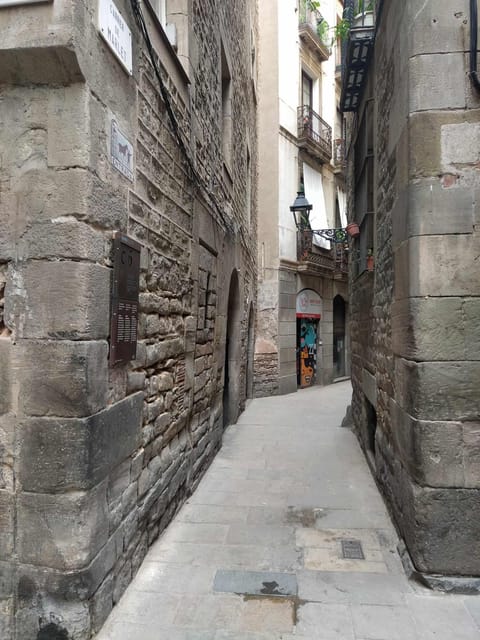
- Hidden spots that are hard to find without local guidance
- A story-first route through the Gothic Quarter with City Hall and Roman-area references
Starting at Plaça de Sant Jaume: your easy meeting point
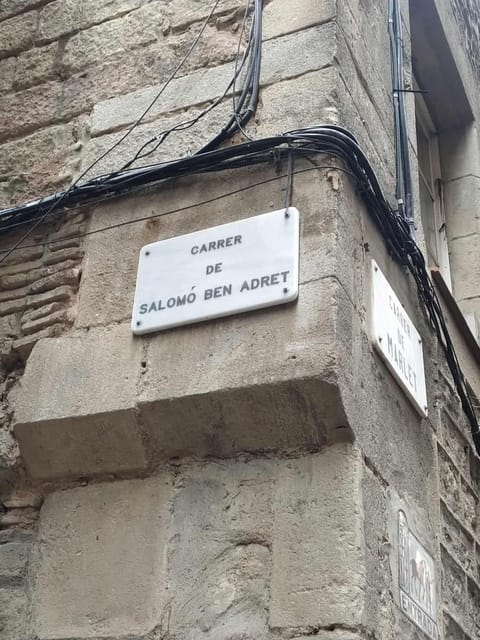
Most people underestimate how much easier a tour feels when it starts in the right place. This one kicks off at Plaça de Sant Jaume, a central square where you can orient quickly in Barcelona’s historic core.
The guide waits outside Starbucks, so you won’t be hunting down a random doorway. That matters here, because the route is about short walks between clues, not long transfers across town.
If you arrive early, use the extra minutes to get comfortable with the neighborhood’s pace. This tour works best when you can slow down and look at corners, doorways, and inscriptions, not just pass by them.
You can also read our reviews of more guided tours in Barcelona


Gothic Quarter streets: why the neighborhood matters more than the “big sights”
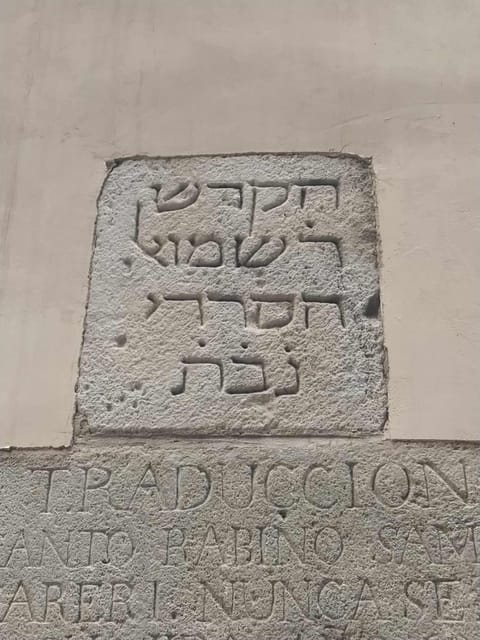
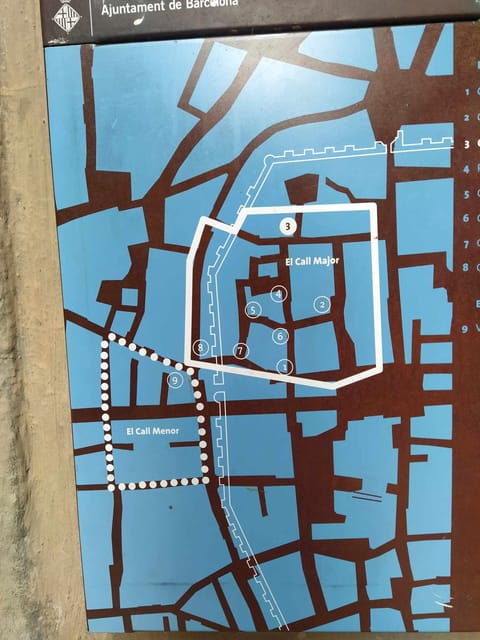
Your main theme is the Jewish heritage woven into the Gothic Quarter. This area is full of layered history, and the tour treats it like a living puzzle instead of a list of attractions.
You’ll spend about an hour in the Gothic Quarter, guided in a way that helps you connect sites to Jewish life and Barcelona’s broader story. The guide also calls out how some Jewish traces are subtle. It’s not always a labeled display. Sometimes it’s the placement, the wording, or a detail that only makes sense when you know what to look for.
One of my favorite parts of tours like this is when the city stops feeling like a backdrop. Here, you’re trained to notice Hebrew inscriptions in surprising places. That single idea changes your whole walk. Instead of asking what you can see, you start asking what the stone is trying to tell you.
The old Jewish quarter route: how hidden corners become understandable
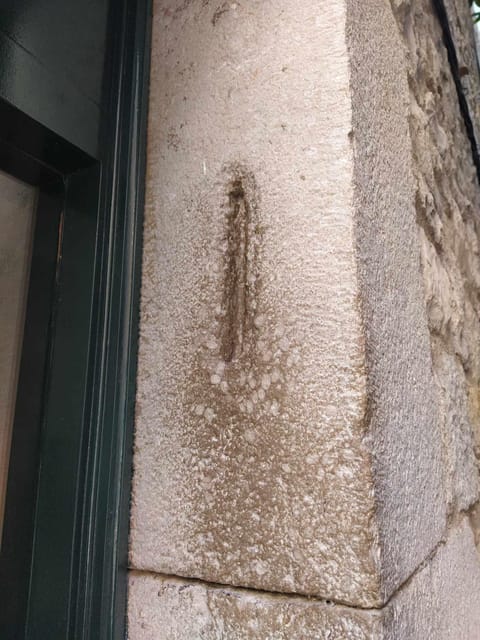
The heart of the experience is the old Jewish quarter area, described as among the best preserved districts of its kind in Barcelona. That phrase matters for value. When the neighborhood structure still holds together, your guide can show you how the community likely moved through space.
Expect a lot of “look here” moments. You’ll find places you’d probably skip if you were sightseeing on your own. Many of these spots are the kind locals know, but visitors often miss because there’s no obvious sign.
There’s also a short break built into the rhythm. That pause is useful on a city walk like this, where you’ll be absorbing names, dates, and cultural context. You can reset your feet and then get back into the story without feeling drained.
House of the Rashba: seeing scholarship made physical
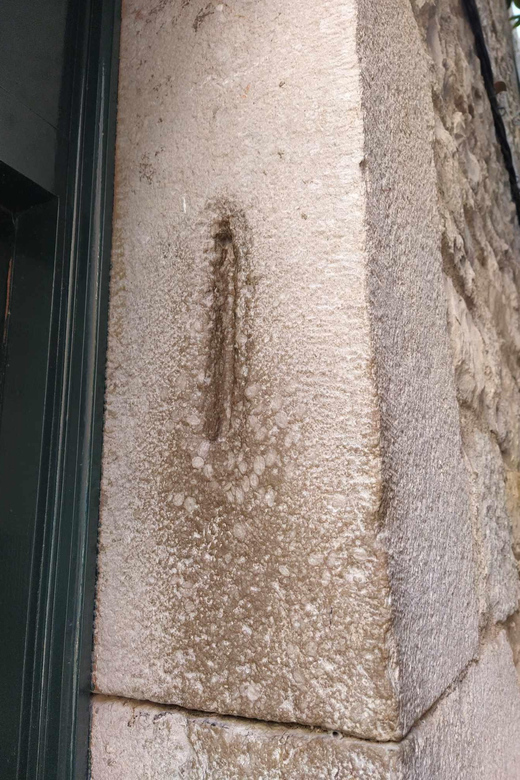
One of the headline stops is the house of the Rashba. Even if you’re not a specialist in medieval Jewish learning, this kind of site has a powerful effect. It makes scholarship feel grounded, like it lived in real rooms and real streets—not only in books.
The guide’s job here is crucial. Jewish heritage in Barcelona often shows up indirectly. So you want a guide who can explain why a specific association matters, and how to read the surrounding environment as part of the story.
This stop also tends to be where the tour’s tone clicks. The best moments aren’t the ones with the most dramatic architecture. They’re the ones that help you picture the people behind the history, and why their presence shaped the city.
Synagogue visit: what to plan for and what you might pay extra
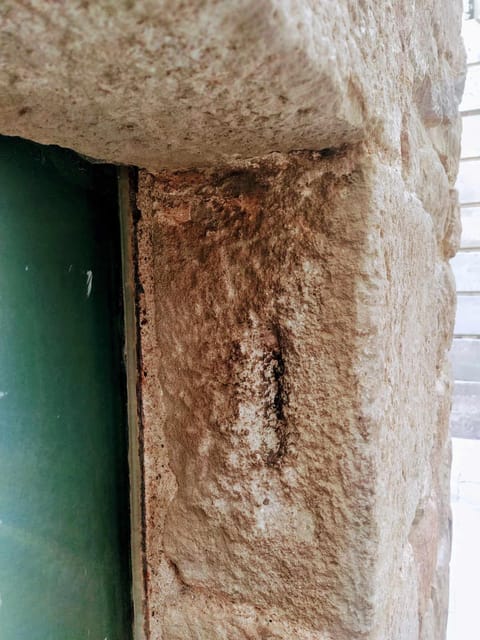
You’ll also visit a synagogue described as one of the oldest in the world. That’s the kind of claim that can sound vague until a guide frames it with the right details and explains what you’re looking at as you go.
Important practical note: entrance to the synagogue museum is not included. So if you want museum time inside, plan for an additional ticket. In other words, the tour itself still gives you the context and walking experience, but the deeper indoor option may cost extra.
This is also where I recommend mentally switching modes. Outdoor heritage walks are about spotting clues. A synagogue visit is about understanding meaning. Give yourself permission to slow down and listen, because the value is in how the guide connects what you see to Jewish continuity, change, and community resilience.



City Hall and Roman-temple references: learning to read layers
A good Jewish heritage tour in a medieval city isn’t only about Jewish sites. It’s also about how Jewish history intersects with the rest of Barcelona’s timeline.
During the walk, you’ll see references including City Hall and a Roman temple. You might wonder why they’re in a Jewish tour. The answer is the same as everywhere in Europe: cities overlap. Different eras stack on each other, and the guide helps you see how Jewish life fit into a larger civic and architectural world.
This kind of stop helps you avoid a common mistake. If you treat the Jewish quarter as an isolated island, you miss how people lived with the city around them. These references give you a wider lens, without stealing the focus from Jewish heritage.
Hebrew inscriptions and “hidden spots”: the moment the tour clicks
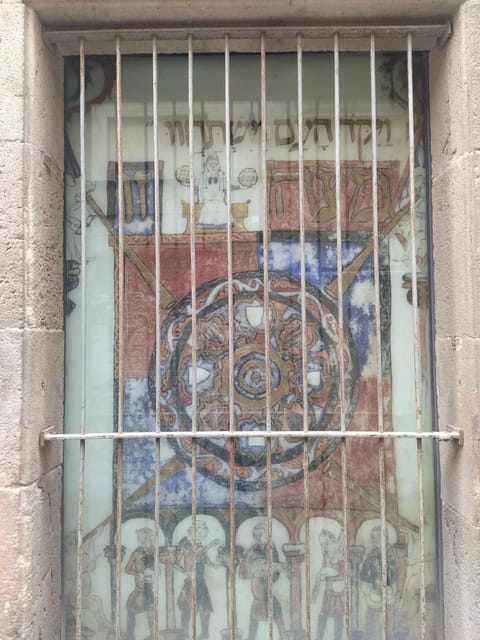
If you want the tour to feel different from a basic walking tour, this is where it happens. You’ll be shown Hebrew inscriptions in surprising places, plus other clues tucked into the built environment.
From the guide feedback, a major reason people love this tour is that it’s not a slow lecture. It’s interactive walking. The guide points out corners and details you’d almost certainly miss, especially if you’re trying to do the neighborhood alone.
This is also a good reminder for you as a visitor. Don’t just “take photos.” Look at the small stuff. Door frames, stone edges, and old writing are the tour’s real souvenirs.
The old mikve: everyday life, not just big dates
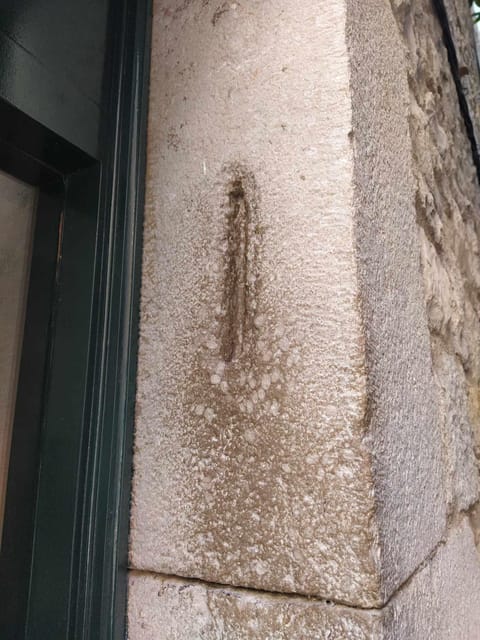
One stop stands out for many people: the old mikve. That’s not a dramatic plaza or a landmark facade. It’s tied to everyday ritual and community practice.
Seeing a mikve in a historic neighborhood helps the tour feel real. It shifts the story from rulers and dates to routines and needs. Jewish history isn’t only what happened to a community in crisis. It’s also what people did regularly to mark life, faith, and cleanliness.
This part of the tour can also be emotionally heavier than the rest. A skilled guide matters here, and the tour’s tone is described as thoughtful and grounded. You’ll likely come away with a better sense of how people lived, not only what happened to them.
Guides with range: Adi, Dina, and Monica
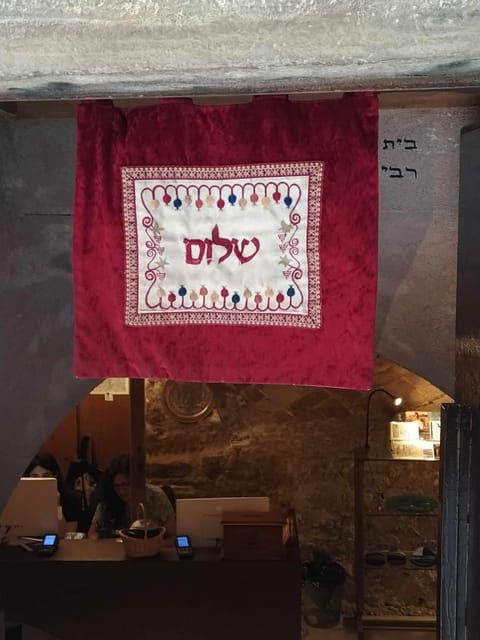
This tour is led by Jewish guides, and the names you may hear include Adi, Dina, and Monica. What stands out in the feedback is not only expertise, but how the guide communicates it.
Adi is repeatedly mentioned as energetic, funny, and able to explain Jewish sources in a way that stays understandable. Dina and Monica are also praised for being informative and friendly, and for creating space for questions. One of the strongest themes is that guides tailor the pace to the group’s level and interest.
If you’re traveling with mixed knowledge, that flexibility is gold. You don’t want a tour that assumes everyone already knows the terms, or one that moves too fast to be meaningful.
Who this private Jewish quarter tour fits best
This works especially well if you want more than a surface walk through Barcelona’s oldest streets.
You’ll likely love it if:
- You want a Jewish history walk that connects sites to daily life
- You enjoy hearing how inscriptions and details tell a bigger story
- You prefer a private group pace where questions are welcome
- You’re interested in understanding the city beyond the usual sights
It may be less ideal if you want a strictly chronological tour with lots of indoor museum time. The experience leans toward interpretation of what’s still visible in the neighborhood—so the guide matters.
Price and value: what $68 buys you
At $68 per person for a 2-hour private guide, the value comes from attention, not just access. This is not a big bus tour where you hear a few highlights from far away. It’s built around guided discovery of small, specific places—exactly the kind of tour where a local interpreter saves time.
Also, the tour offers English, Hebrew, and Spanish guide options, and the guides are described as able to adjust the experience to different interests. That’s part of why people rate it so highly: you’re paying for meaning and context, not only walking distance.
One more value point: you don’t pay separately for transportation as part of the package, which means you control how you reach the meeting area. (Transportation itself is not included.)
Practical expectations before you go
Wear shoes for uneven medieval streets. This is a city-walk experience, and the best moments depend on your ability to look closely while still moving.
Bring a curious mindset. The tour is designed around the idea that Jewish heritage in Barcelona can be hidden in plain sight. If you treat it like a scavenger hunt for history, you’ll get more out of it.
And if you’re sensitive to the emotional weight of European Jewish history, it helps to know that the tour tone can include a more hopeful framing while still acknowledging what’s tied to the rubble and loss. That balance is part of why it lands well for many visitors.
Should you book this Barcelona Jewish Tour?
Book it if you want a private, Jewish-guided walk through the old Jewish quarter with clear explanations and a focus on what you can actually see: the Rashba house connection, a very old synagogue, the old mikve, and those Hebrew inscriptions you’d likely miss alone.
Skip it if you mainly want a museum-heavy itinerary or you prefer large-group tours where everyone follows the same pace without conversation.
If you’re on the fence, here’s the simple test: Do you like learning to read a city’s details? If yes, this is one of the most satisfying ways to do that in Barcelona.
FAQ
How long is the tour?
The tour lasts 2 hours.
Where does the tour start?
Meeting starts at Plaça de Sant Jaume.
Where should I meet the guide?
The guide will be waiting outside of Starbucks.
Is the tour private?
Yes. It’s a private group.
What languages are available for the live guide?
The live guide is offered in English, Hebrew, and Spanish.
What’s included in the price?
The tour includes a professional private guide.
Is transportation included?
No. Transportation is not included.
Is the synagogue museum entrance included?
No. Entrance to the synagogue museum is not included.
Is the tour wheelchair accessible?
Yes. It is listed as wheelchair accessible.
What’s the cancellation policy?
You can cancel up to 24 hours in advance for a full refund.
Is reserve-and-pay-later available?
Yes. You can reserve now & pay later and book without paying today.