REVIEW · BARCELONA
Barcelona: Raval Street Art and Graffiti Walking Tour
Book on GetYourGuide →Operated by Street Art Barcelona · Bookable on GetYourGuide
Street art feels like a live documentary. On this Raval walk, graffiti and murals turn everyday walls into a story about Barcelona, guided by locals who know what you are actually looking at. The route also finishes with a look at the Barcelona Museum of Contemporary Art from the outside, so you get a taste of the modern-art world without spending the whole day in line.
I especially like the way the tour mixes local projects with bigger names. You get stops tied to the local urban-art scene, like the Arnau Gallery, and you may also spot references to international artists such as Keith Haring. One drawback: the whole outing is just 2 hours, and the museum part is exterior-only, so you will need extra time (and a separate ticket) if you want to go inside.
In This Review
- Key things to know before you go
- Why Raval Street Art Works Better Than a Photo Sprint
- Finding Your Way: Jardins Talia Meeting Point on Avenida Paral·lel
- The Raval Walk: Murals, Graffiti Styles, and Local Meanings
- Arnau Gallery Stop: Seeing Street Art as Community Work
- Tres Chimeneas: Skate Spot Energy and Street Culture Beyond the Paint
- Keith Haring and International Touchpoints Without Losing the Local Thread
- Finishing at the Barcelona Museum of Contemporary Art (Exterior + Your Next Step)
- Price and Time: Is $33 for 2 Hours Worth It?
- Who This Tour Suits (and Who Might Prefer Something Else)
- Final Take: Should You Book This Raval Street Art Tour?
- FAQ
- FAQ
- Where do I meet the guide for the Raval Street Art and Graffiti Walking Tour?
- How long is the tour?
- How much does the tour cost?
- Is the Barcelona Museum of Contemporary Art included in the tour price?
- Can I visit the museum after the walking tour?
- What’s included in the experience?
- What languages are available for the live guide?
- Is there hotel pickup or drop-off?
- Is this tour wheelchair accessible?
- What is the cancellation policy?
Key things to know before you go
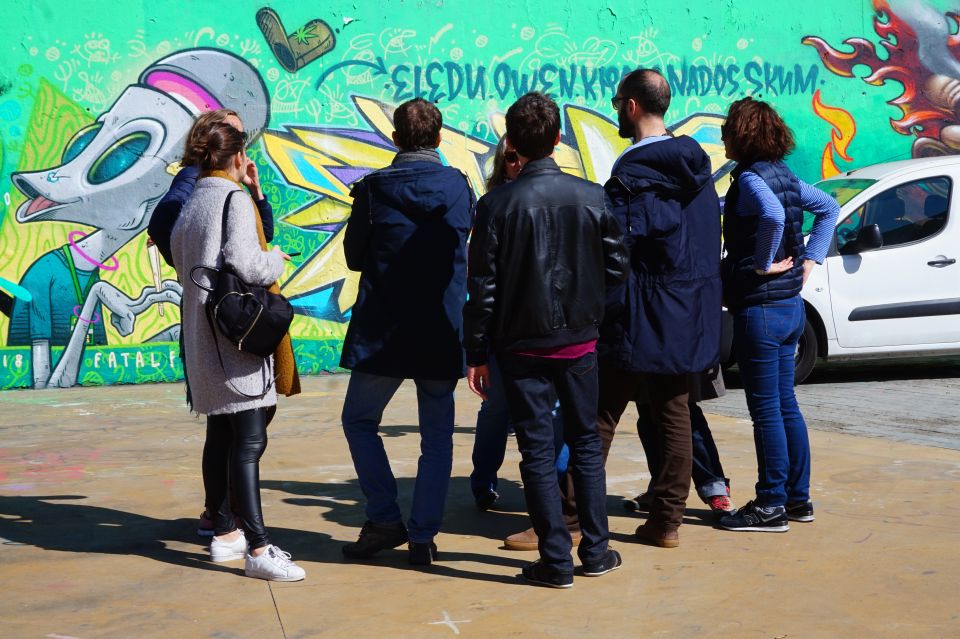
- Raval is the point: you walk the streets where street art is part of the neighborhood, not a planned photo-op.
- Guides bring context: expect commentary on styles, origins, and what the works mean locally.
- Arnau Gallery stop: see examples of resident work tied to Barcelona’s own urban-art momentum.
- Tres Chimeneas skate spot: you pause at a legendary hangout tied to street culture, not just street paintings.
- International art touchpoints: you may encounter references to major figures like Keith Haring while staying grounded in local context.
- MACBA exterior finish: you end by the Barcelona Museum of Contemporary Art, and you can visit it independently afterward.
Why Raval Street Art Works Better Than a Photo Sprint
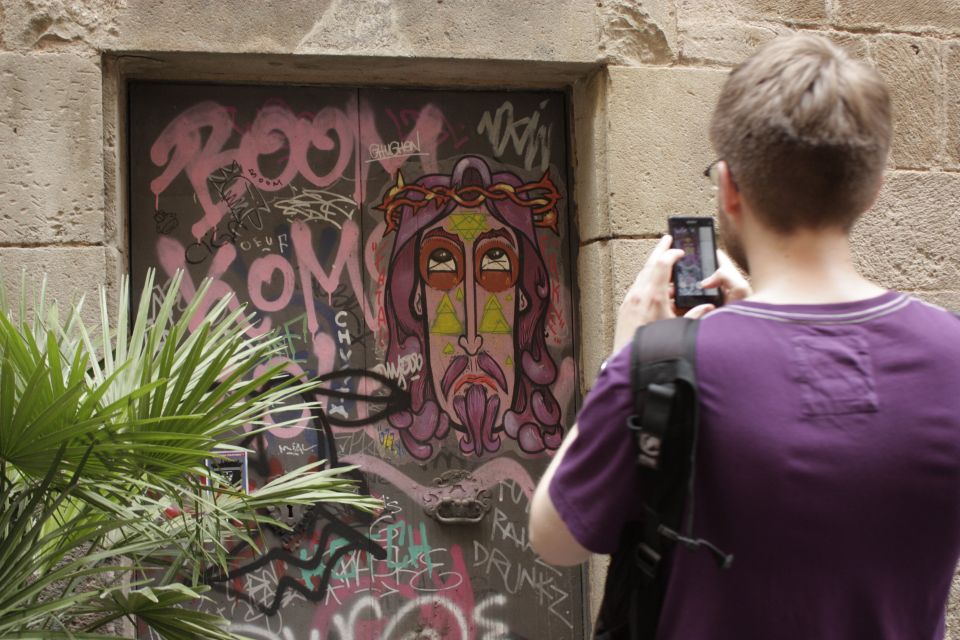
Raval is the kind of neighborhood where you stop trying to find the biggest mural and start noticing the details. The walls here are layered—graffiti, murals, tags, and bigger painted statements—so the “art” feels closer to real life than it does in places where street art is treated like decoration.
What makes this tour especially useful is the guiding lens. Street art looks random until someone gives you the map: what styles tend to mean, how pieces relate to the area, and how local projects fit into the bigger world of urban art. If you love modern culture, hip-hop energy, and street aesthetics, this is a great way to connect those dots without needing an art degree.
I also like that it does not rush you through a checklist. You are walking long enough to actually see the variety—works on building exteriors, apartment blocks, and public areas—so you can start building your own sense of what’s happening in the scene.
You can also read our reviews of more walking tours in Barcelona


Finding Your Way: Jardins Talia Meeting Point on Avenida Paral·lel
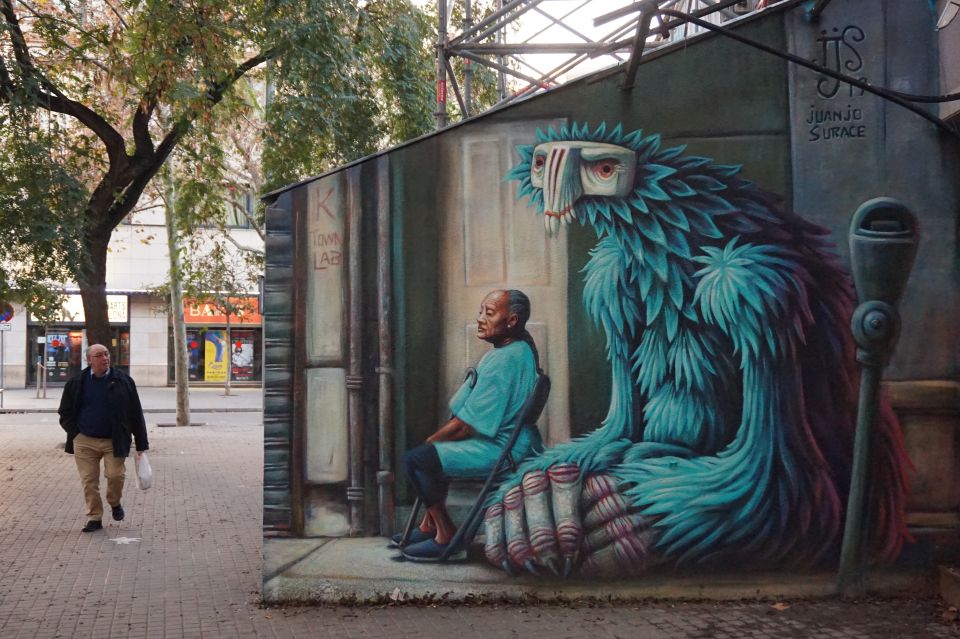
Your meeting point is clear: Jardins Talia park, Avenida Paral·lel 100, Barcelona. Arrive a few minutes early and take a look around before the group gathers—parks can be quieter than the surrounding streets, and it helps you get your bearings fast.
One detail that can matter: the tour description also references meeting near Hotel Serhs del Port as a landmark. If your instructions mention both, do not stress. The key is to follow the meeting-point address you receive when you book, then use nearby landmarks only to confirm you are in the right area.
Practical tip: wear shoes you trust. Raval is a walking neighborhood, and you will likely be on sidewalks and uneven urban surfaces while your guide keeps the flow moving.
The Raval Walk: Murals, Graffiti Styles, and Local Meanings
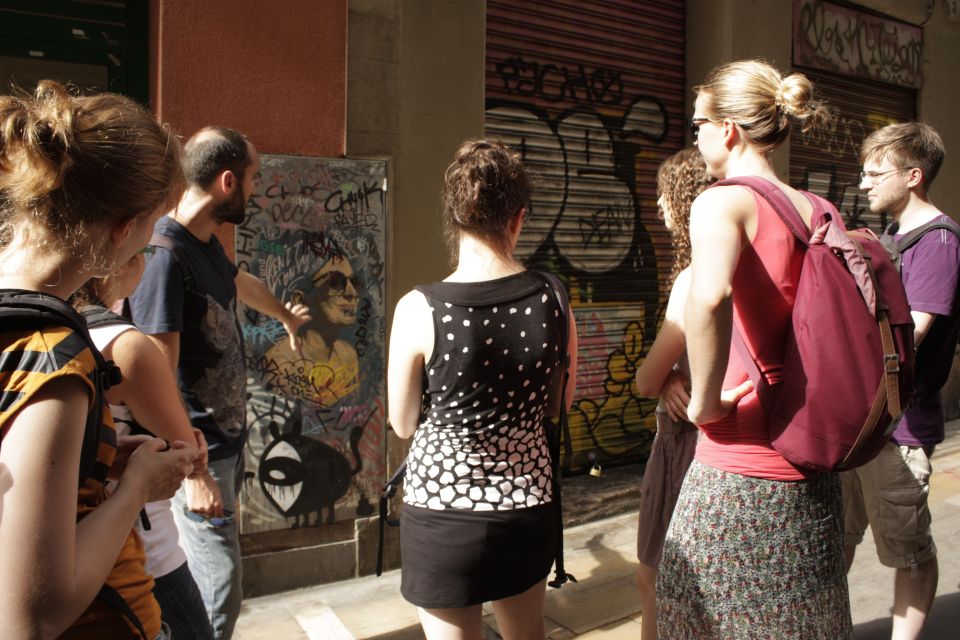
This is not a “look and move on” tour. It is designed so you can see how street art functions in Barcelona’s day-to-day visual language. You will be exploring a district known as the barrio Xino, and while that name carries history, what you’ll experience on the ground is more immediate: layers of artwork that change the feel of streets you might otherwise pass without a second look.
As you move, your guide should point out the differences that matter. You can expect discussion of the origins of graffiti in a general sense, different styles, and local projects that connect the art to people living in the area. In particular, several people mention how their guides were open to questions—even on political topics—so the tour can feel more like a conversation than a lecture.
A note on expectations: yes, some street art will look more dramatic than others. That is normal. The real value is learning how to look. You’ll finish with a sharper eye for the difference between a quick tag, a more designed piece, and a mural meant to linger in public space.
Arnau Gallery Stop: Seeing Street Art as Community Work
One of the most satisfying parts of this kind of tour is when it stops being only about the street walls and turns into a bridge to the local scene. This tour includes a visit focused on the Arnau Gallery, where you can see examples of work connected to local residents and projects.
Why that matters: when you only view street art from the sidewalk, it can feel like it appeared out of nowhere. A stop like this gives you a sense of how urban artists build creative momentum, connect with each other, and keep the neighborhood’s visual identity evolving.
Even if you are not the type who buys art, a gallery stop changes your perspective. You start noticing that street art is not just rebellion for rebellion’s sake. It’s also craft, community, and storytelling—just with a different setting than a white gallery wall.
Tres Chimeneas: Skate Spot Energy and Street Culture Beyond the Paint
Another strong highlight is time spent at Tres Chimeneas, described as a legendary skate spot. This matters because street art in Barcelona is not isolated from street culture. Skateboarding, music, and neighborhood identity overlap in ways you can feel when you linger at places where people actually meet.
On this stop, you’re not just seeing a location for style points. You’re getting a clearer picture of the scene that street art grows out of—where it gets attention, who interacts with it, and why it matters to the people who use these spaces.
If you like alternative culture, this portion can be a welcome shift. It takes the tour from purely visual appreciation to a more grounded street-life context. And if you happen to be a skater or music fan, you’ll likely understand why this kind of spot becomes iconic.
A few more Barcelona tours and experiences worth a look



Keith Haring and International Touchpoints Without Losing the Local Thread
You might encounter references to major international names, including Keith Haring. The important thing is how this is handled. The goal is not to treat famous artists like a souvenir. The point is to show how international street-art influences fit into the local landscape you are walking through.
That perspective helps you connect styles across cities. You start recognizing shared visual language—lines, symbols, bold forms—while also seeing how local context changes what the artwork communicates.
A balanced way to think about this: international references can make the scene easier to access. But local projects are what keep it real. The tour’s best moments tend to be when the guide keeps you anchored to Raval’s own stories rather than turning the street into an art-world museum.
Finishing at the Barcelona Museum of Contemporary Art (Exterior + Your Next Step)
The tour ends by the Barcelona Museum of Contemporary Art, with time focused on admiring the exterior. You do not have museum admission included, but you can visit afterward on your own.
Here’s the practical value of that choice. If you’re on a tight schedule, you still get a modern-art payoff without committing to the full indoor experience. And if you want more, you already have the location and the context from the walk.
The museum is described as showcasing works from three distinct periods of modern art. That’s useful information when you decide whether to add it to your day. If you love modern art, you can turn the exterior viewing into an expanded visit. If you prefer to keep your energy for more neighborhoods, you can skip inside and still feel satisfied with what the tour delivered.
Price and Time: Is $33 for 2 Hours Worth It?
At $33 per person for a 2-hour walk, this is priced in the same universe as solid guided experiences in Barcelona—especially ones that save you the guesswork of interpreting street art on your own.
Where the value comes from is not just the art on the walls. It’s the guided explanations that help you see better. Street art is easy to overlook if you do not know what questions to ask. A good guide turns your eyes into tools: you start noticing style differences, local references, and cultural context that you would miss on a solo walk.
Also, consider what you get for the duration. Two hours sounds short until you’re walking a neighborhood with constant visual changes. This tour stays focused on the Raval street-art scene and includes a couple of meaningful anchors—Arnau Gallery and Tres Chimeneas—so you do not feel like you are just walking in circles.
One cost consideration: museum admission is not included. If you want inside time at the Barcelona Museum of Contemporary Art, budget for that separately. Still, the tour ending at the museum helps you decide fast, because you can choose based on your mood once you are there.
Who This Tour Suits (and Who Might Prefer Something Else)
This is a great fit if you want a different side of Barcelona—one that leans into contemporary culture, street expression, and local context. It also works well if you like small-group learning, since multiple people highlight the alternative, smaller-group feel compared with bigger sightseeing formats.
It is especially good for:
- art lovers who want interpretation, not just photos
- people interested in street art, graffiti styles, and street culture links
- travelers who want to spend time in a neighborhood you might not tour on your own
You might consider a different option if:
- you are expecting a full museum visit (this one is exterior-only)
- you strongly prefer very polished, tourist-centered scenery
- you want a longer, slower pace with fewer stops
Final Take: Should You Book This Raval Street Art Tour?
If you like street art but you hate feeling confused by it, book this. The tour’s main strength is the guided help—turning “I see graffiti” into “I understand what I’m seeing and why it matters.” The combination of Raval walls, the Arnau Gallery stop, a pause at Tres Chimeneas, and the finish near the Barcelona Museum of Contemporary Art makes the timing feel smart.
Do keep one thing in mind: you will walk for 2 hours and then decide whether to continue inside the museum on your own. If that sounds like your style, you’ll likely leave with a stronger visual memory of Barcelona than you would from a standard highlights tour.
FAQ
FAQ
Where do I meet the guide for the Raval Street Art and Graffiti Walking Tour?
You meet your guide at Jardins Talia park on Avenida Paral·lel 100, 08015 Barcelona.
How long is the tour?
The tour duration is 2 hours.
How much does the tour cost?
The price is listed as $33 per person.
Is the Barcelona Museum of Contemporary Art included in the tour price?
No. The tour includes admiring the exterior of the Barcelona Museum of Contemporary Art, but museum admission is not included.
Can I visit the museum after the walking tour?
Yes. You can visit the museum independently after your tour.
What’s included in the experience?
The experience includes a tour guide and the walking tour.
What languages are available for the live guide?
The live tour guide is available in English, French, and Spanish.
Is there hotel pickup or drop-off?
No, hotel pickup and drop-off are not included.
Is this tour wheelchair accessible?
Yes, the tour is wheelchair accessible.
What is the cancellation policy?
Free cancellation is available up to 24 hours in advance for a full refund.