REVIEW · MADRID
From Madrid: The Best of Barcelona in One Day
Book on GetYourGuide →Operated by World Experience · Bookable on GetYourGuide
Barcelona in 13 hours is a sprint. The payoff is real: you get a smooth high-speed train day trip plus a guided walk through Catalonia’s best-known sights like the Gothic Quarter and Gaudí landmarks. The big trade-off is time: you’ll cover a lot of ground, and Sagrada Familia tickets aren’t included, so your day needs a little planning.
This is the kind of tour that works because it’s structured. You arrive at Barcelona Sants, meet your guide, then you’re sent where you’ll get the most visual and historical “hits” fast—Passeig de Gràcia, Roman traces at MUHBA, then a final stop for the Sagrada Familia exterior.
One consideration before you book: the departure is fixed, and the tour assumes you can get to the station on time. If you miss the train window, you can miss the entire day and there’s no refund.
In This Review
- Key highlights worth your attention
- High-Speed Train Day Trip: What the Madrid-to-Barcelona Timing Really Means
- Passeig de Gràcia: Gaudí at Street Level (Casa Batlló and La Pedrera Feel)
- Plaça de Catalunya to the Gothic Quarter: Fast Orientation in Old Barcelona
- MUHBA: The Roman Threads You Can Actually See
- Arc de Triomf and Sagrada Familia Photos: How the Day Closes
- Price and Logistics: Is $406 Worth a 13-Hour Sprint?
- Who This Trip Is Best For (and Who Should Skip It)
- Should You Book This Madrid-to-Barcelona Day Trip?
- FAQ
- How long is the tour?
- What is included in the price?
- Where does the tour start and end in Madrid?
- Is lunch included?
- Are Sagrada Familia tickets included?
- Do I need to purchase train tickets separately?
- What group size should I expect?
- What languages are offered for the guide?
- Do I need to provide passport or ID details?
- Is it wheelchair accessible?
- Can I get a refund if I cancel?
Key highlights worth your attention

- Round-trip high-speed train: less stress, more time on the ground in Barcelona
- Small group (up to 10 people): easier pace and more guide attention
- Gaudí façades on Passeig de Gràcia: Casa Batlló and La Pedrera-style modernism at street level
- Gothic Quarter + key squares: Plaça Reial and Plaça Sant Jaume help you orient quickly
- MUHBA ticket included: you’ll see Roman-era remnants without hunting for them yourself
- Sagrada Familia exterior visit with separate entrance: great photos, but plan for tickets separately
High-Speed Train Day Trip: What the Madrid-to-Barcelona Timing Really Means
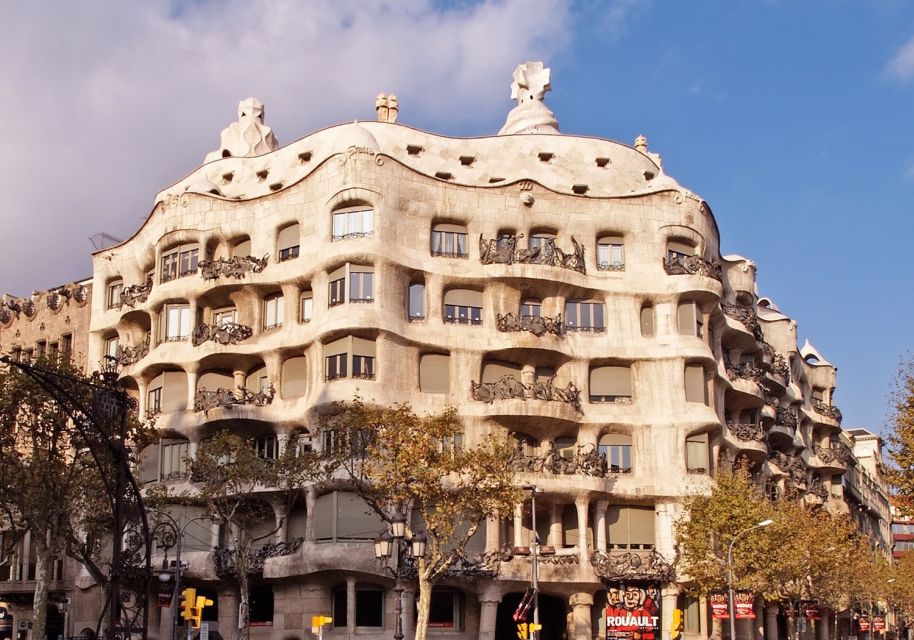
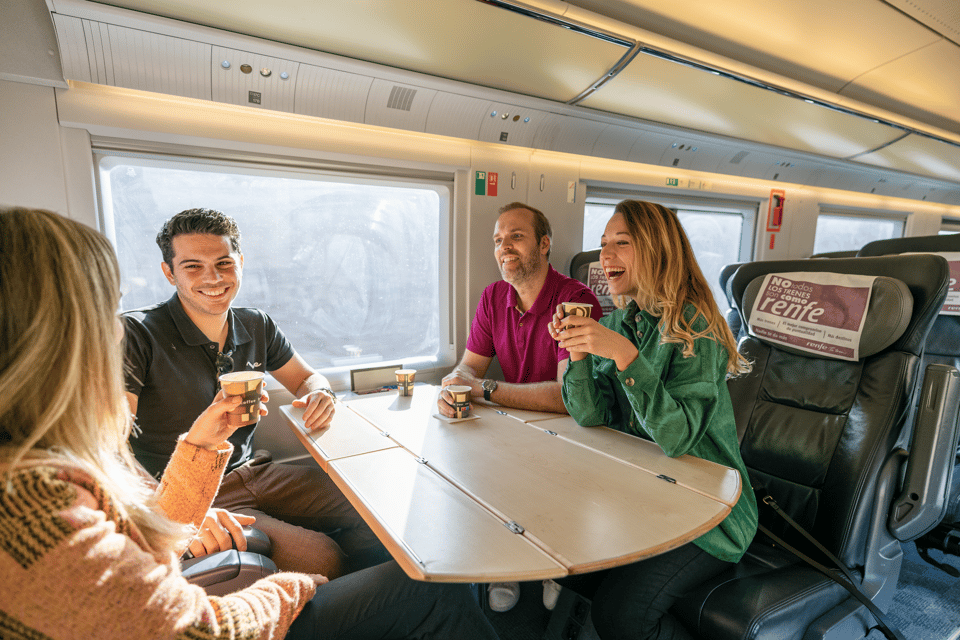
A 13-hour day trip sounds intense because it is. The tour starts at Estación de Atocha in Madrid, then you take the high-speed train to Barcelona Sants. The train ride is built into the day in a way that keeps things straightforward: you don’t lose time figuring out connections, and you get to Barcelona with enough energy to walk.
The outbound train time is listed as 3.5 hours, and the return is 3 hours. Add in station transfers and city walking, and you get a full but efficient loop: see major sights, get brief guided context at each stop, and finish back at Atocha. If your goal is to get a “greatest hits” taste of Barcelona without committing to an overnight stay, this structure makes sense.
I also like that the train is described as ecological, fastest, and comfortable. Even if you don’t care about the green angle, comfort matters on a long travel day. Bring something to do on the train, because the rest of the day is mostly steps and viewpoints.
The downside is obvious when you look at the clock: this is not the tour for lingering. You’ll get time for photos and short breaks, but the rhythm is “move on” rather than “stay awhile.”
A few more Madrid tours and experiences worth a look



Passeig de Gràcia: Gaudí at Street Level (Casa Batlló and La Pedrera Feel)
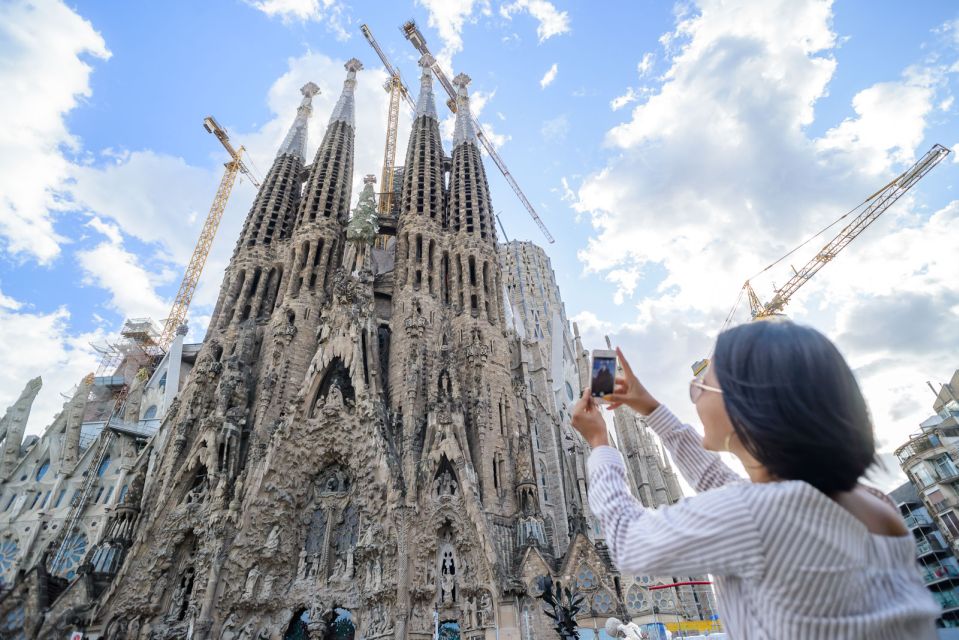
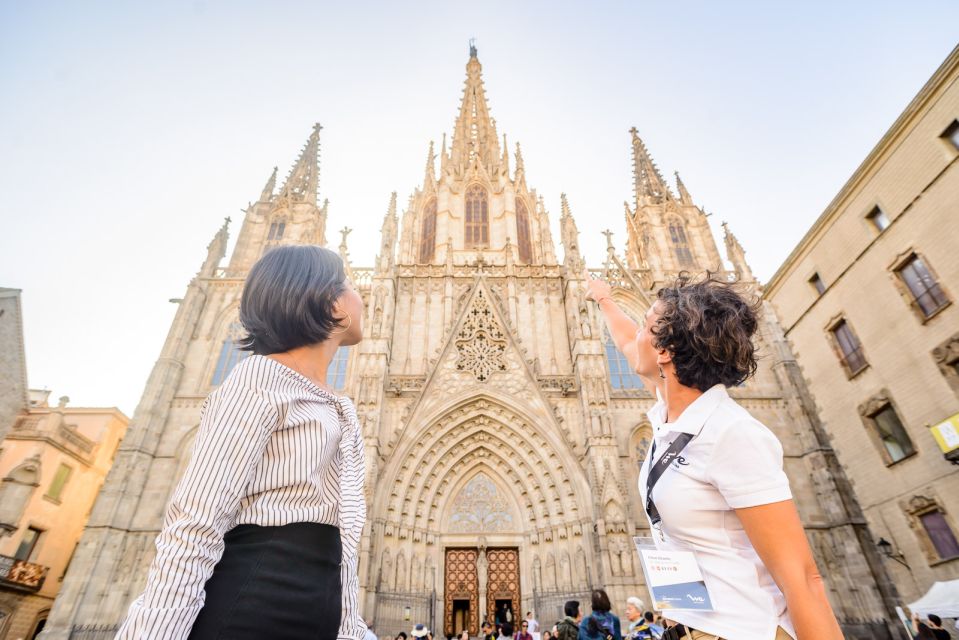
Your first major guided walk is along Passeig de Gràcia, Barcelona’s main show-street. This is where the city’s famous modernism hits you in the face—architecture you don’t have to decode. The tour specifically highlights Casa Batlló and La Pedrera, which is smart if you only have a few hours to spend on Gaudí.
Here’s why I think this stop is valuable: you get to understand Gaudí as a visual language, not just a name on a postcard. The guide’s explanations (and the way the buildings sit on the street) help you notice details faster than if you were wandering alone. You also get that “wait, that’s right here?” feeling because the landmarks are in a walkable corridor.
Expect a guided walk of about 1.5 hours on this stretch. That’s enough time to take photos, point out details, and still not feel rushed into a bus-window view. Also, because this is the start of the day, you’re less likely to feel the fatigue that can hit later around the Gothic streets.
Practical note: modern Barcelona is pretty pedestrian-friendly, but the day still involves walking. Comfortable shoes matter here. You’ll be looking up a lot, too—so don’t wear something you can’t walk in for hours.
Plaça de Catalunya to the Gothic Quarter: Fast Orientation in Old Barcelona
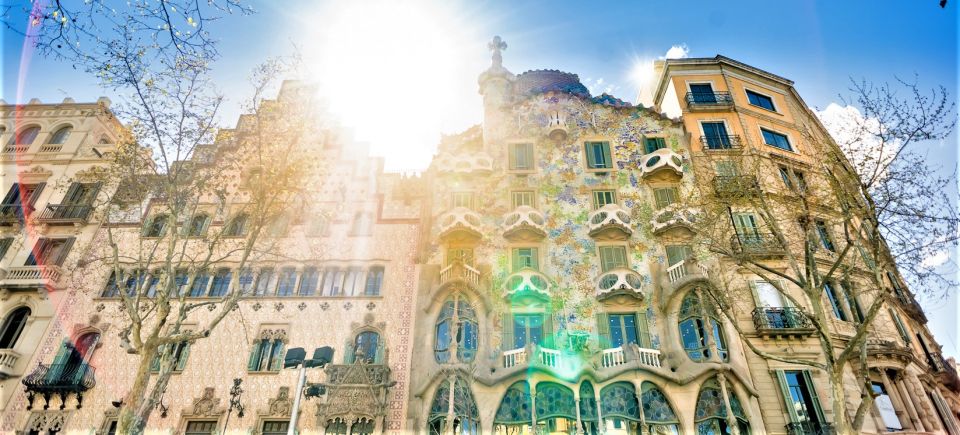
After Passeig de Gràcia, you move to Plaça de Catalunya, described as the city’s heart. This works well as a transition point: it’s a big, open square where you can reset your bearings before you shrink into the older neighborhoods.
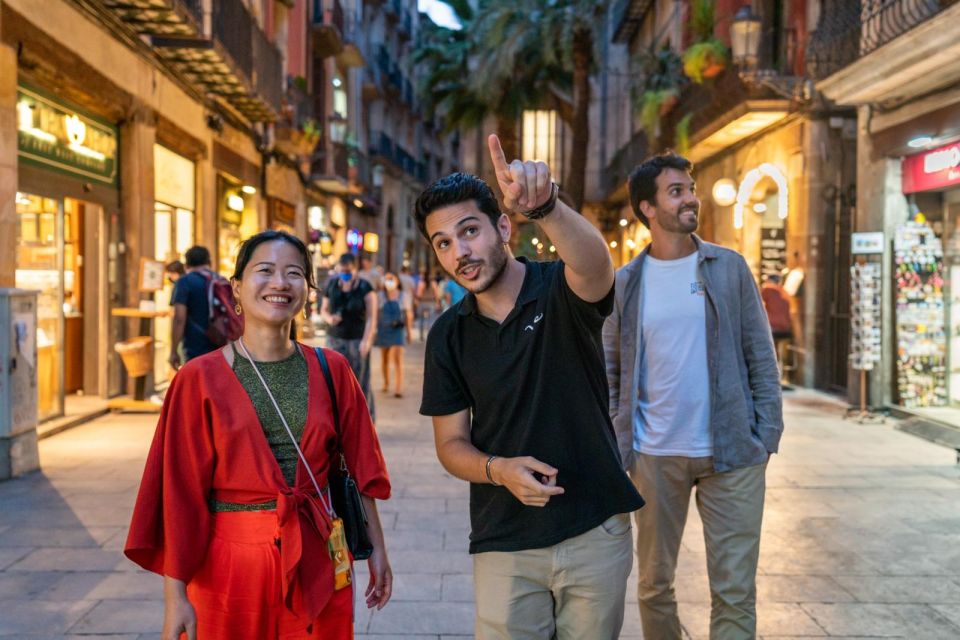
From there, the tour heads into the Born and Gothic Quarter area, where the streets turn narrow and old. This is one of the best parts of Barcelona for people who like atmosphere, not just monuments. The tour calls out key stops like Plaça Reial and Plaça Sant Jaume, and those squares are more than scenic pauses—they’re reference points that help you understand how the neighborhood functions.
Your guided time in this area is about 1.5 hours of walking, and the pacing is set by the guide. That’s the good news. The challenge is that these streets reward curiosity more than speed, so you may not get to drift as much as you’d like.
MUCH of what makes the Gothic Quarter work is subtle: it’s the way history shows up through street layouts and small spatial surprises. With a guide, you’ll likely connect the dots faster—why certain places matter, and what you’re looking at when buildings and arches blur together.
If you hate crowds, this is still a city-center neighborhood, so expect some movement of people. But since the group is limited to 10, you’re not dealing with an ocean of bodies moving as one.
MUHBA: The Roman Threads You Can Actually See
One stop that adds real value here is MUHBA, the Museum of Ancient Ruins of Barcelona. The tour includes tickets for this visit, so you’re not hunting down entry times while you’re already pressed for time.
Why MUHBA fits a day trip: it grounds you. After modernism and medieval streets, Roman Barcelona can feel like a different planet unless someone points it out. MUHBA helps you see remnants of the old city still enduring, which makes the Gothic Quarter’s layered story click into place.
The tour description emphasizes that you’ll encounter remnants of the Roman city. Even if you don’t consider yourself a “museum person,” this is one of those stops that can sharpen the rest of your sightseeing. It’s also an excellent change of pace because it shifts you from street walking into a focused visit.
Your day timing includes time for lunch on your own—about 100 minutes—and MUHBA sits inside the guided flow before that break. This matters: you don’t want to do all your deep sightseeing after you’ve eaten and slowed down. Here, MUHBA comes early enough to keep your brain switched on.
Arc de Triomf and Sagrada Familia Photos: How the Day Closes
After lunch, the tour continues upward toward Arc de Triomf, a striking 19th-century monument that once served as a gateway to the Universal Exposition. It’s a nice breather on the route because it gives you a big “set piece” view that isn’t just narrow-street scenery.
Then comes the main finale: Sagrada Familia.
You get a visit time of about 45 minutes for the monument. The tour notes skip the line through a separate entrance, which is hugely important on a landmark like this. Even if you’re not going inside, the exterior is where the spectacle starts. The guide shares stories and details as you look, which helps you notice the sculpture work and the building’s ongoing evolution as something more than “cool design.”
The important catch: Sagrada Familia tickets are not included. That means your tour experience is focused on the exterior visit and guide-led context. If you want to go inside, you’ll need to plan that separately. If you’re fine with exterior-only and photos, you’ll likely feel like you got your money’s worth anyway—because the outside is the show.
If you’re photographing, arrive with a simple plan: wide shot for the façades, then a closer composition for details. You won’t have endless time, so choosing a strategy beats wandering until your stop time runs out.




Price and Logistics: Is $406 Worth a 13-Hour Sprint?
The listed price is $406 per person for the day trip. At first glance, it feels high—until you map what’s included.
What you get:
- Round-trip high-speed train tickets Madrid ↔ Barcelona
- A walking tour covering major neighborhoods and highlights
- An expert fluent guide
- MUHBA tickets included
- Skip-the-line access with a separate entrance for Sagrada Familia
- A private transfer back to Sants near the end of the day
What you don’t get:
- Meals and drinks
- Sagrada Familia tickets
So you’re paying not just for transit, but for guided time and museum entry plus that line-management advantage. For many people, the math comes out well because you’d likely spend a chunk of time (and energy) figuring out transit and entry tickets on your own—especially with such limited hours.
Still, the logistics are not casual. This is self-check-in, meaning you go to the train station and board directly using tickets provided before the day. The tour specifically instructs you to be at the check-in point 20 minutes before departure, and the train departure is fixed. If you show up late, you can miss the tour day and there’s no refund.
That’s the trade-off behind the convenience: it demands punctuality. Make your station plan boring and reliable. Don’t treat this as a “we’ll figure it out” day.
Also note that the departure time is arranged on trains between 07:00 am and 08:00 am (so you’re an early bird, or at least you’re pretending). Duration is 13 hours, which is long enough that fatigue will creep in after the Gothic Quarter and lunch.
Who This Trip Is Best For (and Who Should Skip It)
This day trip is best if you want Barcelona’s key sights in one shot and you prefer structure over freeform wandering. You’ll likely enjoy it most if:
- you’re visiting Madrid and want one memorable day outside the city
- you care about Gaudí and want Passeig de Gràcia + Sagrada Familia, even if it’s exterior-focused
- you like the Gothic Quarter but don’t want to spend hours studying how it all connects
- you want a small group experience (limited to 10 participants) with a guide who can keep momentum
It might not fit if:
- you want a slow day with long museum time and frequent sit-down stops
- you’re planning to do a lot inside Sagrada Familia, since tickets aren’t included
- you rely on wheelchair access (the tour is not wheelchair accessible)
If you’re the type who packs a day planner and likes clear priorities, this will feel satisfying rather than exhausting.
Should You Book This Madrid-to-Barcelona Day Trip?
I’d book it if you’re short on time and you want a guided, high-efficiency way to see Barcelona’s biggest hits. The train + guided walking + MUHBA combination is exactly what makes a one-day trip work, and the Sagrada Familia exterior time is enough to feel like you truly arrived at the landmark.
I’d think twice if you hate strict schedules or you know you’ll struggle with early mornings and station timing. This tour doesn’t forgive delays, and the day is built on a fixed rhythm.
One more decision tip: if Sagrada Familia interior is a must for you, check how you’ll handle tickets before booking this. If exterior is your priority, the tour’s skip-the-line approach is a real advantage.
If you want one excellent day outside Madrid—packed, guided, and photo-friendly—this is a solid choice.
FAQ
How long is the tour?
The total duration is 13 hours.
What is included in the price?
The price includes round-trip high-speed train tickets between Madrid and Barcelona, a walking tour with an expert guide, MUHBA museum tickets, and a skip-the-line approach through a separate entrance for Sagrada Familia.
Where does the tour start and end in Madrid?
The meeting/start point is Estación de Atocha, and you return to Estación de Atocha at the end of the day.
Is lunch included?
No. Lunch and meals are not included, but the schedule includes free time for lunch on your own.
Are Sagrada Familia tickets included?
No. Sagrada Familia tickets are not included.
Do I need to purchase train tickets separately?
No. Round-trip high-speed train tickets are included, but you must use the tickets provided to you for self-check-in.
What group size should I expect?
It’s a small group, limited to 10 participants.
What languages are offered for the guide?
The live guide speaks Spanish and English.
Do I need to provide passport or ID details?
Yes. The full name of each passenger and passport/ID number is mandatory to confirm the booking.
Is it wheelchair accessible?
No. The tour is not wheelchair accessible.
Can I get a refund if I cancel?
The activity is non-refundable.