REVIEW · MADRID
From Madrid: Toledo, Escorial & Valley of Fallen Day Tour
Book on GetYourGuide →Operated by Julia Travel Gray Line Spain · Bookable on GetYourGuide
Monastery, basilica, cathedral. One packed Madrid day. I especially like the Royal Monastery of El Escorial, with its disciplined Renaissance symmetry and the famous royal spaces, and I’m drawn to the Valley of the Fallen—the 152-meter cross you can spot from far away, plus the underground basilica carved into the mountain. The main drawback: the schedule is tight, so Toledo doesn’t get much time and you’ll feel the day running in segments.
You start with a check-in in central Madrid and ride out by air-conditioned coach, then you’re back for the next portion of the itinerary. I also like that you get a radio guide system, which helps when you’re moving through big stone sites and windy viewpoints. This is not a sit-and-stare tour: expect walking, stairs, and cobbled streets.
One more thing to know upfront: this isn’t ideal if you have reduced mobility, since the monuments involve lots of steps and full accessibility can’t be guaranteed by design. Still, for the right pace, it’s a smart way to stack Madrid-area highlights into a single 10.5-hour outing.
In This Review
- Key takeaways before you go
- From Madrid to three icons in one long day
- El Escorial: the “power building” you’ll feel in your feet
- Valley of the Fallen: the 152-meter cross and the rules of the basilica
- Toledo’s layered streets: cathedral over an old mosque
- San Juan de los Reyes and what’s on the ticket
- Price and value: what you’re really paying for
- Comfort, group size, and tips that save time
- Who should book this Madrid to Toledo Escorial Valley tour
- Should you book it
- FAQ
- How long is the tour?
- Where do I meet in Madrid?
- Is transportation provided from Madrid?
- Is the tour guided in English?
- What admissions are included?
- Is food included?
- Is there walking involved?
- Can I record video during the tour?
Key takeaways before you go
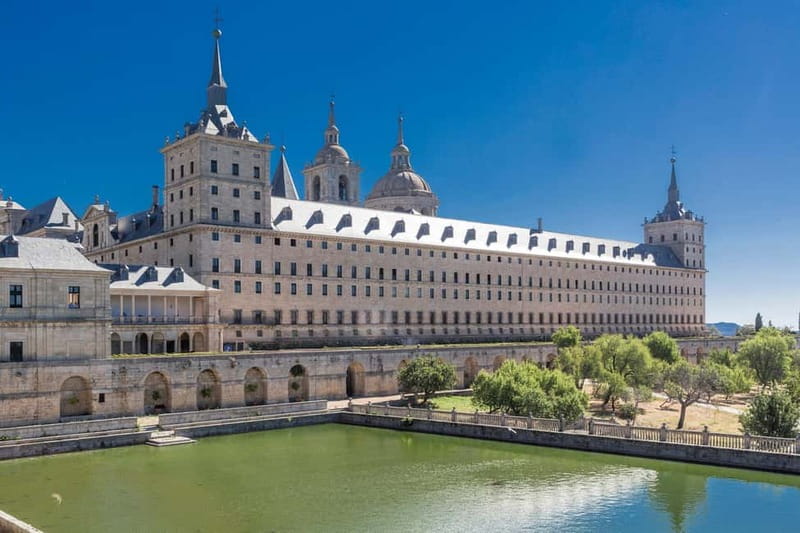
- El Escorial UNESCO plus a true guided walk: you’ll cover key areas like the palace spaces, Chapter House, Basilica, and the library.
- The Valley cross is your “orientation landmark”: it towers above the site, and the basilica experience is tied to local rules.
- Toledo is guided, but time is the tradeoff: you’ll hit major sights, then get limited free time to wander.
- Audio support helps you keep up: the radio guide system makes a difference in large monuments.
- What’s included can change by date: Santo Tomé and Santa María la Blanca are included until 15/03/2026; Cathedral of Toledo from 16/03/2026.
- Comfort matters on a long day: bring comfortable shoes; no video recording is allowed.
From Madrid to three icons in one long day
This is a 10.5-hour experience that aims to do three major stops without overnighting: El Escorial, the Valley of the Fallen, and historic Toledo. You check in at an office in central Madrid 15 minutes early, then you head out by coach. Because there’s a second check-in later for the Toledo portion, the day can feel like two tour blocks stitched together—efficient, but not leisurely.
The upside is you don’t waste your morning figuring out trains, parking, or transfers. The downside is you’ll spend energy on logistics and time management, not wandering at your own pace. If you want Toledo slowly—long café breaks and a deep museum day—this format won’t satisfy that craving.
Group size is capped at 30 travelers per guide, which is big enough to feel like a day trip crowd but small enough that the guide can still keep the flow moving. The tour also runs in both Spanish and English, so you’ll hear the story in a way designed for mixed-language groups.
You can also read our reviews of more tours and experiences in Madrid.



El Escorial: the “power building” you’ll feel in your feet
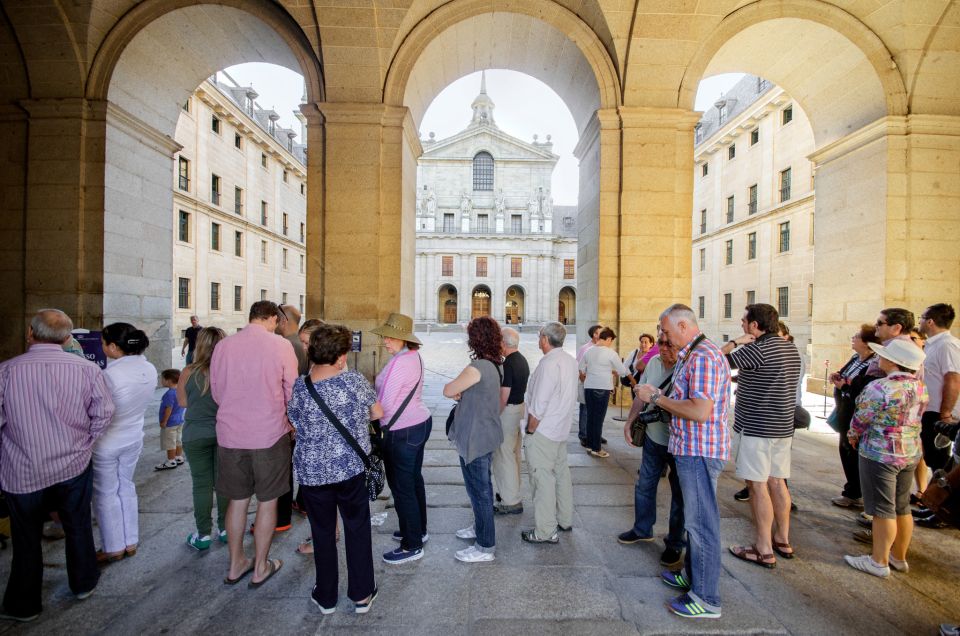
El Escorial is a UNESCO World Heritage Site, and it has that unmistakable vibe of a state project—grand, controlled, and built to last. You’ll get a guided walk through the Royal Monastery, including areas tied to the Habsburg presence such as the Habsburg’s Palace, the Chapter House, and the Basilica. Even if you’re not a “monuments person,” the layout helps you understand the political message the complex was designed to project.
One of the most useful things the guide does here is connect what you’re looking at to how long it took to build. You’ll hear the story behind the 21 years required to complete the site, which makes the place feel less like random stone and more like an intentional machine for memory and authority. I also like that the experience emphasizes Renaissance style and building symmetry—once you notice the balance, you start seeing it everywhere.
The library deserves special attention. It’s the kind of room that turns “I’ve seen a monastery” into “I get why this mattered.” If you want to photograph, pick spots carefully: you’ll be walking through active areas, and the tour rules prohibit video recording, so plan for still photos instead.
Practical note: this portion is guided, but you still need to manage your own pace. Wear shoes with real grip. Stone floors can be slick, and you’ll be moving through multiple rooms in sequence.
Valley of the Fallen: the 152-meter cross and the rules of the basilica
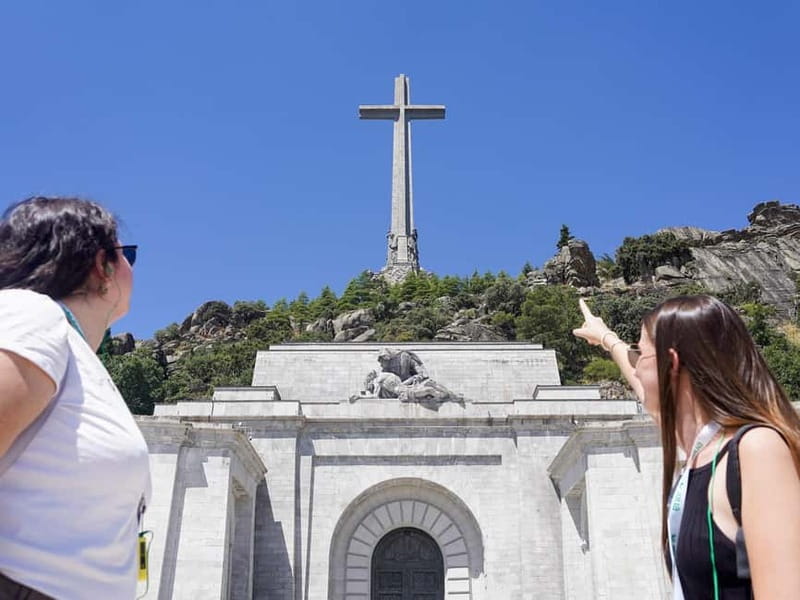
The Valley of the Fallen sits in the Sierra de Guadarrama, about 9 km from El Escorial. The location is part of the experience: the 152-meter cross tops the site and can be seen from miles away, so the landscape acts like a giant signpost. Approaching it, you get an instant sense of scale before you ever step inside.
Inside, you’re dealing with a complex that is both monumental and sensitive in tone. The core architectural moment is the underground basilica built into the mountain. You’ll be able to visit the basilica, but here’s a key detail that matters for your expectations: the guide won’t provide explanations inside the basilica. All information is given outside, and inside becomes more of an on-your-own visit.
That’s not necessarily bad. It can actually help you experience the space without constant narration in a quiet interior. But it does mean you should use the outside time well. If you’re the type who wants to understand every element before you enter, listen closely during the outside explanations, because the inside will be more silent and self-directed.
Also, the basilica sits under the mountain. That typically means cooler air and more stair/step movement. Plan for stairs and uneven walking surfaces in the overall complex.
Toledo’s layered streets: cathedral over an old mosque
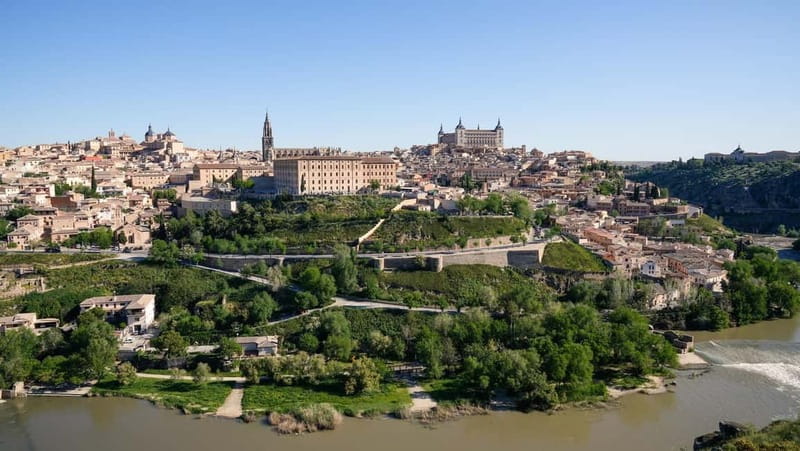
After the El Escorial and Valley block, you head back toward Madrid and then continue on to Toledo by coach. Toledo is a World Heritage City, and it has a rare advantage for first-timers: you can feel the overlap of cultures in the architecture. You’ll be told how centuries of Arab, Jewish, and Christian coexistence shaped what you see today.
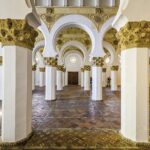
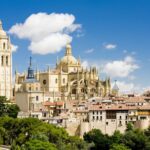
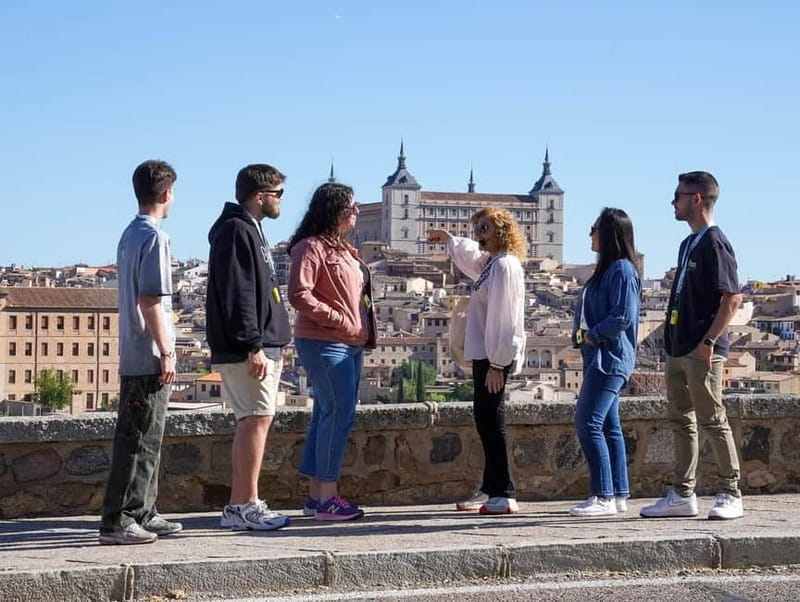
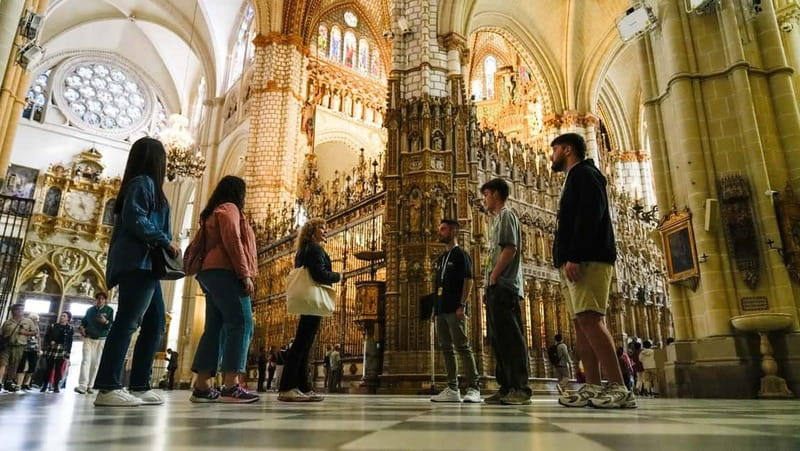
The guided portion is a walking tour of the historic city. You’ll stroll cobbled streets until you reach the Cathedral, and your guide will explain how it was built on the ruins of an ancient Arab mosque. The Cathedral of Toledo is Gothic, constructed during the 13th century, and it’s one of Spain’s most important Gothic cathedrals. I like how the building story connects directly to the city layers you can spot in the streets as you walk.
When you’re at the Cathedral, you’ll also get time to admire the façade details and the large bell tower before going inside. In the interior and sacristy, you’ll see works of art including fifteen paintings by El Greco. That El Greco detail is a big deal for art lovers, because it turns Toledo from a pretty old-city walk into a place with specific, identifiable masterpieces.
Then comes the tradeoff: you’ll have some free time to explore on your own before returning to Madrid. The tour is designed for efficiency, not for wandering until you stumble into three unexpected markets and a sunset lookout. If you want to return to Toledo another day, this tour works well as an appetizer.
San Juan de los Reyes and what’s on the ticket
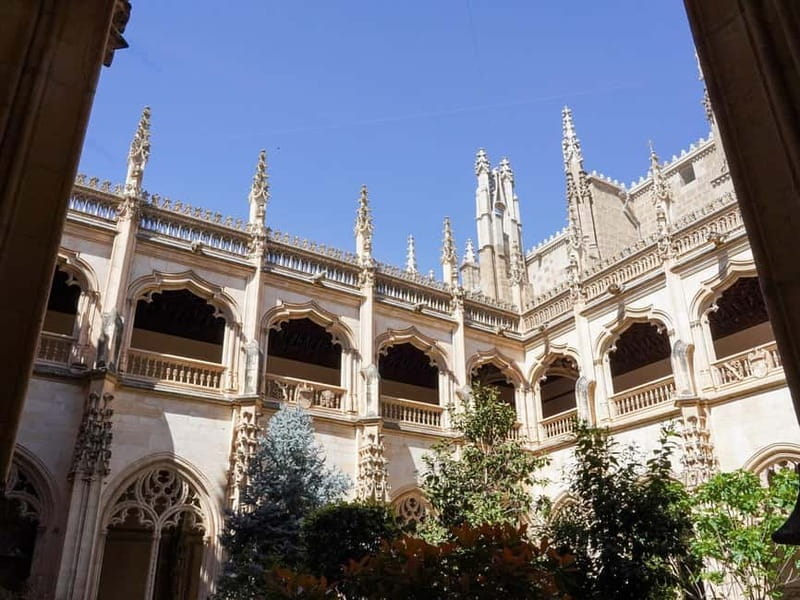
Toledo isn’t only about the Cathedral. Part of the guided story includes the Monastery of San Juan de los Reyes, described as a construction sponsored by the Catholic Monarchs and serving as a royal mausoleum. It’s an important stop conceptually, because it shows how royal power and faith merged in architecture across different periods.
But here’s the budgeting point: admission to the Monastery of San Juan de los Reyes is not included. So if your goal is to step inside for everything on the list, expect extra ticket costs for at least that portion.
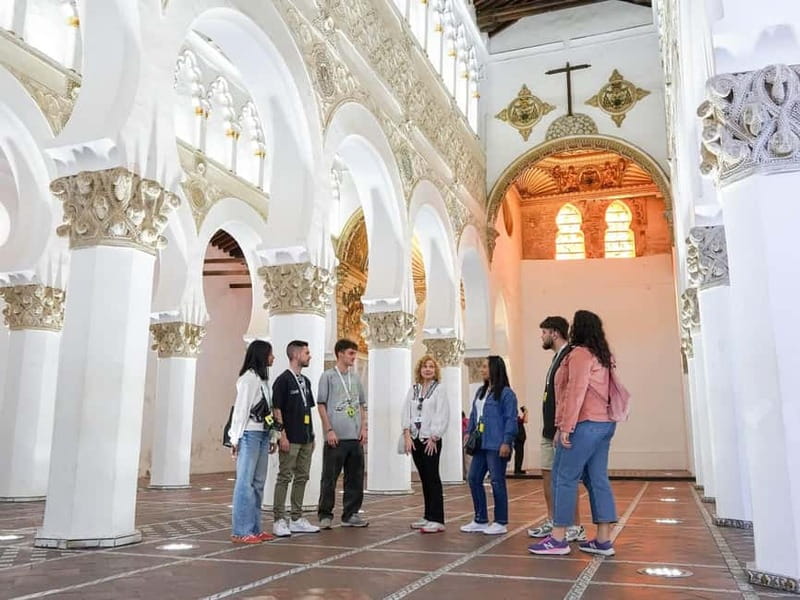
What’s included can also shift based on timing within your travel window. Until 15/03/2026, admission includes the Church of Santo Tomé and the Synagogue of Santa María la Blanca. From 16/03/2026 onward, admission includes the Cathedral of Toledo instead. If you’re booking, check your exact date and match it to what you want most—especially if you care about specific churches or synagogues.





Price and value: what you’re really paying for
At $126 per person for a 10.5-hour day, the value comes from three things: paid admissions, guided interpretation, and coach transportation. You get admission to the Royal Monastery of El Escorial and admission to the Valley of the Fallen and its Basilica. You also get a local official guide and a radio guide system, plus transportation on an air-conditioned coach.
What you don’t get is just as important. Food and drinks aren’t included (unless specified elsewhere in your confirmation), and there are additional admissions not covered—most notably the Monastery of San Juan de los Reyes. So the real cost of the day can creep up a bit if you plan to eat well and pay for all optional entries.
If your goal is to cover the big UNESCO hits without doing logistics math, this price often makes sense. If your goal is maximum time in Toledo, it might feel tight for the money, because the Toledo walking and sightseeing portion isn’t built to be a slow, full-day exploration.
Comfort, group size, and tips that save time
You’ll start with a check-in in central Madrid 15 minutes early, then you’ll be out on the coach. Plan to arrive on time. The meeting point is Calle de San Nicolás, 15 (next to Plaza de Ramales). From there, the day is mostly guided walking plus coach travel between sites.
The tour size limit is 30 travelers per guide. That’s a good balance: you’ll get group energy without feeling swallowed by chaos. The radio guide system is also a real help in stone corridors and larger open areas.
Wear comfortable shoes. This tour includes walking on arrival at the site, and you’ll encounter stairs and older architecture where full accessibility can’t be guaranteed. If you have reduced mobility or walking difficulties, you’ll want to think twice before booking.
One more rule that affects your enjoyment: video recording isn’t allowed. Still photos are fine in most cases, so charge your phone/camera and bring a backup battery if you like to document everything.
Who should book this Madrid to Toledo Escorial Valley tour
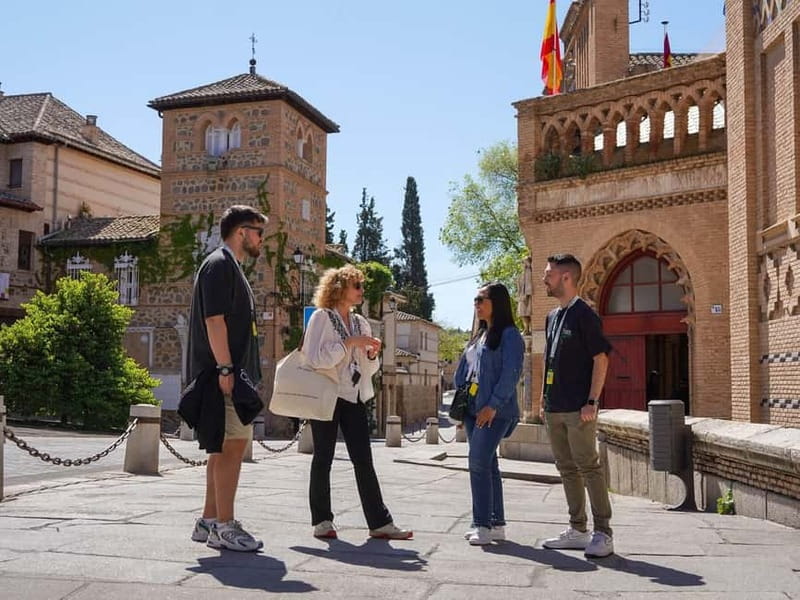
Book it if you want a practical, guided day that hits El Escorial, the Valley of the Fallen, and Toledo’s key sights without you having to plan intercity transport. It’s especially good for first-timers who want the “big three” and then want to decide later what deserves a return trip.
Skip it (or at least reconsider) if you:
- Want Toledo as a slow, meandering day with lots of museum time
- Need a low-stairs itinerary
- Don’t like tight timing and repeated check-in moments
If you’re traveling with mixed interests—someone wants art, someone wants architecture, someone just wants a stunning city walk—this format can work because each stop has a different payoff.
Should you book it
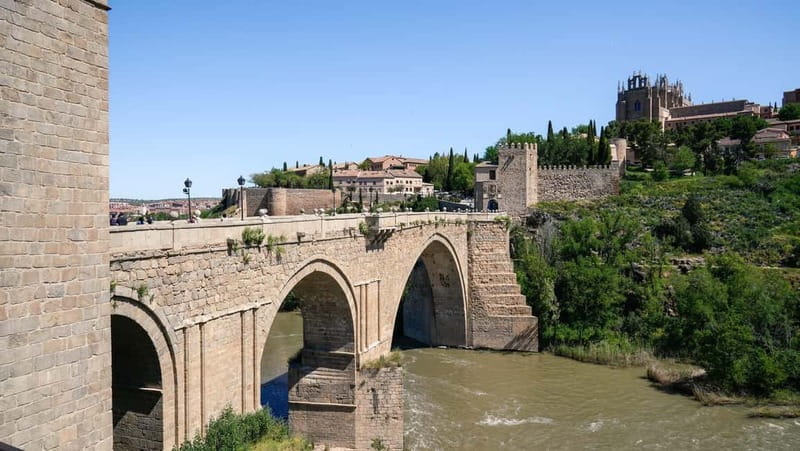
Yes, if you’re craving a guided hit list of UNESCO sites and want the comfort of coach transport from Madrid. The El Escorial guided walk plus the Valley’s scale (cross you can see for miles, basilica built into the mountain) make the day feel big in a good way. And Toledo’s Cathedral story, built on an older mosque, with El Greco paintings in the mix, is exactly the kind of “why it matters” sightseeing that a guide helps with.
I’d hesitate if you’re hoping for lots of Toledo time. This trip treats Toledo as a highlight stop, not a deep dive. If you’re the type who likes to linger, eat slowly, and chase side streets for hours, you’ll likely want a separate Toledo day later.
FAQ
How long is the tour?
The tour lasts 10.5 hours, and that duration includes the round trip travel.
Where do I meet in Madrid?
You meet at Calle de San Nicolás, 15, 28013 Madrid, next to Plaza de Ramales.
Is transportation provided from Madrid?
Yes. The tour includes transportation on an air-conditioned coach.
Is the tour guided in English?
Yes. The tour operates in English and Spanish, with a local official guide.
What admissions are included?
Admission is included to the Royal Monastery of El Escorial and to the Valley of the Fallen and its Basilica. Depending on your date, admission also includes either the Church of Santo Tomé and the Synagogue of Santa María la Blanca (until 15/03/2026) or the Cathedral of Toledo (from 16/03/2026).
Is food included?
Food and drinks are not included, except for those specified in the tour details.
Is there walking involved?
Yes. It includes a walking tour in Toledo and walking at the monuments, including stairs. Comfortable shoes are recommended.
Can I record video during the tour?
No. Video recording is not allowed.