Barcelona runs on two wheels.
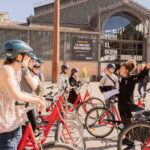
This relaxed, small-group ride is a fast way to see major sights and calmer back streets without feeling wiped out. I like the low-stress pace (short hops between stops, little to no hill work) and I like the built-in photo-and-questions breaks so you’re not just gliding past landmarks. One thing to plan for: several big attractions are outside-view only on this tour, and paid entries like La Sagrada Familia or the cathedral are not included.
If you’re trying to get your bearings in Barcelona on day one, this tour does the practical work for you. You pedal a route designed to avoid the worst of traffic, staying mostly on bike paths, through parks, and along the harbor and beach areas. The only drawback for some people: with stops running about 5–20 minutes each, it’s a great overview, not a slow, in-depth visit.
In This Review
- Key Things I’d Bet You’ll Appreciate
- Why This 3-Hour Bike Tour Works So Well in Barcelona
- From Carrer dels Escudellers to the Shop: Biking Set-Up Without the Stress
- The “Unlimited Biking” Start: How the Tour Gets You Comfortable Fast
- Palau de la Música Catalana: Modernist Beauty Up Close
- Port Vell Barcelona: Harbor Life Without the Long Detour
- Barcelona Cathedral: Gothic Atmosphere, Outside Views, Quick Photos
- Arc de Triomf: A Photo Moment That Also Explains Barcelona’s “Why”
- Basilica de Santa Maria del Mar: Catalan Gothic With a “Wait, This Is Local” Feel
- Parc de la Ciutadella: A Park Break That Makes the Whole Route Feel Balanced
- El Born: Off-Beat Streets, Shops, and Tapas Energy
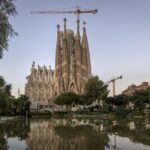
- La Sagrada Familia: Seeing It From the Bike (Not Going Inside)
- Plaça del Rei: A Medieval Square Stop That Anchors the Gothic Quarter
- Plaza Monumental de Barcelona (La Monumental): A Quick Stop With a Twist
- Plaça de les Cascades and a Beach Pass: The Route’s Easy Finale
- Plaça de Sant Jaume: The Civic Heart at the End
- Price and Value: Is $42.33 Worth It?
- Who Should Book This Bike Tour (and Who Should Skip It)
- Should You Book This Barcelona Bike Tour?
- FAQ
- How long is the Barcelona bike tour?
- How much does the tour cost?
- What language is the tour offered in?
- How big is the group?
- Where does the tour start, and where does it end?
- Is this bike tour strenuous?
- Are bikes and helmets included?
- Are admission tickets included for major attractions like La Sagrada Familia?
- Does the tour run in bad weather?
- What if I need to cancel?
Key Things I’d Bet You’ll Appreciate
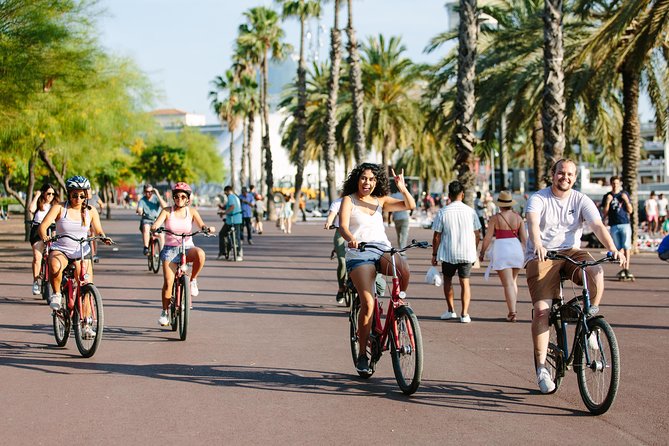
- Small group size (max 9): more personal attention and less waiting around.
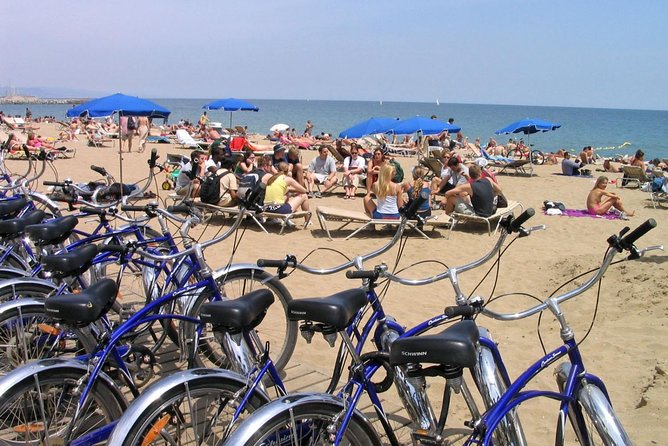
- Easy bikes included: 3 speeds, wide bars, big tires, comfy seats, and bells.
- Stops every few hundred yards: frequent photo time and short, focused stories.
- A modernist-to-gothic mix: Palau de la Música, Gothic squares, and La Sagrada Familia views.
- Rain-ready approach: rain ponchos provided if weather turns.
Why This 3-Hour Bike Tour Works So Well in Barcelona
Barcelona is huge on walking, but your time is limited. This bike loop solves that by stacking a lot of “I came to see that” sights into one morning or afternoon, while keeping the ride manageable. The tour is designed around a relaxed tempo: short distances, regular pauses, and route planning that steers you away from the most chaotic road sections.
The biggest value is the format. In one stretch, you’re guided to downtown landmarks like the Palau de la Música Catalana and the Arc de Triomf, then you’re shifted into the Gothic Quarter rhythm with stops for the Barcelona Cathedral and medieval squares. You also get into neighborhoods like El Born, plus a harbor-and-park sequence that helps Barcelona feel like a whole city, not just a postcard set.
And because the group is kept to 9 guests or less, you’re less likely to lose the flow. People mention guides who kept everything moving and stayed organized when the group needed help finding each other again—exactly the kind of small-group benefit you want when you’re navigating busy streets.
You can also read our reviews of more cycling tours in Barcelona
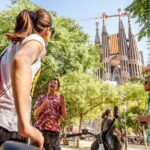
From Carrer dels Escudellers to the Shop: Biking Set-Up Without the Stress
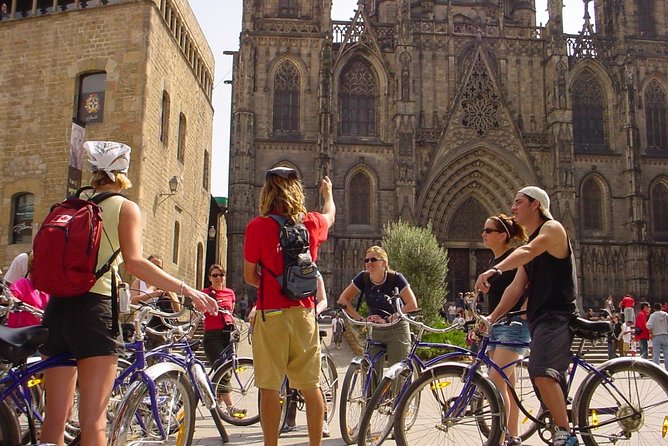
You meet at Carrer dels Escudellers, 48 (Ciutat Vella), and the activity runs back to the same spot. The day starts with a handshake-and-roll moment: you meet your guide and group at the central meeting point, then head to the bike shop to collect your bikes.
A few details matter here:
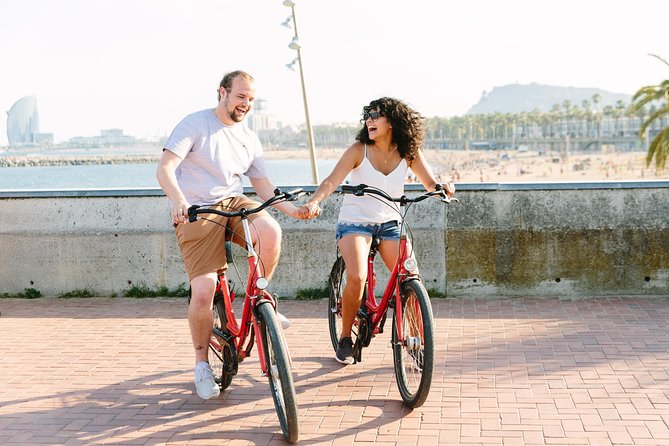
- The bikes are described as easy to ride, with 3 speeds and wide handlebars for stability.
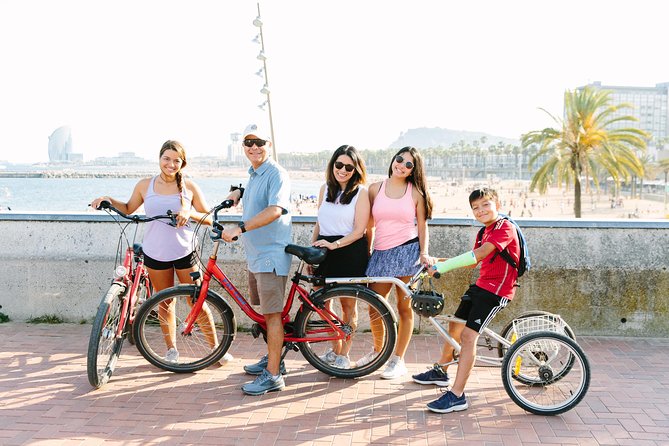
- You can request helmets and child seats, which makes a big difference for families.
- The route is planned to avoid busy streets and to use mostly bike paths, parks, and beach-adjacent areas.
If you’re nervous about riding in a city, this is the right kind of tour to choose. People have specifically said they felt at ease because the guide stayed calm, kept riders together, and gave clear instructions. One practical tip from the experience: follow the guide’s cues closely. In a place with lots of bicycles, pedestrians, and one-way streets, it’s not the time to freestyle.
The “Unlimited Biking” Start: How the Tour Gets You Comfortable Fast
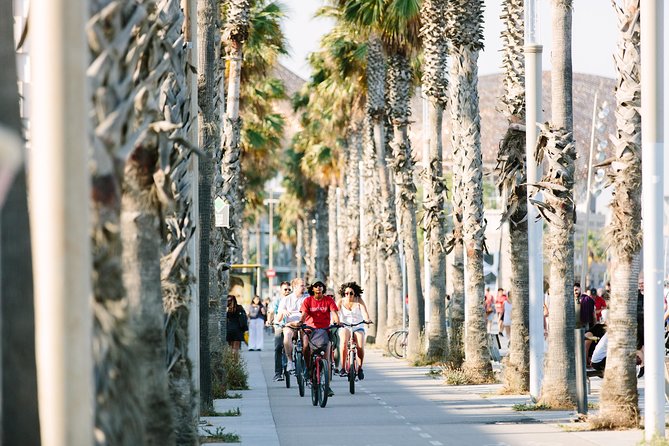
The first stop is basically your confidence builder. You get time for Unlimited Biking, with guidance right from the start so you’re not wrestling with your gears or your balance while also trying to read signs and street layouts.
What makes this phase useful:
- The ride is not strenuous, and it’s set up as relaxed.
- There are frequent breaks to look, listen, and take photos.
- You get a quick burst of “here’s how Barcelona works” context before the landmarks start flying.
In a city like Barcelona, that matters. Once you understand the pattern—what areas feel older, where the major sights cluster, and how the parks and waterfront connect—you’ll be able to plan your next day visits much better.
Palau de la Música Catalana: Modernist Beauty Up Close
Your next major architecture hit is the Palau de la Música Catalana. This stop is brief (around 10 minutes), but it’s a smart one because it lands you in Barcelona’s modernist lane early. It’s described as a downtown icon of modernist architecture and one of the city’s top recommended attractions.
Even without a long visit inside, you get something important: the feeling of how Barcelona mixes artistry and identity. The guide’s stories are the real ticket here—modernism can look like fancy buildings if you don’t have a frame for what you’re seeing.
If you’re the type who likes to know what you’re looking at, this is a great spot to ask questions. The tour is built around being able to stop, photograph, and get answers at each location.
Port Vell Barcelona: Harbor Life Without the Long Detour
Next comes Port Vell, Barcelona’s lively harbor area with yachts and cruise ships. It also has entertainment and family-friendly pieces like a mall, restaurants, a movie theater, and an aquarium.
This stop works as a “reset” between architecture and religious history. You get water views, you can regroup with the group, and you’re not mentally stuck inside a museum timeline. It also sets you up for the next cluster of older Barcelona.
A practical note: expect this to be busy, especially if your tour overlaps with cruise schedules. The upside is that it’s a clear, recognizable landmark zone, so you’re easy to orient from.
You can also read our reviews of more guided tours in Barcelona
Barcelona Cathedral: Gothic Atmosphere, Outside Views, Quick Photos
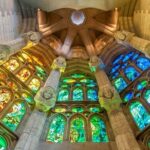
The Barcelona Cathedral stop is about 10 minutes, and admission is not included. You’ll see a Gothic cathedral with stained glass windows dating back about 500 years.
Here’s the key trade-off: this tour is excellent for seeing and learning, but it doesn’t act like a ticketed entry tour. Plan to enjoy the view and the exterior atmosphere, then decide later if you want to go inside on your own.
That’s not a dealbreaker—it can actually be a smart approach. You’ll know what part of the cathedral you care about most by the time you’re deciding on paid entry.
Arc de Triomf: A Photo Moment That Also Explains Barcelona’s “Why”
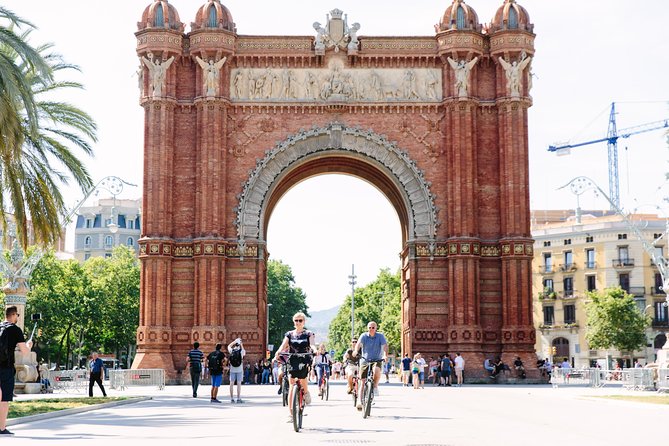
The Arc de Triomf (often called Arc de Triunf in Spanish contexts) is next. It’s free to view on this tour, and the 10-minute timing is enough to spot the shape, take a few photos, and hear why it exists.
This arch was built by architect Josep Vilaseca i Casanovas as the main access gate for the 1888 Barcelona World Fair. That detail turns a pretty structure into a story about how Barcelona presented itself to the world—and how the city built grand entrances to mark big moments.
If you like architecture explanations that connect to history (without turning into a lecture), this stop does that well.
Basilica de Santa Maria del Mar: Catalan Gothic With a “Wait, This Is Local” Feel
The tour then pauses at Basilica de Santa Maria del Mar, described as emblematic of Catalan Gothic. It’s a highlight for people who love medieval design, and it’s noted for purity and unity of style that’s unusual in large medieval buildings.
Admission isn’t included on this stop, so again: you’re getting the outside impression and the story, not a full inside visit.
One reason I like this stop on an overview bike tour: it’s the kind of building that rewards your attention. When you’re moving through the Gothic areas, it helps you separate “big famous monument” from “important local masterpiece.”
Parc de la Ciutadella: A Park Break That Makes the Whole Route Feel Balanced
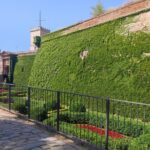
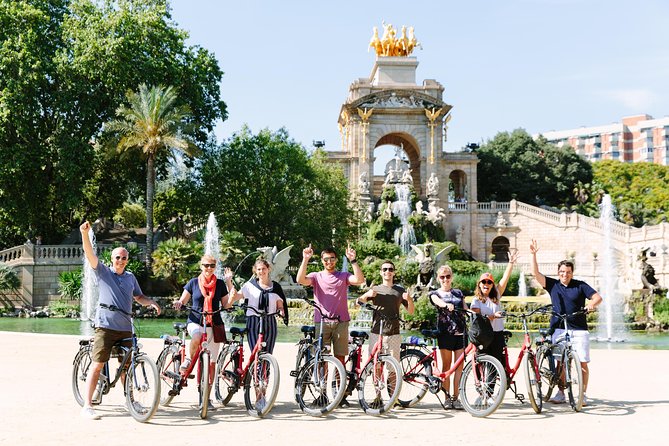
After the cathedral-and-church segment, you get a breather at Parc de la Ciutadella (about 10 minutes). This park is large—about 44 acres (18 hectares)—and it includes features like Castell dels Tres Dragons, the Umbracle (plant house), and the Hivernacle (glass house).
Not every park stop is worth it on a short tour. This one is. Parks break the visual intensity and let you rest your legs before you head toward neighborhoods with more street energy.
Also, parks are a nice reminder that Barcelona isn’t just stone and crowds. It’s built for moving outdoors—on foot, by bike, and along waterfront edges.
El Born: Off-Beat Streets, Shops, and Tapas Energy
Now you shift into El Born, an area known for historic attractions, art galleries, funky shops, bars, and tapas. The tour makes two quick Born stops (one described as a neighborhood pause and another at a main thoroughfare and plaza).
These are free stops and they’re designed for atmosphere: looking at streets, noticing the textures of older buildings, and getting a feel for where you’d actually want to wander later. If you want to plan a tapas crawl after the tour, this is where you’ll get your instinct.
The ride through El Born also shows the tour’s route strategy. Reviews describe guides choosing quieter streets and avoiding the worst traffic, so you’re experiencing the neighborhood instead of just cutting across it.
La Sagrada Familia: Seeing It From the Bike (Not Going Inside)
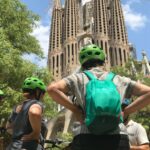
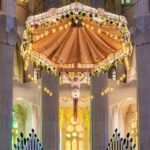
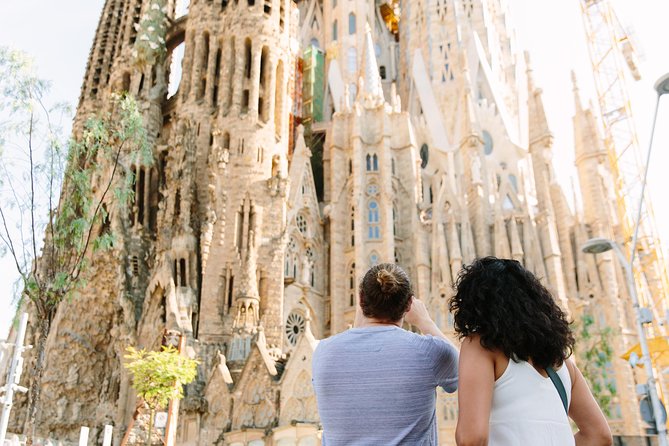
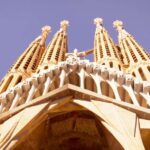
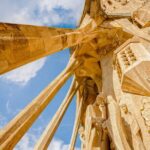
The big moment comes with the stop for La Sagrada Familia. It’s the kind of sight you expect to be fully magical, and the tour gives you the chance to look up close and take photos.
One important caution: admission is not included here. So you get the view and the context, not a ticketed entry.
If you’re traveling in hot season, this matters more than usual. Some people decide not to go inside due to heat or timing, and your best move is to decide after you’ve seen the exterior and heard the basic story. Then you can book a separate visit for the inside details if you want them.
Also, because the stop is about 20 minutes, it’s long enough to do the “first wow,” but not long enough for a deep interior experience.
Plaça del Rei: A Medieval Square Stop That Anchors the Gothic Quarter
Next is Plaça del Rei, a 14th-century medieval public square in the Barri Gòtic. This is a free stop and clocks in at about 10 minutes.
This is the kind of location that helps you understand Barcelona’s layers. You’re not just looking at buildings—you’re standing in a space that tells you how the city organized power and public life long before modern tourism arrived.
If you like being able to map the city mentally, these medieval squares are gold. They give you “anchors” you can return to later.
Plaza Monumental de Barcelona (La Monumental): A Quick Stop With a Twist
The tour pauses at Plaza de Toros Monumental de Barcelona, often called La Monumental. This is the last bullfighting arena in commercial operation in Catalonia, and admission is not included.
This is an interesting contrast point in an otherwise church- and architecture-heavy route. It reminds you Barcelona isn’t just Gothic and Gaudí—there are also other local traditions and eras that shaped what people did for fun and spectacle.
The stop is short (about 5 minutes), but it’s enough to register the building and hear the context.
Plaça de les Cascades and a Beach Pass: The Route’s Easy Finale
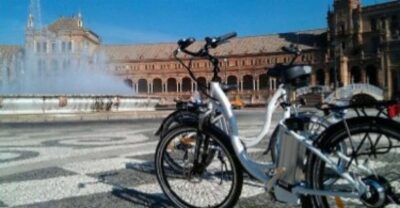
You then head to Plaça de les Cascades (about 10 minutes, free to view) followed by a segment where the route cruises past the beach. The exact timing at the beach pass isn’t listed, but it’s part of the flow before you end in the Old City square zone again.
These are smart pacing choices. After heavy architecture stops, a water-and-sky finish keeps you from feeling like you spent the whole tour staring up at stone.
Also, if the day is sunny, this is when you’ll be happiest you packed sun protection. If it’s rainy, the tour provides rain ponchos, and staying cheerful matters more than having perfect conditions.
Plaça de Sant Jaume: The Civic Heart at the End
The last themed stop is Plaça de Sant Jaume, the administrative heart of both the city and surrounding Catalonia. It’s a free stop and around 10 minutes.
This is a fitting ending because you close the loop on what you’ve been learning: Barcelona isn’t only a collection of monuments. It’s a city with civic identity, local governance, and a sense of Catalan pride that shows up in public spaces.
If you want to turn the tour into a full day plan, this ending helps. From here, it’s easier to decide where you’ll go next—whether that’s more Gothic streets, museums, or a meal in El Born.
Price and Value: Is $42.33 Worth It?
At $42.33 per person for about 3 hours, you’re paying for:
- Guided route planning (including bike-path routing and fewer traffic headaches)
- Bike rental and safety gear on request
- Insurance included
- Access to a compact, high-sight-density itinerary
What you’re not paying for is paid entry into major attractions. Stops like Barcelona Cathedral and La Sagrada Familia list admission as not included, and some people have noted the tour is outside-view focused.
So here’s the practical way to judge value: if you want a guided overview that helps you choose what to visit deeply later, this price is often fair. If you want the tour to be a ticket-based “walk in and out” experience at the biggest sites, then you’ll need to budget separately for those entries.
Who Should Book This Bike Tour (and Who Should Skip It)
This is a strong fit for:
- First-timers who want an organized Barcelona snapshot without exhausting themselves
- Families, because the ride is described as not strenuous and bikes can include child seats and helmets on request
- People who like asking questions and getting immediate context as they stand at real landmarks
- Anyone who wants short neighborhood moments in places like El Born, not just a sightseeing checklist
Skip it or plan differently if:
- You want paid sites included (you should expect outside views at places marked as not included)
- You don’t want any riding time in a city, even if the route avoids the worst traffic
- You prefer longer museum-style visits over quick photo-and-story stops
One nice extra: some guides provide a QR code with additional tips at the end of the tour, which helps you turn the ride into a smarter follow-up day.
Should You Book This Barcelona Bike Tour?
Yes—if you want a time-efficient, easy-bike overview that mixes major Barcelona landmarks with neighborhood texture. For the money, the biggest win is the guided routing and the frequent stop structure, which means you come away oriented and ready to choose your next bookings.
But don’t treat it as your one and only Sagrada stop. Plan on the tour for views and context, then decide separately whether you’ll book inside entry for La Sagrada Familia and other sites with admission not included.
FAQ
How long is the Barcelona bike tour?
It runs for about 3 hours.
How much does the tour cost?
The price is listed at $42.33 per person.
What language is the tour offered in?
The tour is offered in English.
How big is the group?
Group sizes are guaranteed to 9 guests or less, with a maximum of 9 travelers.
Where does the tour start, and where does it end?
It starts at Carrer dels Escudellers, 48, Ciutat Vella, 08002 Barcelona, Spain, and ends back at the meeting point.
Is this bike tour strenuous?
No. It’s described as not strenuous, with a relaxed pace and short distances between stops, with no hills to conquer.
Are bikes and helmets included?
Bike rental is included. Helmets and child seats are available on request.
Are admission tickets included for major attractions like La Sagrada Familia?
Admission is not included for some stops, including La Sagrada Familia and Barcelona Cathedral. Other stops on the route are listed as free to view.
Does the tour run in bad weather?
The tour goes out rain or shine and rain ponchos are provided. The operator also notes the experience requires good weather; if it’s canceled due to poor weather, you’ll be offered a different date or a full refund.
What if I need to cancel?
You can cancel for a full refund up to 24 hours in advance of the experience start time. If you cancel less than 24 hours before, the amount paid won’t be refunded.