Three hours, and Barcelona already feels learnable. This bike tour is a fast way to see top sights and smart side streets without wrestling with maps, thanks to a guide who does the routing for you. You also get bike rental right in the price, plus an included helmet option so you can travel light.
Two things I really like about it: the guided pacing (regular breaks for mixed fitness levels) and the chance to hit major landmarks in one go, from the medieval core to the seaside. The one thing to keep in mind is that you’re cycling in an urban environment, so you’ll want to stay alert around traffic and pedestrians and listen closely to instructions.
In This Review
- Key things worth knowing before you ride
- Why a 3-hour bike tour makes sense in Barcelona
- Meeting at Plaça Reial: palms, people, and an easy start
- Plaça de Sant Jaume and the Gothic Quarter: medieval streets without the stress
- Placa del Rei, the Cathedral, and Catalan Gothic clues you can actually use
- A quick reality check about entry tickets
- Arc de Triomf and Parc de la Ciutadella: when Barcelona lets you breathe
- Sagrada Família timing: the unfinished masterpiece moment
- Port Olímpic and the Mediterranean stretch: Barcelona after 1992
- Basilica de Santa Maria del Mar: the fishermen’s Gothic church
- The ride feel: e-bikes, hills, helmets, and keeping everyone happy
- Guides and pacing: why small groups help
- Who this tour is best for (and who should choose something else)
- Price and value: is $32.89 a good deal?
- Should you book this Barcelona bike or e-bike tour?
- FAQ
- How long is the Barcelona bike or e-bike tour?
- What is the price per person?
- What’s included in the tour price?
- Are entry tickets included for the sights?
- Is an e-bike available?
- Where do I meet for the tour?
- Is the tour offered in English?
- How big is the group?
- What’s the cancellation policy?
Key things worth knowing before you ride
- Bike + helmet rental included so you don’t waste time shopping or packing gear.
- No map required—the guide handles navigation and turns big sights into clear stories.
- Designed for mixed fitness levels with breaks that keep the group comfortable.
- Big “bang for the minutes” route that threads through Gothic Quarter, Modernisme, and the waterfront.
- E-bike upgrade available if you want extra help on any hills or if you just prefer an easier ride.
- Small groups (max 15) which usually means smoother logistics and better attention from the guide.
Why a 3-hour bike tour makes sense in Barcelona
Barcelona can wear you out fast. The city is best explored in a mix: walk where the streets are tight, then switch to wheels where you need speed. That’s exactly the sweet spot here—three hours is long enough to feel like you covered ground, but short enough that you’re not stuck arriving at dinner drenched in sweat.
You also get a guide-led flow, which is the real value. On a bike, you can cover plenty of distance, but you’ll still want context. This tour does that by stopping often, letting you look closely, and explaining what you’re seeing at each turn—things like the layers of old Barcelona in the Gothic Quarter, and the “later” Barcelona created for exhibitions and the Olympics.
You can also read our reviews of more cycling tours in Barcelona
Meeting at Plaça Reial: palms, people, and an easy start
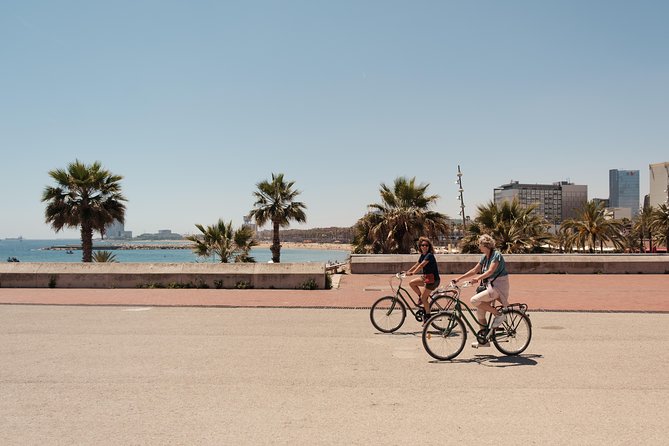
The tour begins at Plaça Reial, a palm-lined square in Ciutat Vella that’s lively in a very Barcelona way—public, photogenic, and not fussy. It’s a great meeting point because it feels like the city’s social living room, so everyone can regroup without confusion.
What I like about starting here is that you get a visual reset before the ride. You’re not thrown instantly into tight alleys. You have a brief moment to gather your bearings (bike fit, helmet, and whatever questions you have) and then roll out with the group.
Plaça de Sant Jaume and the Gothic Quarter: medieval streets without the stress
From the center of civic power at Plaça de Sant Jaume (in front of the Town Hall area), the route slips into the Gothic Quarter—one of the best places in Barcelona to see how the city evolved over centuries.
Cycling through this area is the point. Walking can be slow here because the streets twist and narrow, and you can miss small squares and building remnants that don’t look like much from the curb. On this bike tour, you get short stops and enough time to notice details such as:
- the feel of ancient Roman neighborhood streets beneath medieval layouts
- hidden squares tucked between bigger streets
- remnants of the original city walls you might not spot on your own
The practical advantage is huge. If you’re here for only a few days, this is one of the fastest ways to understand the layout of the old city.
Placa del Rei, the Cathedral, and Catalan Gothic clues you can actually use
You’ll then move toward Plaça del Rei, a historic square linked in local tradition to the arrival of Christopher Columbus when he returned from the Americas. Even when you don’t know the exact story, this kind of stop helps you connect names to places—so Barcelona stops being a list and starts becoming a map in your head.
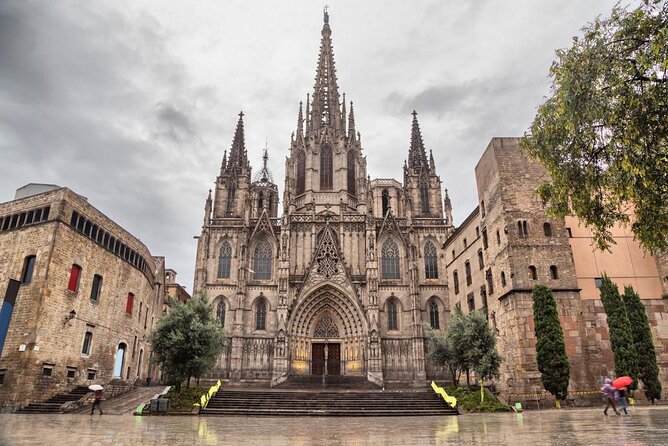
Next comes Catedral de Barcelona, set right in the Gothic Quarter. This is where you’ll get a clearer sense of why Barcelona’s medieval architecture feels different from other parts of Europe. The cathedral is described as a blend of Gothic and Neo-Gothic architecture, which matters because it shows change over time, not just one style frozen in place.
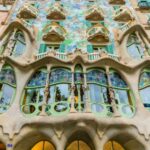
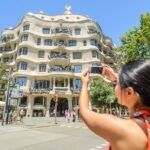
From there, the route shifts to Modernisme power at the Palace of Catalan Music. You’ll be looking at a standout example of Catalan Modernisme, and the big takeaway is simple: Barcelona’s architectural creativity didn’t start and end with Gaudí. That’s useful context, especially if you plan to visit other famous buildings later and want to compare styles.
A quick reality check about entry tickets
For several major stops—like the cathedral, the Catalan Music Palace, and the big basilicas—entry tickets are not included. That doesn’t make the stops less worthwhile. It just means you’ll get the value of seeing the exteriors and learning what to look for, and then you can decide separately if you want to pay for interior access.
A few more Barcelona tours and experiences worth a look



Arc de Triomf and Parc de la Ciutadella: when Barcelona lets you breathe
Not everything has to be stone and centuries. After the older streets, you’ll reach Arc de Triomf, a triumphal arch with a different message than you might expect. Instead of celebrating victory, it marks progress tied to Barcelona’s 1888 Universal Exhibition. It’s the kind of detail that makes the city feel smarter—like history here is also about ideas.
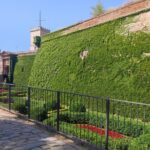
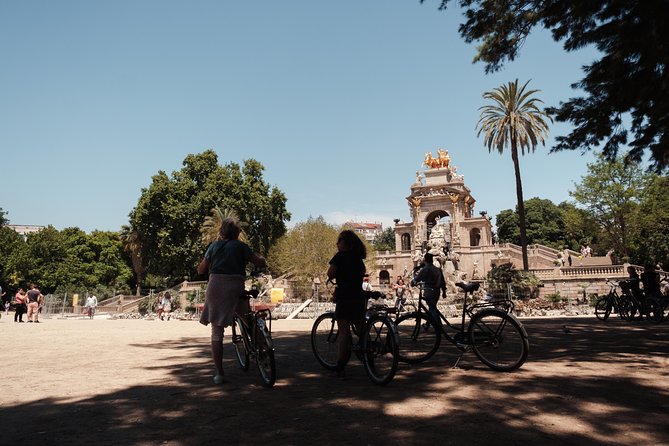
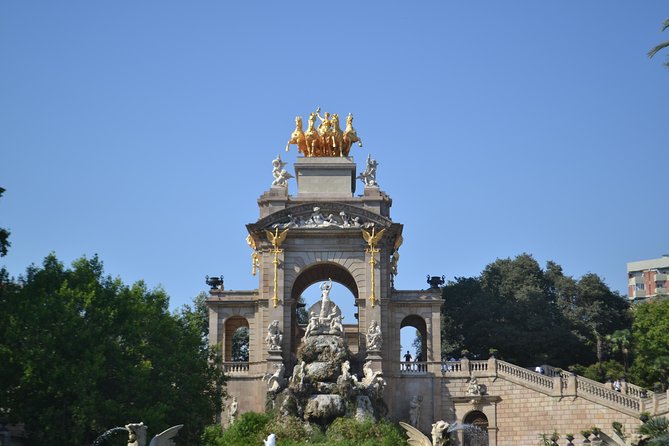
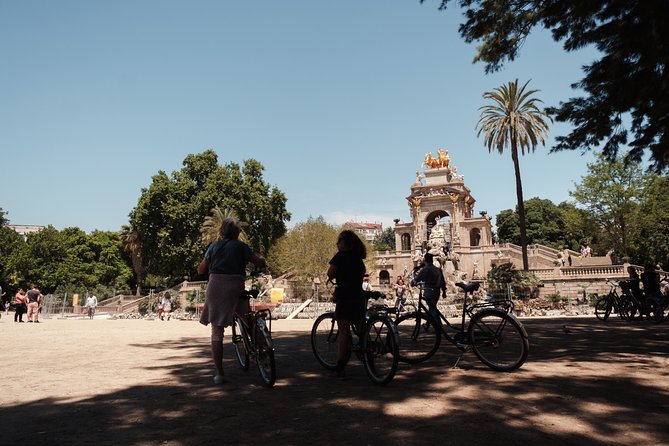
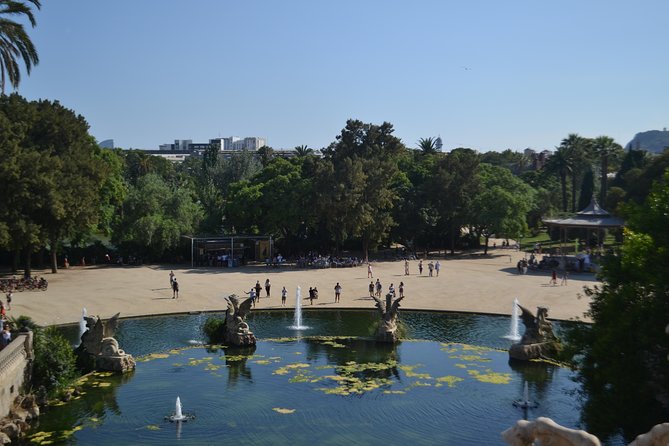
From there, you’ll ride into Parc de la Ciutadella, created for that 1888 World’s Fair and later transformed into a public park. This section is more than a break. It’s a reset for your body and eyes. You get tree-lined paths, a boating lake area, and the Cascada Monumental fountain—plus space to take photos and grab a refreshing drink.
This is also where the tour’s pacing shows. The route gives you enough time to stop, stretch, and move from “sight overload” into “I can actually remember what I saw.”
Sagrada Família timing: the unfinished masterpiece moment
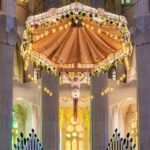
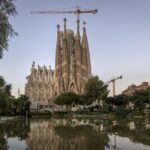
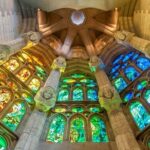
The tour includes a stop at Basilica de la Sagrada Familia. This is where you’ll see the unfinished side of Gaudí’s work—the vision that blends faith, nature, and architecture in a way that feels personal to Barcelona.
Importantly, tickets are not included, so your time at the basilica will depend on what you’re planning to do separately. Even without entry included, this stop is still valuable because the tour helps you understand what you’re looking at before you go inside somewhere else (or before you return on your own later).
One bonus from this structure: you won’t spend your whole day waiting in lines if you don’t want to. You get the big marker of Gaudí, and then you can choose how deep to go next.
Port Olímpic and the Mediterranean stretch: Barcelona after 1992
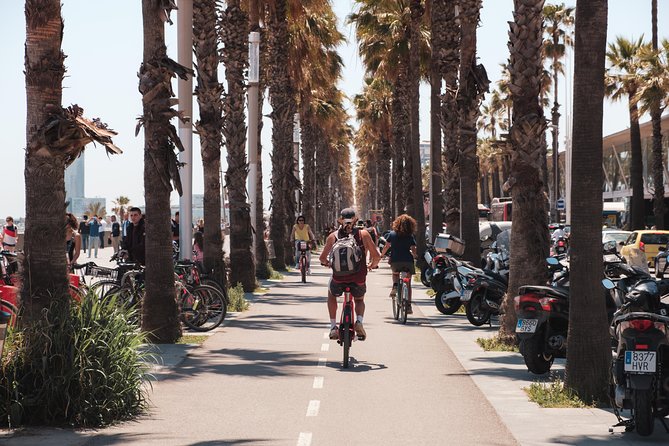
Then the route pivots to a different Barcelona: the Port Olímpic and the waterfront. It’s a smart change of pace after Sagrada Família. Here, you learn how the 1992 Olympic Games reshaped the city’s landscape and seascape.
This section is great for two reasons:
- It gives your legs an easier rhythm compared to the older interior streets.
- It helps you understand Barcelona as a city that keeps rebuilding itself, not just preserving the past.
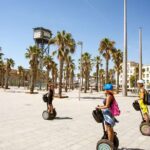
You’ll also spend time along a lively stretch of coastline with palm-lined promenades and sea views. Even if you’ve seen the Mediterranean in postcards, this part feels real because it ties together city planning and daily life.
Basilica de Santa Maria del Mar: the fishermen’s Gothic church
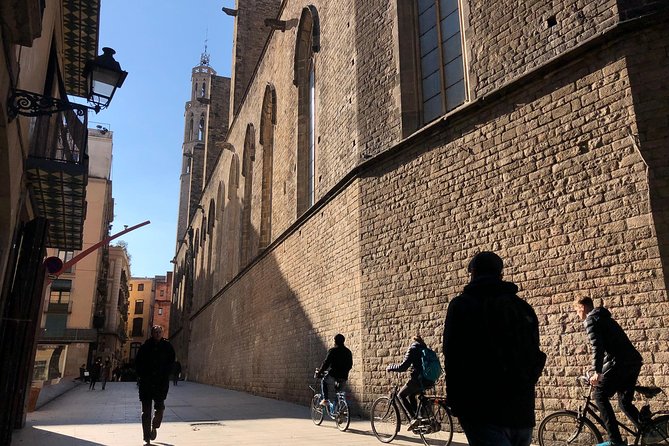
On the way back, you’ll reach Basilica de Santa Maria del Mar. This basilica is described as the only true example of Catalan Gothic in Barcelona, and the story matters: it was built by fishermen and port workers for fishermen and port workers.
That means this isn’t just a famous church stop. It’s a lesson in who funded and shaped Barcelona’s identity—people working the docks, not only kings and elites. If you’re the kind of traveler who likes your history with faces attached, this is a strong ending note.
Again, entry tickets are not included, so treat it as a “see and understand” stop unless you plan to return for inside access separately.
The ride feel: e-bikes, hills, helmets, and keeping everyone happy
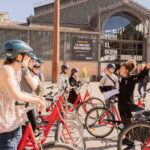
You can choose a standard bike or an E-bike upgrade available. If you’re not sure which to pick, I’d base it on two things:
- how comfortable you are cycling in city traffic
- whether you want the ride to feel relaxed rather than workout-heavy
I’ve seen comments connected to people managing “mean streets” and even mentioning hills, with guides encouraging riders at the right pace. That’s the kind of setup that makes the tour work for mixed groups.
Helmets are optional as an add-on, and there are also child seats available if you’re traveling with kids. That’s not just a convenience; it signals the tour is set up for real families and not only athletic couples.
Still, one practical caution: you’ll be in an urban setting. Keep your eyes up, follow the guide’s signals, and don’t treat it like a quiet bike path. The best experience comes when you ride calmly and let the guide handle the route timing.
Guides and pacing: why small groups help
The guide experience seems to be a major reason people rate this tour so highly. Names like Mariana, Marina, Micha, and Misha come up with the same pattern: friendly, helpful, and clearly focused on keeping the group comfortable.
Small groups (maximum 15) also matter. It’s easier to hear directions, regroup quickly at stops, and avoid long waits between photo opportunities. Plus, it makes the ride feel less like a production and more like a guided walk—just with pedals.
Who this tour is best for (and who should choose something else)
This is a strong fit if you:
- want a first-time orientation to Barcelona without walking everywhere
- like seeing many major landmarks in a short window
- prefer a guided route when your time is limited
- want light exercise but still need breaks
- are traveling with mixed fitness levels
It may not be your best choice if you strongly prefer long, independent time inside major sites. Since entry tickets aren’t included, you’ll get less “inside access” than a ticketed attraction day. In that case, you might pair this with one or two paid entries on separate blocks of time.
Price and value: is $32.89 a good deal?
At $32.89 per person for about three hours, the value comes from what’s bundled:
- bike rental is included
- the guide is included
- helmets are available
- E-bikes are an option if you want them
When you compare that to renting a bike plus paying for a guide separately, the math usually favors this format. You should just factor one thing: entry tickets are not included, so if you plan to go inside every stop, your total trip cost rises.
Overall, for most visitors, this tour is a cost-effective way to spend your limited hours getting your bearings fast and learning what to prioritize later.
Should you book this Barcelona bike or e-bike tour?
I’d book it if you want a smart hit of Barcelona in a short time, especially if you’re arriving with that familiar problem: you want to see a lot, but you don’t want to spend your whole day walking.
Choose it with confidence if you like guided stops, you want to cover both old streets and newer Barcelona waterfront areas, and you’d rather cycle than stand in line for every single attraction immediately.
Skip it (or plan it differently) only if your main goal is deep time inside specific buildings, since admission isn’t included and you’ll need to purchase entry separately if you want interiors.
FAQ
How long is the Barcelona bike or e-bike tour?
It runs for about 3 hours.
What is the price per person?
The price is $32.89 per person.
What’s included in the tour price?
Bike rental and a guide are included. Optional helmets and child seats are available.
Are entry tickets included for the sights?
No. Entry tickets are not included.
Is an e-bike available?
Yes. There’s an e-bike upgrade option.
Where do I meet for the tour?
You meet at Plaça Reial (Pl. Reial, Ciutat Vella, 08002 Barcelona, Spain).
Is the tour offered in English?
Yes, it’s offered in English.
How big is the group?
The tour has a maximum of 15 travelers.
What’s the cancellation policy?
You can cancel for a full refund if you cancel at least 24 hours before the experience’s start time. If you cancel less than 24 hours before, the amount paid isn’t refunded.