REVIEW · BARCELONA
Jewish Walking Tour Barcelona by Expert Jewish Guide 2h
Book on Viator →Operated by barcelona dreaming · Bookable on Viator
One of Barcelona’s best stories fits in 2 hours. This Jewish Walking Tour threads through the Gothic area’s old Jewish streets, ending at the same place you started while covering major landmarks tied to the Call and local synagogue life. What makes it interesting is the way the walk connects street-level architecture to the bigger forces that shaped Jewish life in Catalonia.
Two things I really like: you get a guided focus on places you’d easily miss on your own, and you leave with a much clearer sense of what you’re looking at—especially around the Major Synagogue and the MUHBA–El Call area. Guides such as Ella, Dina, Lilach, and Alan show up in the feedback for being warm, energetic, and good at answering follow-up questions (and yes, they point out small details).
One consideration: entrance costs aren’t included, and there’s also a request for a €5 per person donation onsite at the synagogue. If you’re the type who hates sudden extra steps, budget a little time and a few euros for that part of the stop.
In This Review
- Key highlights to look forward to
- Two Hours in the Jewish Quarter: Why This Walk Works
- Where You Start at Conesa Entrepans (and What to Expect)
- Plaça de Sant Jaume: Catalonia’s Political Heart and the Jewish Story
- Major Synagogue: Seeing One of Europe’s Oldest Synagogue Narratives
- MUHBA – El Call: Winding Alleys, Everyday Life, and Hard Chapters
- Plàça del Rei: Where History Changes When Power Moves
- Professional Local Guides: The Real Value Comes From the Person
- Price and Value: Is $96.79 Worth It?
- How to Prepare: Timing, Shoes, and What to Bring
- Who This Tour Fits Best (and Who Might Skip It)
- Should You Book the Jewish Walking Tour of Barcelona?
- FAQ
- How long is the Jewish Walking Tour in Barcelona?
- Where does the tour start?
- Does the tour end at the meeting point?
- Is the tour offered in English?
- Are entrance fees included?
- Is there an onsite payment at the synagogue?
- Does the price include hotel pickup or drop-off?
- Can I cancel for free?
- Is it private?
Key highlights to look forward to
- Plaça de Sant Jaume sets the stage at Catalonia’s political heart, right where the story can connect to power.
- Major Synagogue is treated as one of Europe’s oldest synagogue narratives, with architectural and historical context.
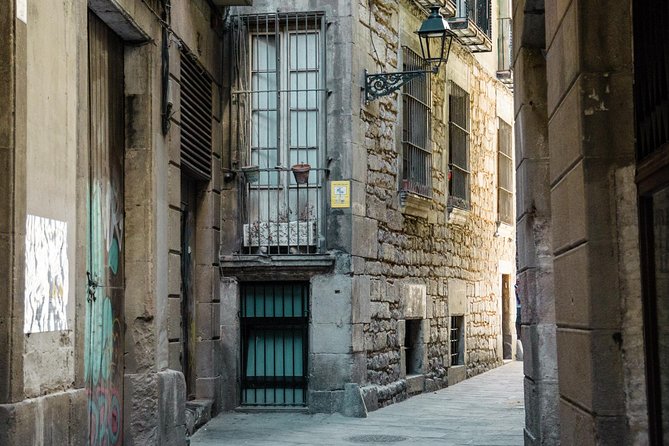
- MUHBA – El Call gives you the alley-level setting where Jewish life and hardship played out in the streets.
- Plàça del Rei ties the Jewish community to royal circles and the way history shifts fast when rulers change.
- Private for your group means you can ask questions without feeling rushed.
- Expert local guiding in English keeps the pacing easy to follow for most visitors.
Two Hours in the Jewish Quarter: Why This Walk Works
Barcelona can feel like a giant “pick a direction” puzzle. This tour gives you a clean route through the Jewish Quarter area so you’re not wandering with no map—or worse, collecting random facts that don’t connect.
The timing is ideal for a first pass. Around two hours is enough to understand the main geography of the Call and still keep your feet in good shape for the rest of your day. It’s also structured in a way that makes each stop feel like a chapter instead of separate photo ops.
And because it’s offered in English with a professional local guide, you can expect a story that stays coherent. The strong theme from the guides praised in the feedback is that they don’t just point. They explain why a building or a square matters, and they answer questions in plain language.
You can also read our reviews of more walking tours in Barcelona



Where You Start at Conesa Entrepans (and What to Expect)
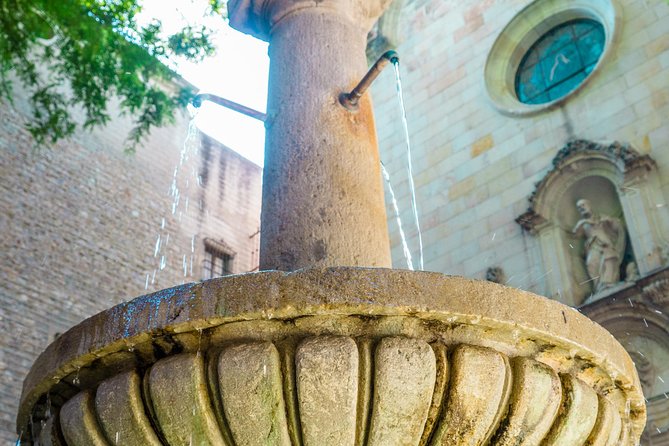
You meet at Conesa Entrepans, Carrer de la Llibreteria, 1, in the Gothic area (Ciutat Vella). That’s a helpful anchor point: you can find it without hunting through backstreets, and you’re already in the zone where Barcelona’s old lanes begin to make sense.
The walk is designed so the tour ends back near the meeting point. That’s convenient when you’re trying to keep your day simple. It also helps if you want to grab lunch afterward or hop onto public transportation.
Because it’s close to public transport, you don’t have to build extra time for transfers. Still, wear shoes that handle uneven pavement and narrow lanes. The route is in old-city streets, so you’ll be on foot more than you’d be on a modern wide sidewalk.
Plaça de Sant Jaume: Catalonia’s Political Heart and the Jewish Story
Your first stop is Plaça de Sant Jaume, which serves as a symbolic gateway to Jewish Barcelona. I like this start because it gives context before you enter the tighter, older streets. You’re not only looking at buildings—you’re learning how the city’s political center connects to everything that happens around it.
This square also helps your brain “frame” what comes next. When you later move into the Call, you understand that the neighborhood wasn’t isolated. It was part of a city with power, laws, and competing agendas—so the story feels more real.
Time here is short (about 15 minutes). That’s a good thing. Squares can eat time if you let them. The tour keeps it focused so you’re ready for the more intimate part of the walk right away.
Major Synagogue: Seeing One of Europe’s Oldest Synagogue Narratives
Next comes the Major Synagogue area, described as an ancient synagogue in the center of Barcelona and noted as one of the oldest synagogue sites in Europe. What I appreciate is that this isn’t treated like a checkbox. The guide role matters here: this stop needs interpretation to land.
You’re also told upfront that admission isn’t included, and there’s that onsite donation request (about €5 per person at the synagogue). So go with the mindset that this is part history lesson, part respectful access. If you plan ahead, you’ll feel smooth rather than caught off guard.
In the feedback, guides like Dina and Ella stand out for combining story with architectural and historical context. That’s exactly what you want at a site like this. Otherwise, it can be easy to look at stone and not know what it’s saying.
MUHBA – El Call: Winding Alleys, Everyday Life, and Hard Chapters
Then you get to MUHBA – El Call, where the focus shifts from major landmarks to the lived-in feeling of the neighborhood. This is one of those places where Barcelona’s old streets can help you “see” the story physically. The alleys make the scale of daily life obvious.
I like that the tour spends about 30 minutes here. It’s long enough to notice details and short enough to stay engaged. You get time to understand how the neighborhood layout shapes movement, community, and access—without turning the walk into a museum marathon.
From the guide descriptions shared in the feedback, this stop often includes discussion of Jewish life alongside tragedy and political change. You’ll hear a fuller arc, not just smooth highlights. If you’re the kind of traveler who likes context—why a neighborhood matters beyond postcard charm—this part is a strong fit.
You can also read our reviews of more guided tours in Barcelona



Plàça del Rei: Where History Changes When Power Moves
Your last landmark stop is Plàça del Rei. This square matters because it connects the Jewish community to kings and royal spaces—basically, where decisions were made and where history could flip quickly.
Spending around 30 minutes here keeps the story moving. You’re moving from street-level to power-level again, which helps the whole walk feel connected. The route isn’t random; it keeps bringing you back to how different parts of Barcelona influenced each other.
A subtle but important value here: you’ll start noticing that squares are not just pretty. They’re political nodes. Once that clicks, your walk through the Gothic area gets smarter, even after the tour ends.
Professional Local Guides: The Real Value Comes From the Person
At $96.79 per person, you’re not only paying for walking time and a route. You’re paying for a guide who can connect architecture, politics, and everyday life into something understandable.
The strongest praise in the feedback centers on guide quality—warmth, energy, and the ability to explain what you’re seeing. Names that repeatedly show up include Ella, Dina, Lilach, Leilah, Rina, Eyal, Alan, and Lilach again (in different groups). While your specific guide may differ, the consistent pattern is what matters: you’re likely to get someone who really cares about the story and can answer questions.
One thing I’d take seriously if you book: choose your pace mentally around questions. Because it’s a private experience for your group, you’ll get more chances to ask “why” and “how” than you would on a big open-group tour.
Price and Value: Is $96.79 Worth It?
Let’s talk value without hand-waving. $96.79 per person for a ~2-hour Jewish Quarter walk is not the cheapest thing you can do in Barcelona. But it also isn’t an inflated “theme park tour” price.
Here’s what supports the cost:
- You get a professional local guide for a set two-hour route.
- You cover multiple key sites in the Call area instead of bouncing randomly around the Gothic Quarter.
- Your group participates only in the private format, which usually means less waiting and more direct attention.
- The tour is in English, which can be a big deal for accuracy and comfort.
What can affect your final cost is simple: admission isn’t included, and you’re asked for a €5 donation onsite at the synagogue. So think of the $96.79 as the tour fee, then add a small buffer for that onsite request. If you like guided interpretation at historic sites, the total tends to feel fair.
How to Prepare: Timing, Shoes, and What to Bring
This tour meets in the Gothic area and includes walking through narrow streets. That’s not the time for fashion sneakers that hate cobblestones.
I’d bring:
- Comfortable shoes for uneven pavement and tight lanes
- A phone with battery for the mobile ticket
- A small amount of cash or payment flexibility for the €5 onsite donation request
Weather can also matter. Barcelona can turn on you fast. If rain starts, expect streets to feel slick and your pace to slow. A good guide can still keep the stories flowing, but you’ll want to stay comfortable and safe.
Also, because the meeting point is easy to reach by public transportation, don’t overcomplicate arrival. Just give yourself a little buffer so you can start on time and avoid rushing at the first stop.
Who This Tour Fits Best (and Who Might Skip It)
This tour is ideal if you want:
- A guided overview of the Jewish Quarter geography and its key monuments
- Architecture plus story, not just general sightseeing
- A tour in English that keeps pace steady and understandable
If you love history, especially the way local communities fit into wider European and Spanish contexts, you’ll enjoy the focused route. In the feedback, guides often layer in broader Catalonia and historical context—so it’s not only about what’s standing there now.
You might choose differently if you:
- Prefer totally self-guided walks with no onsite donation requests
- Have limited tolerance for walking through older streets
- Want a long museum-style experience rather than a structured neighborhood walk
Should You Book the Jewish Walking Tour of Barcelona?
My take: if you’re spending a couple days in Barcelona and you want the Jewish Quarter story to actually make sense, book it. The combination of a short, efficient route, a private-group feel, and guides who are praised for spotting the details you’d miss on your own is a winning mix.
Also, the tour seems to be in demand—you typically book about 48 days in advance—so if your dates are fixed, don’t wait until the last minute.
If you can handle a small onsite donation request and you’re ready to walk through historic lanes, this is a strong value way to understand a part of Barcelona that deserves more attention than it usually gets.
FAQ
How long is the Jewish Walking Tour in Barcelona?
The tour runs for about 2 hours.
Where does the tour start?
You start at Conesa Entrepans, Carrer de la Llibreteria, 1, Ciutat Vella, 08002 Barcelona, Spain.
Does the tour end at the meeting point?
Yes, the activity ends back at the meeting point.
Is the tour offered in English?
Yes, it is offered in English.
Are entrance fees included?
No. Entrance fees are not included.
Is there an onsite payment at the synagogue?
Yes. A €5 per person donation is kindly requested onsite at the synagogue.
Does the price include hotel pickup or drop-off?
No. Hotel pickup and drop-off are not included.
Can I cancel for free?
Yes. You can cancel for a full refund if you cancel up to 24 hours in advance of the experience’s start time.
Is it private?
It’s a private tour/activity, so only your group will participate.