REVIEW · SEVILLE
Private Half Day Walking Tour of Seville
Book on Viator →Operated by Tours in Sevilla, Don Carlos · Bookable on Viator
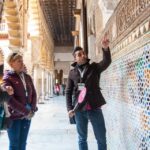
Seville makes more sense when you walk it. This private half-day route moves fast but keeps the story clear, from Moorish gates to the Alcázar and the Santa Cruz streets. I especially like how the guide brings the sites to life, and names like Carlos and Fernando show up in past groups for their history and humor.
My second favorite part is the way you get major landmarks as real city backdrops, not just a photo stop list. You’ll see exteriors up close, including the Giralda’s Cathedral exterior symbol and the Real Alcázar from the outside, plus a Barrio de Santa Cruz walk through small plazas and alleys. The only real drawback: it’s mostly outside views and walking, so if you want lots of indoor ticket time, or you’re sensitive to heat, plan carefully and wear comfortable shoes.
In This Review
- Quick reasons this Seville walk works
- Setting off from Puerta de Jerez and the Alfonso XIII neighborhood
- Tobacco Factory to San Telmo: where trade turns into art and power
- Torre del Oro and the Postigo Arch: Seville’s maritime memory
- Plaza del Cabildo and the Cathedral-Giralda duo
- Archivo de Indias and the Alcázar: colonial documents and royal walls
- Santa Cruz on foot: patios, flowers, and old Jewish-quarter lanes
- From Iglesia de El Salvador to Metrosol Parasol: where mosques become churches and modern forms rise
- Calle Sierpes and the Royal Prison: shopping street with literary weight
- Ending at Plaza de San Francisco: a good finish near the Cathedral core
- Price, time, and value at about $133 per person
- Who this Seville tour suits best (and who might want something else)
- Should you book this private Seville walking tour?
- FAQ
- Where does the tour start?
- Where does the tour end?
- How long is the walking tour?
- Is this tour private?
- What language is the guide in?
- Is transportation included?
- Do I need a ticket on my phone?
- What fitness level do I need?
- Are service animals allowed?
- What if the weather is bad?
Quick reasons this Seville walk works
- A pro guide who explains what you’re looking at as you move, not after you’re already tired.
- Outside looks at heavyweight sights across different eras, from mosques and towers to Renaissance city power.
- Game of Thrones filming references you can actually connect to the buildings you see near the Alcázar and the shipyards.
- Carmen and Cervantes connections that add extra meaning to the Tobacco Factory and Calle Sierpes area.
- Santa Cruz on foot with named plazas like Doña Elvira and Plaza de Santa Cruz, not just a general stroll.
- Simple old-town start and finish at Puerta de Jerez and Plaza de San Francisco, both easy to orient to.
Setting off from Puerta de Jerez and the Alfonso XIII neighborhood
You start at Puerta de Jerez, one of the old city gates. It’s a sharp way to begin because Seville’s shape still matters: gates, plazas, and walls helped define where people walked, traded, and moved power around.
From there you’ll look around the Plaza area where Hotel Alfonso XIII sits. The hotel’s exterior is linked to the 1929 Ibero-American Exposition, so even though it’s modern by comparison, it’s still part of the city’s “Seville presenting itself” story—how the city showcases its identity to the world.
You can also read our reviews of more walking tours in Seville

Tobacco Factory to San Telmo: where trade turns into art and power

Next you’ll see the exteriors of the old Royal Tobacco Factory of Seville, one of Spain’s biggest buildings outside the Escorial complex. Today it’s the Rectorate of the University of Seville, but the scale still shows you why Seville mattered to big industries.
This stop is also tied to culture: the building is famously connected to Bizet’s opera Carmen. Even if you’re not an opera person, the reference helps you understand why Seville became a magnet for artists—real cities with real social tension make better stories.
Then you’ll move to the Palacio de San Telmo. It started as a school for navigators during the Discovery of America era, then later became a residence for the Spanish royal family. Its garden connects you forward in time too, since it’s now the area that feeds into Maria Luisa Park, the 1929 exposition’s lasting legacy.
Torre del Oro and the Postigo Arch: Seville’s maritime memory
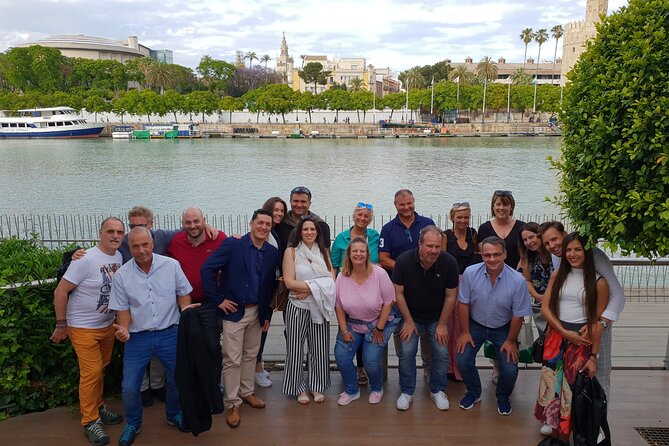
Now you shift from inland power to water power. You’ll see Torre del Oro from the outside, a 13th-century Islamic architecture landmark tied to maritime traffic. In a short walk, it’s a reminder that Seville’s wealth didn’t come only from land—it came from movement on the river and toward the Atlantic.
You’ll also pass the Postigo Arch, one of the old gates still preserved. Gates like this are more than scenery; they’re pieces of city plumbing, showing you how Seville filtered people in and out over centuries.
Near this area you’ll get exteriors of the old Royal Shipyards where ships headed to America were built. There’s a modern pop-culture layer here too: Game of Thrones filming is mentioned for the area, so you’ll spot familiar real-world corners that screen fans recognize.
Plaza del Cabildo and the Cathedral-Giralda duo
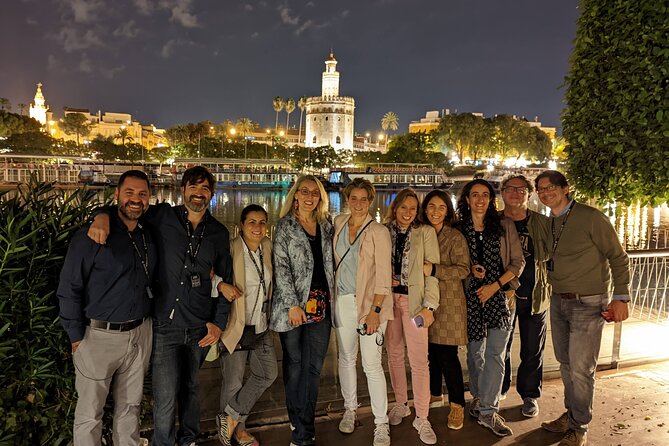
At Plaza del Cabildo, you’re in one of Seville’s most special squares. It’s linked to the Cathedral world—canon-related history stays here—and there’s also an antiques market tradition that still runs on Sundays.
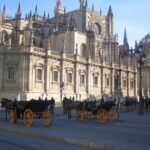
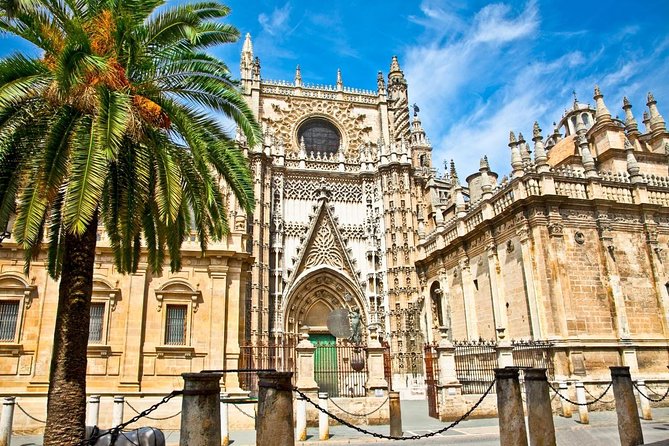
Then you’ll see the Cathedral of Seville from the outside. It’s described as the largest Gothic temple in the world and also a UNESCO World Heritage Site. What makes this spot truly satisfying is the visible time-mashup: the building’s Gothic identity sits on top of an earlier mosque that used to be the main Islamic place of worship here.
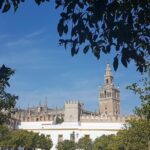
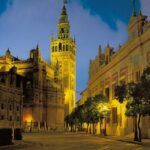
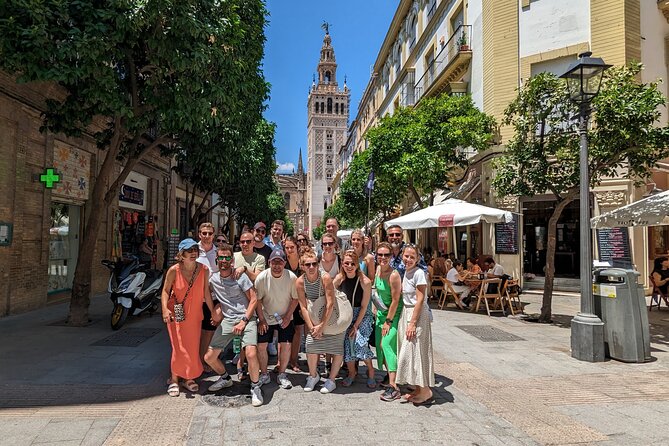
The tour also sets up Seville’s best landmark shorthand: the Giralda. You’ll see it from the outside as the Cathedral bell tower, built on the former mosque tower structure from the 12th century. If you’ve ever wondered why people call the Giralda the symbol of Seville, this is where it clicks. It’s not just tall; it’s layered.
Archivo de Indias and the Alcázar: colonial documents and royal walls
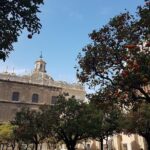
One of the most thought-provoking exterior stops is the General Archive of the Indies. You’ll see it from outside as a UNESCO-recognized property where more than 40,000 documents related to America are kept. The description also points to maps, the Treaty of Tordesillas document, and original-type Columbus-related autograph texts. Even without going inside, that context gives you a sense of why Spain’s empire was run through paper.
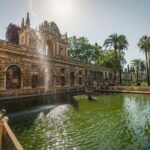
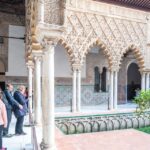
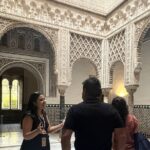
Then comes Real Alcázar, a UNESCO World Heritage Site and the oldest royal palace in Europe still in use. You’ll look at the exteriors and hear stories about the kings who lived there. A major modern storytelling thread gets mentioned here too: Dorne from Game of Thrones was filmed in the Alcázar setting, so the palace doesn’t feel frozen in “history-only.” It feels like a set that has had multiple lives.
You can also read our reviews of more private tours in Seville





Santa Cruz on foot: patios, flowers, and old Jewish-quarter lanes
Now you move into the Barrio de Santa Cruz, Seville’s old Jewish Quarter and one of the most picturesque parts of the city. This part is where the walking payoff is strongest, because you’re not just viewing big monuments. You’re getting the smaller scale—squares, alleys, and patios with flowers that shape how people actually experience Seville.
You’ll pass or see notable places including Doña Elvira, Los Venerables, Agua y Vida, and Plaza de Santa Cruz. The names matter because they help you remember what you saw, especially after you’ve left the main sights behind. It’s also tied to the arts: the neighborhood is mentioned as a setting for multiple operas, including The Barber of Seville.
From Iglesia de El Salvador to Metrosol Parasol: where mosques become churches and modern forms rise
You’ll see the Church of El Salvador from the outside. The key detail is that it began as the first mosque in Seville in the 9th century and later became a collegiate church in the 13th century under Fernando III el Santo. The church is also described as preserving the old mosque abluction courtyard, which is one of those quiet architectural reminders that the site kept serving spiritual needs even as the faith changed.
After that, you’ll walk through older Islamic-medina-style streets that are now the city’s commercial area. This is useful because it shows you Seville’s pattern: history isn’t trapped behind ropes; it often runs right through storefronts and everyday life.
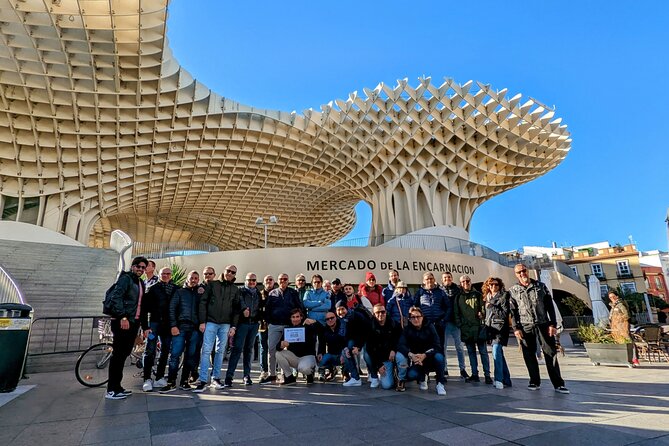
Then you reach Plaza de la Encarnación to see the famous mushrooms, the Metrosol Parasol (Setas de Sevilla). It’s presented as an emblematic building and major tourist attraction, designed by German architect Jürgen Mayer. The practical benefit here is timing: it’s a natural “pause” point in the middle of a walking day, and it’s one of the easiest landmarks to spot and re-find later.
Calle Sierpes and the Royal Prison: shopping street with literary weight
Next you’ll walk down Calle Sierpes, one of Seville’s best-known streets. It’s lined with shops and famous cafés, but there’s a specific historic anchor here too: the old Royal Prison where Miguel de Cervantes was held as a prisoner.
This is a great example of how the tour adds meaning without slowing you down too much. You get a street you can actually enjoy after your tour for browsing or coffee, while also knowing there’s a reason the name of the place sits in literary history.
Ending at Plaza de San Francisco: a good finish near the Cathedral core
You finish in Plaza de San Francisco, very close to the Cathedral and the heart of Seville. The location choice makes sense: you end where you’ll want to keep walking on your own, whether that means snapping photos of the Cathedral area again or finding a late lunch nearby.
It’s also a smooth way to close the loop. You started at Puerta de Jerez, a gateway into the old city, and you end near the center that symbolized religious authority for centuries.
Price, time, and value at about $133 per person
At $133.03 per person for a 2 to 3 hour private walking tour, the value depends on what you want from your time in Seville. If you’re the type who likes answers—why a gate matters, how Gothic forms connect to a mosque site, why Seville’s empire used this city—you’ll likely feel like your money is buying context, not just walking.
Two details help justify the cost. First, you’re not sharing with random strangers in a big group in the same way you might on standard tours, since it’s private: only your group participates. Second, the guide is described as an official professional with 30 years of experience, plus you get tour photos.
Group discounts are also mentioned, so if you’re traveling with friends or family, it can become noticeably more reasonable. One more timing reality check: this tour is often booked far ahead on average, so if you’re visiting during peak season, plan to reserve early.
Who this Seville tour suits best (and who might want something else)
This works well for you if you want a focused half day and you like learning while you walk. It’s also a good match if you prefer seeing major highlights like the Giralda, Cathedral exterior, Alcázar exterior areas, and Santa Cruz in one connected route rather than bouncing around on your own.
You’ll also like it if you’re interested in the mix of faith, architecture, and empire—Seville as a layered city where Islamic, Gothic, Renaissance, and modern threads overlap. The Game of Thrones references and the Carmen/Cervantes tie-ins are there to make those layers easier to remember.
It may be less ideal if you want long indoor visits or museum time, because the stops emphasize exteriors for many landmarks. Also, the tour asks for moderate physical fitness, so if you’re dealing with mobility limits, you may want to choose a slower option or plan extra breaks.
Should you book this private Seville walking tour?
I’d book it if you want a guided walk that turns famous places into understandable stories. The mix of Puerta de Jerez, Tobacco Factory context, the Cathedral-Giralda link, the Archivo de Indias meaning, and the Santa Cruz streets is exactly the kind of route that helps you feel grounded in Seville fast.
I’d hesitate if you’re only interested in interiors or you dislike heat and long stretches of outdoor walking. In that case, you might want a tour format with more indoor time or more frequent stops.
If you can handle a few hours on your feet and you value a strong guide, this one is an efficient way to get the city’s big ideas without losing the small-street charm.
FAQ
Where does the tour start?
The tour starts at Puerta de Jerez in the Casco Antiguo area.
Where does the tour end?
The tour ends at Plaza de San Francisco, near the Cathedral area.
How long is the walking tour?
It runs for about 2 to 3 hours.
Is this tour private?
Yes. It’s a private tour/activity, and only your group participates.
What language is the guide in?
The tour is offered in English.
Is transportation included?
No. Private transportation is not included.
Do I need a ticket on my phone?
You’ll have a mobile ticket.
What fitness level do I need?
You should have moderate physical fitness for the walking pace.
Are service animals allowed?
Yes. Service animals are allowed.
What if the weather is bad?
The experience requires good weather. If it’s canceled due to poor weather, you’ll be offered a different date or a full refund.