REVIEW · MADRID
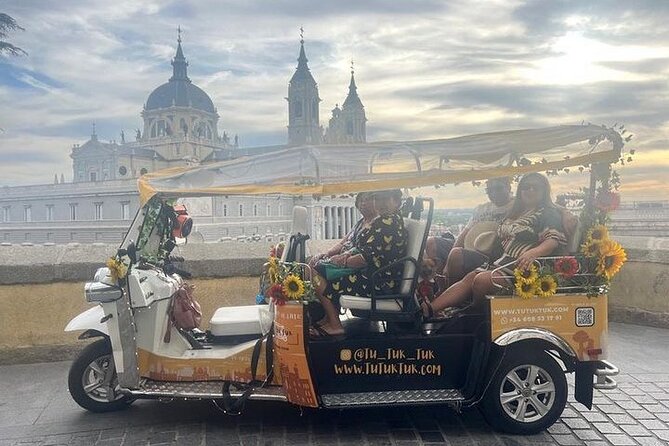
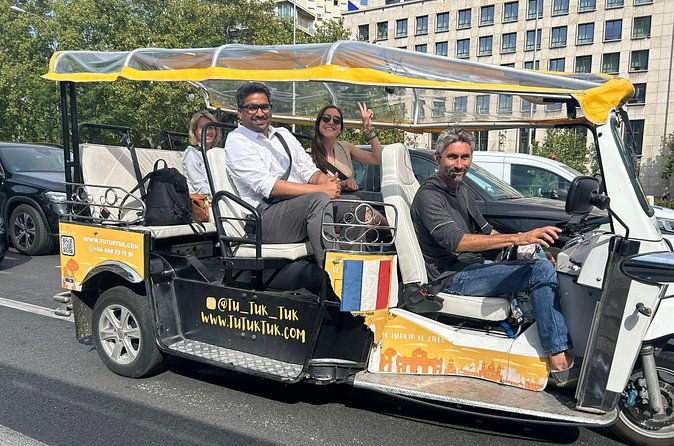
Privately Guided Panoramic Tour in Yellow Tuk Tuk from Madrid
Book on Viator →Operated by Yellow TU TUK TUK Madrid · Bookable on Viator
Madrid feels big until you ride one. This private yellow tuk tuk tour gives you quick city orientation plus big viewpoints, without the long slog on foot. I also like that guides such as Miguel and Louise explain the why behind the sights, not just the what.
Two things I love: you cover far more ground than a walking loop, and the tuk tuk slips through tight streets where big buses can’t go. One possible drawback: the route is paced for sightseeing stops, so weather can limit how close you get for photos when it turns cold or rainy.
In This Review
- Key highlights to look for
- Why a yellow tuk tuk is the smart way to start Madrid
- Price and what $60.34 per person really buys
- Starting at Plaza de Isabel II: your orientation moment
- Almudena Cathedral museum area to Mercado de San Miguel: history meets food
- Barrio de Las Letras and Congreso de los Diputados: the city’s brain
- Two fan-friendly fountains: Cibeles and Neptuno
- San Jerónimo el Real and Parque del Retiro: calm in the middle of the tour
- Puerta de Alcalá to Salamanca: a shift toward classic grand avenues
- Paseo de la Castellana to Bernabéu: modern Madrid for Real Madrid lovers
- Biblioteca Nacional and Prado area: where the ticket choice matters
- Calle de Alcalá, Metrópolis, and Plaza de Santa Ana: shopping and theater energy
- Royal Palace and Templo de Debod: ending with a standout contrast
- The guides make or break it: what to expect from the best ones
- Timing and weather: the real practical drawback
- What to bring and how to ride comfortably
- Who this tour is best for
- Should you book the Private Panoramic Tour in a Yellow Tuk Tuk?
- FAQ
- How long is the panoramic tuk tuk tour in Madrid?
- What is the starting point for the tour?
- What sights does the route cover?
- Is the tour private?
- Does the price include museum or monument entrance fees?
- Is the tour offered in English?
- Do I need a printed ticket?
- Is good weather required?
- What about cancellations?
- Are service animals allowed?
Key highlights to look for

- Narrow-street access that tour buses can’t handle, so you see more of real Madrid.
- Live English guiding from people like Miguel and Louise, who keep the story flowing.
- A practical 2-hour snapshot, great for your first day to understand how the city fits together.
- Photo-friendly stops, with frequent opportunities to pull over and take pictures.
- Football-fan landmarks built right into the route via Cibeles and the Neptuno fountain area.
- Comfort tweaks like car-seat help reported, and small extras such as snacks on some rides.
Why a yellow tuk tuk is the smart way to start Madrid
Madrid has layers. This tour helps you see the layers fast.
In about two hours, you glide past classic sights and modern Madrid without doing a full-on walking workout. The tuk tuk also handles narrow, steep streets well, so you get views that feel more local than what you’d see from a big bus window.
The other big win is the guide. I like tours where you can ask a question and get an actual answer. People on this route have praised guides such as Miguel, Louise, David, Sam, and Frederic for clear storytelling and for pointing out small details you’d miss on your own.
You can also read our reviews of more guided tours in Madrid


Price and what $60.34 per person really buys

At around $60.34 per person for a private ride, you’re paying for three things: a live guide, private transport, and time-efficient sightseeing.
If you’re used to hop-on, hop-off buses, this can feel like better value because the audio is replaced by real conversation. You’re also not stuck in one straight-line itinerary; guides can adjust to what you care about (for example, some groups have been steered away from stops that didn’t match their interests).
The main cost reminder: entrance fees are not included. Even if the stops include areas with free viewing time, museums and major ticketed sites still cost extra if you want to go inside.
Starting at Plaza de Isabel II: your orientation moment
You meet at Plaza de Isabel II in central Madrid, then roll out for an overview that connects neighborhoods to monuments.
This is a great setup because you quickly learn which areas cluster together and what direction you’ll want to walk later. Guides also tend to use the first minutes to explain the overall route logic, so the rest of the ride feels less like random stops and more like a guided “map you can remember.”
Almudena Cathedral museum area to Mercado de San Miguel: history meets food

The ride begins near Museo de la Catedral de la Almudena. Even if you don’t go deep into museum rooms, the cathedral complex is one of those Madrid anchors that helps you understand the city’s religious and architectural layers.
Next comes Mercado de San Miguel. This is where your tour taps into Madrid’s daily life through food culture. You won’t be spending long here, but it’s enough to spot why the market is famous and to plan what you might want later.
Practical tip: if you’re food-motivated, think of this as a teaser. Use it to decide whether you want to return for a slower bite when you’re not on a clock.
Barrio de Las Letras and Congreso de los Diputados: the city’s brain

From the market zone, you move to the Barrio de Las Letras (Literary Quarter). This area links Madrid to writers and to the idea of the city as a stage for ideas, not just buildings.
Then the tour heads toward Congreso de los Diputados. Watching politics from the street is one of those moments where the city stops being a postcard. You start to see Madrid as a capital with real civic power, not just monuments.
Because these stops are short, the value comes from the guide’s context: why these places sit where they do and how Madrid grew around major institutions.


Two fan-friendly fountains: Cibeles and Neptuno
One of my favorite parts of this route is how it uses landmarks that sports fans instantly recognize.
You’ll stop at Cibeles Fountain, a major Madrid symbol and a natural photo point. Then you head toward Fuente de Neptuno, which also matters for fans across the city. The route treats these fountains like story markers, not just background scenery.
If you’re traveling as a group, this section often makes the ride feel fun and personal. People ask questions here. Guides can turn that curiosity into a quick explanation of how the city’s icons became part of everyday identity.
San Jerónimo el Real and Parque del Retiro: calm in the middle of the tour
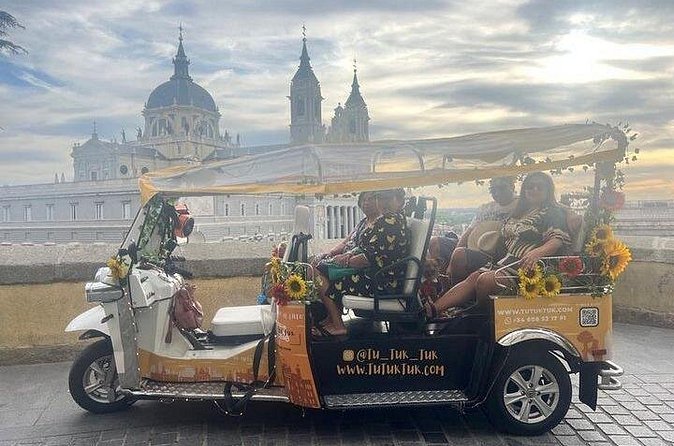
Next you hit Iglesia de San Jerónimo el Real, a beautiful church that gives the ride a quieter tone. It’s a small pause, but it breaks up the city’s pace in a good way.
After that, it’s Parque del Retiro. Even with limited time, it’s easy to understand why Retiro matters. It’s the kind of space you’ll want to revisit if your schedule allows, especially if you like gardens, people-watching, or just catching your breath.
Photo tip: this is a good area to take a wide shot that includes green space and sky. With a limited stop time, wide frames are easier than trying to get perfect close-ups in a busy public park.
Puerta de Alcalá to Salamanca: a shift toward classic grand avenues
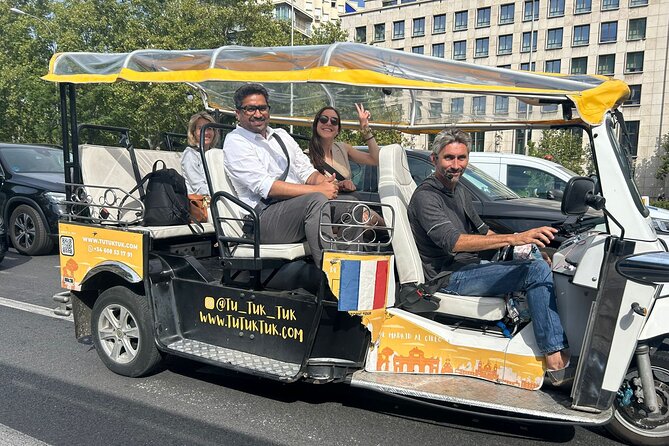
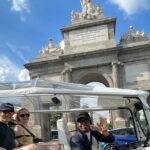
Then you reach Puerta de Alcalá, an essential Madrid landmark. It’s the sort of sight that instantly gives you scale. You feel where the city’s “big statement” architecture sits.
After that, the route swings into the Barrio de Salamanca area. This neighborhood offers a different Madrid vibe—more upscale streets, more polished facades, and a sense of the city’s modern style.
Next up is Plaza Colón, followed by the Financial District along Paseo Castellana. This transition is useful because it helps you read Madrid like a layout: historic core, then major boulevards and modern business lines.
Paseo de la Castellana to Bernabéu: modern Madrid for Real Madrid lovers
The ride continues along Paseo de la Castellana, then stops at Santiago Bernabéu Stadium. Even if you’re not a hardcore fan, the stadium stop is a strong “modern Madrid” marker that you can’t really appreciate from a walking route alone unless you specifically plan for it.
Guides often connect stadium architecture to the city’s modern identity. If you are a fan, it’s the easiest way to make that interest fit into an overall highlights tour.
Biblioteca Nacional and Prado area: where the ticket choice matters
As you head toward Biblioteca Nacional de España, you get another institutional landmark—again, useful context for understanding Madrid as a hub of culture and learning.
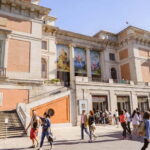
Then comes Museo Nacional del Prado. This stop is important, but here’s the key: museum admission is not included, and time is limited. If you want a full museum experience, I’d treat this stop as a view-and-location moment, then plan a separate Prado visit for deeper time.
If your plan is short on days, you can still benefit from the stop. But don’t assume this is a full museum tour. It’s more like an arrival point that tells you why the Prado area matters.
Calle de Alcalá, Metrópolis, and Plaza de Santa Ana: shopping and theater energy
After the museum district area, the route moves to Calle de Alcalá, a central shopping street. Even if you don’t shop, it’s a useful “where to go later” corridor.
Next is Edificio Metropolis, which is a Madrid icon. This is one of those buildings that looks better in person than it does in photos because of how it stands out against surrounding streets.
Then you arrive at Plaza de Santa Ana, often associated with Madrid’s theater and evening atmosphere. Even on a daytime ride, the stop helps you see how Madrid’s social life sits right in the middle of the city center.
Royal Palace and Templo de Debod: ending with a standout contrast
Near the end of the tour, you’ll stop at Madrid’s Royal Palace area. Since the tour time is short, the big value here is view orientation. You get a feel for how the palace zone fits into the city and what direction you might want to walk if you plan a longer visit later.
Finally, you reach Templo de Debod. This one is memorable for a reason beyond aesthetics. The temple is an Egyptian structure from the 2nd century BC, later installed in Madrid’s Cuartel de la Montaña Park near Plaza de España. Spain received it as a donation from Egypt to help prevent flooding damage after the construction of the Aswan High Dam.
That story makes the last stop feel like a real “wow” moment instead of just another photo stop. It’s also a good way to end your first-orientation tour with something unexpected.
The guides make or break it: what to expect from the best ones
The tour’s quality hinges on the guide’s style. The guides named here tend to share a common strength: they explain the city in human terms.
People have highlighted Miguel for taking groups to good viewing spots and for passionate city storytelling. Louise has been praised for friendly guidance and for helping with practical info like ticket reminders. Others like David and Sam have been described as flexible, interactive, and helpful with local tips and photo moments.
You should also know this: sometimes guides will try to accommodate your preferences and can adjust the route a bit based on what you care about. For example, some groups reported being able to choose a different drop-off point closer to where they needed to go afterward.
Timing and weather: the real practical drawback
This is where you should be honest with yourself. The tour works best in good weather because your experience depends on quick stops and time outside the tuk tuk for photos and brief looks.
If it’s raining and cold, you might not get as close for details. One short stop might turn into a quick peek and a fast move on. That doesn’t ruin the route, but it changes the feel.
I’d also plan your photo expectations: you’ll get lots of “good enough” moments, but not the slow, step-by-step closeups you’d do on your own later.
What to bring and how to ride comfortably
Since this is a short ride with frequent stops, pack for movement, not for a museum.
- Wear comfortable shoes even though you’ll be mostly riding. You’ll still step out briefly.
- Bring a light layer in cooler months. Madrid can surprise you when the sun drops.
- If you’re traveling with kids or need extra comfort help, this tour has supported requests such as car seats in at least one case, so it’s worth saying what you need ahead of time.
And keep your phone ready. The guides here often help with photos, not just commentary.
Who this tour is best for
This tour is a strong match if you want:
- A fast first-day overview so you can plan later walks smarter
- A private, English-speaking guide with real-time Q&A
- Narrow-street access without the fatigue of long distances
- A mix of classic landmarks and modern Madrid stops (including Bernabéu)
It might not be the best fit if you want long museum time or if you’re expecting a deep ticketed-site experience like a full Prado visit. This is about orientation and highlights, not about waiting in galleries for hours.
Should you book the Private Panoramic Tour in a Yellow Tuk Tuk?
Book it if you’re juggling a tight schedule and you want a guided snapshot of Madrid that still feels personal. With guides like Miguel and Louise, you get more than a drive—you get a coherent story that helps you understand the city’s layout.
Skip or adjust your expectations if you’re traveling on a day with poor weather, or if your top priority is going inside major museums. For Prado-level depth, plan a separate museum block.
If you do book: try it early in your trip. It sets you up to enjoy the rest of Madrid with more confidence and less guesswork.
FAQ
How long is the panoramic tuk tuk tour in Madrid?
It’s about 2 hours.
What is the starting point for the tour?
The tour starts at Plaza de Isabel II in central Madrid.
What sights does the route cover?
The route includes major landmarks such as Mercado de San Miguel, Puerta de Alcalá, Parque del Retiro, Plaza de Santa Ana, the area near Madrid’s Royal Palace, and Templo de Debod, along with several other central stops.
Is the tour private?
Yes. It’s private, so only your group participates.
Does the price include museum or monument entrance fees?
No. Entrance fees to monuments and museums are not included.
Is the tour offered in English?
Yes, it’s offered in English.
Do I need a printed ticket?
No. A mobile ticket is provided.
Is good weather required?
Yes. The experience requires good weather, and if it’s canceled due to poor weather you’ll be offered a different date or a full refund.
What about cancellations?
You can cancel for a full refund up to 24 hours in advance.
Are service animals allowed?
Yes, service animals are allowed.