REVIEW · SEVILLE
Seville Former Jewish Quarter Walking Tour: Santa Cruz
Book on Viator →Operated by Amsterdam Guías & Tours · Bookable on Viator
Seville’s Santa Cruz feels like a living puzzle. This Former Jewish Quarter walking tour in Seville helps you connect the modern streets to centuries of Jewish life, local legends, and big historical turning points—without needing a museum ticket.
What I liked most is the way the guide blends storytelling with street-level context, so the names and corners make sense fast. And I also really valued the small-group format, which means questions get answered instead of being swallowed by the crowd.
One drawback to consider: at about 2 hours, you’ll see a lot of stops, but you may still want more time if you expect deep, daily-life detail about the Judería itself rather than what you can comfortably cover on a walk.
In This Review
- Key highlights you’ll actually feel on the ground
- Walking the Santa Cruz with a guide: the real value of this 2-hour route
- Price: $18.02 for a guided route with ten named stops
- Where you start and how the walk flows
- Stop-by-stop: what each Santa Cruz location adds to the story
- Plaza del Triunfo: the heart of the action
- Fuente de la Plaza de la Alianza: water, memory, and quiet corners
- Plaza de Doña Elvira: romance, legends, and a picturesque pause
- Calle Susona: a street name carrying a tragic tale
- Hospital de los Venerables: Baroque form with sacred art
- Casa de Murillo: art tied to the light of Seville
- Calle Sierpes: iconic street, old legends, disappearances
- Rosina’s Balcony: opera meets neighborhood lore
- Callejón del Agua: a narrow passage and the idea of flowing water
- Plaza Patio de Banderas: behind the Alcázar walls
- The guide makes or breaks it: what I’m paying attention to
- A fair note on expectations: what you might want more of
- Who this tour suits best (and who should maybe choose something else)
- Should you book the Seville Santa Cruz Former Jewish Quarter walk?
- FAQ
- FAQ
- How long is the Seville Santa Cruz Former Jewish Quarter walking tour?
- What languages are available?
- What does it cost?
- Where do I meet the guide, and where does the tour end?
- Are there extra admission tickets for the stops?
- Can I cancel for a full refund?
Key highlights you’ll actually feel on the ground
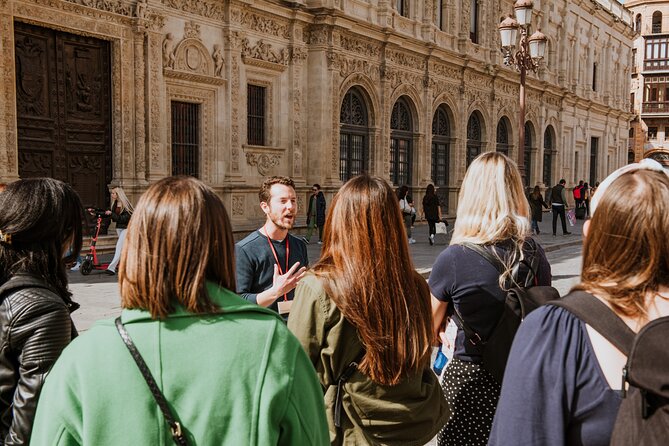
- Small group energy (up to 15): easier pace and more back-and-forth than the big-bus style tours
- English or Spanish: you can choose the language that keeps the history clear
- Legend + history at key corners: Susona’s name, Rosina’s balcony, and other references tied to real places
- A Baroque anchor: the Hospital de los Venerables adds visual weight to the walk
- Art and architecture stops: Murillo’s house site and the Santa Cruz/Alcázar court area broaden the story beyond one theme
Walking the Santa Cruz with a guide: the real value of this 2-hour route
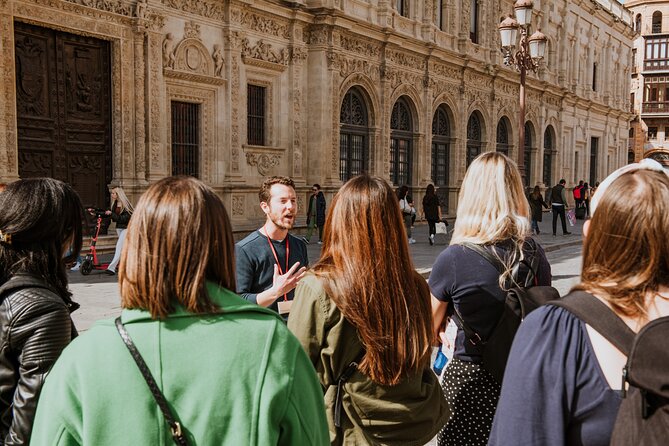
Santa Cruz is one of those neighborhoods where you can wander for hours and still miss the point. Streets curve, squares pop out of nowhere, and the city looks pretty much the way it always does in postcards. This tour gives you a map made of meaning. You walk the old quarter with a guide explaining what the places used to represent and why their memory still shows up in street names, local stories, and the layout of Seville’s center.
The basic format is simple: you’re with the guide for around two hours on foot, stopping at ten major points. Each stop is quick enough to keep momentum, but long enough to look up, listen, and connect details. The tour also runs with a maximum group size of 15, which matters a lot in Seville—narrow lanes can feel tight if everyone is trying to film at the same second.
Language is another practical win. The tour is offered in English and Spanish, so you’re not forced into a second-best explanation. And since it’s a mobile ticket experience, you can show up without juggling paper tickets in the middle of an old-town maze.
You can also read our reviews of more walking tours in Seville


Price: $18.02 for a guided route with ten named stops
At $18.02 per person, this is priced like a short neighborhood walk rather than a museum-day commitment. The value comes from two things. First, you get a guide to interpret the streets—especially helpful in Santa Cruz, where so much is subtle and layered. Second, the itinerary’s listed stops don’t include paid admissions for each point, so you’re not forced into extra ticket costs just to see the core landmarks on your route.
If you like learning as you walk, it’s a strong deal. If you want a long, museum-style session, you might feel the time squeeze. But for most people trying to understand Seville’s past without turning the whole trip into homework, it’s a reasonable investment.
Where you start and how the walk flows
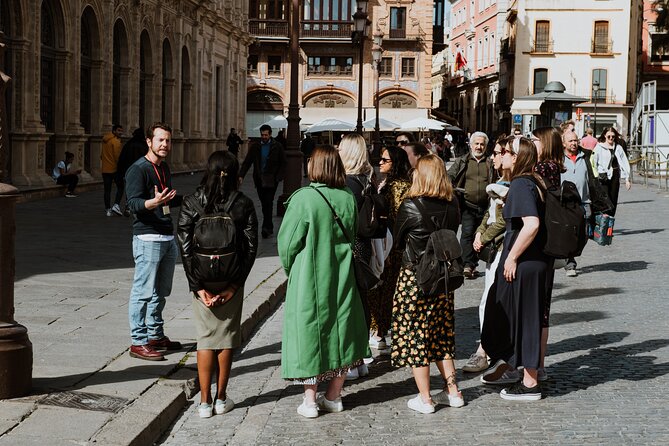
You meet at Plaza del Triunfo (Pl. del Triunfo, Casco Antiguo, 41004 Sevilla) and you end at Plaza de Santa Cruz (Pl. de Sta Cruz, Casco Antiguo, 41004 Sevilla). That end point is a nice practical touch: you finish right where you can keep exploring on your own afterward.
The walk itself is very Seville. Expect tight lanes, little squares that feel like you’ve stepped into a theater set, and sudden views that explain why people used to build important things here. The tour’s structure—short stops, steady movement—helps you keep your bearings while the guide does the historical stitching.
Stop-by-stop: what each Santa Cruz location adds to the story
This is a themed route, but it doesn’t feel like a single-note lecture. Each stop adds a different piece: setting, symbolism, architecture, or a story that people still repeat.
Plaza del Triunfo: the heart of the action
Your first stop is Plaza del Triunfo, a central square that has seen major royal events and historic shifts. Even if you don’t know Seville’s timeline yet, this is a good starting point because it frames the whole walk: power, change, and public life shaped what happened in nearby streets—including the neighborhood that later becomes known for Jewish history.
One practical benefit of starting here is context. You’re not immediately stuck in narrow alleys without understanding where you are in the broader city.




Fuente de la Plaza de la Alianza: water, memory, and quiet corners
Next is the Fuente de la Plaza de la Alianza, tucked into Santa Cruz’s narrow-street world. The feel here is different from the bigger square energy you start with. This stop is all about atmosphere: a small, quiet place that helps the guide connect past meeting points and court intrigue to what you can still sense in the layout today.
If you like “small scene, big story” locations, you’ll appreciate this kind of stop. It’s not just a photo-op fountain.
Plaza de Doña Elvira: romance, legends, and a picturesque pause
Then you reach Plaza de Doña Elvira, a charming corner surrounded by legends. This stop is where the tour leans into local memory—how Seville keeps telling stories about the neighborhood, even when the original community details have become harder to trace through surviving artifacts.
This is also a good mental breather: you pause, look around, and let the guide reset the story before the walk turns more dramatic and personal.
Calle Susona: a street name carrying a tragic tale
Calle Susona is one of the emotional stops on the route. The guide ties the street to the tale of Susona, a young Jewish woman remembered in local memory through a story of love and betrayal.
Even if you’ve never heard the story before, this stop works because it uses something you can’t miss: the name on the street. You start to see how neighborhoods preserve history through language, not just buildings.
Hospital de los Venerables: Baroque form with sacred art
At Hospital de los Venerables, you switch from legends and street names to architecture and artistic weight. This is a Baroque building that once housed retired priests and is now associated with sacred art and the spirit of Seville’s Golden Age.
Why it matters in a Jewish Quarter walk: big buildings like this help explain how Seville reorganized itself over time—how religious and cultural priorities shifted, and how the city’s most visible “memory” often ended up in dominant institutions.
Casa de Murillo: art tied to the light of Seville
Then you move to Casa de Murillo, connected to Bartolomé Esteban Murillo, the painter linked to 17th-century Seville. The guide uses this stop to show how the city’s look and mood—its light, its human scenes—became part of its cultural identity.
This is a welcome shift if you feel history walks can sometimes turn into a one-theme parade. Murillo gives you an entry point into how Seville expressed its soul through art, not only through conflict and change.
Calle Sierpes: iconic street, old legends, disappearances
Calle Sierpes is one of Seville’s most iconic shopping lanes, but on this tour it’s treated like more than a “walk down the center.” The guide connects it to older urban legends, including stories tied to mysterious disappearances.
This is also where you’ll start noticing how legends spread in dense old cities. The city’s physical structure—the lanes, the crowd flow, the sightlines—makes certain stories feel believable, even when you know legends are not literal history.
Rosina’s Balcony: opera meets neighborhood lore
Next is Rosina’s Balcony. The tour explains how the opera The Barber of Seville brought Rosina to life, tying the character to the neighborhood’s spirit and playful cleverness.
This stop works well because it demonstrates a different kind of cultural memory. Instead of focusing on religious or communal history alone, it shows how Santa Cruz became inspiration for art forms that people carried into wider culture.
Callejón del Agua: a narrow passage and the idea of flowing water
At Callejón del Agua, the mood turns cooler and more intimate. The guide points out that water from the Royal Alcázar once flowed here, and uses that to connect the space to poems, love stories, and whispered secrets.
This is a great stop for listening. The lane feels made for close conversation—perfect for a guide to explain how small environments amplify storytelling.
Plaza Patio de Banderas: behind the Alcázar walls
You finish this route area at Plaza Patio de Banderas, set behind the Alcázar walls. The guide frames it as a wide courtyard holding memories of empires and royal ceremonies, plus the city’s evolution over time.
It’s a fitting end because it broadens the lens. You start thinking: the neighborhood mattered, but Seville as a whole also kept transforming, and the Judería story sits inside those larger political and cultural shifts.
The guide makes or breaks it: what I’m paying attention to

In the real world, the difference between a good historical walk and a forgettable one is how the guide handles complexity. This tour tends to earn strong marks for the delivery—guides like Julio and Lara are repeatedly described as story-forward and patient with questions. Maria and Ana also come up in comments about being friendly and informative, with the tour shaped for the group’s interests.
Here’s what that means for your experience. You’ll likely hear:
- clear explanations that connect street names to the past
- a legend-first approach that then gets balanced with what’s historically reasonable
- frequent chances to ask questions while you’re still standing where the story happened
That last point matters. In Seville, standing still is the secret. If you rush through, the street names blur together. With a good guide, each stop becomes a label you can remember later when you’re on your own.
A fair note on expectations: what you might want more of
A couple of people come away wanting more explicit explanation of the Jewish community’s specific contribution to Seville society, or more detail about Jewish family life and daily routines. If that’s your main goal, go in knowing this is a walking route through the surviving traces and the story-shaped corners of Santa Cruz—not a full ethnographic account of community life.
You’ll still learn a lot about the neighborhood’s presence and the consequences Jewish people faced across changing eras, including references to pogroms and other anti-Jewish movements mentioned in comments. Just don’t expect a deep, long-form “how a ghetto worked day to day” session on a two-hour schedule.
Who this tour suits best (and who should maybe choose something else)
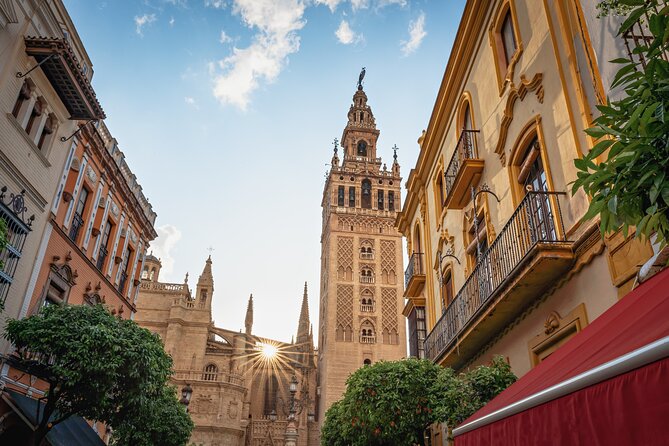
This works especially well if you:
- want to connect Jewish history to the actual street layout of Santa Cruz
- like guides who bring Seville’s legends and facts together
- prefer an evening or short-time plan that doesn’t lock you into a museum timetable
It may feel less satisfying if you:
- need a long, detailed study session focused strictly on Jewish daily life and institutions
- expect a major number of surviving original artifacts to point to (Santa Cruz has a lot of story, and less visible physical evidence than you might hope)
Should you book the Seville Santa Cruz Former Jewish Quarter walk?
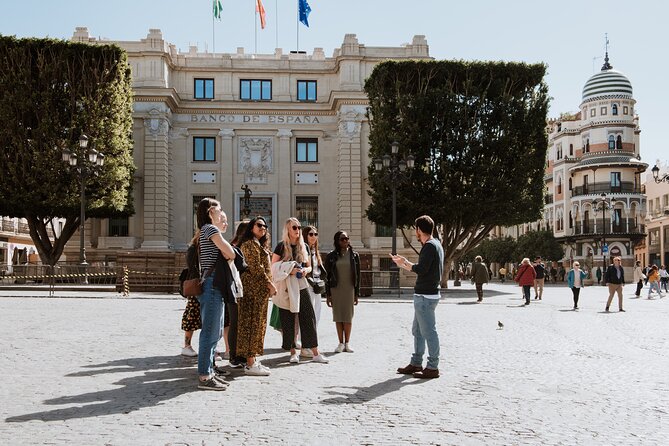
I’d book it if your goal is to understand Santa Cruz in a way that sticks. For $18.02, in about two hours, with a small group and English or Spanish options, you get an efficient route through the neighborhood’s named places, plus a guide who helps you interpret what you’re seeing rather than just pointing at it.
If you love history, but you also want Seville to feel like Seville—story and street both included—this is one of those tours that makes your later self-guided wandering better. And if you’re the type who asks questions during walks (good for you), the group size here makes it more likely your questions will get real answers.
FAQ
FAQ
How long is the Seville Santa Cruz Former Jewish Quarter walking tour?
It runs for about 2 hours.
What languages are available?
The guided tour is offered in English and Spanish.
What does it cost?
The price listed is $18.02 per person.
Where do I meet the guide, and where does the tour end?
You start at Plaza del Triunfo and finish at Plaza de Santa Cruz.
Are there extra admission tickets for the stops?
The itinerary lists admission as ticket free for each stop.
Can I cancel for a full refund?
Yes. Free cancellation is available if you cancel at least 24 hours in advance.
If you want, tell me your travel dates and whether you prefer English or Spanish, and I’ll suggest the best time to do this walk during your Seville day.