REVIEW · MADRID
Street Art Guided Tour in Madrid
Book on Viator →Operated by Cooltourspain · Bookable on Viator
Street art in Madrid has a pulse. In about two hours, you’ll walk from central meeting points through La Neomudéjar and La Tabacalera, then finish at Campo de Cebada. Along the way, you’ll pass some classic sights and some under-the-radar art spaces that help explain why this city writes back on its own walls.
I love the behind-the-scenes access to La Neomudéjar, the old power plant turned artist workspace. I also like the way the tour links the art to real-world pressure, including protests tied to Spanish article 626 and its crackdown on graffiti.
One thing to plan around: parts of the route can depend on opening hours, and weekday timing can be restrictive at La Tabacalera.
In This Review
- Key things that make this street art tour worth your time
- Start Point in Centro: what 2 hours feels like on your feet
- The short walk to La Neomudéjar: where the power plant becomes an artist hub
- Passing Atocha’s art scene and those big-headed babies
- La Tabacalera de Lavapiés: tobacco warehouse turned creative engine
- Esta es Una Plaza: the urban garden stop that depends on being open
- Lavapiés on foot: multicultural streets and the art’s real context
- Artists, guides, and the difference between a mural tour and a street-art tour
- Campo de Cebada: where street art meets community life
- Is $30.38 a fair deal for Madrid street art?
- What to bring and how to get the most from the walk
- Who should book this street art guided tour?
- Should you book this Madrid street art tour?
- FAQ
- What’s the duration of the Street Art Guided Tour in Madrid?
- How much does the tour cost, and what language is it in?
- How many people are in a group?
- Where do I meet the guide, and what’s the nearest metro?
- Is it a walk-only tour, or are there indoor parts?
- Is the tour affected by weather?
- What if I cancel?
Key things that make this street art tour worth your time

- La Neomudéjar, a former power plant repurposed by local and international street artists
- La Tabacalera, a 19th-century tobacco warehouse with performance energy and stencil-lined basements
- Lavapiés at street level, where you learn the neighborhood context behind the murals
- Campo de Cebada, a community space shaped by the 15-M Movement and daily local use
- Small group size (max 13), which makes it easier to ask questions and hear explanations
- Festival timing luck, since you can sometimes catch artists painting for events
Start Point in Centro: what 2 hours feels like on your feet
This is a short walk-heavy tour, built for people who want to see more than a photo stop. You meet at Teatro Valle-Inclán (Pl. de Ana Diosdado, s/n) in Centro, with the nearest metro listed as La Latina or Tirso Molina. The start time shown is 11:15 am, but the tour can run in the morning or afternoon depending on the departure.
With a maximum of 13 people, you’re not stuck in a long line. That matters here, because good street-art tours are part art viewing, part conversation. If you want the messages behind the murals to land, you’ll do better when you can actually hear the guide and move as a group without falling behind.
If you’re deciding whether to wear shoes for walking or for photos, pick walking shoes. This tour is designed for streets, not museum benches. Also, it operates in all weather, so bring what you need for the day (Madrid can swing from sunny to windy fast).
You can also read our reviews of more guided tours in Madrid


The short walk to La Neomudéjar: where the power plant becomes an artist hub
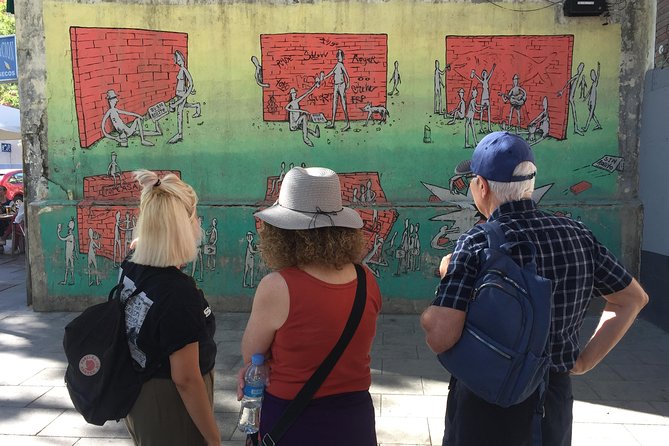
La Neomudéjar is the first major stop, and it’s a smart opener. The space used to help power the train station back in the 19th century. Now it’s reclaimed by artists, and it’s the kind of place where you can feel the transformation in the brick and layout.
One reason I like this stop for you is that it sets the tone. Street art is not just “cool wall pictures.” In spaces like this, the art is tied to place, time, and ownership. You’ll see works by artists such as Himen, Ze Carrión, and Laguna626, and the guide helps you read the styles and the messages instead of just naming colors.
There’s also a strong political thread. Many artists use their work to protest the enforcement pressures around Spanish article 626, a law aimed at penalizing graffiti creators. Even if you’re not trying to be political, it’s useful context. It explains why some pieces look urgent, why messages are direct, and why the art spreads through collaboration.
Passing Atocha’s art scene and those big-headed babies
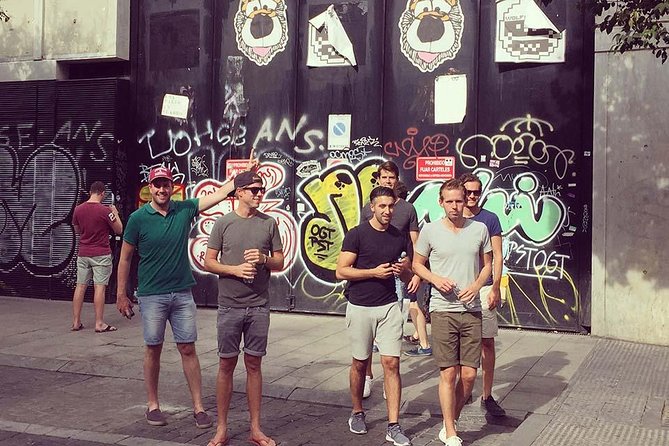
As you move, the route doesn’t ignore Madrid’s mainstream landmarks. You’ll pass the big-headed babies monument in front of Atocha train station as you walk through the area. It’s a quick detour, but it helps you understand the contrast: official-looking landmarks right next to unofficial wall language.
You’ll also encounter an avant-garde art center now located in the Mediodía metro station. That detail matters because it signals a bigger point: Madrid doesn’t treat art as one separate category. It flows through transport hubs, neighborhoods, and underground spaces.
For you, this kind of transition is valuable. It keeps the day from becoming only murals-on-murals. You get a sense of where the creative scene “lives,” not just where it gets displayed.
La Tabacalera de Lavapiés: tobacco warehouse turned creative engine
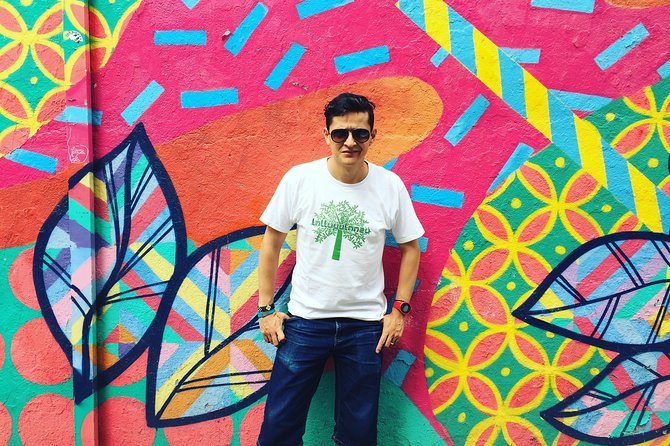
La Tabacalera is the next anchor stop, and it’s the one that often feels like Madrid’s creative headquarters. This is a former warehouse from the 19th century where more than 1,000 workers processed tobacco by chopping, shredding, and rolling. Today, the building hosts exhibitions and artistic performance events, so the vibe is less like a gallery and more like an active venue.
You’ll focus on the exterior graffiti walls first, paying attention to the artists, the messages, and the techniques. One reason this stop works well is that you’re not just looking at completed murals. You’re learning to spot how different styles are built—line choices, layering, spray textures, and how artists fit their work into existing surfaces.
Then comes an especially memorable part: the basement. It’s described as lined with hundreds of street art projects and stencils. Even if your interest is mainly street-level murals, basements like this teach you how much prep and planning sits behind what looks spontaneous.
A practical note: La Tabacalera can have restrictive timing during weekdays. That doesn’t make the tour “bad,” but it can affect what’s accessible on your date. If you’re flexible with your schedule, you’ll reduce the chance of missing a key area.
Esta es Una Plaza: the urban garden stop that depends on being open
This tour also includes a stop called Esta es Una Plaza—an urban garden with walls worth seeing. The key detail is simple: the visit to the garden walls is only guaranteed if the location is open. In other words, this part is sensitive to daily hours.
If you’re the type who hates uncertainty, this is the one element you should treat like a bonus rather than a promise. If it’s open, great—you get another layer of street art culture in a calmer setting. If it isn’t, the rest of the walk still covers plenty.
This stop is also useful because it reminds you that street art isn’t always only on grimy corners. In some places, it’s framed by community design—green space, gathering space, and art that fits everyday use.
A few more Madrid tours and experiences worth a look
Lavapiés on foot: multicultural streets and the art’s real context
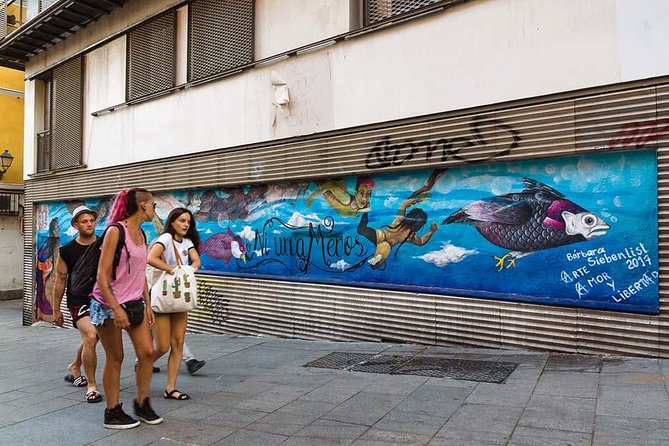
Lavapiés is where the tour starts to feel like Madrid rather than just Madrid’s walls. You’ll walk around the neighborhood and the guide explains its history and how it became the kind of district where street art makes sense.
Lavapiés is described as highly multicultural and diverse, and that’s not a generic label here. It shows up in what you see on walls: multiple languages, different references, and messages shaped by local life. It’s also the kind of area where sanctioned and unsanctioned art can sit side by side, sometimes with permission and sometimes without it.
One review detail worth keeping in mind: on at least one tour date, the group caught artists painting new pieces for an upcoming festival in the Calle Lavapies area. If your timing lines up, you might get a little extra energy—people actively working, talking about their pieces, and making the art feel current rather than archived.
Artists, guides, and the difference between a mural tour and a street-art tour
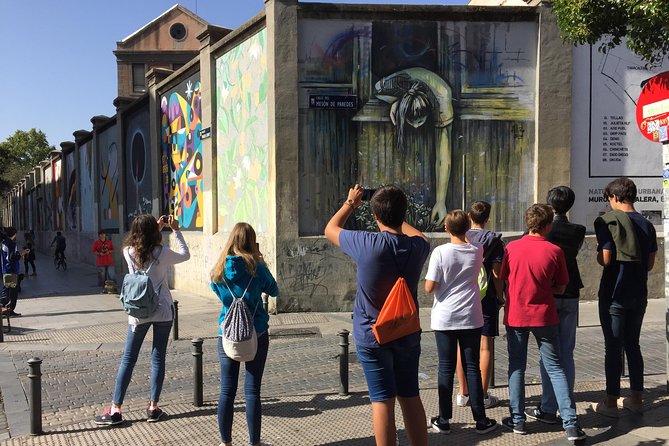
What makes this tour work best is the human side. The guide is local, and the experience includes a multilingual guide (English/French/Spanish), while the tour offering you book is English. You’ll also see feedback that names guides like Santi and Julia for being fun, engaged, and very tuned into the neighborhood.
That matters because street art is full of small signals. A great guide doesn’t just point and name. They connect the dots: why the message is shaped the way it is, what technique the artist used, and what the placement says about the neighborhood.
There’s also a recurring theme in the feedback: guides can be responsive to the group. If someone asks a question about a specific style or a specific artist name, you may get a clear answer rather than a quick “next stop” shove.
One practical lesson from mixed feedback: if you drift too far ahead or you’re constantly scanning your phone, you can miss details. This isn’t a “stand back and listen” tour. If you want the explanations, stay close enough to hear them.
Campo de Cebada: where street art meets community life
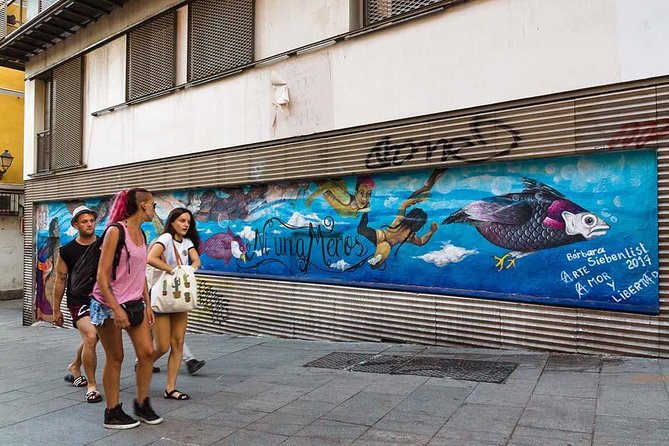
Your tour finishes at Campo de Cebada, called the Barley Field. This is a community gathering place and art project, and the origin story gives it meaning beyond murals.
The space ties back to Spain’s 15-M Movement, when people recaptured public streets and squares for communal use. While Campo de Cebada once had a swimming pool, local associations reorganized it into a shared space that supports everyday activities—watching movies in summer, listening to music, and even planting vegetables in a collective garden.
This ending works because it changes the question from “Who painted that?” to “Who uses this space?” Street art is often born from public space. Campo de Cebada shows what that can evolve into when communities hold onto the idea of shared ownership.
The tour ends at Plaza de Cascorro, which is a handy anchor for your next step—wander for food, keep exploring, or hop on transit without feeling rushed.
Is $30.38 a fair deal for Madrid street art?
At $30.38 per person for about two hours, the value comes from what’s packed in—not just the wall viewing. You get:
- Multiple major art spaces (La Neomudéjar and La Tabacalera) rather than one neighborhood-only route
- A mix of surfaces: exterior walls, performance-style spaces, and basement stencil collections
- Context tied to real Madrid policy pressure, including the graffiti-related article 626 discussion
- A small group cap of 13, which improves the quality of interaction
So for you, the price makes sense if you want context and a route that hits different types of street art culture, not just the easiest photo spots. If your goal is only “best-looking murals in the shortest time,” you could maybe find similar photos on your own. But if you want the why behind the walls, you’ll likely feel this tour earns its cost.
One more thing: this tour is typically booked about 16 days in advance on average. I’d treat that as a sign that dates can fill, especially for smaller groups.
What to bring and how to get the most from the walk
This is a practical, outdoors-first tour. You’re moving between sites, so focus on comfort over style. I’d bring:
- Comfortable shoes (you’ll be walking more than you expect)
- Weather protection, since it runs in all conditions
- A charged phone for photos, but not so much that you lose the spoken details
Also, if you’re the curious type, this is a great time to ask about specific artists you’re seeing. Names like Himen, Ze Carrión, and Laguna626 come up for a reason, and a good guide can tell you what to notice in their work.
Finally, keep an eye on access. Since La Tabacalera can have restrictive weekday timing and Esta es Una Plaza is only guaranteed if open, your best mindset is flexible.
Who should book this street art guided tour?
Book it if you:
- Want street art with context, not just pictures
- Like neighborhood walking through Lavapiés
- Enjoy learning how art interacts with local rules and community life
- Want a smaller group experience where you can ask questions
Skip it (or at least adjust expectations) if you:
- Want a strict list of only the biggest “name murals” with guaranteed access everywhere
- Get frustrated when outdoor stops depend on day-to-day opening hours
- Prefer a faster rhythm with minimal guide talk (this tour includes explanation at multiple points)
Should you book this Madrid street art tour?
If your idea of a great day in Madrid is walking, reading walls, and understanding the human stories behind street art, yes—this tour is a strong fit. The combination of La Neomudéjar (artist-reclaimed power plant), La Tabacalera (tobacco warehouse plus stencil basements), and Campo de Cebada (community space tied to the 15-M Movement) gives you a full picture of how street art operates here.
Just go in with two expectations set: access at certain stops can depend on timing, and you’ll get the best value by staying close enough to hear the guide.
FAQ
What’s the duration of the Street Art Guided Tour in Madrid?
The tour runs for about 2 hours.
How much does the tour cost, and what language is it in?
It costs $30.38 per person and is offered in English.
How many people are in a group?
The group maximum is 13 travelers.
Where do I meet the guide, and what’s the nearest metro?
You meet at Teatro Valle-Inclán on Pl. de Ana Diosdado, s/n (Centro). The nearest metro listed is La Latina or Tirso Molina.
Is it a walk-only tour, or are there indoor parts?
It includes outdoor street art viewing and also visits to indoor spaces at La Tabacalera, including the basement area with projects and stencils.
Is the tour affected by weather?
It operates in all weather conditions, so dress appropriately for the day.
What if I cancel?
You can cancel up to 24 hours in advance of the experience start time for a full refund.