REVIEW · CORDOBA
Cordoba: Guided Tour of Medina Azahara at Night
Book on GetYourGuide →Operated by ARTENCORDOBA · Bookable on GetYourGuide
Medina Azahara hits different after dark. This 2-hour, small-site guided walk uses purpose-built night lighting to help you read the 10th-century ruins like a story of Al-Andalus.
I especially love the fact that you’re walking with historians and archaeologists, not just someone reciting facts. Plus, the guides (notably Rafa) do a great job making the place feel bigger and more human, not like a pile of stones.
One thing to watch: the live guide is Spanish only, so an all-English experience isn’t what you’ll get.
In This Review
- Key Things That Make This Night Tour Work
- Medina Azahara at Night: Why the Ruins Feel So Big
- Getting There from Córdoba: Bus Transfer vs. 8 km Walk
- The 2-Hour Guided Walk: What You’ll Learn and See
- The Night Lighting Setup: Comfort, Clarity, and Real-World Limits
- Guide Style in Practice: Rafa’s Storytelling Matters
- Price and Value: Is $33 a Good Deal?
- Who This Tour Fits Best (and Who Should Skip It)
- Potential Snags to Plan Around
- Should You Book This Night Tour of Medina Azahara?
- FAQ
- How long is the guided tour?
- What time of day is this tour?
- Is transportation included?
- Where do I meet the bus in Córdoba?
- What language is the guide?
- Is the tour suitable for wheelchair users?
- Can I cancel for a full refund?
Key Things That Make This Night Tour Work
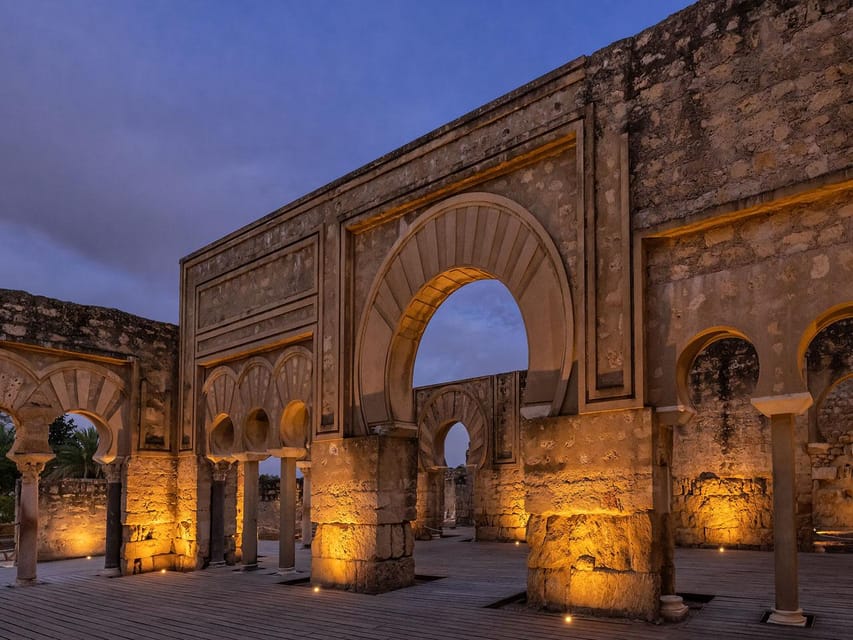
- Night lighting (since Oct 2017) turns the ruins from hard-to-read to actually understandable at walking speed
- Expert-led storytelling with historians/archaeologists gives you context for the architecture and power of Al-Andalus
- A short 2-hour format that fits easily into an evening without eating your whole day
- Cooler night temperatures make the walk more comfortable than the daytime heat
- Optional bus transfer helps because the site is about 8 km from Córdoba
Medina Azahara at Night: Why the Ruins Feel So Big
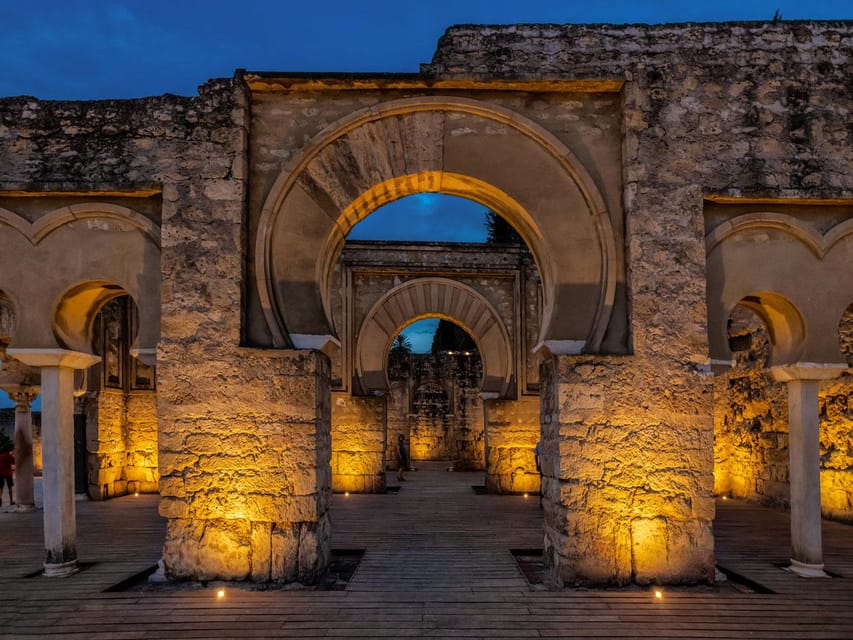
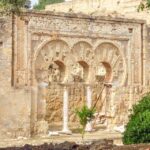
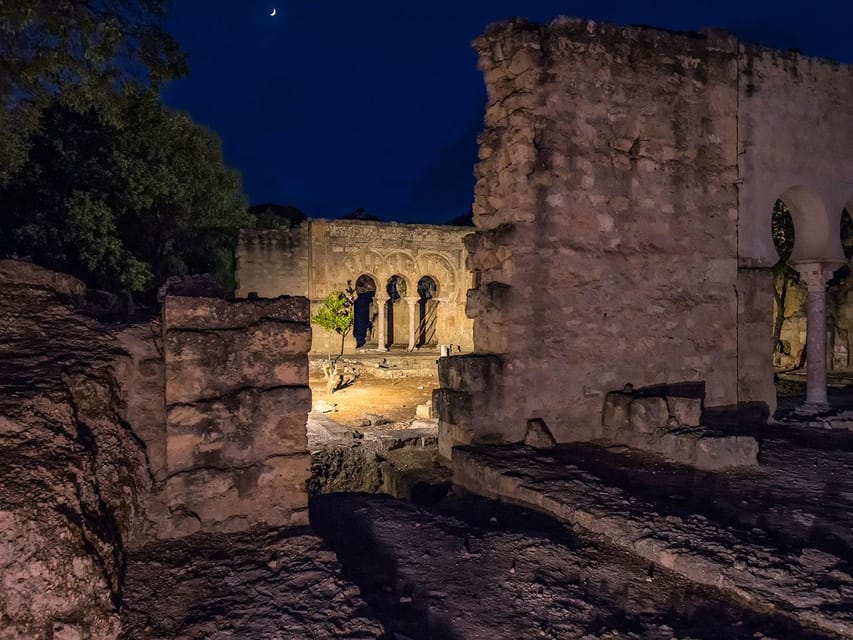
Medina Azahara was built as a palace city in the 10th century, and at night you get a useful advantage: your eyes can focus on shape, rhythm, and space. Daytime photos often flatten things; at night, the lit paths and walls guide your attention in a way that makes the complex feel more “planned” and less “ruined.”
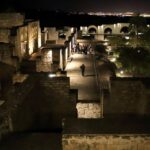
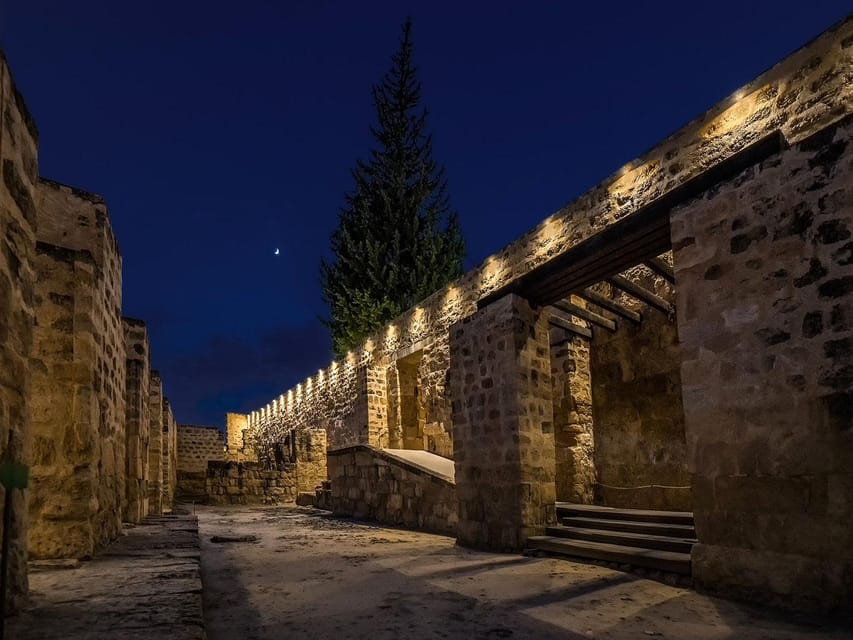
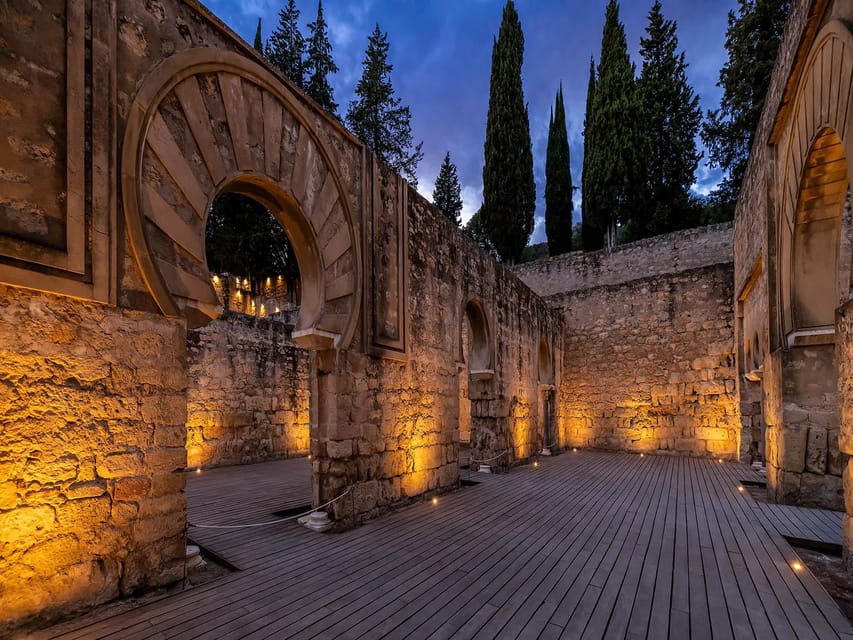
The lights system is a real practical win. Since October 2017, the archaeological site has been equipped for comfortable guided visits after dark. That means you can follow the guide’s explanation without constantly squinting or guessing what you’re standing next to. You’re still outside on uneven ground, but it’s built for evening viewing, not emergency flashlight archaeology.
I also like how the night setting changes your pace. You’re not racing to check boxes. You’re walking slow enough to pick up how a caliphal city related to real power: politics, trade, and culture. And because the walk is only 2 hours, it doesn’t overstay its welcome.
You can also read our reviews of more guided tours in Cordoba

Getting There from Córdoba: Bus Transfer vs. 8 km Walk
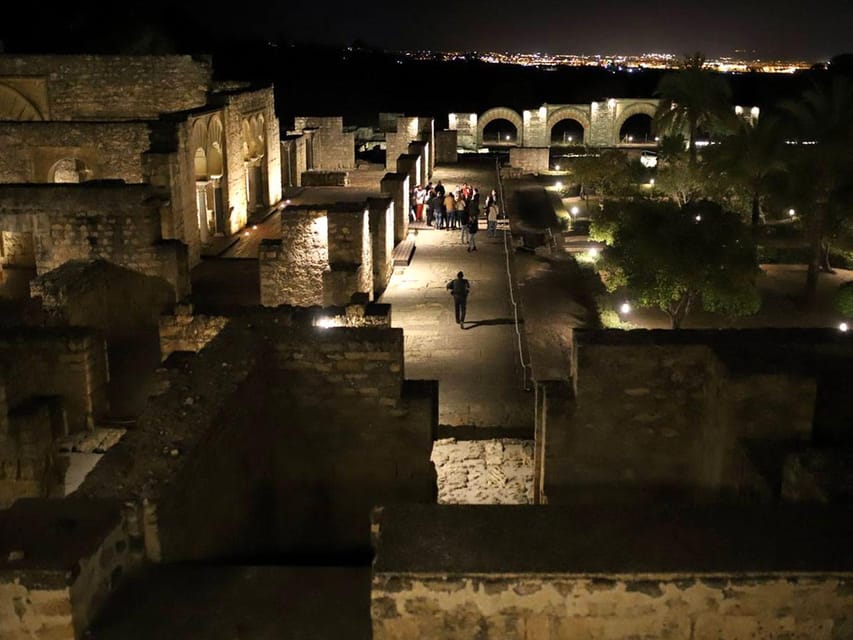
This tour has two workable options. You can join the version with bus transportation to and from Córdoba, or you can choose the option without transportation and handle the travel to the site yourself. The archaeological complex is about 8 kilometers from Córdoba, so the bus option makes a difference if you’re short on energy or want a smoother evening.
If you’re taking the bus, here’s the key detail: you board the yellow bus with red lettering at the ‘Paseo de la Victoria’ stop at the Rotonda Cruz Roja, opposite the Eurostar Palace Hotel. Bring your bus ticket and show it to the driver. And yes, you should arrive early—this kind of departure is run on time.
If you’re choosing the no-transport option, plan for that 8 km distance and an evening start. Wear shoes you’re comfortable walking in, because you’ll be on the ground where ruins meet dirt paths.
The 2-Hour Guided Walk: What You’ll Learn and See
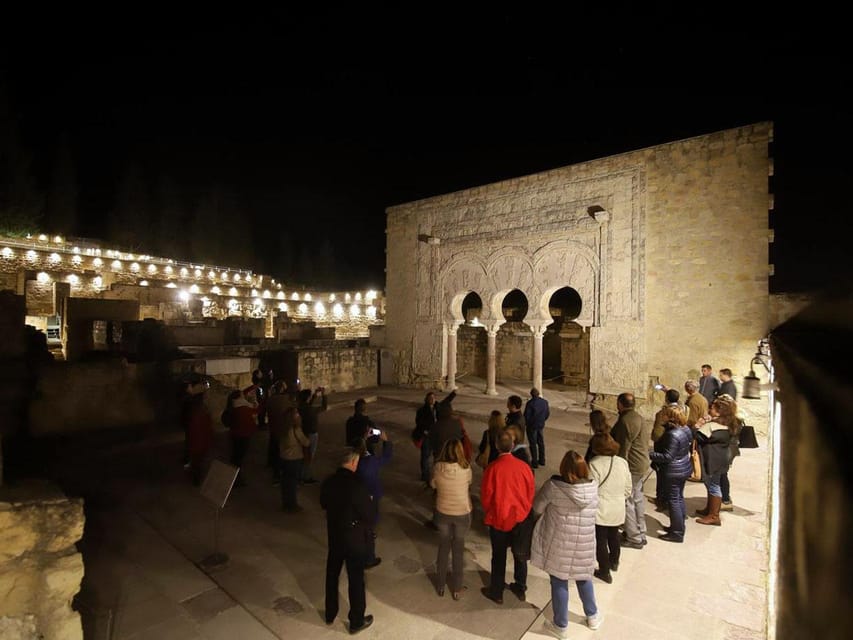
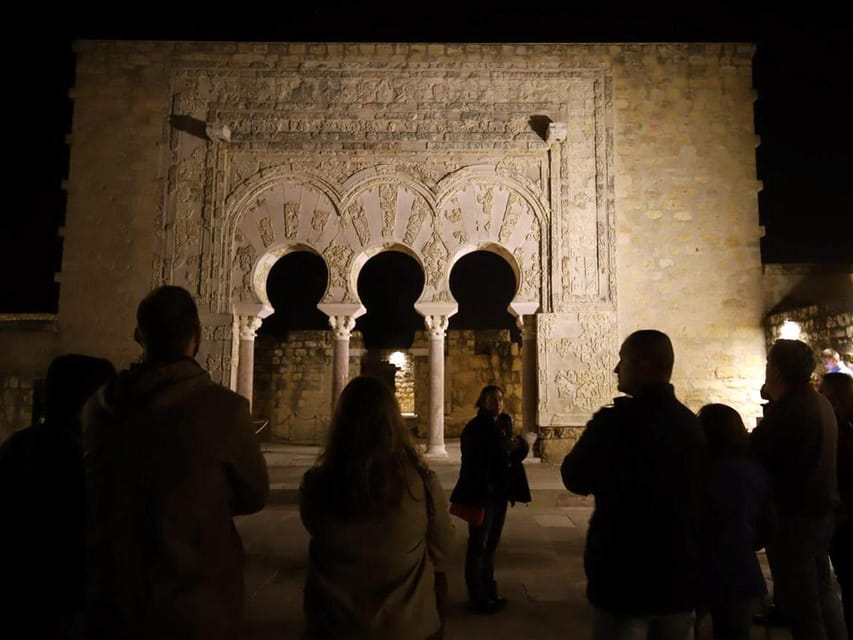
The tour starts with a guided walk beginning at the archaeological ruins. From there, you’re led through the site on foot, with the focus on understanding what you’re looking at. The best part is that the explanations aren’t just about dates—they connect the architecture of Medina Azahara to the wider story of Al-Andalus.
Here’s what the guide is helping you piece together:
- How caliphal (high-rule) Islamic art shows up in architecture and design choices
- How the palace-city complex worked as an economic, social, and cultural power
- Why the place mattered in Córdoba’s historical orbit during the period of Al-Andalus
Even if you only know a little before you go, the structure of a guided evening visit helps. You get time to look, then time to connect what you saw to why it exists. That’s the difference between a quick night stroll and an actually meaningful visit.
You’ll also notice the site’s scale. Ruins can look “patchy” in daylight; at night with lighting and a guide’s rhythm, the layout feels more logical. It’s easier to sense the planning behind the complex.
The Night Lighting Setup: Comfort, Clarity, and Real-World Limits
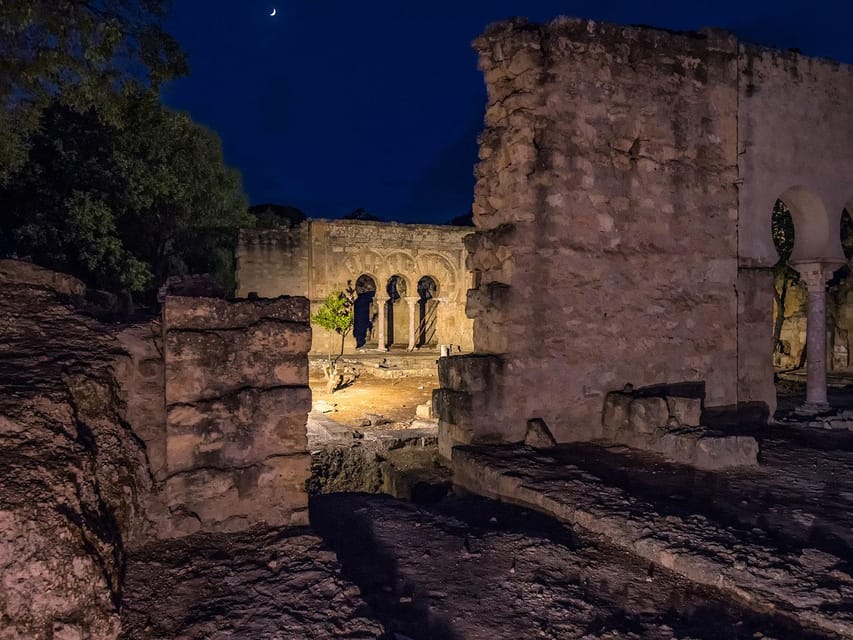
The big promise of the evening visit is straightforward: lighting that makes night touring comfortable. And in practice, that helps you read the ruins in a way that’s not frustrating.
Still, a night site has limits, and you should plan around them:
- You’ll be outside, so you’ll want comfortable shoes and an attitude of watch your step
- Seating isn’t guaranteed in the way museums are, so if you need places to rest, you might find options limited
Also, consider that lighting can’t make everything evenly visible. One of the most honest things I’d tell you is this: if your expectations are that the ruins will look like a well-lit indoor exhibit, you may be disappointed. The value is in the guided interpretation and the lighting designed to support a walk, not to create perfect visibility everywhere.
For photos, expect that your best shots will happen when the guide points things out. Let the explanation shape where you look; you’ll get better results than wandering with your camera held up randomly.
Guide Style in Practice: Rafa’s Storytelling Matters
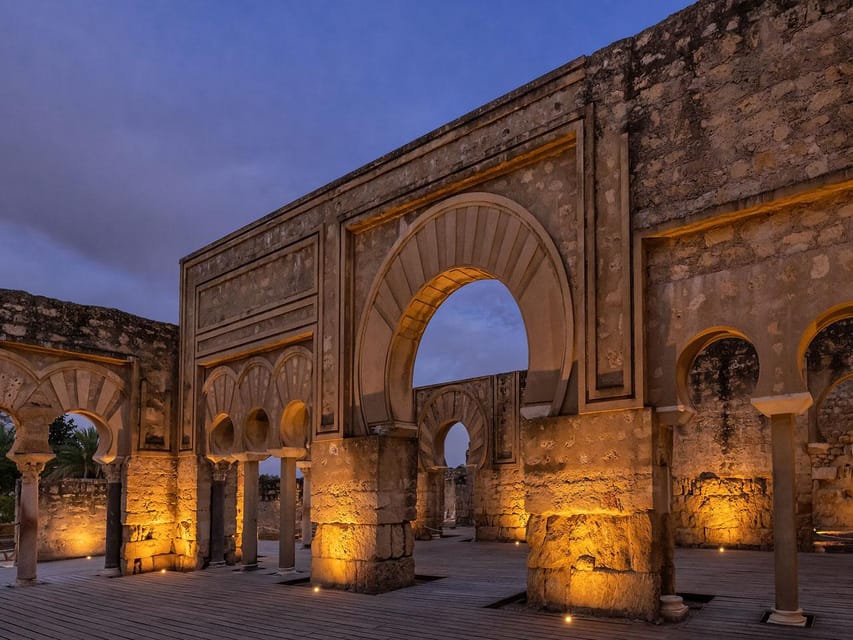
A guided night experience rises or falls on the guide’s ability to turn stone into context. In this case, the guide approach is a strong point, especially when the guide is Rafa. The tone is interactive and energetic—history gets explained in a way that feels like you’re learning the logic behind what you see.
This matters because Medina Azahara isn’t a single highlight like a cathedral nave. It’s a palace-city complex. Without guidance, you can easily miss the connections: why certain forms appear, what caliphal art meant, and how the city’s role extended beyond royal buildings.
On the plus side, a live guide who’s good at pacing can keep the evening enjoyable rather than exhausting. And the night timing helps too: people often find it more comfortable because temperatures are usually cooler than daytime.
The one clear drawback again is the language. The guide you’ll hear is Spanish only, so if your Spanish is basic, you’ll need to rely on the general flow of the explanations and any non-verbal cues the guide uses.
You can also read our reviews of more evening experiences in Cordoba


Price and Value: Is $33 a Good Deal?
At about $33 per person for a 2-hour guided night visit, the value comes from three things working together:
- You’re paying for guided interpretation, not just entry
The tour is designed to explain caliphal or Islamic art and connect the ruins to Al-Andalus as economic, social, and cultural power.
- You’re paying for night readiness
The lighting system makes after-dark visits feasible and comfortable, which is usually the hardest part of night tours at outdoor sites.
- You may be paying for transport too (depending on option)
If you select the bus version, round-trip transfer reduces friction and keeps the evening simple.
So this isn’t a bargain if you’re expecting an English-language tour or a long, sitting-friendly experience. It’s a smart buy if you want a focused evening visit with real context and you don’t mind that it’s Spanish-led.
Who This Tour Fits Best (and Who Should Skip It)
This tour is a great fit if you:
- Love architecture and want the why behind the stone
- Prefer a night visit because it feels cooler and more atmospheric
- Want a short, guided format that doesn’t eat your whole evening
- Can comfortably follow a Spanish live guide (or at least enjoy the rhythm even if you’re not fluent)
You might want to skip or rethink if:
- You need an English option for the live guide
- You’re counting on a lot of seating during the visit
- You require wheelchair accessibility (this tour isn’t suitable for wheelchair users)
Potential Snags to Plan Around
Even with good lighting and a solid format, outdoor evening tours can hit real-life bumps. Here are the ones most relevant to your decision:
- Language barrier: the live guide is Spanish, and there isn’t an English option listed.
- Site activity changes: if a portion is closed due to a musical concert or event, your route could shift. That’s not something you can control, but it’s worth keeping flexibility in your schedule.
- Limited rest: a night archaeological visit is still a walk through uneven terrain. If you get tired easily, bring a plan (slow pace, comfortable footwear) and don’t expect plenty of benches.
Should You Book This Night Tour of Medina Azahara?
If you’re the kind of traveler who likes understanding what you’re seeing, I’d say book it—especially for the night lighting and the guided focus on Al-Andalus and caliphal art. The 2-hour length is also ideal: you get depth without committing to a long, tiring outdoor session.
But be honest about your needs. Don’t book expecting English guidance, heavy seating, or perfectly even lighting everywhere. If Spanish is okay for you (or you’re comfortable with a primarily Spanish experience) and you want a memorable night visit that makes sense of the ruins, this tour is a solid way to spend an evening in Córdoba.
FAQ
How long is the guided tour?
The tour lasts 2 hours.
What time of day is this tour?
It’s a nighttime visit to the Medina Azahara archaeological site.
Is transportation included?
It depends on the option you select. You can choose a tour with bus transportation to and from Córdoba, or an option without transportation.
Where do I meet the bus in Córdoba?
Meet at the ‘Paseo de la Victoria’ bus stop at the Rotonda Cruz Roja, opposite the Eurostar Palace Hotel. The bus is yellow with red lettering.
What language is the guide?
The live tour guide is Spanish.
Is the tour suitable for wheelchair users?
No, it is not suitable for wheelchair users.
Can I cancel for a full refund?
Yes. You can cancel up to 24 hours in advance for a full refund.