REVIEW · CORDOBA
Extra Virgin Olive oil tasting
Book on GetYourGuide →Operated by Things to do Cordoba · Bookable on GetYourGuide
Olive oil tasting can feel like breakfast class. In Córdoba, you get a breakfast-style EVOO tasting that turns liquid gold into something you can actually taste and explain. You’ll learn why this region matters so much for olive oil production and how different varieties shape flavor, not just price. One thing I love is how hands-on it feels, not like a lecture.
My second big favorite is the guided, stop-and-smell, taste-and-talk approach with guides such as Adrian and Barbara, who bring the food and the local olive culture into the room. The main drawback to plan for is simple: it’s not suitable for wheelchair users, so you’ll want to consider accessibility before you book.
In This Review
- Key things that make this tasting work
- Why Córdoba’s extra virgin olive oils taste different
- Meeting at the Corredera market: where the experience starts
- Desayuno molinero breakfast: pan del vacar and real tasting technique
- The six oils: how to taste picual, arbequino, picudo, and hojiblanca
- From tree to bottle: what you learn about production
- Coffee, ancient habits, and how Andalusians actually eat with olive oil
- Buying your favorite oil in situ without losing the plot
- Price and value: what $15 gets you in real terms
- How long is it, and who should book it
- Should you book this Córdoba extra virgin olive oil tasting
- FAQ
- What’s included in the extra virgin olive oil tasting?
- How long does the tasting last?
- Where do I meet for the tour?
- How much does it cost?
- What languages are available?
- Is it accessible for wheelchair users?
Key things that make this tasting work
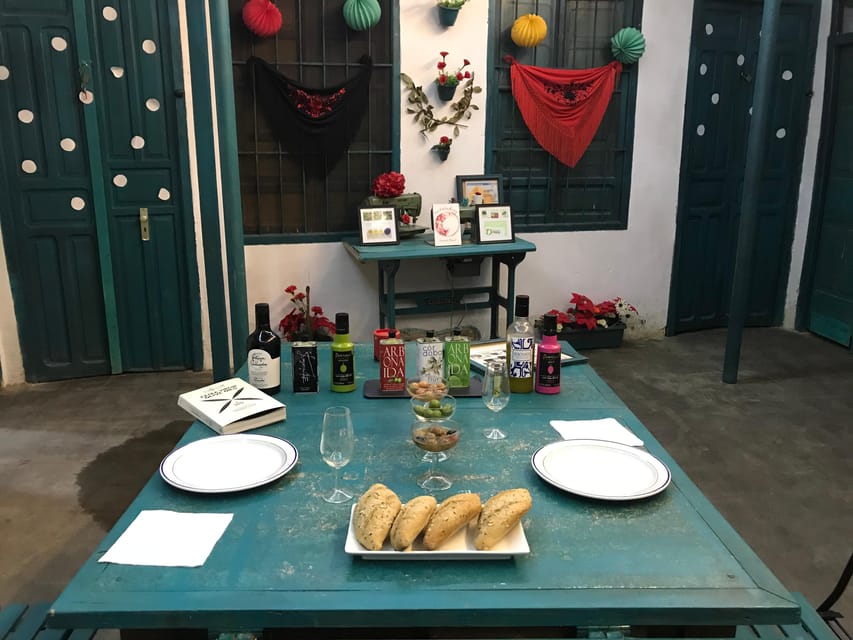
- Six Cordoban oils to compare, not just one or two
- Organoleptic tasting taught in plain terms, with bread as your tasting tool
- Picual, Arbequino, Picudo, and Hojiblanca explained as more than names on a label
- Desayuno molinero with pan del vacar, so the oils make sense with real eating habits
- Arabic coffee and tea to round out the breakfast rhythm
- A chance to buy your favorite oil in situ without hunting around
Why Córdoba’s extra virgin olive oils taste different
Córdoba sits in the same olive-growing world you hear about across Andalusia, but it’s also a serious producer with a long tradition. That matters here because the tasting isn’t just about flavors in isolation. You learn how the olives and local practices shape the final bottle.
What makes this experience worth your time is that you stop treating olive oil like a generic cooking ingredient. Instead, you taste it the way it’s meant to be tasted: slowly, with attention to aroma, bitterness, and that peppery finish many good extra virgin oils carry.
And because you’re doing this with breakfast, you’ll get an immediate mental connection. The olive oil isn’t some fancy side quest. It becomes part of the meal logic.
You can also read our reviews of more food & drink experiences in Cordoba

Meeting at the Corredera market: where the experience starts
Your meeting point is right at Córdoba’s Corredera square market: look for the big clock under the main entry. Even before you start tasting, the location sets the tone. This is where you’d expect local foods to show up, and that helps you read the oils in context.
In many sessions, there’s a short market moment first, where your guide points out local product ideas and helps you understand what you’re about to taste. It’s not a huge shopping spree. It’s more like a warm-up so the tasting doesn’t feel random.
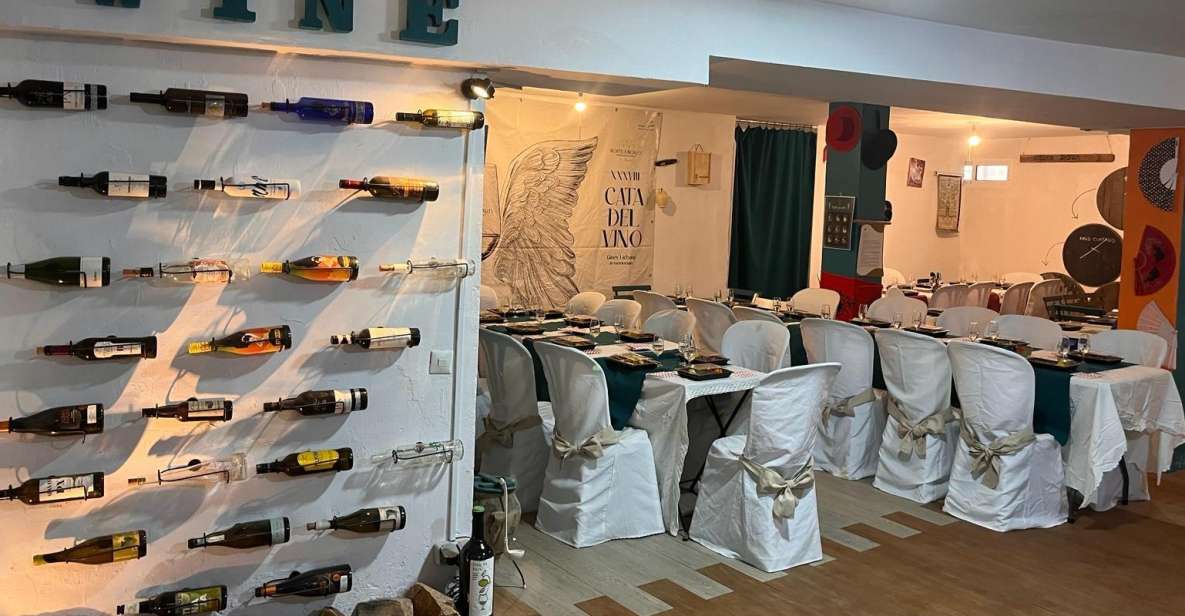
Then you head to the tasting room. Several experiences describe a cool, comfortable basement-style setup, which makes a big difference in the middle of the day. If you’ve ever tried to do a food tasting in a hot, noisy street, you know why this matters.
Desayuno molinero breakfast: pan del vacar and real tasting technique
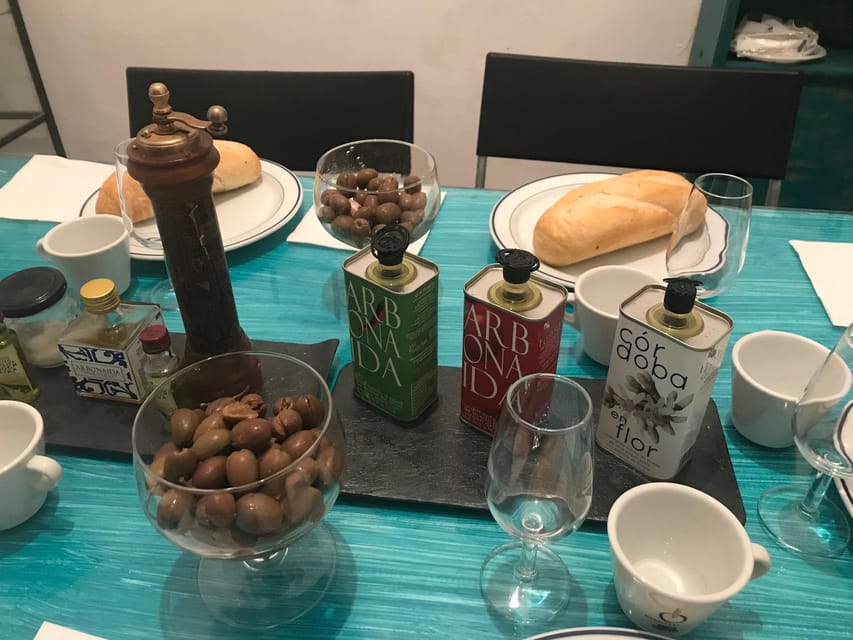
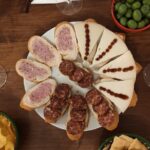
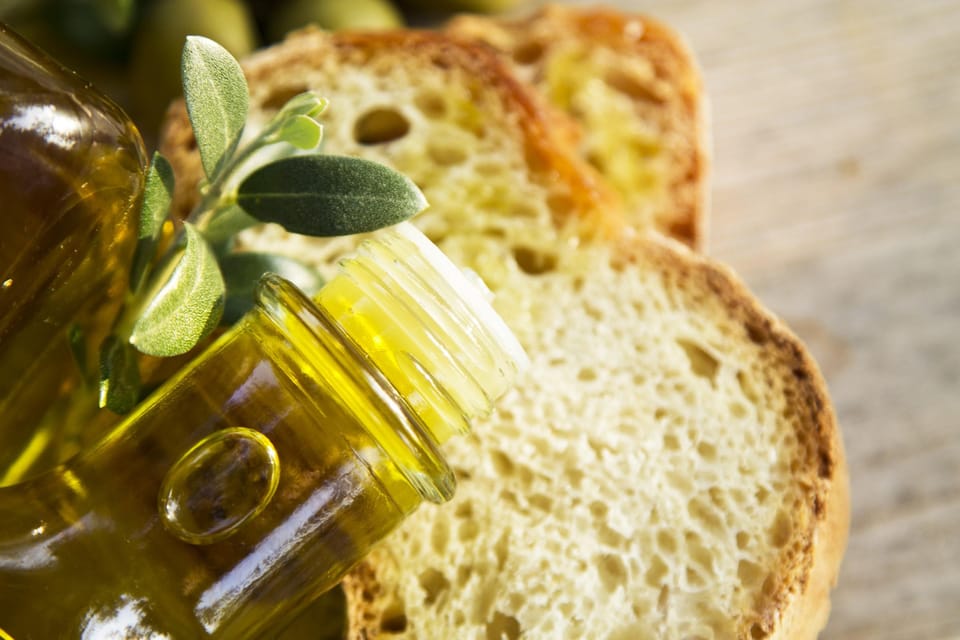
This tasting is built around a breakfast setup called desayuno molinero. You’ll have bread for the tasting (pan del vacar), plus coffee and tea. The food isn’t filler. It’s the tool that helps you taste more clearly.
Here’s the practical part you’ll appreciate: the oils are sampled in sequence, with the bread used as the bridge between oil and palate. That means you can compare oils without guessing. If you like the sharp, green notes in one oil, you’ll feel it against the bread. If another oil feels rounder, softer, or more buttery on first taste, that contrast shows up quickly.
A few sessions also include palette-clearing habits. People describe being offered water between tastings, plus drinks like coffee. That’s a smart touch, because olive oil flavors can blur when your mouth is tired or your senses are overloaded.
The six oils: how to taste picual, arbequino, picudo, and hojiblanca
The experience includes 6 olive oils from Córdoba. You also learn about specific varieties and their differences, including Picual, Arbequino, Picudo, and Hojiblanca.
Think of each variety as its own personality:
- Picual often gets associated with a more structured profile. In a tasting like this, it’s the one that tends to show up with clearer bitterness and that peppery impression if the oil is fresh and well made.
- Arbequino is commonly recognized for gentler balance, and in tastings it often reads as smoother or more harmonious, even when it has character.
- Picudo can feel distinctive in a way that surprises people. When you’re sampling multiple oils back-to-back, you notice that not all extra virgin oils have the same intensity.
- Hojiblanca typically brings another flavor direction entirely, so you stop thinking of olive oil as a single taste.
You’ll learn organoleptic characteristics, which is a fancy way of saying you’ll train your senses. You don’t just swallow. You smell, taste, then describe what you’re noticing. That’s how you start understanding why one oil works for bread-and-tomato while another may feel better with salads, vegetables, or a finishing drizzle on warm dishes.
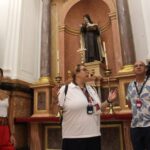
And guides make this much easier. People highlight how hosts explain the process from olives to bottle, and how they use passion and clear talk to keep the tasting fun, not intimidating. You’ll likely leave with a vocabulary you can actually use back at home.
From tree to bottle: what you learn about production
This is where the experience earns its name as more than a snack. You learn the secrets behind liquid gold with a real production story: varieties, how olives are handled, and how that leads to what ends up in your glass.
You’ll hear about how olive oil starts as fruit, not liquid. That changes how you taste. Once you understand how the olive variety contributes and how processing affects quality, you start tasting like you’re reading a label with your mouth.
A standout detail from people’s descriptions is that guides connect the oil to Córdoba itself: local production, local habits, and in some cases even family stories. One account mentions a guide sharing personal background about growing up with olive oil making dating back centuries. That kind of context doesn’t just make the story warmer. It helps explain why people here care so much about freshness, variety, and how the oil is used.



Coffee, ancient habits, and how Andalusians actually eat with olive oil
Olive oil doesn’t live alone. In this tasting, it’s paired with breakfast habits that give you the proper rhythm.
You’ll have arabic coffee from a local producer (and also tea). It’s a simple pairing, but it works because coffee can reset your palate and heighten aroma perception. You drink it as part of the flow, not as an afterthought.
You’ll also learn about the ancient way to consume olive oil, tied to the desayuno molinero idea and the traditional bread. That’s valuable for two reasons.
First, it answers a common question: what do I do with this at home? If you only taste oils on their own, you don’t learn their practical match. With bread and breakfast, you immediately understand how locals think about oil.
Second, it teaches respect for the product. Extra virgin olive oil isn’t just about culinary use. People in olive regions see it as a daily staple with properties tied to how it’s handled and eaten over time.
Buying your favorite oil in situ without losing the plot
At the end, there’s an in situ store option so you can buy an oil you liked. This is one of those parts that sounds marketing-ish, but it can actually be useful.
Why? Because tasting is the moment your preferences become obvious. Without a local shop stop, you’d either forget what you liked or try to buy blindly later. With a store on site, you can match your choice to your palate memory.
The hosts also claim you can get a good price. I can’t verify price against every other store in town from here, but based on the setup, it’s at least a convenient way to bring home the flavor you learned to recognize.
Practical tip: if you’re buying gifts, pick one oil that tastes the most like what you already cook with at home, and one that’s a little more adventurous. You’ll be happier using the first one and impressing people with the second.
Price and value: what $15 gets you in real terms
This experience is priced at $15 per person and runs about 75 minutes.
That’s strong value for three reasons:
- You get multiple tastings (6 oils), not a token sample. The comparison itself is the learning engine.
- You get breakfast elements, including bread plus coffee and tea. You’re not just paying for tasting notes; you’re eating something real.
- You get guided education, including production and variety differences. If you’ve ever bought a fancy olive oil at home and wondered what made it special, this kind of guided tasting helps you answer that question.
Also, the time is efficient. You’re not committing to a half-day excursion. You can fit it into a Córdoba schedule that already includes plazas, monuments, and markets.
How long is it, and who should book it
Duration is 75 minutes, and the session is offered in Spanish and English.
You’ll enjoy it most if:
- you like food learning that doesn’t feel like homework
- you want to understand varieties like picual and arbequino without reading for an hour
- you’re the type who buys ingredients on trips and wants better choices at home
It’s also a great option if you want something different from pure sightseeing. Several accounts describe the experience as small and personal, which makes sense for a tasting format where everyone can actually notice differences.
If you’re traveling with someone who thinks olive oil is boring, this is exactly the kind of tasting that can fix that. The breakfast format, the bread-and-oil method, and the fun energy from guides such as Gloria, Adrian, Barbara, and Mara (names that show up in people’s accounts) make it easier to stay curious.
The only clear mismatch: wheelchair users should choose another activity since it’s not suitable.
Should you book this Córdoba extra virgin olive oil tasting
Book it if you want a real taste of Córdoba that goes beyond souvenirs. The value is solid for the price: you’ll sample six local oils, learn variety differences, and eat breakfast in a way that teaches you how to use the oils after you leave.
Skip it only if you’re not interested in food-based learning or you prefer long cultural tours over short, sensory experiences. It’s not a slow, grand history march. It’s a focused session built around flavor, technique, and local olive culture.
If you’re in Córdoba and you care about quality ingredients, I think this is one of the smarter, more memorable add-ons you can make to your day.
FAQ
What’s included in the extra virgin olive oil tasting?
The experience includes 6 olive oils from Córdoba, coffee & tea, and bread for the desayuno molinero.
How long does the tasting last?
It lasts about 75 minutes.
Where do I meet for the tour?
Meet at the big clock under the main entry to the Corredera’s square market.
How much does it cost?
The price is $15 per person.
What languages are available?
The instructor runs the experience in Spanish and English.
Is it accessible for wheelchair users?
No, it’s not suitable for wheelchair users.