REVIEW · BARCELONA
Gothic Quarter Donation-Based Walking Tour in English
Book on Viator →Operated by Runner Bean Tours · Bookable on Viator
Medieval Barcelona starts right at Plaça Reial. This English walking tour threads through the Gothic Quarter and nearby landmarks, with built-in pauses so you can read the stonework and still grab good photos. I love the way it mixes famous names with real street-corner context, so the area stops feeling like a blur of sightseeing.
Two things I really liked: first, the photo-friendly timing at each stop (about 15–20 minutes) so you’re not sprinting between sights. Second, the guide is there not just for the walk, but also to share practical suggestions for what to do next in Barcelona. One possible drawback: at 2 hours 30 minutes, it can feel a bit fast on foot in sticky, hot weather.
In This Review
- Key Highlights You’ll Feel During the Walk
- Why This Gothic Quarter Tour Feels Worth the Small Price
- Starting at Plaça Reial: The Perfect Warm-Up
- Your Walk Through 9 Iconic Squares and Churches
- Stop 1: Plaça Reial (15 minutes)
- Stop 2: Plaza del Pi (15 minutes)
- Stop 3: The Jewish Quarter (El Call) (15 minutes)
- Stop 4: Plaça de Sant Jaume (20 minutes)
- Stop 5: Barcelona Cathedral (15 minutes)
- Stop 6: Plaça Sant Felip Neri (15 minutes)
- Stop 7: Plaça Nova (15 minutes)
- Stop 8: Plaça del Rei (20 minutes)
- Stop 9: Basilica de Santa Maria del Mar (20 minutes)
- How the Guide Turns Architecture into a Story
- Photo-Friendly Timing and the Pace Question
- Ending in El Born: Make It a Complete Half-Day
- Should You Book This Gothic Quarter Donation-Based Walking Tour?
- FAQ
- How long is the Gothic Quarter donation-based walking tour?
- What language is the tour offered in?
- Where does the tour start and where does it end?
- What time does the tour start?
- How many people are on the tour?
- What’s included in the price?
- Is free cancellation available?
Key Highlights You’ll Feel During the Walk
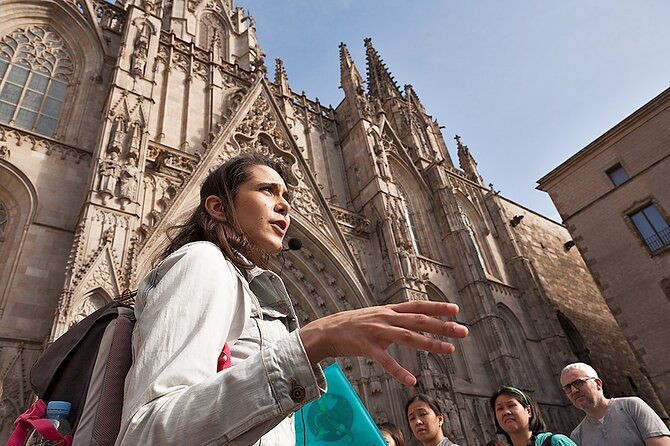
- Small group size (max 20): easier questions, more interaction, and a calmer pace than big-bus crowds
- Photo breaks built in: each stop gets time to look closely, not just point and move on
- Route covers more than one era: Roman-era traces show up alongside medieval and 14th-century architecture
- English-speaking local guide: you get context as you walk, plus tips for the rest of your trip
- Social, friendly vibe: a good option when you want to chat with people who also love history
Why This Gothic Quarter Tour Feels Worth the Small Price
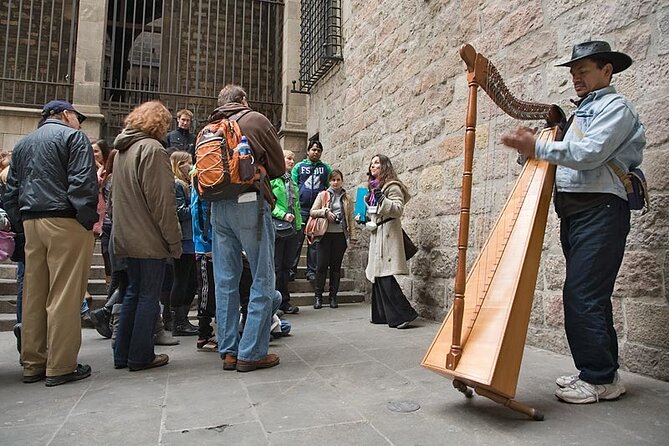
The listed cost is $3.62 per person for a roughly 2.5-hour guided walk. That’s strikingly low for a professional local guide, and the format makes the value make sense: you’re paying for direction, interpretation, and time saved figuring out what you’re looking at.
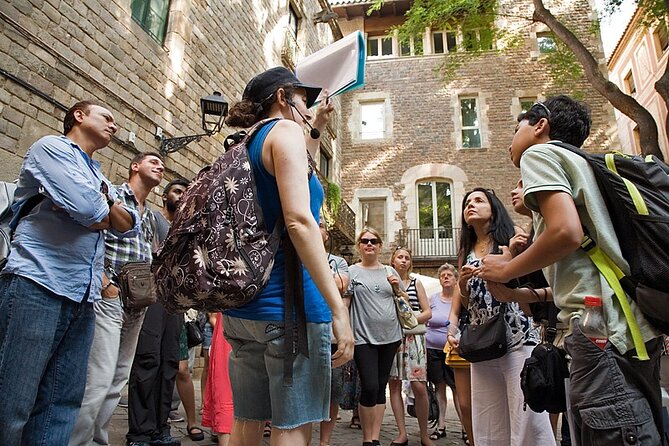
This is also a donation-based-style experience in concept, but you’re not guessing how to participate—you buy the tour like normal and get the guide and route. With a maximum group size of 20, it doesn’t turn into a cattle-line tour. You’ll have room to ask questions, pause for photos, and actually hear explanations.
The start time is 11:00 am, which is helpful because you get your history fix before the afternoon gets too intense. That said, the tour is still a walking route through dense streets. If you’re sensitive to heat or humidity, plan like it matters: water, light clothing, and sunscreen can turn a tiring day into a comfortable one.
English is the offered language, and that matters here. The Gothic Quarter’s details are the point, and you’ll get more out of the carvings, street layouts, and architectural shifts when someone can explain what to look for as you go.
You can also read our reviews of more walking tours in Barcelona



Starting at Plaça Reial: The Perfect Warm-Up
Your tour begins at Plaça Reial (Plaça Reial, Ciutat Vella). This spot is just off La Rambla, so it’s easy to find and easy to orient yourself. It also works as a warm-up: before you get deep into tighter medieval streets, you get a broad square with obvious focal points.
At this first stop, you’ll see why Plaça Reial feels like a pause in the middle of movement. The setting is defined by elegant neoclassical buildings, palm trees, and outdoor cafés where you can imagine the area’s day-to-day rhythm. It’s also a great place to start learning how Barcelona layers styles.
Two highlights to keep an eye out for: the Gaudí-designed lampposts and the Font de les Tres Gràcies fountain. Even from street level, those details give you a hook—if you’ve ever wondered how Gaudí’s influence shows up beyond the big-ticket sights, this is a low-pressure introduction.
Practical tip: if you like photos, arrive with your camera ready. This square is open enough that you’ll get clean angles early, which makes the narrower streets later feel less intimidating.
Your Walk Through 9 Iconic Squares and Churches
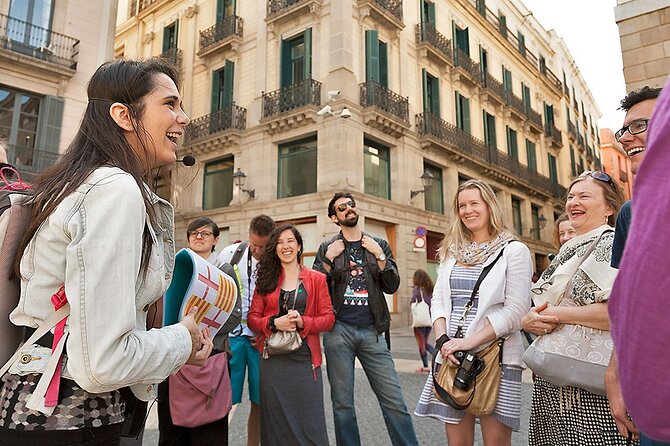
The route is a steady progression of stops, mostly 15 minutes each, with a few longer breaks (20 minutes) at key places. Nearly every stop is marked free admission, which means you’re not paying extra just to see the exterior and the immediate square setting.
Here’s what you should expect at each stop, and what makes each one worth the time.
Stop 1: Plaça Reial (15 minutes)
You’ll start in a plaza where the architecture makes quick sense. Look upward at the neoclassical facades and then spot the Gaudí lamp designs. This is where the tour’s pace feels friendly: you can settle in, listen, and take photos before the streets tighten.
Drawback to note: if you show up right at start time, you may feel like you’re joining the middle of café activity. Still, the explanations help you shift from people-watching to reading the buildings.
Stop 2: Plaza del Pi (15 minutes)
Plaça del Pi sits in the Gothic Quarter and is known for a quieter, local feel. The big visual anchor is the Santa Maria del Pi church overlooking the square. That view makes it easier to understand why people gathered here: it’s a natural meeting point with a strong architectural focal point.
This stop is ideal if you like atmosphere as much as monuments. You’re likely to notice cafés, artisan stalls, and an art market vibe in the area. You won’t just learn facts—you’ll start to “see” how a square becomes part of daily life.
Possible consideration: because the Gothic Quarter streets are tight, this is one of the stops where you’ll want to give yourself a little extra space for photos.
Stop 3: The Jewish Quarter (El Call) (15 minutes)
El Call is a maze of medieval streets, and that layout matters to the story. This area once held a thriving Jewish community, and today it offers a chance to connect the city’s medieval past to its lived geography.
You’ll hear about key sites such as the Medieval Synagogue and the Call Interpretation Centre. Even if you don’t go inside every site, the guide can help you orient where these places fit in the neighborhood’s story.
If you’re a history lover, this stop is where the Gothic Quarter stops being just pretty stone. It becomes human-scale history: the idea that a whole community existed here, in streets you can still walk.
Stop 4: Plaça de Sant Jaume (20 minutes)
This is the political heart of the city: City Hall and the Palau de la Generalitat sit here. The square has been a center of power since Roman times, which is a helpful contrast to the medieval Gothic feel you’ll have been seeing.
It’s also a practical stop for understanding how Barcelona organizes civic life. Squares like this aren’t random—they’re where official decisions, public gatherings, and celebrations naturally happen.
Watch your footing here. Squares can look flat on a map, but the transition from side streets to larger open areas is where you can accidentally rush and miss a key visual detail.
Stop 5: Barcelona Cathedral (15 minutes)
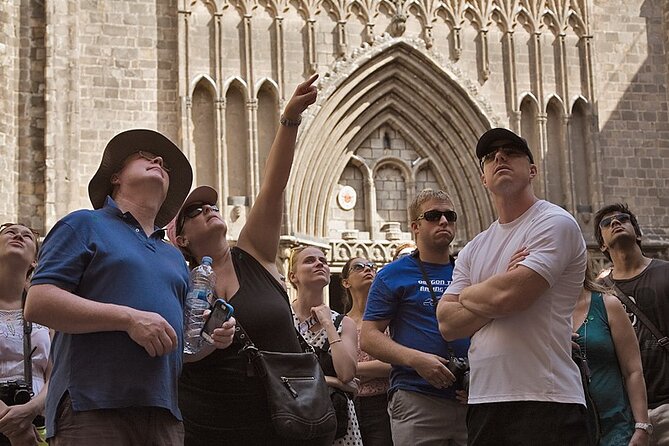
Next is the Barcelona Cathedral, and the focus is the façade. You’ll get a clear look at Catalan Gothic architecture: intricate stone carvings, soaring spires, and the grand central arch.
This stop works even if you don’t plan to go inside anything major. The façade alone tells a lot about style and ambition, and the guide’s job is to point out what your eyes might skip.
Photo tip: try to capture the façade at an angle if the crowding allows. Straight-on shots are great, but Gothic details often pop better when the perspective catches shadows.
Stop 6: Plaça Sant Felip Neri (15 minutes)
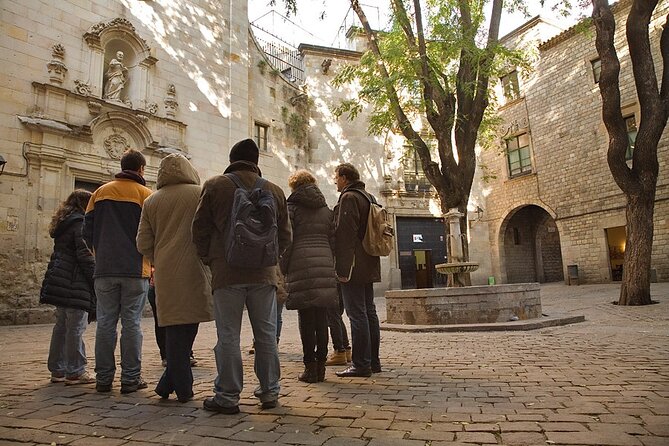
This one has a different mood. Plaça Sant Felip Neri is described as a quieter Gothic Quarter corner, and the façade carries visible marks from the Spanish Civil War, including shrapnel scars.
That kind of history can be heavy, but it’s also honest. It’s a reminder that cities don’t just change through design and power struggles—they change through real conflict, too.
Expect a mix of Gothic and baroque cues. The area includes a baroque church and a peaceful fountain, making this a nice breath stop in the walking rhythm.
Stop 7: Plaça Nova (15 minutes)
Plaça Nova is framed as a gateway to Roman Barcelona. You’ll see remnants of the ancient city wall and two imposing defense towers. The best part of this stop is the contrast: you’re standing in a place that helps bridge Barcelona’s layers—Roman groundwork leading into the later medieval city.
This is also one of the easier stops to connect to the rest of the route. It gives you a timeline in stone: city defenses, then shifting eras and styles.
If you like “how it all connects,” don’t rush this stop. Take your time aligning the visual cues the guide points out.
Stop 8: Plaça del Rei (20 minutes)
Plaça del Rei sits in the heart of the Gothic Quarter and leans into the medieval royal story. You’ll be surrounded by landmarks including the Grand Royal Palace and the Watchtower of King Martí.
This is where the square-to-structure relationship becomes obvious. The space isn’t just a hangout spot; it feels like a place built for authority and visibility, which helps you understand why these areas became famous.
This stop is longer than some others (20 minutes). Use that extra time to get both wide context shots and closer images of the architectural details.
Stop 9: Basilica de Santa Maria del Mar (20 minutes)
The tour finishes at the Basilica de Santa Maria del Mar façade in the El Born district. It’s a 14th-century basilica, and the standout features you’ll focus on include the rose window, soaring arches, and twin towers.
This basilica is known as a masterpiece of medieval craftsmanship, and the façade does a lot of work for you without requiring extra tickets. After hours of smaller squares and street corners, this stop feels like a payoff: bigger scale, clearer structure, and strong symmetry.
The tour ends nearby at Plaça del Fossar de les Moreres, and it’s pointed out that you’ll be in El Born afterward, a central area with restaurants. That timing is smart. You’re walking a history route, then you’re dropped into a neighborhood that’s ready for dinner plans.
How the Guide Turns Architecture into a Story
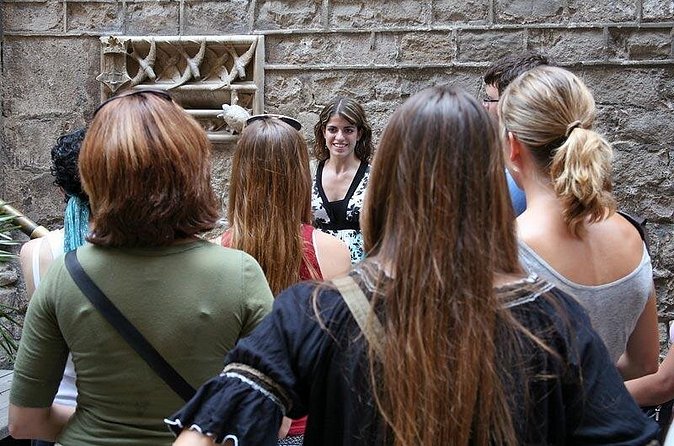
What makes this tour work isn’t only where you go. It’s how the guide connects the sights into a timeline you can remember.
You get that with explanations at each stop: why a square mattered, what kind of power lived there, and how the neighborhood shifted through centuries. The route is built so you’re not staring at random monuments. You’re learning patterns: civic spaces, religious spaces, community spaces, and defensive traces.
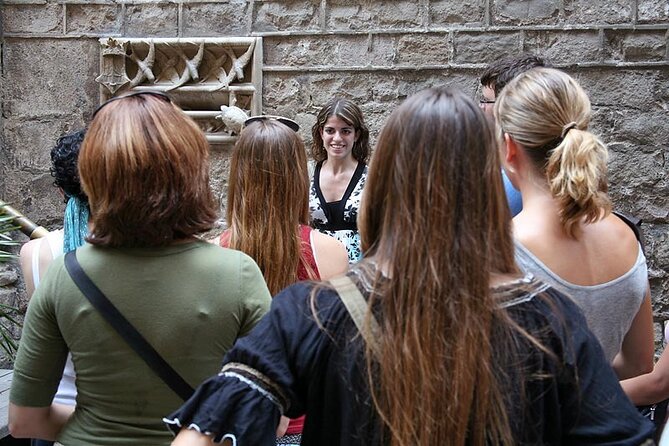
I also like that the guide doesn’t treat the walk like a one-way lecture. The experience is interactive, so you can ask questions as they come up. If you enjoy conversation—especially with people who also love city history—this group format helps.
One more practical bonus: you’ll get recommendations for the rest of your trip. That’s valuable because the Gothic Quarter can be a maze. When you have someone local steering you toward what fits your interests, you spend less time wandering aimlessly.
Photo-Friendly Timing and the Pace Question
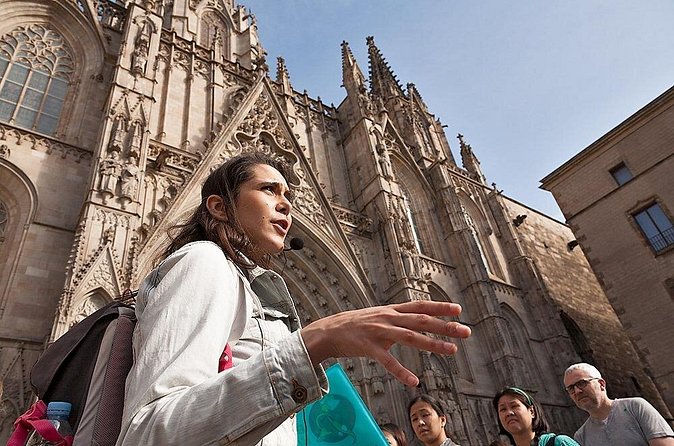
The tour has built-in time for photos at every stop, which is rare. You’re not forced to rely on quick stop-and-swipe pictures. Instead, you get roughly 15–20 minutes per location, which gives you room to frame shots and still listen.
The trade-off is that you still cover a lot of ground in one day’s block. One clear consideration is pace in humid weather. If it’s warm and damp, the walk can feel faster than you expected. That’s not a dealbreaker, but it’s something to plan around.
Here’s how you can handle it:
- Wear comfortable shoes with solid grip for old pavement.
- Bring water, especially if you’re doing more sightseeing after.
- If you hate rushing, arrive a few minutes early so you’re not flustered.
The small-group size can help here. You’re less likely to feel boxed in, so pauses for photos feel normal instead of disruptive.
Ending in El Born: Make It a Complete Half-Day
After Santa Maria del Mar, you’re not left stranded. The walk ends at Plaça del Fossar de les Moreres, and you’re in El Born, known for central dining.
This is a smart wrap-up strategy. You finish with a major architectural finale, then you can immediately turn the mood into dinner. If the guide gave you recommendations, this is exactly when you can use them—before your energy drops and decision-making gets harder.
If you want to keep the history vibe going, wander slowly through the nearby streets after your meal. El Born is close enough that it feels like a continuation, not a whole new project.
Should You Book This Gothic Quarter Donation-Based Walking Tour?
Book it if you want:
- an English guided walk that focuses on how the Gothic Quarter changed over centuries
- a route with plenty of time for photos
- a small group format (max 20) that makes questions feel doable
- practical tips for what to do after the tour, without needing extra planning
Skip it or consider a shorter alternative if:
- you’re very heat-sensitive and worry you’ll struggle with a 2.5-hour walk in humid conditions
- you’re only interested in huge interiors and paid attractions, since this experience is built around squares, façades, and street-level context
For most first-time visitors to the area—especially history lovers with a tight schedule—this is a strong value way to get your bearings.
FAQ
How long is the Gothic Quarter donation-based walking tour?
It runs for about 2 hours 30 minutes.
What language is the tour offered in?
The tour is offered in English.
Where does the tour start and where does it end?
It starts at Plaça Reial in Ciutat Vella and ends at Plaça del Fossar de les Moreres in Ciutat Vella, with the tour finishing in El Born.
What time does the tour start?
The start time is 11:00 am.
How many people are on the tour?
The tour has a maximum of 20 travelers.
What’s included in the price?
A professional English-speaking local guide is included.
Is free cancellation available?
Yes. You can cancel for free up to 24 hours in advance for a full refund.