REVIEW · MADRID
Madrid City Guided Bike/E-Bike Tour for Small Groups
Book on GetYourGuide →Operated by BRAVO BIKE SL · Bookable on GetYourGuide
Three hours, zero guesswork, all the classics.
This Madrid guided bike/e-bike tour is a smart way to get your bearings fast, sweeping you from the Egyptian Temple of Debod to the big royal-and-central squares with a guide who keeps the story clear. I like that the tour runs with bilingual, professional guides (I’ve seen names like Kaspar, Casper, and Alex pop up in feedback) and that you get a digital photo album afterward, so you can focus on riding instead of snapping shots.
What I like most is the way it mixes “must-see” Madrid landmarks with real neighborhoods: Plaza Mayor and Puerta del Sol sit next to Santa Ana, Las Letras, Chueca, and Malasaña. I also like that the route is designed for an easy rhythm—frequent stops, short stretches between key views, and clear pacing so you don’t feel rushed.
One consideration: it’s not a flat cruise. You should be a regular cyclist (and plan for gentle uphills), and it’s not the right pick if you’re new to biking or you have mobility limits or high blood pressure.
In This Review
- Key highlights that matter in real life
- Why a 3-hour Madrid bike loop works so well
- Meeting at Plaza de España: setting off smoothly (and safely)
- Debod Temple to Royal sights: Madrid’s big contrasts in motion
- Plaza Mayor, Puerta del Sol, and Santa Ana: the heart of the postcard
- Las Letras to Las Cortes: mixing everyday streets with power
- Climbing into Retiro Park: boating lake, Cristal Palace, and rose season
- Leaving the park via Alcalá Gate, then rolling to Chueca and Malasaña
- How the ride feels: pace, safety, and the e-bike question
- Price and value: why $41 is often a bargain in Madrid
- Who should book (and who should skip)
- Should you book this Madrid bike or e-bike tour?
- FAQ
- How long is the Madrid bike or e-bike tour?
- Where is the meeting point?
- What landmarks does the tour include?
- Is the tour suitable for beginners?
- Can I choose an e-bike instead of a regular bike?
- Are helmets provided, and are they required?
- What’s included in the price?
- Does the tour include entrance fees?
Key highlights that matter in real life
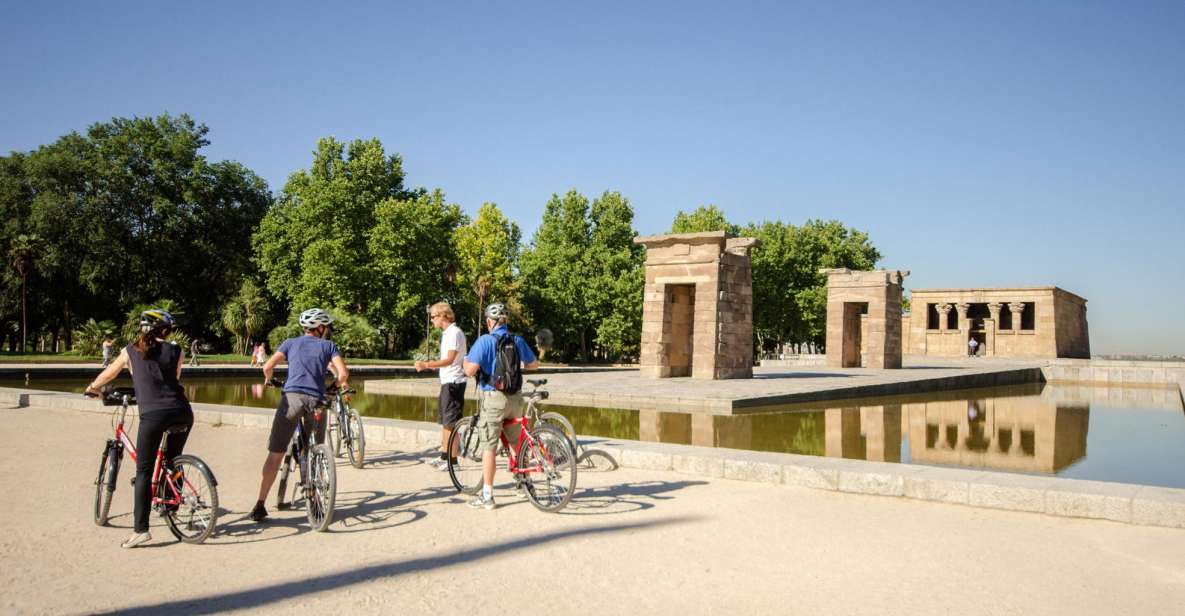
- Debod to Retiro in one run: Iconic sights without the hassle of planning transfers
- Bilingual guides and constant context: History in English or Spanish, plus other languages for private groups
- Photo stops built in: The guide takes photos and emails a digital album
- Bike quality and safety emphasis: Multi-gear bikes, optional adults’ helmets, and child helmet rules
- Route includes neighborhoods, not just monuments: Chueca and Malasaña-style streets and market areas
- E-bike option for the hills: A €10 supplement can make the climb feel easy
Why a 3-hour Madrid bike loop works so well
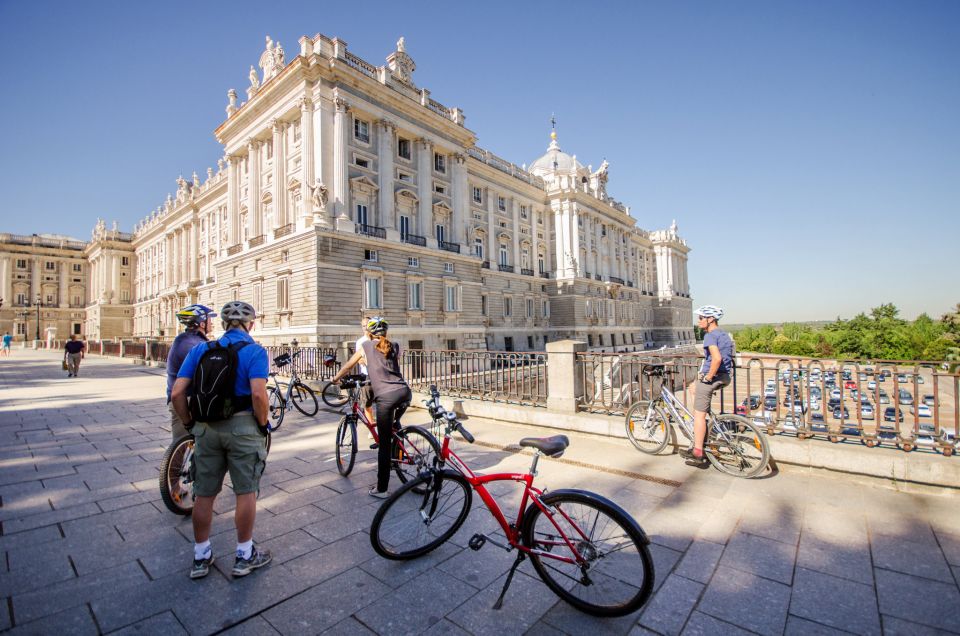
Madrid is huge in feel. Even if you’re staying central, the “what should I see first?” problem hits fast. This tour solves that with a tight 3-hour circuit that touches the city’s headline landmarks and its most fun districts, so you come away with both orientation and ideas for the rest of your trip.
You start near Plaza de España (a practical hub with metro access), and you don’t just park yourself at one view. Instead, you ride through changing scenery: ancient temple vibes at Debod, royal and religious architecture near the palace and Almudena Cathedral, grand squares around Plaza Mayor and Puerta del Sol, then green space at Retiro Park, and finally markets and lively streets in Chueca and Malasaña.
The other thing that makes this tour feel efficient is how it’s paced for “short-sightseeing stamina.” You get multiple quick “glance and learn” stops, not a single long museum slog. If you’re the type who likes to understand what you’re looking at (and not just point at it), the guide’s narration is built for that.
You can also read our reviews of more cycling tours in Madrid

Meeting at Plaza de España: setting off smoothly (and safely)
The meeting point is 3 minutes on foot from Plaza de España, on the northwestern side. You can reach it using metro lines 10 and 3 at Plaza de España, which matters because Madrid metros make it easy to arrive early without stress.
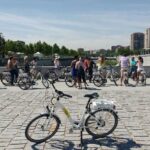
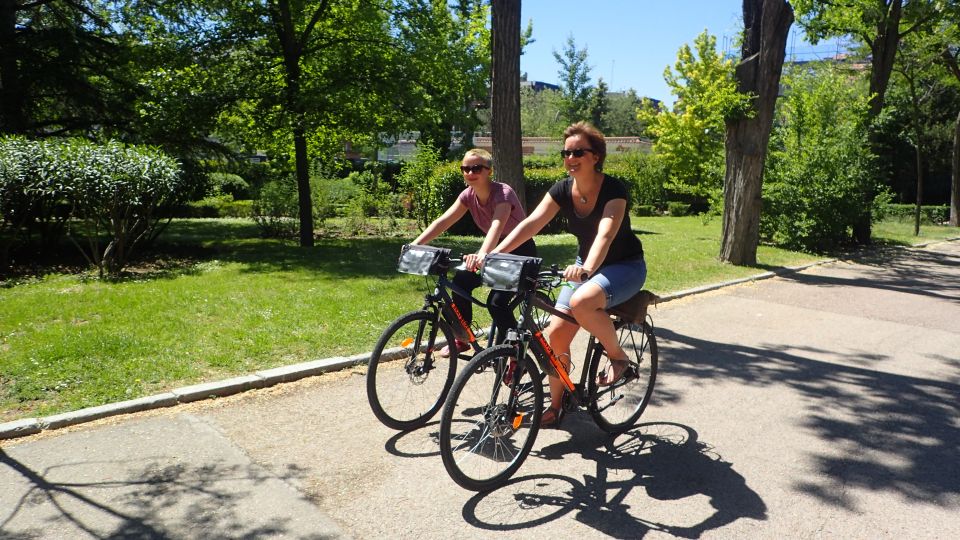
Once you’re checked in, you’re on a rental bike with multigear capability, plus a small handlebar bag to stash a water bottle or personal items. Helmets are optional for adults, but helmets are obligatory for children up to 16, so if you’re traveling with teens you’ll want to plan accordingly. There are also lockers available and the option to store luggage on-site—handy if your bike time lines up with hotel check-in.
A small but useful detail: the tour description suggests you bike rain or shine. If weather turns, you can buy a rain poncho for €2 (and water for €1), so you’re not stuck with dry clothes as a make-or-break factor. That’s exactly the kind of practical setup that keeps a morning plan from turning into a cancellation.
Debod Temple to Royal sights: Madrid’s big contrasts in motion
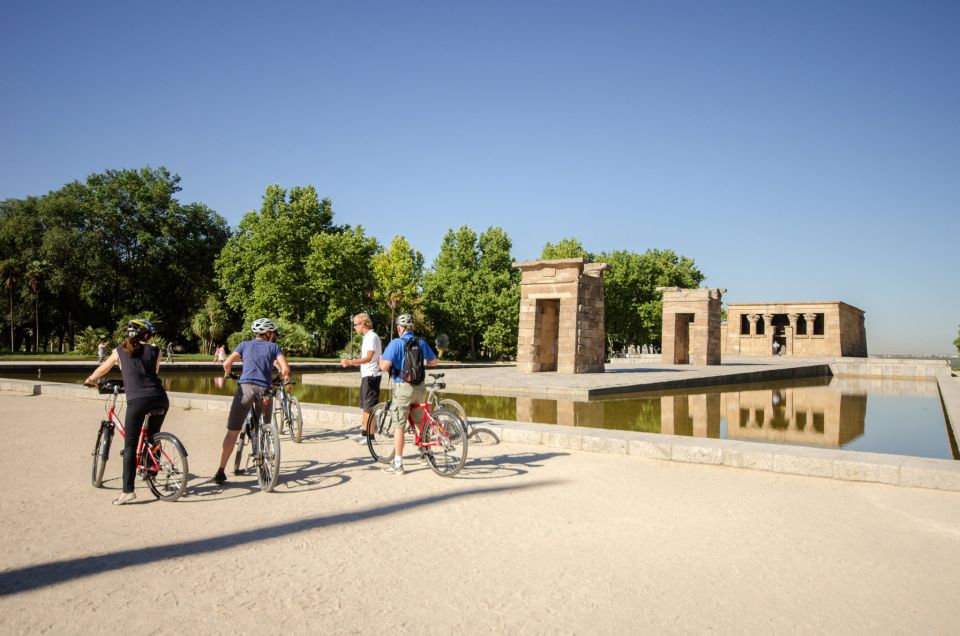
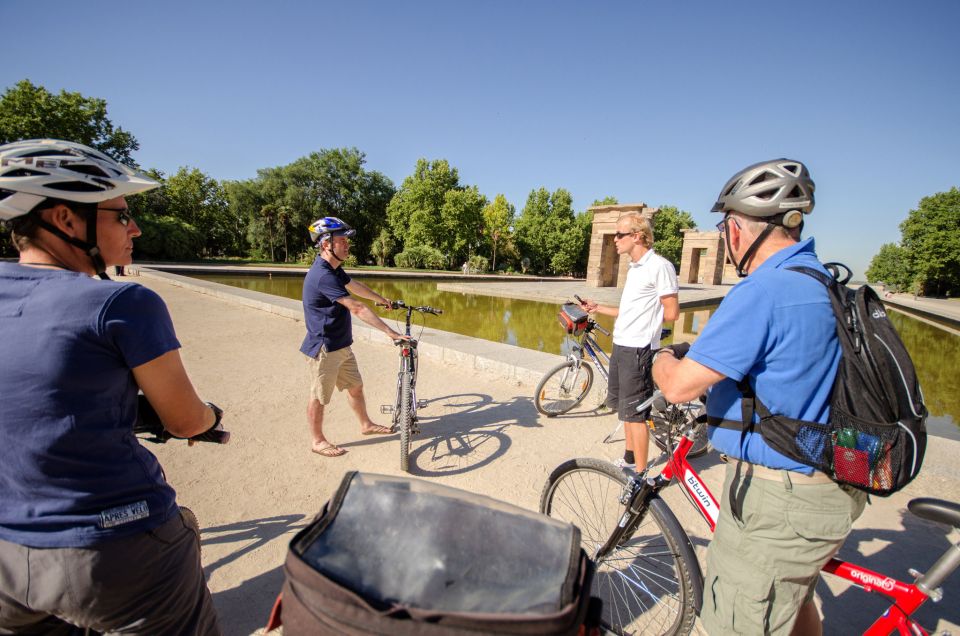
Your first major stop is the Temple of Debod, an Egyptian temple in Madrid. Even if you’ve never studied Egyptian history, it hits because the setting feels different from everything around it—stone, views, and that “how is this here?” energy. This is a strong opener because it gives you a visual anchor before the tour dives into Madrid’s classic architecture.
From Debod, you ride past the Royal Palace area and toward the Almudena Cathedral. This stretch is where the tour starts to make sense as a “Madrid in one glance” plan: religious and royal symbolism sit close to each other, and moving by bike lets you see scale and surroundings without walking long distances.
Why this matters: if you only arrive and start wandering, you usually end up missing the connective tissue—how plazas, churches, and royal structures relate to the city grid. By rolling through them with a guide, you build a mental map before you get too tired to think.
Plaza Mayor, Puerta del Sol, and Santa Ana: the heart of the postcard
After the palace-and-cathedral zone, the route swings into central Madrid.
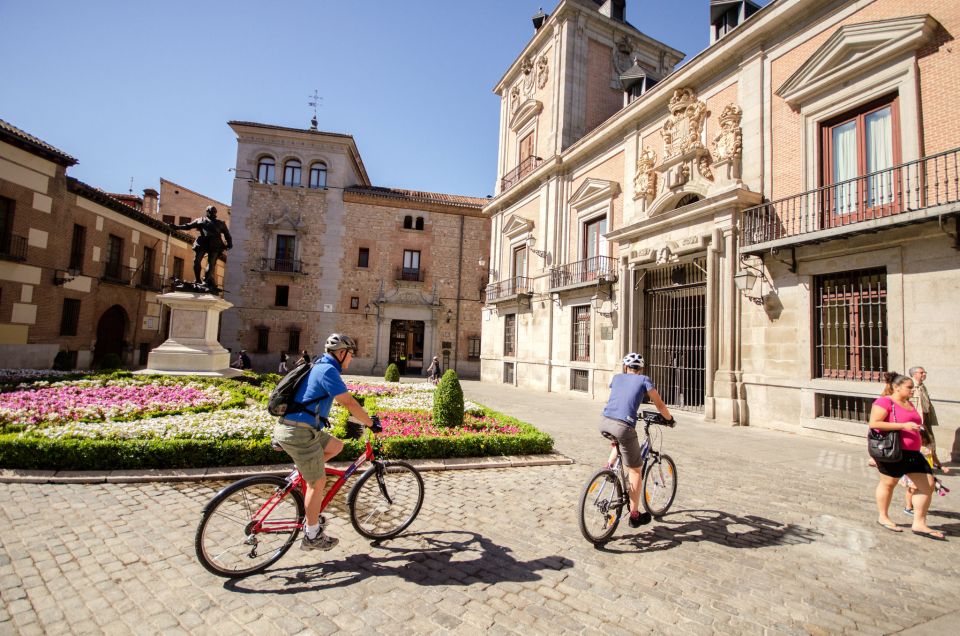
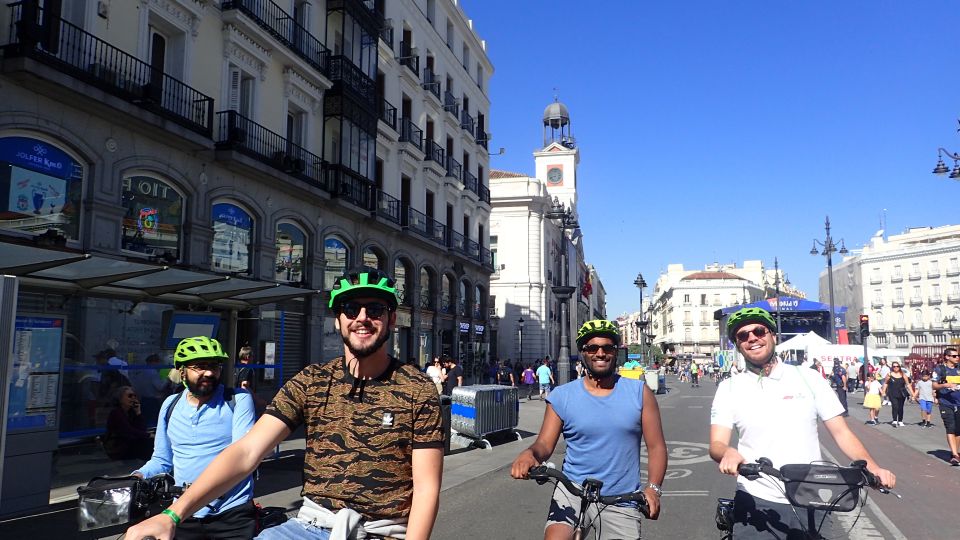
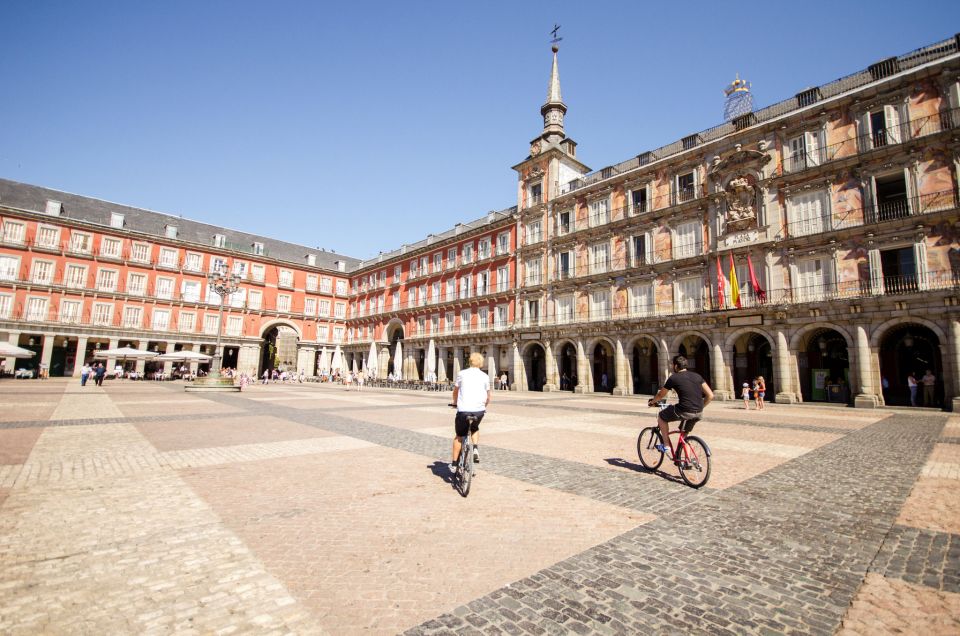
You reach Plaza Mayor, then continue toward Puerta del Sol, and on to Plaza de Santa Ana in the heart of Madrid’s literary district. These are the scenes people describe in photos because they truly are photogenic—but on a bike tour, you experience them differently. You don’t just stare upward at buildings. You also feel the street geometry: where people gather, where traffic funnels, and which corners look “quiet” even when the center is lively.
The “reason this is valuable” part is simple: you’ll likely pass these spots again later. When you already understand the layout, your return is smoother. You’ll know where to stand for views, where the pedestrian vibe changes, and what direction to explore on foot afterward.
One tip for making these stops work: bring sunglasses and sunscreen. Central plazas can look picturesque and still burn you. Madrid sun has zero patience for wishful thinking.
Las Letras to Las Cortes: mixing everyday streets with power
Next you move through the Las Letras Quarter, a neighborhood that feels like Madrid’s personality—small streets, bookish associations, and lots of street-level life. This part is a breather from monumental stops. It’s where the tour starts acting like local navigation: you’re learning routes you’d never pick just by reading a guidebook.
Then you get to Las Cortes, the building housing Spain’s lower house of parliament. That’s a key contrast stop because it shifts the narrative from architecture and daily life into governance and national identity. Even if you don’t follow Spanish politics closely, the explanation helps you understand why this area carries weight beyond sightseeing.
And yes—this is also where the ride begins to include a bit more effort. The description notes gentle uphill sections later on, but you’ll feel you’re moving out of the flat “center plateau” mindset. If you’re on a standard bike, pacing matters here. If you’re thinking about upgrading to an e-bike, this is the moment to decide whether you want the climb to feel easy.
You can also read our reviews of more guided tours in Madrid



Climbing into Retiro Park: boating lake, Cristal Palace, and rose season
The tour heads to Retiro Park, one of the biggest reasons Madrid feels livable even in peak season. There’s a gentle climb as you enter the park area, but it’s designed for a short, manageable effort—not a training session.
Once you’re inside, you get stops around major highlights:
- the boating lake
- the Cristal Palace
- and the rose garden during springtime
Retiro is also where the tour’s pacing model shines. The park portion gives you space to breathe, slow down, and absorb the scenery. You’re not just “passing through”—you pause by landmarks and take in how the park shifts the mood from city center to open air.
If you’re visiting in a season where roses are in bloom, that rose garden stop can feel like the perfect payoff to the cycling. Even when it isn’t peak spring, Retiro still provides that “Madrid slows down here” feeling.
Leaving the park via Alcalá Gate, then rolling to Chueca and Malasaña
After Retiro, you exit by the Alcalá gate. From there, the tour continues along Calle Serrano and crosses Recoletos Avenue, then heads toward the San Anton market in the Chueca district.
This sequence is smart because it blends three different Madrid “lanes”:
- the grandeur shift out of the park
- the upscale city feel along Serrano/Recoletos
- the everyday market-energy of San Anton and the surrounding Chueca streets
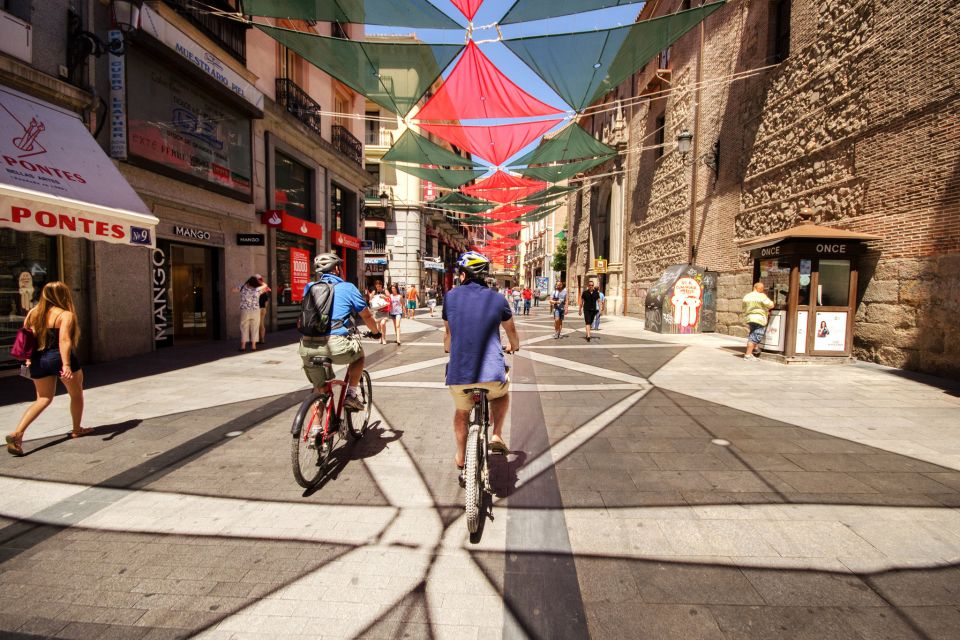
Then comes Malasaña, with its boutiques and cafés and that slightly alternative edge people associate with the neighborhood. You ride through lively streets, not just sightseeing corridors, and that’s where the tour feels most like a lived-in city.
Finally, you wind back to Plaza de España to wrap the loop. The return matters because it makes your ending feel “complete.” You finish back where you started, so you can hop to lunch or keep exploring without needing a navigation rethink.
How the ride feels: pace, safety, and the e-bike question
This tour is recommended for cyclists who are comfortable riding in a city environment. It’s not for absolute beginners, and the tour notes gentle uphills—so your legs do matter.
That said, most of the strongest feedback focuses on how safe and well-managed the experience feels. Riders repeatedly mention that the bikes are in good shape, the guides keep control of the group, and the pacing is relaxed. One recurring theme is that the route favors quieter lanes and paths when possible, which is exactly what makes city cycling less stressful.
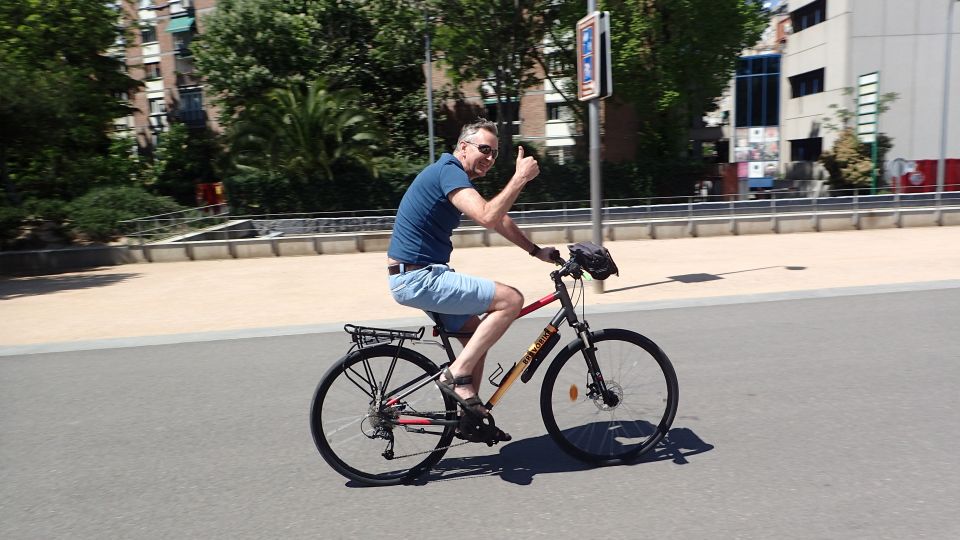
Now the e-bike detail. A €10 supplement gets you an 8-speed electric pedal-assist setup. Multiple riders mention choosing electric help specifically because of hills, or because it makes the tour more enjoyable without turning it into a workout. If you’re even slightly unsure about your climbing stamina, the upgrade is usually the easiest “stress reducer” you can buy.
Practical ride tips from what’s provided:
- wear sports shoes and closed-toe footwear
- skip high heels
- bring sunglasses and sunscreen
- expect the photo stops (so you don’t have to stop to pose constantly)
Price and value: why $41 is often a bargain in Madrid
At about $41 per person for a 3-hour guided loop, the value is in what you’re getting beyond just transportation.
You’re paying for:
- a professional bilingual guide (English standard; other listed languages, and private options)
- a rental bike with multigear setup
- an included handlebar bag for essentials
- optional adult helmets and mandatory child helmets
- storage options (lockers and luggage storage at the premises)
And there’s an extra value layer that’s easy to miss: the guide takes photos throughout the ride and forwards them as a digital album by email. That’s not required for most city tours, but it removes “photo friction” and helps you remember the day clearly.
E-bike upgrade is extra (€10). Water and rain ponchos cost extra too (€1 for a bottle, €2 for a poncho). But those are small add-ons. The real question is whether you need the e-bike comfort to make the ride enjoyable. If you do, the upgrade is usually cheaper than paying for a second day of “recovery walking” after an overly demanding first bike tour.
Who should book (and who should skip)
This tour is a strong match if you:
- ride bikes regularly and feel comfortable in city traffic conditions
- want a fast orientation route through the biggest sights
- like learning while you move, not after the fact
- want a guided route plus a chance to see neighborhoods like Chueca and Malasaña
Age guidance in the tour notes suggests a minimum age of 13 for younger participants, assuming they have good bicycle command. If you’re traveling with kids, there’s baby equipment support: baby carrier or baby seat (max 22 kg) and a followme tandem option for children 5–7 years.
Skip it if you:
- are new to cycling (the tour explicitly says it’s not for beginners)
- have mobility impairments
- are over 275 lbs / 125 kg
- have high blood pressure (not recommended)
One more “smart fit” note: if you’re visiting in a time when it’s hot, you’ll feel it more on a bike. A past rider even suggested doing this earlier in the day for better cycling temperatures. So I’d plan your ride when the sun is still polite.
Should you book this Madrid bike or e-bike tour?
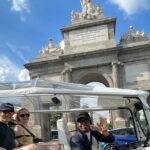
If your goal is to get your bearings fast and see Madrid’s main sights without planning a route of your own, I think you should book. The mix of landmark stops (Debod, Royal Palace area, Almudena, Plaza Mayor, Puerta del Sol, Las Cortes, Retiro Park) plus neighborhood riding (Chueca and Malasaña) is exactly how you turn “first day sightseeing” into something you can build on for the rest of the trip.
Book with an e-bike mindset if hills could be a worry for you, and bring sunscreen no matter what the sky looks like. If you’re comfortable riding in cities and you like guides who explain the why behind what you see, this is the kind of 3-hour tour that pays off for days.
FAQ
How long is the Madrid bike or e-bike tour?
The tour lasts 3 hours.
Where is the meeting point?
Meet at a shop/office about 3 minutes’ walk from Plaza de España on the northwestern side, accessible via metro lines 10 and 3.
What landmarks does the tour include?
It includes stops around Debod Temple, the Royal Palace area, Almudena Cathedral, Plaza Mayor, Puerta del Sol, Plaza de Santa Ana/Las Letras, Las Cortes, Retiro Park (including the boating lake, Cristal Palace, and the rose garden in springtime), Alcalá Gate, plus the San Anton market area in Chueca and riding through Malasaña.
Is the tour suitable for beginners?
No. The tour is not for beginners or people who do not cycle regularly.
Can I choose an e-bike instead of a regular bike?
Yes. There’s a €10 supplement option for taking an e-bike with pedal assist.
Are helmets provided, and are they required?
Helmets are optional for adults, but obligatory for children up to 16 years.
What’s included in the price?
Included are the guide services, multigear bike rental, and (if selected) an 8-speed electric bike pedal assist. Also included are a handlebar bag, plus options for baby carriers/seats or a followme tandem for certain child ages, and the possibility to store luggage, with lockers available.
Does the tour include entrance fees?
No. Entrance fees to attractions are not included.