REVIEW · MADRID
Madrid Expert Tour with Local Guide in Eco Tuk Tuk Private
Book on Viator →Operated by Eco Tuk Tuk - Spain · Bookable on Viator
Madrid moves fast in an electric tuk-tuk. I love the private eco vehicle (100% electric, 4 people max per tuk-tuk) and the way the guide turns big landmarks into a clear, no-stress overview. I also like the practical comforts, like blankets for chilly/windy weather and pre-set photo stops that keep things moving. One thing to think about: if you’re late, your tour time can get cut (and you won’t get a refund for that lost time).
This is a smart first-day plan when you want to understand Madrid quickly without committing to a full museum day. The route is built around the city’s major corridors and monuments, so you can build a short list of what you’ll return to later—at your own pace.
You’ll ride through older Madrid and newer neighborhoods in a way that feels easier on your feet. It’s not a slow “wander and hope” style tour; it’s a guided loop designed to give you orientation, with short moments to look up close and take photos.
In This Review
- Key things to know before you ride
- Electric eco tuk-tuk: a better Madrid intro than buses or aimless walking
- Covered market and Atocha Station: Madrid’s daily pulse
- Spanish Courts, Puerta de Alcalá, and Neptune: monuments with real stories
- Prado-area art landmarks and San Jerónimo el Real: big names, closer context
- Barrio Salamanca’s streets and the Bernabéu view: Madrid’s upscale side
- Columbus Square, the National Library, and the “state power” feel
- Cibeles fountain and the Bank of Spain: photo stops with local emotion
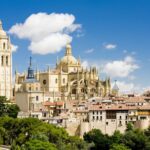
- Santa Ana, San Francisco el Grande, Almudena Cathedral, and the Royal Palace
- Templo de Debod: a quick free ancient Egypt moment
- $28.67 value, private groups, and the vibe from different guides
- Should you book this Eco Tuk Tuk loop in Madrid?
- FAQ
- How long is the Madrid Expert Tour in the eco tuk-tuk?
- Is this tour private?
- How many people can ride in each tuk-tuk?
- What’s included in the price, and what isn’t?
- Where is the meeting point?
- Can I cancel for a refund?
- Does the tour run in rain or heat?
- Is Templo de Debod included, and is admission free?
- What are the minimum age and weight requirements?
Key things to know before you ride
- No queue starts: you begin without line-waiting or delays.
- A true overview in about 3 hours: you’ll hit major sights across multiple districts.
- Photography stops are pre-planned: you can’t swap them mid-tour for new photo spots.
- Built for real weather: blankets are included in winter, plus protective layers against rain and wind.
- Guides are a big part of the experience: many tours highlight guides like Jaime, Lucia, Manuel, Carlos, and Gustavo for their humor and clear explanations.
Electric eco tuk-tuk: a better Madrid intro than buses or aimless walking
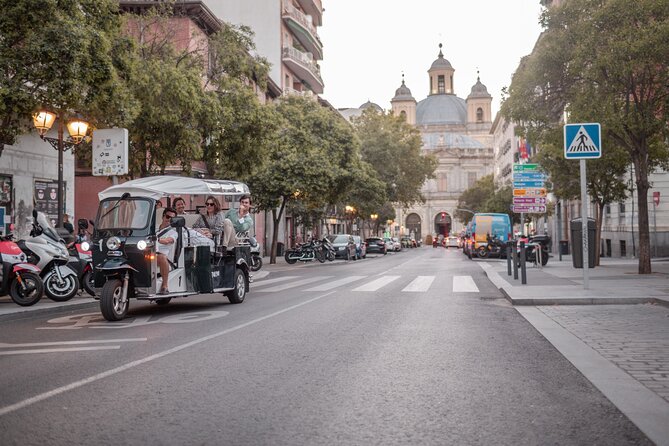
Madrid is big, and it can feel like everything is “close” until you’re walking and it’s already hot. This tour is built for the exact problem: getting you a high-signal route through the city without burning your whole day on transportation.
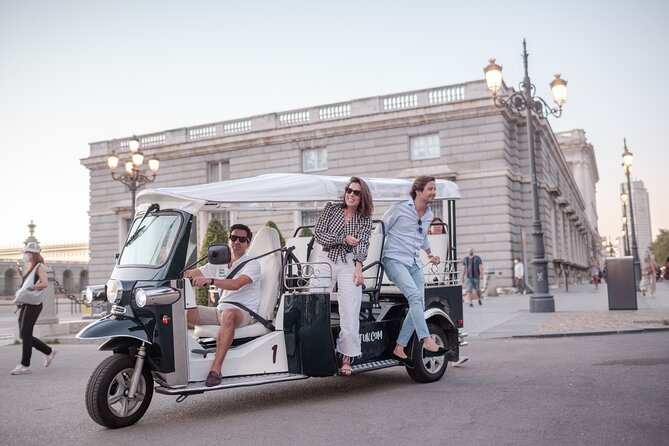
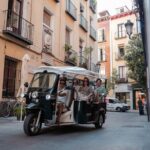
The eco tuk-tuk makes a difference in two ways. First, you glide through streets that can be crowded and confusing on foot. Second, you can pause without the awkward logistics of constantly re-grouping with a walking crowd. You’re not stuck in a bus seat. You’re close enough to look up at buildings, fountains, and monuments as you pass.
You’re also not stuck “waiting around.” The tour is designed to start cleanly, and the itinerary is arranged around photo-friendly moments. Just don’t expect a free-for-all to rearrange stops on the fly; if something is pre-set for a specific viewpoint, that’s where you go.
And yes, the comfort matters: the vehicle is electric and the company provides blankets and protective layers. In winter, that’s not a luxury—it’s what lets you keep enjoying the outdoors instead of rushing through it.
You can also read our reviews of more guided tours in Madrid

Covered market and Atocha Station: Madrid’s daily pulse
The tour starts by taking you to the covered market from around 1916, where you’ll see how Madrid’s food culture mixes everyday life with a more elegant indoor atmosphere. This is the kind of stop that helps you understand the city’s habits fast. Even if you don’t plan to eat right there, you’ll get a feel for what locals treat as normal—delicatessens, prepared foods, and a constant flow of activity.
Next is Atocha Station, which is more than a train station. It’s a huge rail complex near Plaza del Emperador Carlos V, and it’s described as the busiest station in Spain and one of the key hubs in Europe. From the outside and through the ride, the scale becomes obvious quickly. If you’re planning day trips later, this makes Atocha feel less intimidating. You start to connect Madrid’s geography to how you’ll move around the region.
Practical tip: use this segment to map your mental layout. After Atocha, a lot of Madrid landmarks begin to feel logically grouped. That makes your self-guided exploring later much easier.
Spanish Courts, Puerta de Alcalá, and Neptune: monuments with real stories
One of my favorite parts of this tour style is that it doesn’t throw facts at you like homework. It links landmarks to power, art, war, and symbolism—so the city feels connected instead of like random postcards.
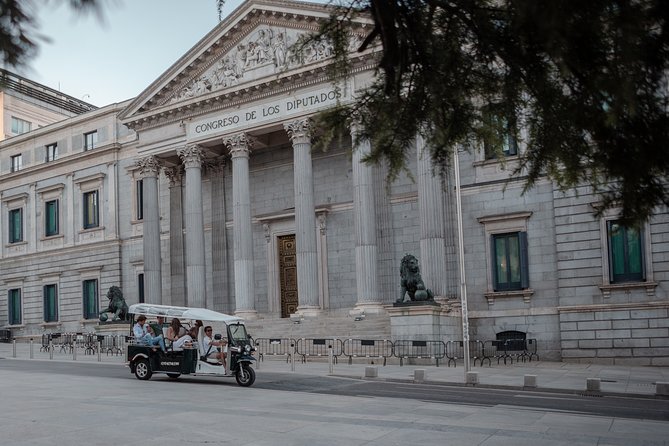
You’ll see the Palace of the Spanish Courts, built on the former convent site. The exterior details are part of the fun here: the entrance lions are tied to an interesting detail from the text—cast with iron from cannons captured during the war in Africa. Even if you’re not going deep on architecture, those kinds of specifics make you look harder, and that’s where the memories stick.
Inside, the tour focuses on iconic rooms like the Session room and the library/conference room known as the lost steps room. You won’t turn this into a long interior visit in a 3-hour loop, but you’ll understand why it matters, which is a huge win when you later spot similar styles around the city.
Then it’s on to the fountain of Neptune in Plaza de Cánovas del Castillo. The fountain has neoclassical muscle, and you also get the timeline: proposed in 1777, construction began in 1782, completed in 1786. That kind of detail is surprisingly useful—later, when you see other Spanish fountains, you’ll recognize the pattern of planning and timeframes.
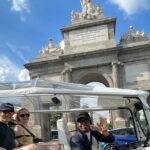
Finally, the tour includes Puerta de Alcalá, the neoclassical triumphal arch designed by Francesco Sabatini. It’s a granite arc with five openings (not the usual three) and it’s often compared to other famous “arches” across Europe. Here, you don’t just see it—you learn why the design looks the way it does, and how each facade’s decorations change what you notice from different angles.
Prado-area art landmarks and San Jerónimo el Real: big names, closer context
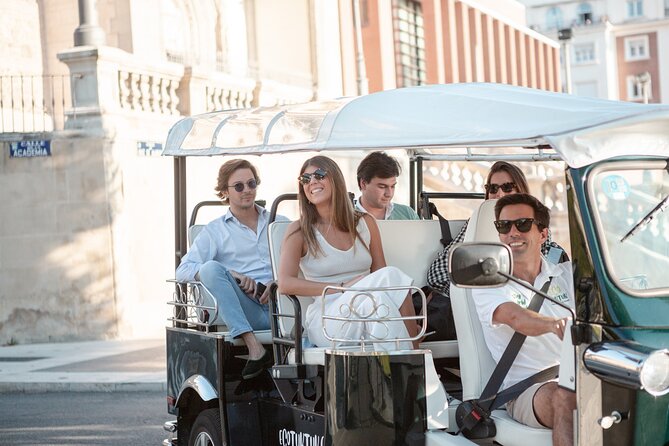
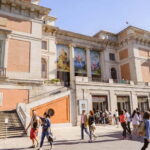
Madrid is a city where major art and major religion sit side by side. This tour hits the zone around the big painting museum (the one famous for European masters like Velázquez, El Greco, Goya, and more). The museum stop is described with an emphasis on why it’s so important: strong collections across centuries and a particular concentration of artists you’ll keep seeing again and again in European art.
Even if you don’t have time for a long museum session on this tour, the payoff is orientation. You’ll learn which artists and collections anchor the museum’s reputation, so your future visit becomes smarter. Instead of wandering room-to-room, you’ll have names to look for first.
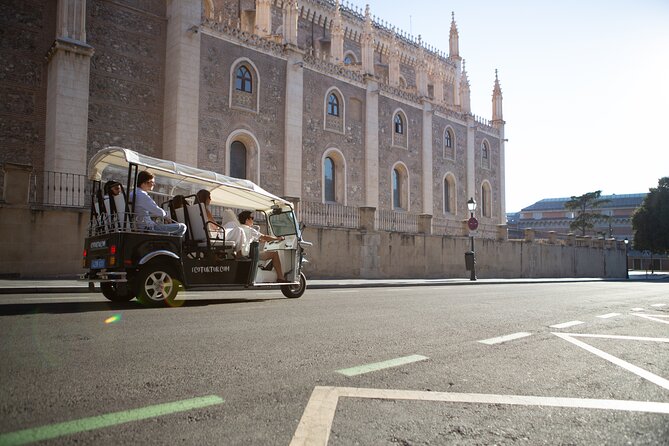
Right next to this art world is San Jerónimo el Real—also called Los Jerónimos. It’s late Gothic with Renaissance influence from the early 1500s, and while much of the original structure has changed over time, the building’s role in royal life is a big part of the story. It became a place of spiritual retreat for several monarchs, and it’s also tied to major events such as royal investitures (in the absence of a cathedral) and even the wedding of Alfonso XIII, with the famous stairway built in 1906.
Practical note: the bronze door is described as opening only on very marked occasions. So don’t plan on any dramatic door moment—plan for what you can see consistently: the overall facade, the approach, and the feeling of this being a real royal-adjacent religious site, not a decorative backdrop.
Barrio Salamanca’s streets and the Bernabéu view: Madrid’s upscale side
The tour also travels into Barrio Salamanca, one of Madrid’s most famous “shopping and style” areas. Streets like Velázquez, Ortega y Gasset, and Serrano come into view via the route. This isn’t just about luxury vibes. It’s about contrast: you’ll have already seen royal buildings and grand public monuments, and now you see how Madrid’s modern status zones look and feel.
Then comes a football moment. You’ll head toward the Santiago Bernabéu Stadium along the Paseo de la Castellana. It’s given a clear identity in the information: inaugurated December 14, 1947, with capacity listed at 81,044 spectators. Even if you’re not a match-day person, it helps to see the scale of the venue and how it fits into the city’s main avenue system.
If you’re traveling with teens or sports fans, this stop can break up the history-heavy rhythm in a good way. If you’re not, it still adds a modern Madrid reference point you can anchor in your memory.
You can also read our reviews of more private tours in Madrid



Columbus Square, the National Library, and the “state power” feel
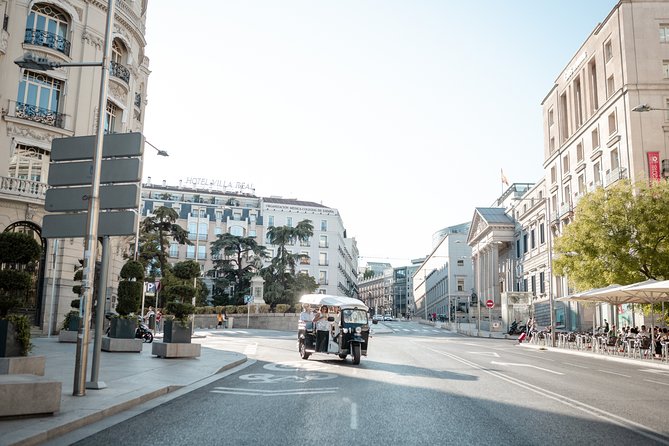
Madrid isn’t just monuments—it’s also institutions. This part of the tour takes you to a cluster that feels like the city is organized around learning, governance, and finance.
You’ll see the Christopher Columbus monument in the center of a square/fountain roundabout. It’s a white marble neo-Gothic sculpture, 17 meters tall, built in 1885 by Jerónimo Suñol for the wedding celebration between Alfonso XII and María de las Mercedes de Orleans. The gardens around it include Gardens of Discovery, opened in 1970, with sculptures tied to discovery themes.
From there, the route includes the National Library of Spain (BNE), described as an autonomous body responsible for depositing Spain’s bibliographic and documentary heritage. The scale is dramatic in the information: custody of around 30 million publications since the beginning of the 18th century. You won’t likely spend hours inside on a tuk-tuk loop, but you’ll understand why this institution matters and where it sits in the city’s ecosystem.
Nearby, you also pass big-palace neighbors:
- Palacio de Buenavista (Army Headquarters)
- Palacio de Linares (Casa de América)
- Palacio de Comunicaciones (former post office, now City Council)
- the Bank of Spain
This “institutions in a row” feel is one of the reasons this tour works so well as an orientation day. It helps you later recognize where Madrid places its gravity.
Cibeles fountain and the Bank of Spain: photo stops with local emotion
No Madrid highlights route is complete without Cibeles. You’ll see the fountain of the Roman goddess Cibeles symbolizing land, agriculture, and fertility—on a car pulled by two lions, with the text naming Hipomenes and Atalanta. The goddess and lions are carved in marble, with other parts in stone.
What makes Cibeles more than a pretty stop is the football connection. The information explicitly notes that Cibeles is an icon for Real Madrid fans, used to celebrate titles and successes.
So when you take your photo here, it’s not just “wow, classic Madrid.” It’s also a place tied to public celebration.
The tour also includes the Bank of Spain building from the outside. It’s described as a highly decorated structure built to house the national bank’s operations (with mention that interior visits are extremely limited: groups tied to educational centers and universities, and exceptional cases for certain cultural or associative entities). In other words: you’re seeing the exterior impact, not touring the interior.
Santa Ana, San Francisco el Grande, Almudena Cathedral, and the Royal Palace
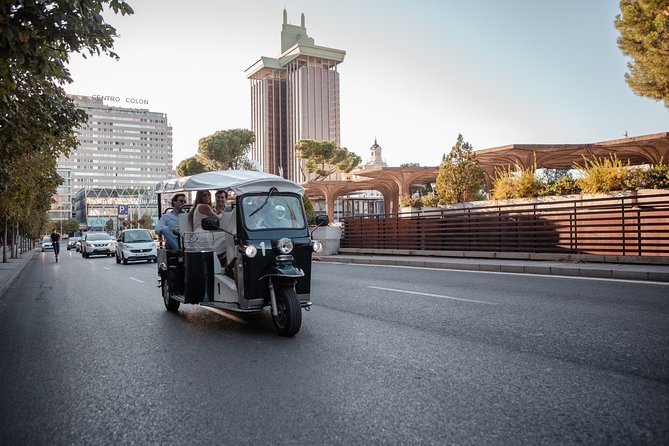
This is the part of the loop where Madrid feels like a grand finale—church domes, cathedral importance, and royal power all in one run.
You’ll pass Plaza de Santa Ana, an open space in the Centro/Cortes neighborhood dating to 1810, with its look shaped by multiple urbanization phases over the years.
Then you’ll see the Royal Basilica of San Francisco el Grande, officially the Basilica of Our Lady of the Angels, in the Palacio neighborhood. It’s a Catholic church inside the historic center area—meaning it’s not just a landmark; it’s part of Madrid’s old-city fabric.
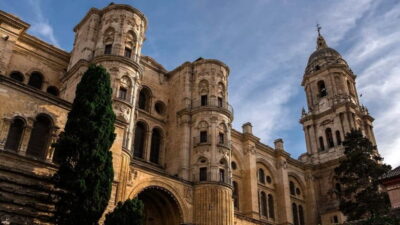
Next is the Almudena Cathedral, described as the most important religious building in Madrid. It was consecrated on June 15, 1993 by Pope John Paul II, noted as the first consecrated cathedral outside Rome. There’s also a cathedral museum setup with dozens of objects telling the story of the diocese, spread across twelve rooms (mosaics, episcopal shields, and more).
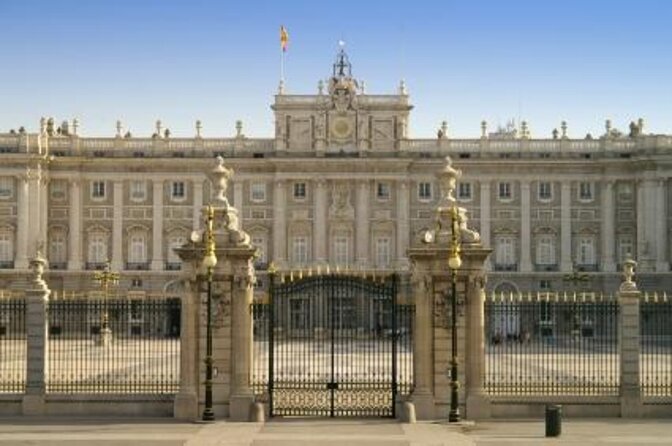
Finally, you’ll reach the Royal Palace (Palacio de Oriente). Construction began in 1738 and lasted 17 years. After it was completed, Carlos III established his habitual residence there in 1764. The palace is described as replacing the earlier Palace of the Austrias site that was destroyed in the Christmas Eve fire in 1734.
You’ll also see the royal gardens context: Campo del Moro and Sabatini Gardens around the palace. Campo del Moro is described as about 20 hectares and protected as historical-artistic interest (declared in 1931). It stretches from the western facade of the Royal Palace to the promenade of the Virgin of the Port.
For a practical moment: on a tour like this, I always recommend you walk just enough to orient your eye. Then you’ll know exactly where to return. In this area, that matters because the palace and cathedral are visually linked, and it’s easy to lose your bearings if you only ride past.
Templo de Debod: a quick free ancient Egypt moment
You’ll end with Templo de Debod. It’s an ancient Egyptian temple building now located in Madrid near Plaza de España, by the Paseo del Pintor Rosales and on a hill where Mountain Barracks was once located.
The time and cost info is clear: about 15 minutes, with free admission ticket. This is a great “short, high-impact” finish. You get an entirely different feel after all the European architecture and royal sites earlier in the loop.
If you like photo light, aim for a moment close to late afternoon when the sun angle helps the stone look warm. Even if you don’t go out for a long view, the temple gives your brain a change of scenery.
$28.67 value, private groups, and the vibe from different guides
At $28.67 per person, you’re paying for a tight mix: expert guide/driver time, a private electric vehicle for your group only, and a route packed with recognizable landmarks. Duration is listed as about 2 to 4 hours (with the tour described as roughly 3 hours), which is exactly the sweet spot for a first-day overview.
A few value points that matter:
- You’re not sharing your ride with strangers; it’s private for your group.
- Tuk-tuks are reserved privately and limited to a legal maximum of 4 passengers per tuk-tuk. That means bigger groups may use multiple tuk-tuks.
- Pre-selected photography stops and a route designed to avoid waiting helps keep the hours efficient.
- Blankets and protective layers are included, which prevents the tour from feeling miserable in winter wind or rain.
What you should expect not to get: you’re not getting a full museum day. Indoor depth depends on what you choose to do after the tour. This is about orientation and seeing the “big map” of Madrid so you can plan better later.
Guide energy matters, and the guide names mentioned in the experience range from funny and warm to calm and organized. For example, Jaime is praised for humor and pacing; Lucia gets called upbeat and great with families and older guests; Manuel stands out for kindness and patience; Carlos is noted for high energy and keeping teens laughing; Gustavo is highlighted for really knowing the history and sharing strong recommendations.
If you want an extra layer of usefulness, I’d treat this as your planning hour. One guide suggestion included two practical ideas: the museum time strategy that Prado is free after 6 pm, plus a recommendation to try convent cookies from nuns (a specific local follow-up tied to the route). That kind of “useful after the tour” tip is the difference between seeing sights and learning how to structure your day.
Also remember the boundaries: stops for photos can’t be modified, and delays over 15 minutes can lead to cancellation with no refund. So aim to arrive early and don’t cut it close.
Should you book this Eco Tuk Tuk loop in Madrid?
Book it if you want:
- a fast, guided overview that helps you understand Madrid’s layout
- an easier way to cover royal buildings, major plazas, and art landmarks without wearing yourself out
- comfort support like blankets and protective layers for unpredictable weather
- a first-day plan that helps you choose what to revisit
Skip it (or pair it with other plans) if you’re chasing:
- long indoor museum time or deep guided tours inside major institutions
- a route you want to customize on the spot for your own photo preferences
If your goal is get your bearings fast and leave Madrid with a short list of what to return to, this is a strong, practical choice.
FAQ
How long is the Madrid Expert Tour in the eco tuk-tuk?
The tour is listed as about 2 to 4 hours, with an average experience running around 3 hours.
Is this tour private?
Yes. It’s a private tour/activity, and your group rides in a private tuk-tuk arrangement.
How many people can ride in each tuk-tuk?
Each tuk-tuk has a legal maximum of 4 passengers, and the number of tuk-tuks depends on your group size.
What’s included in the price, and what isn’t?
Included items are the expert companion guide/driver, the private electric vehicle for your group, pre-selected photo stops, and protective blankets/layers for rain and wind. Not included are tips for the driver/guide and hotel pickup/drop-off (not legal), plus any transfers outside the tour route.
Where is the meeting point?
The meeting point is C. de Bailén, 4, Centro, 28013 Madrid. The pickup is near the Plaza de Oriente underground bus station next to the Royal Palace; using Google Maps for Calle Bailén 4 or Puerta del Príncipe helps you find the stairs to the station, where you’ll see Eco Tuk Tuk signage.
Can I cancel for a refund?
Yes. You can cancel up to 24 hours in advance for a full refund.
Does the tour run in rain or heat?
Yes. Tours take place in rain or heat, and cancellation only happens under extreme conditions.
Is Templo de Debod included, and is admission free?
Templo de Debod is included as a stop with about 15 minutes of time, and admission is listed as free.
What are the minimum age and weight requirements?
The minimum age is 2 years. There is also a minimum weight requirement of 9 kg, and pets aren’t allowed.