REVIEW · MADRID
Madrid to Avila & Segovia: Full-Day Highlights Tour
Book on Viator →Operated by Fun and Tickets · Bookable on Viator
Ávila and Segovia in one day is the shortcut to medieval Spain. You’ll see Ávila’s fortress walls and Segovia’s headline sights without sleeping away from Madrid. I especially like the way the tour bundles the must-see monuments with an organized guided walking route, and I like that the bus includes Wi‑Fi and A/C for a long day. One consideration: monument tickets are not included, and the schedule can feel fast if you crave lots of free time in Ávila.
The day is built around a classic rhythm: ride first, then guided stops, then a photo-friendly sweep through the old towns. You’ll get radio guidance with headphones, so you can keep moving and still catch what matters.
If you’re a careful planner, this tour is a strong value. If you’re hoping for a relaxed, self-guided day, you may want to save some energy for a second visit—or choose a different format.
Why This Tour Works Well (and for Who)
- Two UNESCO-level cities in one day: you hit Ávila and Segovia without committing to an overnight.
- Photo-first monuments: ramparts in Ávila, then Segovia’s aqueduct and Alcázar setting you up for great skyline shots.
- Guides who connect the dots: people mention guides like Carlos, Beatriz, Rafa, Laura, David, Federico, Marta, Pilar, and more for clear storytelling and pacing.
- Comfort on the road: luxury bus with Wi‑Fi and air conditioning matters when you’re walking for hours.
- Light included refreshment in Ávila: a drink plus snack keeps you going, but it’s not a full lunch.
- Heads-up on walking: expect serious steps and some uneven historic streets.
In This Review
- How the Madrid to Ávila and Segovia Day Trip Really Plays Out
- The Sierra de Guadarrama Stop: A Scenic Reset Before the Old Town
- Ávila Walls: The Main Event You Can Actually Photograph
- Catedral de Ávila and the Cathedral-Fortress Idea
- Basilica de San Vicente: Romanesque Details in 30 Minutes
- Iglesia-convento de Santa Teresa: Where Faith Meets a Born-Here Story
- The Included Snack in Ávila: Good Fuel, Not a Full Lunch
- Aqueduct of Segovia: The Icon You See Even If Tickets Are Extra
- Segovia Cathedral: Gothic Style in the Main Square
- Alcázar of Segovia: The Castle-Palace Built on a Crag
- Getting the Most Out of a Busy 9-Hour Schedule
- Price and Value: What $61.67 Really Covers
- Who Should Book This Tour?
- Should You Book It?
- FAQ
- How long is the Madrid to Ávila & Segovia highlights tour?
- Where do I meet for the tour?
- Is the tour offered in English?
- Are monument tickets included?
- Is lunch included?
- What’s included on the bus?
- Is it suitable for people with reduced mobility?
How the Madrid to Ávila and Segovia Day Trip Really Plays Out
This is a single-day loop, running about 9 hours from an 8:45am departure. The group is capped at 35 people, which helps the day feel organized instead of chaotic.
You start at Fun and Tickets / San Bernardo (C. de San Bernardo, 7), then you ride north to the mountain region of Sierra de Guadarrama. After that, it’s straight into the historic core of Ávila, then on to Segovia for the big icons.
The tour is offered in English (with bilingual guide groups). If your Spanish is limited, the radio guide and headphones help you follow along without leaning on your phone.
One practical note: this tour is not recommended for people with reduced mobility, likely because of walking volume and older-stone streets. Even if you can manage short distances, the pacing and stairs/curbs can be an issue.
The Sierra de Guadarrama Stop: A Scenic Reset Before the Old Town
Early in the day, you’ll pause in Sierra de Guadarrama, part of Spain’s central mountain system (the Sistema Central). The range sits between the Sierra de Gredos in Ávila province and Sierra de Ayllón in Guadalajara province.
This isn’t an all-day hike. Think of it as a breather and a chance to look out over the region before the day becomes very “stone and towers.”
Why it matters: it’s one of the few moments when the day expands beyond monuments. You get a sense of where these cities sit—then you return to the tightly packed medieval streets.
A few more Madrid tours and experiences worth a look

Ávila Walls: The Main Event You Can Actually Photograph
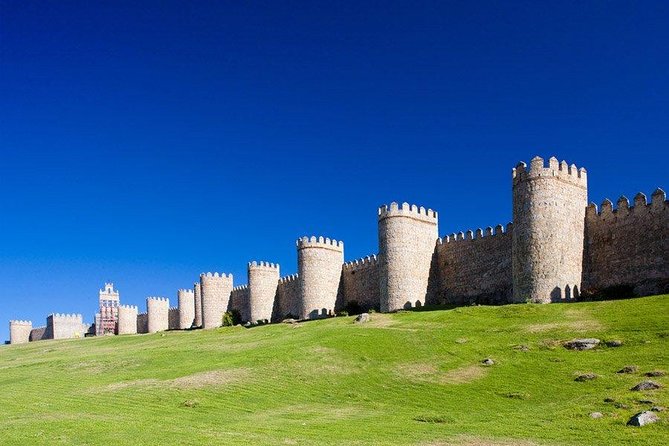
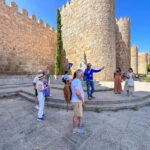
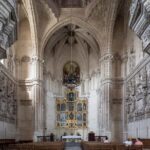
Ávila’s Walls are the signature. Completed between the 11th and 14th centuries, they’re considered the principal historic feature of the city, and many people treat them like the symbol that makes Ávila feel instantly different from nearby towns.
On this tour, you’ll spend about 30 minutes at Las Murallas de Ávila. Admission isn’t included, so you may be viewing from the outside or focusing on viewpoints depending on what your stop allows.
What I like about this stop: it’s short but effective. Even if you can’t climb every section, the walls still deliver. And in good light, the wall texture + towers make for the kind of photos that look like they came from a postcards folder.
If you want to get the best shots, wear shoes you trust. Some viewpoints involve steps or sloped streets, and you don’t want to fight your footing while you’re trying to frame a tall rampart.
Catedral de Ávila and the Cathedral-Fortress Idea
Next up is the Catedral de Ávila, a Catholic cathedral shaped by both Romanesque and Gothic traditions. The planning concept is key: it was designed as a cathedral-fortress, and even the apse connects to the city-wall system via turrets.
Your guide will put this in context as you look at the cathedral’s exterior and the way it fits the defensive town layout. You get about 30 minutes, and again, tickets aren’t included.
Why this stop is worth it: it explains how medieval power worked. In many European cities, churches and fortifications are separate stories. Here, they’re linked—so when you look at the cathedral, you’re also looking at the city’s protection strategy.
Basilica de San Vicente: Romanesque Details in 30 Minutes
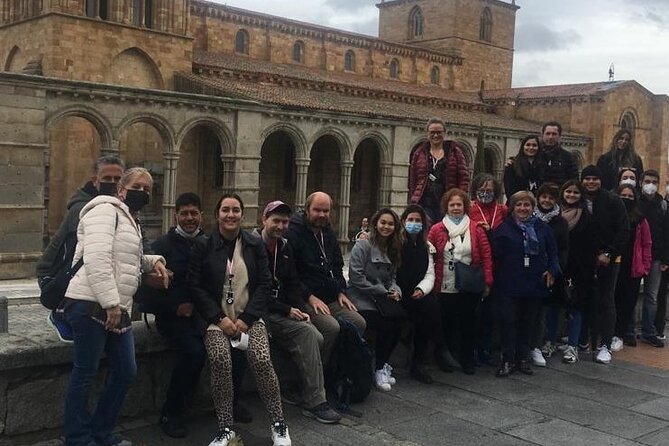
The Basilica de San Vicente (Basilica de los Santos Hermanos Mártires) is one of Spain’s strong Romanesque examples. On the itinerary, you’re given around 30 minutes, and monument admission is not included.
This stop works best if you like architecture basics: rounded forms, heavy structure, and the sense of “older than modern eyes expect.” Even with limited time, Romanesque buildings communicate their era quickly.
If you’re the type who rushes through churches, you might want to slow down for this one. It’s shorter than it sounds on paper, but Romanesque shapes are easiest to appreciate when you pause and actually look.
Iglesia-convento de Santa Teresa: Where Faith Meets a Born-Here Story
The tour includes the church and convent of Santa Teresa of Jesus, often described as built by the Discalced Carmelites in the 17th century, and connected to the traditional birthplace story of Saint Teresa.
You’ll get about 30 minutes here, with admission not included. This is another moment where the guide’s commentary matters. The meaning of the place isn’t just the walls; it’s why the order built here and how the tradition shaped the architecture.
Practical tip: this is a great stop for people who like history that has a human center—someone’s story placed into a specific physical spot.





The Included Snack in Ávila: Good Fuel, Not a Full Lunch
Ávila includes a drink and snack as part of the tour. There is also no lunch included in the standard plan.
So, plan your expectations. The snack is meant to keep you moving during a long day. One review described the included bite as light—more like tapas-style than a proper meal—so if you tend to get hungry, bring your own water and consider grabbing extra food nearby when you have a moment.
This part of the day is the key place where the experience can feel different for different people. If you want a long pause for lunch and browsing, the schedule may feel tight.
Aqueduct of Segovia: The Icon You See Even If Tickets Are Extra
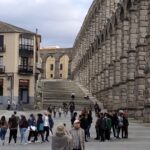
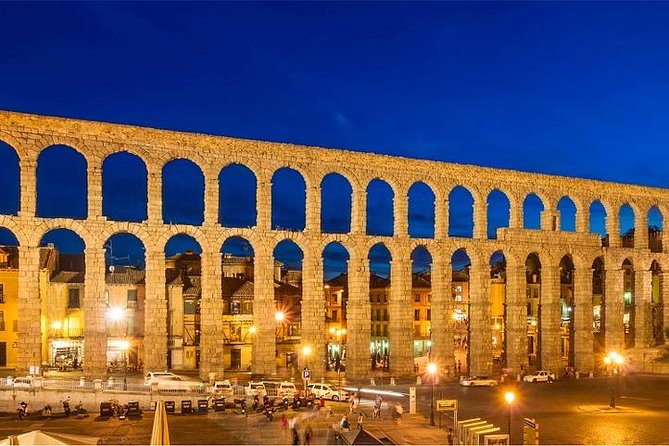
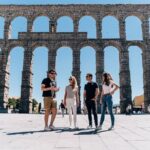
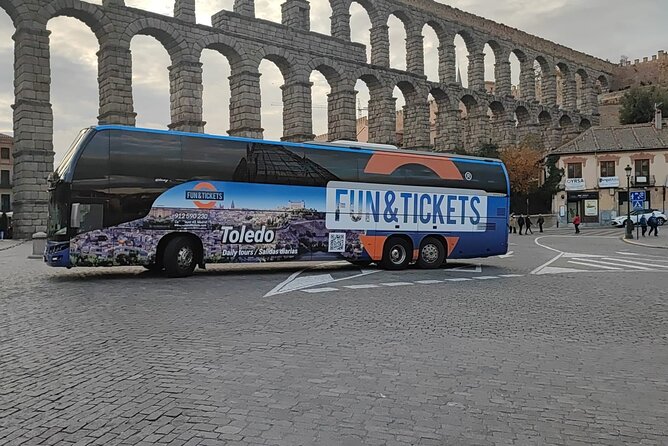
Segovia’s Roman aqueduct is the city’s most recognizable symbol, and it’s one of the best-preserved elevated Roman aqueducts. On this itinerary, the aqueduct visit is free.
You’ll get about 30 minutes here. This stop is a gift for photography lovers: the aqueduct lines up with viewpoints across the old town, and its height makes it hard to miss—even if you’re not trying.
It’s also a good anchor for the rest of the day. After several fortress-and-church stops in Ávila, the aqueduct snaps you into a different kind of Roman achievement: infrastructure as monument.
Segovia Cathedral: Gothic Style in the Main Square
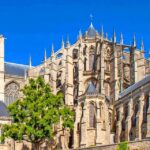
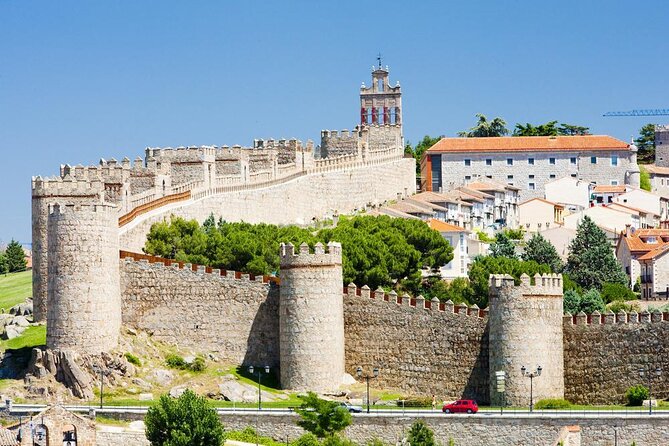
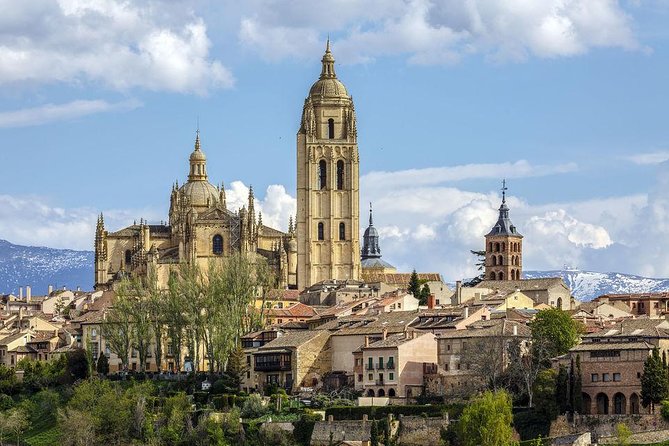
Next is Segovia Cathedral, a mid-16th-century Gothic-style Roman Catholic cathedral in the main square area, dedicated to the Virgin Mary. The itinerary gives about 1 hour here, with admission not included.
The cathedral often works as a reset moment. Aqueduct photos can dominate your brain, then the cathedral brings verticality and detail back into focus. If you like stained-glass light and strong stone geometry, this is your time.
Drawback to consider: if you’re trying to see everything quickly, a cathedral can start to feel like one more stop. This is where your guide’s commentary can make the difference—turning a quick look into something you understand.
Alcázar of Segovia: The Castle-Palace Built on a Crag
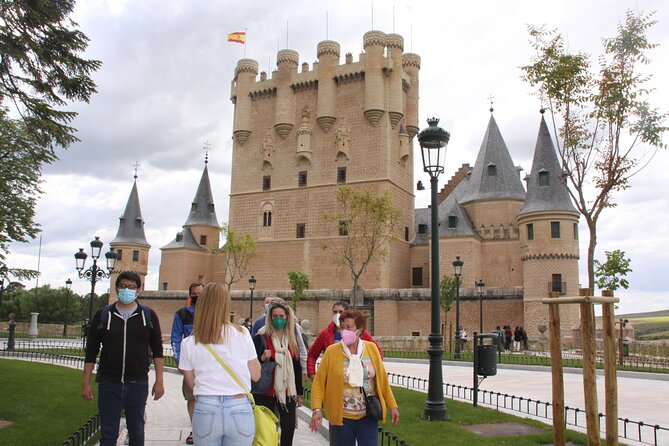
The final headline stop is the Alcázar of Segovia, a medieval castle-palace sitting on a rocky crag above the confluence of two rivers near the Guadarrama mountains. It’s one of Spain’s most distinctive silhouettes, often compared to the shape of a ship’s bow.
Your time here is about 45 minutes, and admission isn’t included.
Why people remember this: when you see it in person, you understand why it’s a symbol. The location is dramatic, and the structure looks like it belongs to another century entirely.
If it’s raining, keep an eye on timing and your walking pace. One review noted how a wet day changed the feel of getting back down toward the bus. In other words: pack for weather, then walk with extra caution.
Getting the Most Out of a Busy 9-Hour Schedule
This tour packs a lot into one day. Most people walk around 12,000 to 15,000 steps, so plan like it’s a hike disguised as city sightseeing.
I recommend:
- Sturdy shoes you can handle on uneven stone.
- Water (and sip early—don’t wait until you feel thirsty).
- Sunglasses for bright days, plus a cap if you burn easily.
- A small day bag so you’re not wrestling with pockets during photo stops.
Also: the tour includes radio guidance with gift headphones, which is great for hearing the guide. Still, sound quality can vary depending on the day and the equipment. If you’re sensitive to audio, sit where you can hear clearly.
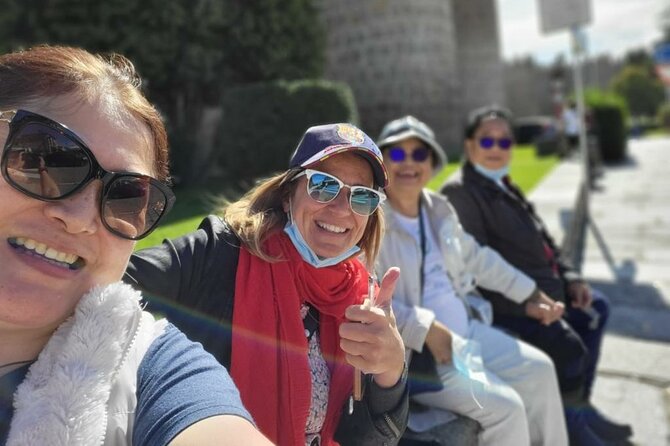
Group logistics: you’ll be on a coach with Wi‑Fi and A/C, and the pace is structured. That’s good for value, but it means you don’t get the kind of wandering that a fully self-guided day allows.
Price and Value: What $61.67 Really Covers
At about $61.67 per person, the price is mostly about organization: bus transport, experienced guidance, and the “big-picture” plan that connects Ávila and Segovia without you doing route math all day.
What you get included:
- Air-conditioned luxury bus with Wi‑Fi
- Official bilingual guides (Spanish group and English group)
- Guided walking tours in both Ávila (1 hour) and Segovia (1 hour)
- A drink and snack in Ávila
- Radio guide and gift headphones
What you should budget extra for:
- Monument tickets (not included) for stops like the walls, cathedral, basilica, Santa Teresa church/convent, Segovia cathedral, and the Alcázar.
So the value depends on how many tickets you’re willing to pay for. If you plan to visit the Alcázar and the churches anyway, the guided structure can save you time and confusion. If you’re the type who wants to pick and choose and then linger, the add-on tickets and set timing can start to feel like money spent for a “tour format” instead of a flexible day.
Who Should Book This Tour?
This is a great match if you:
- Want a single-day highlight plan from Madrid
- Like guided storytelling that links buildings to the people who built them
- Enjoy photo ops at landmarks like the aqueduct and Ávila’s walls
- Prefer the comfort of a coach over train transfers and multiple tickets of your own
It might not be your best choice if you:
- Need long periods of free time for browsing or sitting with a meal
- Have reduced mobility or struggle with steady walking on old streets
- Get irritated by a schedule that is built to cover a lot of sights quickly
Should You Book It?
Yes—if you want the fast, organized version of Ávila and Segovia and you’re willing to pay for monument entries separately. This tour is built for momentum: you’ll leave with strong visual memories and clear context for why each site matters.
I’d skip it or rethink it if you dream of a slow day with lots of unplanned wandering. In that case, consider rail and self-guided time so you can control pacing town-by-town.
If you do book, go prepared: good shoes, water, and an expectation that this is a highlights sweep, not a lazy stroll.
FAQ
How long is the Madrid to Ávila & Segovia highlights tour?
It runs about 9 hours.
Where do I meet for the tour?
The meeting point is Fun and Tickets / San Bernardo, C. de San Bernardo, 7, Centro, 28013 Madrid. It ends back at the same meeting point.
Is the tour offered in English?
Yes. The tour is offered in English.
Are monument tickets included?
No. Tickets for monuments are not included, though the Aqueduct of Segovia stop is listed as free.
Is lunch included?
No lunch is included. A guided walking tour in Ávila includes a drink and snack, and meals beyond that are not part of the plan.
What’s included on the bus?
The bus includes air conditioning and Wi‑Fi.
Is it suitable for people with reduced mobility?
It is not recommended for people with reduced mobility. The operator has the final right of admission.