REVIEW · MADRID
Prado Museum Small Group Tour Skip the Line 7 People Max
Book on Viator →Operated by Madridean Tours · Bookable on Viator
A small-group Prado tour saves your feet. You get skip-the-line access and an art-focused guide who helps you understand major painters and the stories inside the paintings. It’s a fast way to grasp why the Prado matters without getting lost in 7,600 works.
I like two things a lot: the max of 7 people keeps the walk comfortable and questions welcome, and the tour is built around symbolism and context, not just names on a wall.
One possible drawback: with only about 1 hour 30 minutes, the route is a highlights sweep, so you’ll still want a longer self-guided visit if you’re the type who reads every label.
In This Review
- Quick hits
- Prado Museum with Small-Group Skip-the-Line: What Makes It Worth $50
- Entering The Museum: Where You Meet and How the Tour Starts
- Skip-the-Line Really Means More Than Convenience
- The 1.5-Hour Prado Route: How the Highlights Work
- Your Prado Highlights: Bosch to Goya (and Why Context Changes Everything)
- Bosch: strange imagery becomes readable
- El Greco: emotion and style make sense
- Titian and Rubens: power, portraiture, and drama
- Velázquez: the art of seeing
- Goya: why he’s the one you remember
- A Guide Like Monroe Makes It Feel Personal
- The Pace: Great for First-Timers, Fast Enough for Everyone Else
- Who This Tour Fits Best (and Who Might Want Something Different)
- Madrid Timing Tips: How to Pair This With the Rest of Your Day
- Is This Skip-the-Line Small-Group Prado Tour Good Value?
- Book It or Skip It: My Decision Guide
- FAQ
- How long is the Prado Museum Small Group Tour?
- Is admission included?
- What language is the tour in?
- How big is the group?
- Where do I meet the guide?
- Do I get a mobile ticket?
- Are service animals allowed?
- What’s the cancellation policy?
- What happens if weather is bad?
- What if the minimum number of travelers isn’t met?
Quick hits
- 7 travelers max for a calmer, more interactive museum visit
- Priority admission to reduce waiting time inside a high-demand museum
- A guide who can explain symbolism and historical context as you move room to room
- You’ll focus on major masters like Bosch, El Greco, Titian, Rubens, Velázquez, and Goya
- Meeting at the Monument to Goya in Retiro makes the start easy to find
Prado Museum with Small-Group Skip-the-Line: What Makes It Worth $50
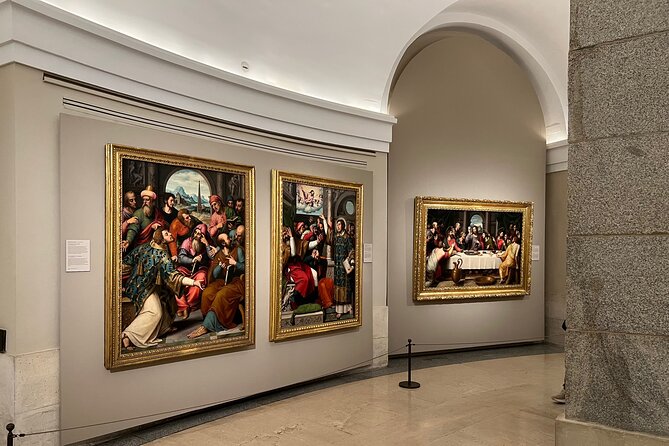
Madrid’s Prado Museum can feel like a beautiful problem. It’s huge, and if you show up without a plan, you end up bouncing from gallery to gallery like a pinball. This small-group tour is designed to solve the big issue: getting you to the right works without wasting your limited time.
The price ($50 per person) isn’t the bargain-basement kind. But you’re paying for two upgrades that matter in the real world: skip-the-line access and a guide who gives you direction. For a museum as large as the Prado (about 7,600 paintings), “time saved” is often more valuable than “money saved.”
Also, the tour is rated extremely well: 4.9 stars with a 99% recommendation. That’s not a guarantee, but it does suggest the guide-led format is consistently hitting the mark.
You can also read our reviews of more museum experiences in Madrid



Entering The Museum: Where You Meet and How the Tour Starts
The meeting point is the Monument to Goya, at C. de Felipe IV, s/n, Retiro, 28014 Madrid, Spain. The tour ends back at that same meeting point, so you don’t have to figure out a new pickup location after the museum visit.
That matters more than it sounds. Prado tours can scatter people across the building and make the last step annoying. Here, you’re basically guaranteed a clean start and a clean finish, which is great on a tight Madrid itinerary.
The tour is also offered in English, which helps if your Spanish is basic or if you just want your art education to be friction-free. Service animals are allowed, and the meeting point area is noted as near public transportation, so you’re not locked into one travel method.
Skip-the-Line Really Means More Than Convenience
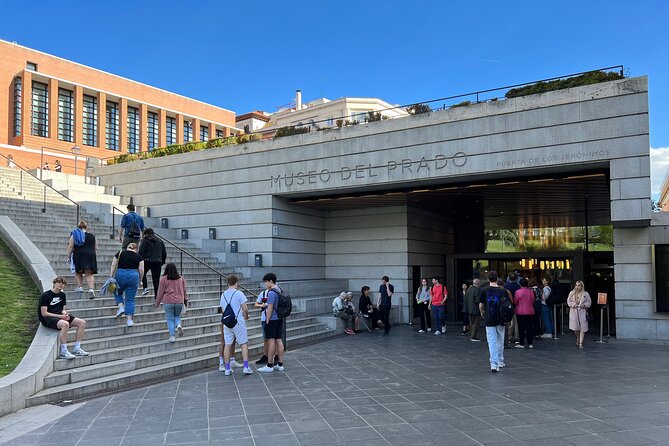
Skip-the-line sounds like marketing fluff until you picture the Prado on a busy day. You’re going to a museum where lines can eat an hour before you even start seeing the art. Priority admission here is about more than comfort—it’s about keeping the tour’s 90-minute structure intact.
You also get a mobile ticket, which is a real practical win. No printing, no forgotten paper, no last-minute phone panic at the door.
One more detail that adds value: the group limit is 7 people max. That changes the feel of priority entry. Instead of a big pack, you move at a human pace, and the guide can actually get everyone’s attention when something important shows up.
The 1.5-Hour Prado Route: How the Highlights Work
This tour is built as a guided highlights walk. It’s not a slow, museum-as-a-book experience. It’s a smart intro that helps you recognize what you’re looking at and why it mattered to the artists, patrons, and society of the time.
You’ll spend the full visit at the Prado, starting with a stroll through the museum and moving through key galleries and works. Your guide is there to connect the dots—history, meaning, symbolism, and what to notice as you stand in front of the painting.
The nice part is that the tour aims to avoid the common problem of “I saw famous art, now what?” Instead, you’ll get context as you go, so the artworks make more sense immediately.
Your Prado Highlights: Bosch to Goya (and Why Context Changes Everything)
Here’s the roster this style of tour typically covers, and it’s a big reason it’s worth your time:
- Hieronymus Bosch
- El Greco
- Titian
- Peter Paul Rubens
- Diego Velázquez
- Francisco Goya
If those names already excite you, great. But even if they don’t, you’ll still benefit because the guide explains what you’re seeing—especially symbolism and context.
A few more Madrid tours and experiences worth a look




Bosch: strange imagery becomes readable
Bosch can look like a dream you can’t interpret. With context, you start noticing patterns: themes, moral messages, and why the visuals are so intense. The guide’s job is to give you a way to look that doesn’t require an art-history degree.
El Greco: emotion and style make sense
El Greco is famous for elongated figures and dramatic color. Without guidance, it’s easy to treat it as just “weird but pretty.” With the tour’s focus on meaning, you’re more likely to understand what the style is doing—emotion, spirituality, and the way the artist builds impact.
Titian and Rubens: power, portraiture, and drama
Titian and Rubens often reward viewers who know what to look for—pose, lighting, flesh tones, composition, and storytelling. The guide doesn’t just point out technique; it helps you connect technique to purpose.
Velázquez: the art of seeing
Velázquez can feel quietly brilliant compared to more explosive styles. Context helps you notice how the painter builds depth and realism and how those choices link to the world the painting comes from.
Goya: why he’s the one you remember
Goya is a special case in the Prado. The tour description specifically calls out Goya, and the meeting point is literally the Monument to Goya, which is a fun bit of thematic symmetry. With a guide focused on symbolism and historical background, you’re more likely to walk away feeling you actually understood why Goya’s works hit so hard.
A Guide Like Monroe Makes It Feel Personal
Many of the strongest comments in the provided feedback point to one theme: the guide makes the art understandable and even fun.
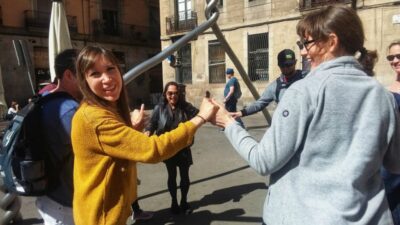
In particular, Monroe shows up repeatedly as the kind of guide you hope for—full of detail, willing to answer questions, and able to keep the pace lively without turning the museum into a lecture. Several people also highlight his humor and the way he explains context in a way that doesn’t talk down to beginners.
There’s also a practical advantage to a small group with a strong guide: you’re not trapped in a script. If someone in the group is curious about a specific work, the guide can adjust and spend extra time.
That flexibility is a real quality signal. A rushed tour that won’t answer questions is common at big museums. This format is set up to be interactive.
The Pace: Great for First-Timers, Fast Enough for Everyone Else
The time window is about 1 hour 30 minutes. That’s short enough to fit into a day plan, but long enough for a real highlights sequence.
The best way to think about the pace is this: you’re getting a structured orientation. You’re not trying to see everything. You’re learning how to see more when you explore on your own after.
One review notes that you’re able to stay after the tour to continue exploring independently. That’s a big bonus. I like tours where the guided part acts like training wheels—then you can slow down for the works that grabbed you.
Who This Tour Fits Best (and Who Might Want Something Different)
This tour is ideal if you:
- want an English-led introduction to the Prado’s main masters
- feel overwhelmed by museum size and prefer a route with context built in
- like asking questions and getting answers in real time
- appreciate symbolism and historical background, not just name recognition
It may not be ideal if you:
- want to spend hours reading labels and lingering at your own pace
- plan to do a very deep dive into a small subset of artists
- prefer audio-guide freedom with no group structure
In other words, think of it as a “best-of + meaning” plan. If you love the Prado, you’ll likely come back for the slower, longer version.
Madrid Timing Tips: How to Pair This With the Rest of Your Day
You don’t get start times in the data here, but you do get one useful piece of advice from the feedback: a weekday and an earlier start tend to feel better. The Prado is popular, and weekday mornings often have fewer crowds.
If you’re building a day around it, I’d suggest:
- schedule other major sights after (so you can use the tour to map the museum in your head)
- leave extra time if you expect to stay after your guide finishes
Your guide will help you focus on key works, and then you can hunt for those pieces again—at your pace.
Is This Skip-the-Line Small-Group Prado Tour Good Value?
For $50, you’re buying three things:
1) Priority admission (less waiting, more art time)
2) A professional guide (context you can’t easily get from labels)
3) A small group (more interaction, less shuffling, easier questions)
The value really depends on your goals. If you were planning to wander randomly and hope you hit the highlights, the guide and the skip-the-line piece save you time and confusion. If you already know your favorite artists and you love planning your route carefully, you might decide to DIY.
But for most first-timers—and for anyone who wants art explanations without the stress—this format is a strong deal.
Book It or Skip It: My Decision Guide
Book it if you want a guided Prado experience that helps you understand why the masterpieces matter, not just that they’re famous. The small-group cap at 7, the skip-the-line access, and the focus on artists like Bosch, El Greco, Titian, Rubens, Velázquez, and Goya make it a smart way to see the museum’s core.
Consider skipping if you’re the type who wants to spend an entire afternoon in one room, reading deeply and taking your time, with no set route.
If you’re unsure, I’d choose this tour for your first Prado visit. Then plan a second trip later for slower exploration—using the guide’s route as your mental map.
FAQ
How long is the Prado Museum Small Group Tour?
It runs for about 1 hour 30 minutes.
Is admission included?
Yes. The Prado Museum skip-the-line ticket is included.
What language is the tour in?
The tour is offered in English.
How big is the group?
It’s a maximum of 7 travelers.
Where do I meet the guide?
You meet at the Monument to Goya, C. de Felipe IV, s/n, Retiro, 28014 Madrid, Spain. The tour ends back at the meeting point.
Do I get a mobile ticket?
Yes, the tour includes a mobile ticket.
Are service animals allowed?
Yes, service animals are allowed.
What’s the cancellation policy?
Free cancellation is available up to 24 hours in advance for a full refund.
What happens if weather is bad?
The experience requires good weather. If it’s canceled due to poor weather, you’ll be offered a different date or a full refund.
What if the minimum number of travelers isn’t met?
If it’s canceled because the minimum isn’t met, you’ll be offered a different date/experience or a full refund.