REVIEW · BARCELONA
Private Barcelona Old Town and Gothic Quarter Walking Tour
Book on Viator →Operated by In Out Barcelona Tours · Bookable on Viator
Barcelona’s old streets tell stories fast. This private 2.5-hour walk links Ciutat Vella, the Gothic Quarter, and iconic stops like Las Ramblas and Boqueria, with a guide who turns stone and squares into something you can actually picture. I also love the candid pacing and practical tips—the kind that help you navigate beyond the obvious photo stops.
One consideration: you’ll cover a lot of ground on foot in a short time, and most sights are viewed while passing through rather than spending long hours inside.
In This Review
- Key Things You’ll Notice on This Old Town Walk
- Starting at Plaça de Catalunya: Why This Meetup Works
- Ciutat Vella First: Roman Threads and Medieval Atmosphere
- Gothic Quarter (Barri Gòtic): From Roman Village to Cathedral Corners
- Near Barcelona Cathedral: Gargoyles and Saint Eulalia
- Basilica de Santa Maria del Mar: Catalan Gothic, Up Close by Stroll
- Las Ramblas and La Boqueria: Big-City Theater Meets Food Culture
- La Boqueria Market: An Easy First Look
- Plaça de Sant Jaume: Where Catalan Power Still Shows
- Plaça Reial and Plaça del Rei: Warm Lighting and Medieval Quiet
- Plaça Reial: Palm Trees, Fountain, and Yellow-Walled Warmth
- Plaça del Rei: A Quiet Medieval Pocket
- The Ending Near the Born: Why the Finish Matters
- Price and Value: What $96.75 Buys You in Barcelona
- Guides That Make or Break a Walking Tour
- What to Expect on the Ground: Timing, Pace, and Stops
- Practical Tips Before You Go
- Should You Book This Private Barcelona Old Town and Gothic Quarter Tour?
- FAQ
- How long is the Private Barcelona Old Town and Gothic Quarter Walking Tour?
- Where does the tour start and end?
- Is this tour private or shared with strangers?
- Are there any admission tickets included for the stops?
- What’s included in the price?
- What language is the tour offered in?
Key Things You’ll Notice on This Old Town Walk
- Meet right by Plaça de Catalunya, so you’re starting in the heart of the action and not hunting down obscure side streets.
- Gothic Quarter focus, with medieval squares like Plaça de Sant Jaume and Plaça Reial in the mix.
- Las Ramblas + La Boqueria at street level, great for orientation and appetite, even if you don’t do a full market meal.
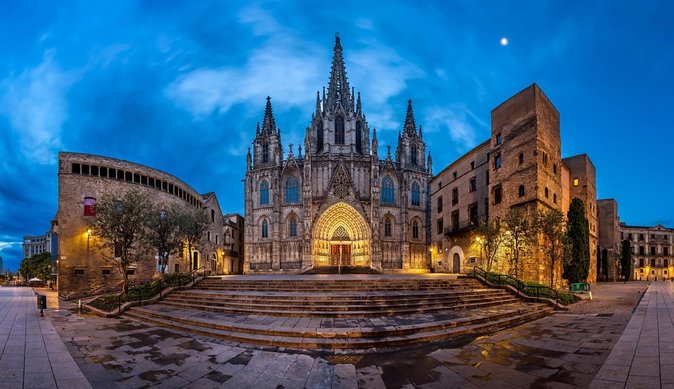
- Catalan Gothic architecture on the route, including Basilica de Santa Maria del Mar and stops near Barcelona Cathedral.
- A private group means your guide can adjust the pace and answer your questions without racing a crowd.
Starting at Plaça de Catalunya: Why This Meetup Works
You’ll begin at Carrer de Fontanella, 2, in Ciutat Vella, right in the area that’s easy to reach from the rest of Barcelona. The big win here is simple: you’re not starting “later,” you’re starting close to the central grid. That matters in a city where wandering can be fun but time can vanish quickly.
From the start, the tour is designed to help you get your bearings fast. You move from ancient layers of Barcelona toward the more famous medieval blocks, then out toward the long promenade people associate with the city. If this is your first time in town, that flow is exactly what you want.
Also, since it’s private, you don’t have the usual problem of being pulled along at a pace that fits strangers. Guides you may encounter on this tour—like Montse, Joris, Juan, Isabel, and Olga—are repeatedly praised for bringing humor and clear context, which makes the walking feel more like a guided conversation than a lecture.
You can also read our reviews of more walking tours in Barcelona



Ciutat Vella First: Roman Threads and Medieval Atmosphere
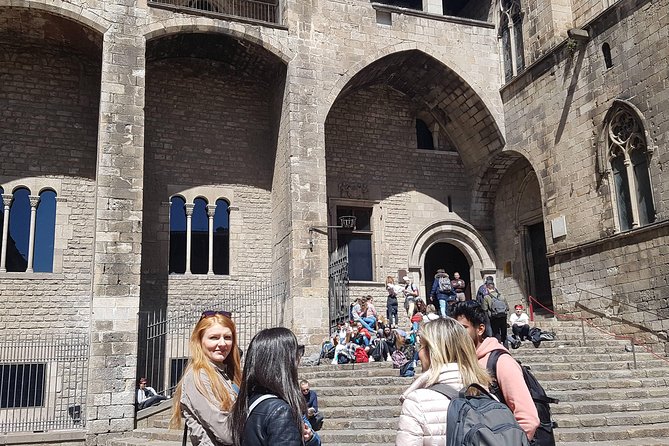
The tour’s first stop is Ciutat Vella, Barcelona’s ancient core. Here you get the “how this city started” version, including references to Roman Barcelona and the idea that you’re walking through a place that has been built, rebuilt, and re-used for centuries.
This stop is about atmosphere as much as it is facts. The streets can feel narrow and time-worn, and your guide’s job is to help you read the space: what likely came earlier, what changed later, and why the layout still matters.
The practical value: when you understand the early city pattern, the Gothic Quarter makes more sense afterward. You won’t just see old buildings—you’ll understand why certain parts feel tighter, why the streets curve, and why certain corners feel like old power centers.
Drawback? Ciutat Vella is dense. If you’re not a fan of lots of foot traffic right at the beginning, it can feel like a quick jump into the old-city maze. The good news is the tour is paced with a moderate walking rhythm, and your guide can typically slow down if needed.
Gothic Quarter (Barri Gòtic): From Roman Village to Cathedral Corners
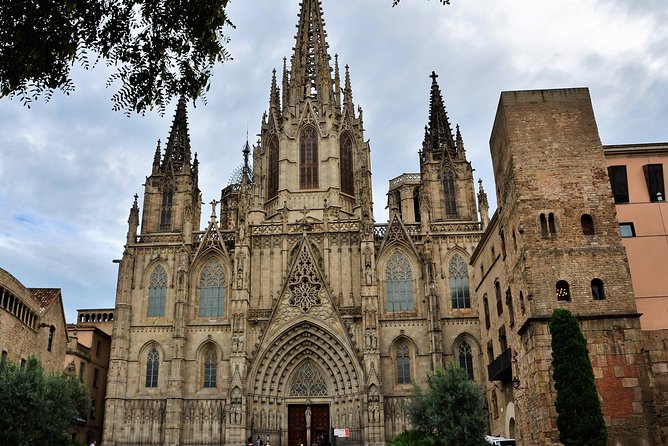
Next comes the Gothic Quarter, a neighborhood that used to function as a Roman village area and later grew into the medieval heart of the city. This is where the tour earns its reputation for turning “pretty streets” into “I get what I’m looking at.”
Expect a mix of:
- medieval-looking lanes and small facades,
- lively street energy,
- and stops near major religious and civic landmarks.
A highlight many people love is the ability to ask questions while you’re still in the middle of the area. The guide’s answers tend to connect architectural details to the people who lived here—how the city governed itself, how neighborhoods organized daily life, and why certain squares became crowd magnets even centuries later.
Near Barcelona Cathedral: Gargoyles and Saint Eulalia
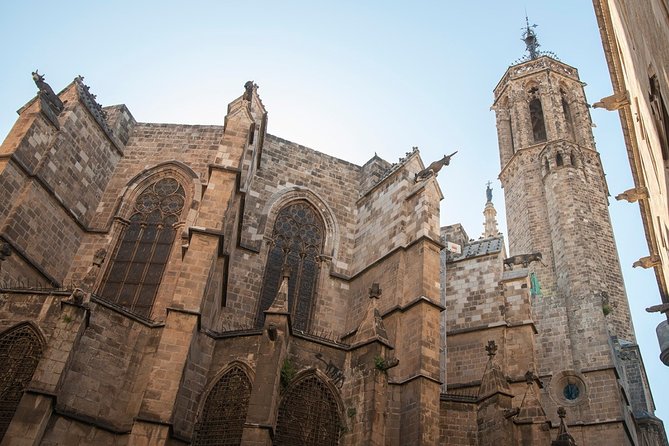
As you pass by, you’ll get a look at Barcelona Cathedral and the gargoyle sculptures that crown the towers. You’ll also hear what the cathedral is dedicated to: Saint Eulalia. Even if you don’t go inside, this is a strong “orientation stop” because it anchors your understanding of the Gothic Quarter’s scale.
Basilica de Santa Maria del Mar: Catalan Gothic, Up Close by Stroll
You’ll also pass Basilica de Santa Maria del Mar, a key example of Catalan Gothic architecture. The tour frames it as a church raised by citizens, which helps you see it as more than a landmark. It’s an artifact of community pride and local identity.
This stop tends to work well for visitors who like architecture and for those who just want something calm and visually clear in the middle of busy streets.
You can also read our reviews of more private tours in Barcelona




Las Ramblas and La Boqueria: Big-City Theater Meets Food Culture
Then the route shifts toward Las Ramblas, the pedestrian avenue that’s almost its own stage set. You’ll walk along the street where performers pop up, where small cafés cluster, and where you’ll see shops selling traditional Catalan items.
This part isn’t about “quiet sightseeing.” It’s about getting a feel for Barcelona as a living city. The key value is orientation: you’ll learn where the crowds concentrate, where the street becomes less useful for navigation, and where it becomes a great place to watch city life.
La Boqueria Market: An Easy First Look
You’ll pass in front of Mercat de la Boqueria, Barcelona’s best-known open market. The tour’s focus here is on what the market represents—Catalan food culture and local specialties like Iberian cured ham.
Even if you don’t do a market meal, the visit works as a “map in your head.” After this, you’ll know what to look for when you plan your own food time later.
One practical tip: Las Ramblas and Boqueria can get crowded. If you’re sensitive to crowds or want quieter photos, your best bet is to keep an eye on your guide’s timing and move with the group rather than trying to stop everywhere at once.
Plaça de Sant Jaume: Where Catalan Power Still Shows
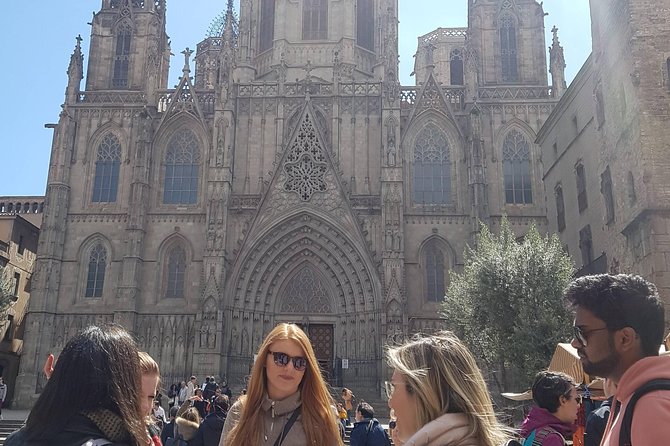
Plaça de Sant Jaume is one of the oldest squares in the Gothic area, and it plays an outsized role in the story your guide tells. You’ll hear how, even after around 20 centuries, it still represents political power connected to Catalan culture.
This kind of stop is more meaningful than it sounds. Squares are where power, law, and public life show up together. When you understand the function of the place, the architecture stops being just “cool old buildings” and starts being a readable social map.
If you like learning how cities worked, this is a good anchor point.
Plaça Reial and Plaça del Rei: Warm Lighting and Medieval Quiet
After Sant Jaume, the tour continues through smaller yet memorable squares.
Plaça Reial: Palm Trees, Fountain, and Yellow-Walled Warmth
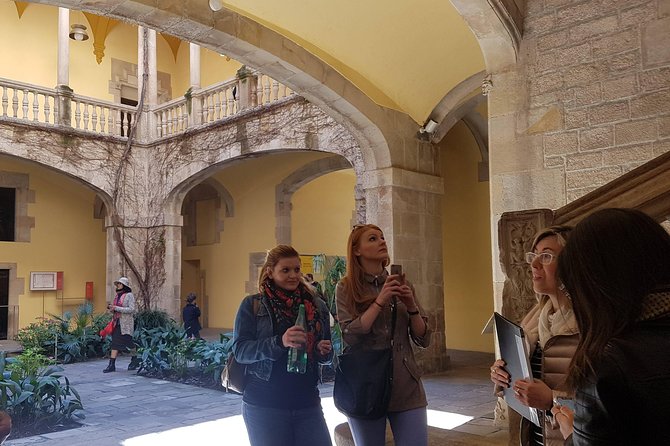
Plaça Reial has a fountain, elegant lampposts, and big palm trees. It also has that cozy effect from surrounding building colors—yellow walls create a warmer look that changes how the whole square photographs and feels.
This is a great stop if you want a calmer pause, because it’s open enough to breathe while still being in the medieval atmosphere.
Plaça del Rei: A Quiet Medieval Pocket
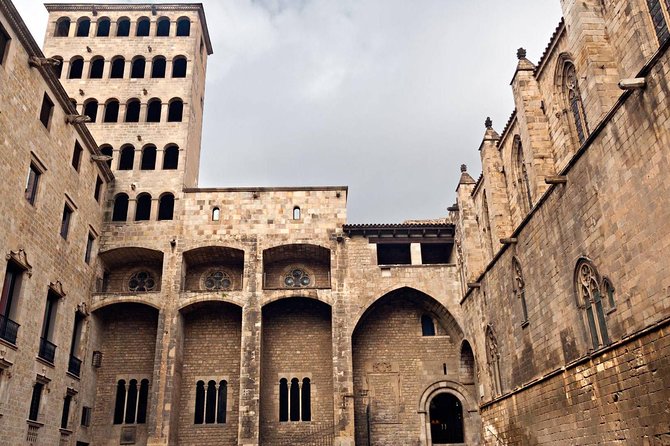
Next is Plaça del Rei, a quieter corner enclosed by the Royal Palace and surrounding buildings. The payoff here is contrast: after lively Ramblas energy and street-level Gothic lanes, this square feels like stepping into a still moment.
Your guide can also use this spot to connect medieval governance and neighborhood life to what you’ll see next around the Born area.
The Ending Near the Born: Why the Finish Matters
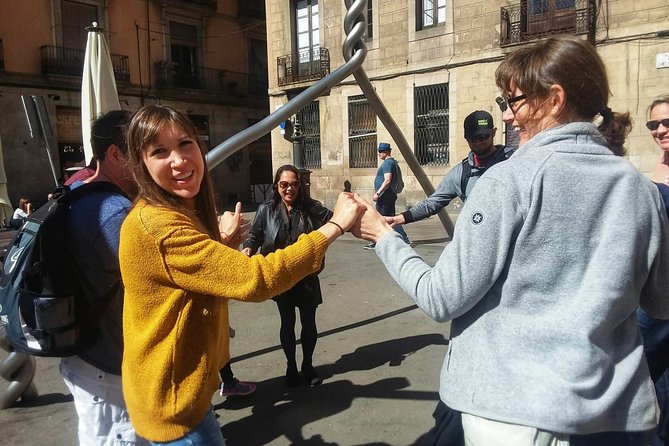
The tour ends at Passeig del Born, Ciutat Vella. That location is a smart finishing point because it nudges you toward the Born District, which the tour includes as part of the overall Old Town focus.
Practically, this matters because you’re not forced into a far-out meeting-to-far-out ending. You finish in an area that’s naturally good for a second walk, browsing, or finding a meal afterward without needing to re-route across the city.
Price and Value: What $96.75 Buys You in Barcelona
At $96.75 per person for about 2 hours 30 minutes, this is the kind of tour that makes sense when you want more than a simple stroll.
Here’s what you’re really paying for:
- A professional local guide who connects landmarks into a story you can follow.
- A private format, which usually means you spend your time asking questions and setting your own walking pace rather than waiting for a big group.
- A route that hits first-timer staples (Cathedral area, Ramblas, Boqueria) plus the square-based Gothic details people miss without a guide.
If you’re the kind of traveler who likes to understand what you’re seeing—why a street is laid out a certain way, why a church matters, why squares become power hubs—this price can feel fair fast. If you only want a casual walk with Instagram stops and no context, you might decide you’d rather do it on your own. But if you want to leave with a better grip on Barcelona and Catalonia, the guide time is the value.
One more planning note: the experience is typically booked about 61 days in advance on average. If your dates are tight or you want a specific time window, it’s worth booking earlier rather than later.
Guides That Make or Break a Walking Tour
The biggest theme across the guide comments here is not just “they know facts.” It’s how they teach: humor, calm pacing, and smart tailoring.
Some of the names you may encounter include Steven, Baggio, Montse, Joris, Juan, Isabel, Olga, Jose Carlos, Nilufar, and Adriano. The common thread is that guides often:
- keep the history readable rather than overwhelming,
- adjust for different groups (including families),
- and make the walk feel personal, not scripted.
You’ll also notice a practical bonus in the way some guides share Barcelona recommendations—like where to eat afterward or what to look for when you return on your own. That’s the kind of value that doesn’t show up in a basic landmark list.
What to Expect on the Ground: Timing, Pace, and Stops
This tour runs about 2.5 hours, and each key segment is short enough to keep you moving: Ciutat Vella and the Gothic Quarter each get about 30 minutes in the plan, then you flow toward Las Ramblas, Boqueria, and the cathedral and basilica pass-bys, finishing at the Born area.
Because so many places are “pass by” moments, the strategy is:
- let the guide point out what to notice,
- snap a photo if you want,
- and be ready to stop again later for deeper exploring if you’re curious.
If you’re the type who likes long indoor visits, plan extra time on your own. But if you want a smart first loop that helps you return to the right places, this structure works well.
Practical Tips Before You Go
- Wear comfortable walking shoes. This is a concentrated foot-walk through dense old streets.
- Bring water, especially if you hit a hot part of the day. The tour doesn’t list any drink stops included.
- If food is a priority, treat Boqueria as orientation. You can use what you learn to pick a lunch plan after the tour.
- If you’re traveling with kids, the tour notes child pricing rules and that children must be accompanied by an adult. Also, guide comments suggest many adapt to children without making the experience feel watered down.
Should You Book This Private Barcelona Old Town and Gothic Quarter Tour?
Book it if you want:
- an easy first-time orientation through Ciutat Vella + the Gothic Quarter,
- a private group experience with a guide who can answer questions,
- and practical context for places like Barcelona Cathedral, Plaça de Sant Jaume, Plaça Reial, and Plaça del Rei.
Skip or reconsider if you:
- hate walking for 2.5 hours,
- only want a self-guided stroll with no explanation,
- or want long interior time at major sights.
If you’re trying to do Barcelona efficiently—without turning the trip into a checklist—this is a strong choice. It helps you understand the city’s layers in one smooth loop, then sets you up to explore the parts that grab you most.
FAQ
How long is the Private Barcelona Old Town and Gothic Quarter Walking Tour?
It’s about 2 hours 30 minutes.
Where does the tour start and end?
You meet at Carrer de Fontanella, 2, Ciutat Vella, 08002 Barcelona, Spain. The tour ends at Passeig del Born / Pg. del Born, Ciutat Vella, 08003 Barcelona, Spain.
Is this tour private or shared with strangers?
It’s a private tour/activity, so only your group participates.
Are there any admission tickets included for the stops?
The listed stops show Admission Ticket Free. The tour focuses on walking and viewing the landmarks as part of the route.
What’s included in the price?
Included are a private walking tour, a professional local guide, and an Old Town walking tour covering the highlights, including the Gothic Quarter and the Born District.
What language is the tour offered in?
English is offered, and other languages are available upon request.