REVIEW · BARCELONA
Private Tour Spanish Civil War & Franco’s Dictatorship
Book on Viator →Operated by Nostos Tours · Bookable on Viator
Barcelona remembers the Spanish Civil War in stone. This private, English-guided walk links street corners to the conflict’s biggest themes—Spanish Civil War battles, the Franco dictatorship that followed, and the people caught in between—all in about 2.5 hours.
I love two things most. First, the guide keeps your focus tight on the story, not a lecture shuffle—private tour means you get real attention. Second, I like the specific Barcelona references, like the Telefonica fight at Placa Catalunya and the hotel tied to George Orwell on La Rambla.
One consideration: this route is short, but it covers heavy topics fast. If you want a slower pace with more breathing room, you might find the 2.5 hours feels packed—especially on a warm day.
In This Review
- Key things I’d bet you’ll care about
- Why This Barcelona Civil War Walk Works in 2.5 Hours
- Price and What You’re Actually Buying
- Private Guide Time: The Real Benefit You Can Feel
- Walking the Route from Placa Catalunya to Plaça Nova
- Stop 1: Placa Catalunya and the fight over Telefonica
- Stop 2: La Rambla and the Orwell connection
- Stop 3: Plaza de Vicenc Martorell and the Raval’s working-class story
- Stop 4: Antic Hospital de la Santa Creu and the war’s human cost
- Stop 5: Basilica de Santa Maria del Pi and International Brigades
- Stop 6: Placa Sant Felip Neri and bombing damage
- What You’ll Learn Beyond the Headlines
- How to Prepare So You Get the Most Out of It
- Who This Tour Fits Best (and Who Might Skip It)
- Should You Book This Private Spanish Civil War Tour?
- FAQ
- How long is the private Spanish Civil War & Franco’s Dictatorship tour in Barcelona?
- What does the tour cost per person?
- Is this a private tour or shared with other groups?
- What language is the tour offered in?
- Where do I meet the guide, and where does the tour end?
- What’s included in the price?
- What’s not included?
- What happens if the weather is poor?
- FAQ
- Can I cancel for a full refund?
- When will I receive confirmation after booking?
- Is the tour suitable for most travelers?
- Is the tour near public transportation?
- Are service animals allowed?
Key things I’d bet you’ll care about
- Private, English-led pacing that keeps questions from getting lost
- Stop-by-stop storytelling across Barcelona’s Civil War-era landmarks
- Orwell and the politics of the city, not just generic “war history”
- International Brigades discussed through what you can actually see
- Bombing scars in plain sight, with the war’s outside powers brought into focus
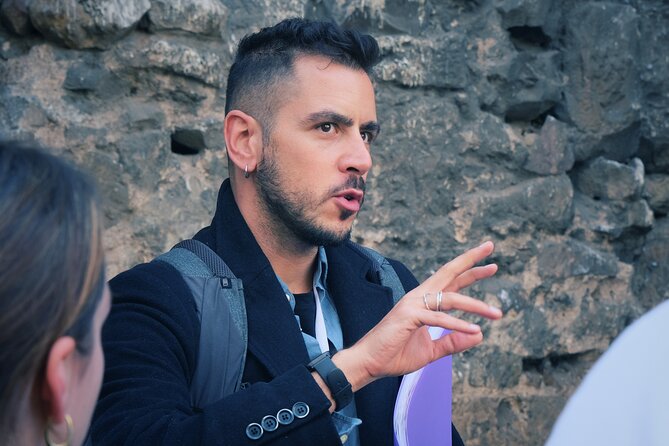
- Expert guide energy—including one standout guide named Yannis in recent bookings
Why This Barcelona Civil War Walk Works in 2.5 Hours
Barcelona can look like it’s all about architecture and sun. This tour flips the script. In a relatively short stretch, you walk through places that help explain why the Spanish Civil War wasn’t only fought on battlefields—it was fought through communications, politics, neighborhoods, and punishment afterward.
What makes this experience practical is that it uses the city as the classroom. You’re not trying to memorize dates while standing in a museum. Instead, your guide points at real locations around you and connects them to what happened during the war and what came next under Franco’s dictatorship.
And because it’s private, you’re not herded into a one-size-fits-all rhythm. If something grabs you—an event, a neighborhood, a church detail—you can ask, and the guide can stay on track for your group.
You can also read our reviews of more private tours in Barcelona

Price and What You’re Actually Buying

At $181.41 per person for a 2 hours 30 minutes private tour, you’re paying for three things: a specialist guide, private time, and a focused route that doesn’t wander.
Here’s the value angle I’d use to decide. If you’ve ever done a big-group tour where you can’t hear well or your questions get cut off, private usually pays off quickly—especially with topics like the Spanish Civil War, where context matters. Also, the tour includes multiple major stops spread across central neighborhoods, with entry tickets listed as free at each point.
You do need to manage expectations. Lunch isn’t included, and there’s no food or drink on the route. Plan to eat before or after, and if you’re sensitive to long walks, bring water and wear comfortable shoes.
Private Guide Time: The Real Benefit You Can Feel

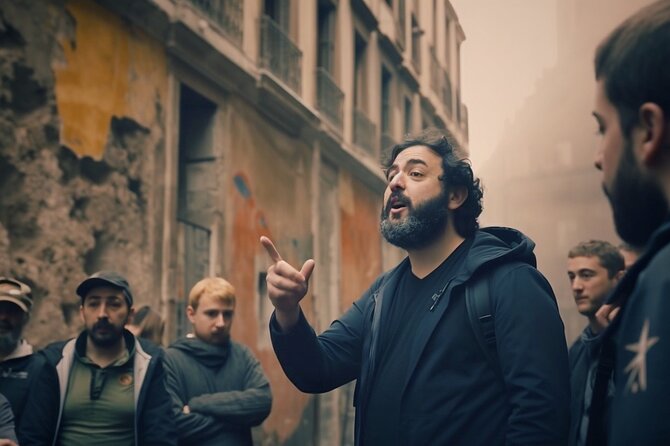
The best part of a private tour isn’t the label—it’s the flow. On this one, your guide stays responsive to your group, which helps a lot with emotionally heavy history. You’re also more likely to catch the meaning behind small details, because you’re not competing with a crowd.
In recent bookings, the guide Yannis stood out for being both passionate and deeply engaged, and that energy matters on this subject. When a guide cares, you start seeing patterns: how one place connects to another, how the war’s chaos ties into the later oppression, and how symbols survive in everyday streets.
So even though the schedule is tight, it doesn’t feel like a rushed checklist. It feels like a guided walk where the city keeps talking.
Walking the Route from Placa Catalunya to Plaça Nova
The tour runs as a chain: start in the historic core around Placa Catalunya, then move through La Rambla and out toward areas connected to working-class life and resistance. The end point lands you at Plaça Nova, near the Cathedral—handy if you’re turning this into a broader day of exploring.
The timing works well if you have a packed itinerary. You’re getting a clear narrative arc in one sitting, and you’ll still have daylight for other sights afterward.
Stop 1: Placa Catalunya and the fight over Telefonica
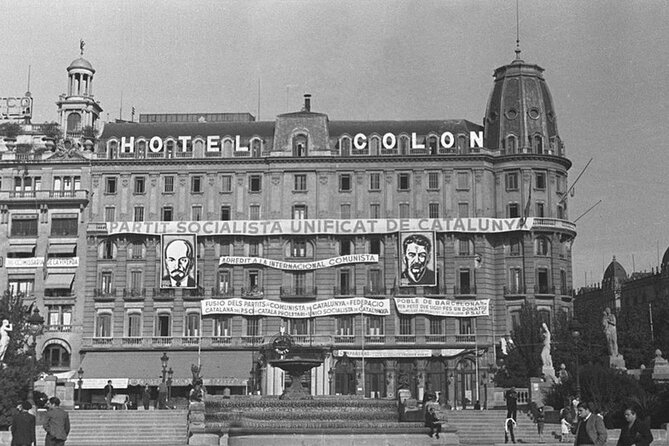
At Placa Catalunya, you get the big framing. This is where you’re introduced to the Spanish Civil War through a key local struggle involving the Telefonica building—so the story starts with power and control, not just vague slogans.
Why this stop matters: it helps you understand that the war wasn’t only about armed conflict. It was about communications and influence—who could spread messages, coordinate action, and shape what people believed.
Practical note: Placa Catalunya is a central hub, so it’s a good place to orient yourself for the rest of the walk.



Stop 2: La Rambla and the Orwell connection
On La Rambla, you’ll hear about a hotel tied to George Orwell during the Spanish Civil War. It’s a reminder that writers, journalists, and outsiders were drawn into the conflict—and that Barcelona wasn’t just a distant backdrop.
This stop is valuable because it shifts the lens. Instead of only thinking about uniforms and fronts, you also see the war as something observed, reported, and debated in real time.
If you like history with a human angle, you’ll probably enjoy this part more than you expect. It’s one of those moments where the city starts to feel like a scene from a lived-in drama, not just a textbook.
Stop 3: Plaza de Vicenc Martorell and the Raval’s working-class story
Next you move to Plaza de Vicenc Martorell, where the focus turns to the Raval neighborhood. Here, your guide discusses working-class suffering, resistance, and anarchism as part of how people experienced the war and pushed back against it.
This is one of the stops that makes the tour feel different from “top sites only” sightseeing. You’re learning about a specific social environment, not just famous battles. That changes how you interpret the later dictatorship as well, because you see how oppression lands hardest where people have already been organized and targeted.
One small consideration: neighborhoods like this can feel intense if you’re not in the mood for heavy themes. If you want a lighter tone, you may need a quick mental reset between stops.
Stop 4: Antic Hospital de la Santa Creu and the war’s human cost
At the Antic Hospital de la Santa Creu, the story moves from politics to consequence. This 15th-century hospital is where wounded soldiers and civilians came through, and your guide connects that suffering to how the war ended and how cultural oppression took shape under Franco’s dictatorship.
Why this stop hits: hospitals are where history becomes physical. Even if you’re not emotionally sensitive, the change from public conflict to personal harm tends to make the story stick.
Also, it’s a smart break in the narrative. After neighborhood resistance and ideology, the hospital gives you a grounded, human reference point.
Stop 5: Basilica de Santa Maria del Pi and International Brigades
At the Basilica de Santa Maria del Pi, you’ll find a Civil War remnant that’s easy to miss at first glance. Your guide points it out and uses it to talk about the International Brigades.
This is one of the clever parts of the tour: you learn about outside involvement through something visible in the church itself. It’s not only “war history somewhere else.” It’s war history in the city’s walls, waiting for someone to explain what you’re looking at.
If you like learning that turns generic architecture into a story, this stop is a keeper.
Stop 6: Placa Sant Felip Neri and bombing damage
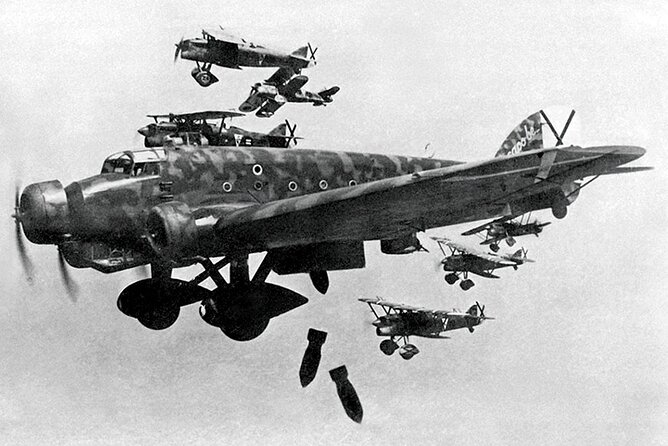
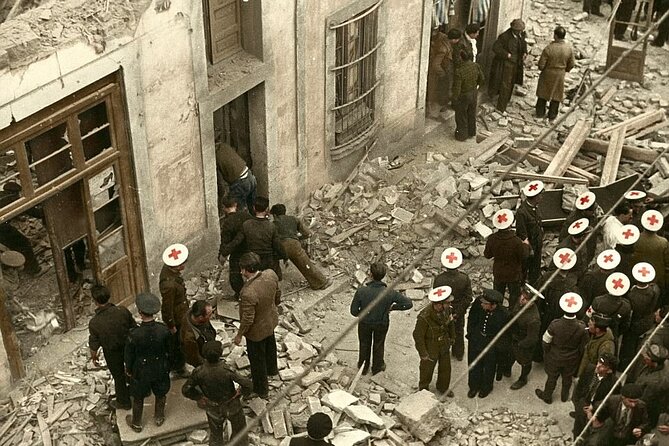
The last stop is Placa Sant Felip Neri, where your guide points out the most visible damage from aerial bombings. You’ll also hear about the tragic bombing and the involvement of the axis powers in the war.
This is the moment where the tour becomes visibly shocking. It’s one thing to hear about bombing from a distance; it’s another to stand near damage that remains in the urban fabric.
I’d also treat this as your “watch your step” part of the route. The area is in the center of Barcelona, so keep your attention on the guide and the street details, not your phone.
What You’ll Learn Beyond the Headlines
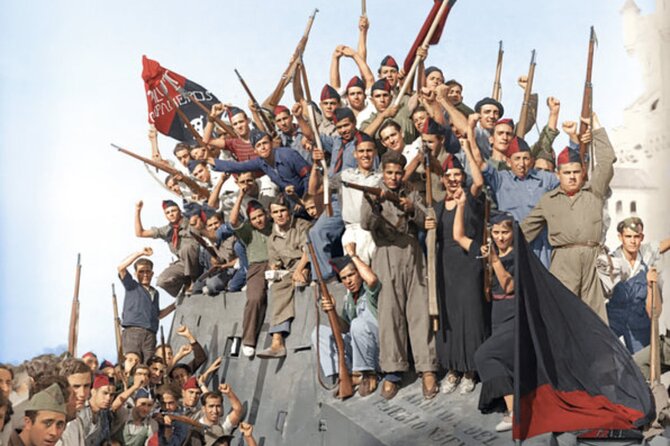
If you only know the Spanish Civil War in broad strokes, this tour adds sharper edges. You’ll come away with a clearer sense of three connected ideas.
First: the war wasn’t confined to front lines. The story touches communications (Telefonica), neighborhoods (Raval), and institutions (a hospital). That makes the conflict feel like it touched everything.
Second: resistance and ideology show up at street level. By discussing anarchism and working-class suffering, the tour explains why people weren’t all reacting the same way.
Third: the dictatorship isn’t treated like a vague afterword. The guide links what happened at the end of the war to cultural oppression under Franco’s rule. That connection is often missing in casual sightseeing, and it’s what makes the tour more than a list of grim locations.
And because the route is built from actual places, you start noticing how Barcelona carries memory in everyday settings—churches, plazas, and central streets.
How to Prepare So You Get the Most Out of It
To make this tour satisfying rather than exhausting, think “comfortable walking with mental focus.” The duration is about 2 hours 30 minutes, so you’ll want good shoes and a calm pace.
Bring:
- Water, since there’s no food or drink included
- A light layer if the weather changes
- Questions ready in your head, because private time makes asking easy
Also, the tour needs good weather. If conditions are poor, you should expect rescheduling or a refund offered if it’s canceled for weather reasons.
For meeting, you’ll start at Foot Locker on Pl. de Catalunya, 20, in Ciutat Vella, and end at Plaça Nova near the Cathedral area. That end point is a nice springboard for your next stop, rather than dropping you somewhere inconvenient.
Who This Tour Fits Best (and Who Might Skip It)
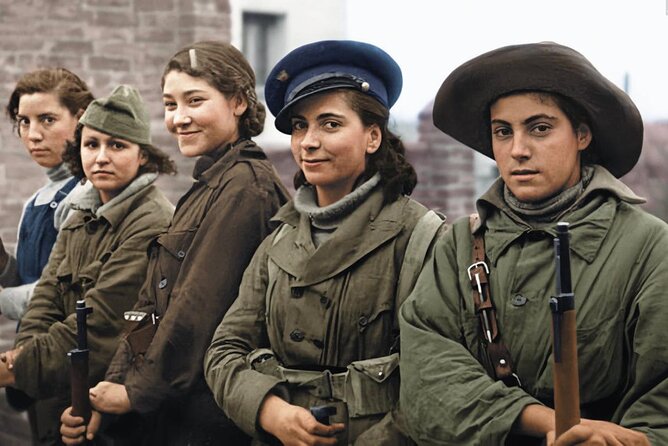
This is a strong choice if you:
- Want a private Spanish Civil War walking tour with focused attention
- Appreciate learning history from what you can see right now on the street
- Like routes that connect political events to everyday life—workers, hospitals, and visible damage
- Plan to spend most of your day in central Barcelona and don’t want a long museum session
You might not love it as much if you:
- Prefer a lighter topic on vacation day
- Want lots of free time at each stop for photos without listening
- Are hoping for a purely visual tour with minimal context
Should You Book This Private Spanish Civil War Tour?
Yes, if you want a structured, guide-led way to understand Barcelona’s role in the Spanish Civil War and what Franco’s dictatorship meant afterward. The value is in the storytelling focus, the private format, and the specific locations that connect big events to the city’s physical reality.
I’d especially recommend it if you’re the kind of traveler who likes asking why something is where it is—why a church detail matters, why a plaza carries visible bombing marks, or why a neighborhood tells you about resistance and survival.
If you’re deciding between this and a more general history walk, go with this one. It’s not trying to cover everything. It’s trying to explain the conflict in a way you can actually hold in your head while you’re standing in the places that witnessed it.
FAQ
How long is the private Spanish Civil War & Franco’s Dictatorship tour in Barcelona?
It runs about 2 hours 30 minutes.
What does the tour cost per person?
The price is $181.41 per person.
Is this a private tour or shared with other groups?
It’s a private tour/activity, and only your group participates.
What language is the tour offered in?
It’s offered in English.
Where do I meet the guide, and where does the tour end?
You start at Foot Locker, Pl. de Catalunya, 20, Ciutat Vella, 08002 Barcelona. You end at Plaça Nova, Ciutat Vella, 08002 Barcelona, near the Cathedral.
What’s included in the price?
An expert tour guide is included.
What’s not included?
Tips/gratuities and lunch (no food or drink is included).
What happens if the weather is poor?
The experience requires good weather. If it’s canceled due to poor weather, you’ll be offered a different date or a full refund.
FAQ
Can I cancel for a full refund?
Yes—if you cancel up to 24 hours in advance, you can get a full refund.
When will I receive confirmation after booking?
You should receive confirmation at the time of booking, unless you book within 2 days of travel—in that case, confirmation arrives within 48 hours, subject to availability.
Is the tour suitable for most travelers?
Most travelers can participate.
Is the tour near public transportation?
Yes, it’s near public transportation.
Are service animals allowed?
Yes, service animals are allowed.