REVIEW · SANTIAGO DE COMPOSTELA
Rías Baixas Tour
Book on Viator →Operated by Santiago Excursiones · Bookable on Viator
Albariño and mussels make this a standout day. This Rías Baixas tour strings together an Albariño winery visit in Cambados, then an Arousa catamaran where you eat mussels all you want with local wine. The one thing I’d plan for is the pacing: you’re on a schedule, and if you don’t catch the narration in Spanish/English smoothly, some explanations can feel cut short.
I also like that it’s built for people without a rental car: pickup is offered, the vehicle is air-conditioned, and the group stays manageable at up to 55 people. The itinerary also hits real local icons, like the Capilla de las Conchas on Isla de la Toja, plus a coastal stroll in O Grove and the horreos area of Combarro. You’re trading slow travel for variety, so it’s best if you want to see a lot in one long day.
In This Review
- Key Highlights You’ll Actually Feel
- A Long, Smooth Day Trip Out of Santiago
- Cambados Winery Stop: Albariño Taught in Plain Sight
- La Lanzada: Chapel and Views, but Don’t Bank on a Long Wander
- Isla de la Toja: The Scallop-Shell Church That’s All Impact
- La Toja Catamaran Through the Arousa Estuary: Mussels, Glass Bottoms, and Farming Up Close
- O Grove Coastline Walk: Guided Views Then Real-Time Food Choices
- Combarro’s Horreos Area: Photo-Worthy, Often Time-Compressed
- Price and Value: Where $66.52 Really Works
- Who Should Book This Rías Baixas Tour (And Who Should Skip)
- FAQ
- How long is the Rías Baixas tour?
- Where does the tour start, and what time is departure?
- Is lunch included?
- What’s included with the mussels and boat trip?
- Is the tour offered in English?
- Can I cancel for a full refund?
- Should You Book This Rías Baixas Day Trip?
Key Highlights You’ll Actually Feel
- Cambados Albariño winery + tasting: a guided look at how Albariño is made, finished with wine tasting in a typical winery.
- Arousa estuary catamaran with glass bottoms: you can watch farming areas below the water while the boat shows you the estuary in motion.
- All-you-can-eat mussels on board: mussels are freshly served during the route, with wine, soft drinks, water, and pomace shots.
- Capilla de las Conchas on Isla de la Toja: a church covered in scallop shells set in a park, with big visual impact in a short stop.
- O Grove seafood-port time: a guided coastline walk plus enough free time to eat at your own pace.
- Language may shift mid-commentary: the tour is offered in English, but you may hear Spanish first during parts of the narration.
A Long, Smooth Day Trip Out of Santiago
This tour is a full-day outing, running about 9 to 10 hours with a 10:00 am start from Capela do Pilar on Av. de Xoán Carlos I (in Santiago de Compostela). If you booked ahead, that’s smart: it’s commonly reserved around 40 days in advance, so popular departures can fill.
You’ll ride in an air-conditioned vehicle with pickup offered and a mobile ticket. The group can be up to 55 travelers, so you’re not stuck shoulder-to-shoulder, but it still feels like a coordinated day, not a quiet private stroll.
One practical note: the tour depends on good weather. If it gets canceled due to poor conditions, you’ll be offered a different date or a full refund. In other words, it’s a sea-and-coast plan, so pack for wind and sun even when Santiago feels mild.
You can also read our reviews of more tours and experiences in Santiago de Compostela.

Cambados Winery Stop: Albariño Taught in Plain Sight
Your first major anchor is Cambados, a town strongly tied to Albariño. At this stop, you get a guided winery visit focused on how Albariño is made, plus tasting in a typical Rías Baixas winery setting.
This is the part I like most for wine lovers who don’t want to overthink things. Instead of turning into a lecture, it’s structured: visit first, then tasting. And because it’s a scheduled stop (about 1 hour), you can enjoy it without worrying that the rest of the day will collapse.
Here’s a balanced expectation to keep in mind: some winery stops can feel lighter if you’re hoping for a wide range of pours. If you’re a serious wine geek, ask questions during the tasting and be clear you’d like to learn what makes Albariño taste the way it does in this region. If your main goal is a fun cultural stop plus a taste, this works.
La Lanzada: Chapel and Views, but Don’t Bank on a Long Wander
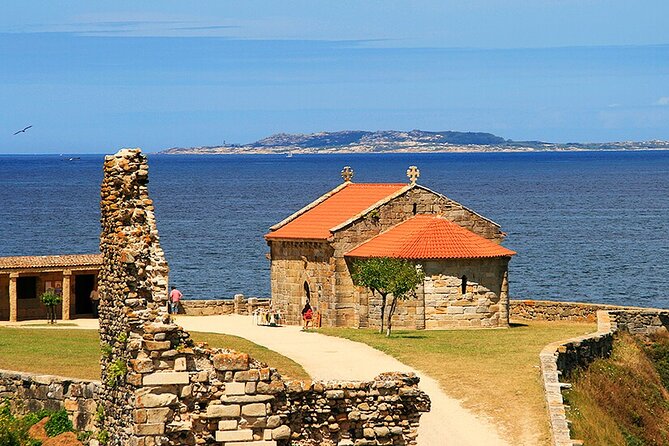
Next comes Playa La Lanzada, with a medieval chapel, a viewpoint, and beach time. The plan is around 30 minutes—short, by design.
This stop is about quick impressions: the chapel and viewpoint give you a clean sense of coastal scenery, and then you’re back in motion. The only “watch out” is that the time can feel tight in real life. If you’re the type who needs time to linger, take your photos fast and do a quick walk first.
If you’re traveling with a camera, plan to use this window strategically. Bring sunglasses and water; the beach angle can be bright, and the rest of the day isn’t built around long breaks.
Isla de la Toja: The Scallop-Shell Church That’s All Impact
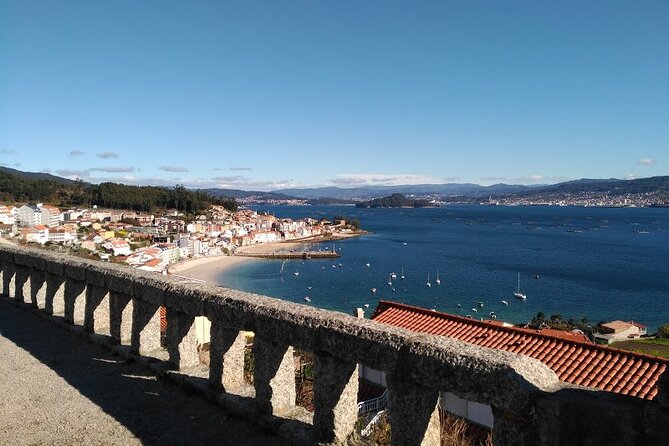
Isla de la Toja is one of those stops that just makes sense on a day like this. You’ll visit the Capilla de las Conchas, a church completely covered in scallop shells, set in a park and flanked by the old soap factory and the Gran Hotel de La Toja (noted as the first spa hotel in Spain).
This stop is about 45 minutes, which is a good length for something visually intense. You don’t need hours to understand the wow factor here—you need enough time to look closely, walk around, and actually register the shell design.
If you love oddball architecture or you just like photos with texture and detail, this is a keeper. Even if you only do a quick loop, you’ll leave with something memorable that feels very Galician.
La Toja Catamaran Through the Arousa Estuary: Mussels, Glass Bottoms, and Farming Up Close
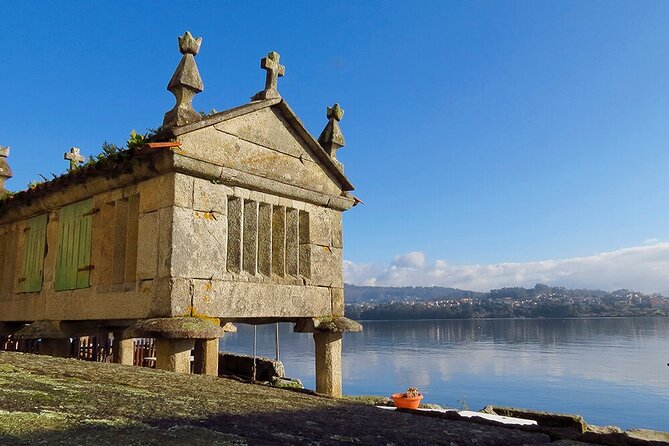
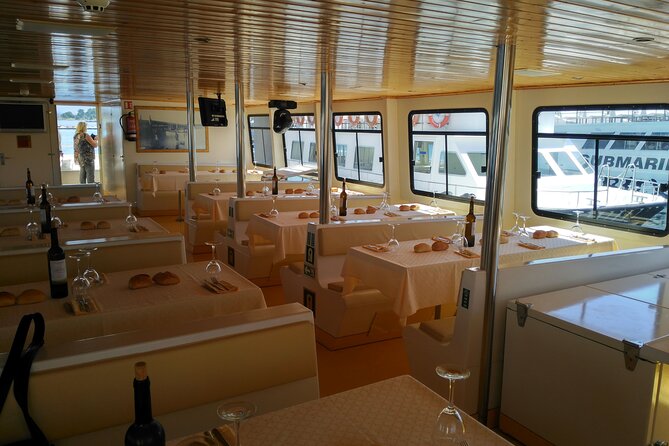
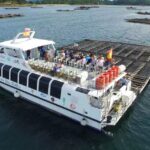
The heart of the day is the catamaran route through the Ría de Arousa. It lasts about 75 minutes, and it’s built around three things: what’s happening below the water, how shellfish farming works, and a seriously friendly food setup.
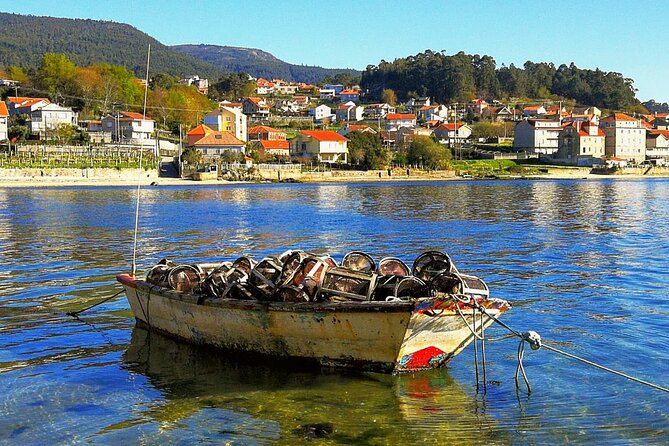
During the cruise, you learn about scallop, oyster, and mussel farming in Galician estuaries. There’s even a stop at one of the rafts (shellfish farming platforms) where you can see the process in situ. On top of that, the boat uses glass bottoms, so you can watch the marine world below while the scenery rolls by.
Then comes the part that usually gets people grinning: you get to eat all the mussels you want, freshly taken from the sea. This is paired with top-quality regional wine, plus soft drinks, water, and shots of pomace. Some departures also run with music, which adds to the festive feel.
Two practical considerations:
- If alcohol is a concern for you, this stop is built with it, so you’ll want to pace yourself (and maybe skip shots).
- The stop info notes that an admission ticket isn’t included for the catamaran portion, even though the tour includes the boat trip with mussels and drinks. That mismatch can happen in how different systems list things. Before you go, confirm what you need to pay for at check-in, if anything.
If you want one reason this tour gets consistently good scores, it’s that this is where the value becomes physical. You don’t just hear about seafood—you eat it while seeing how it’s farmed.



O Grove Coastline Walk: Guided Views Then Real-Time Food Choices
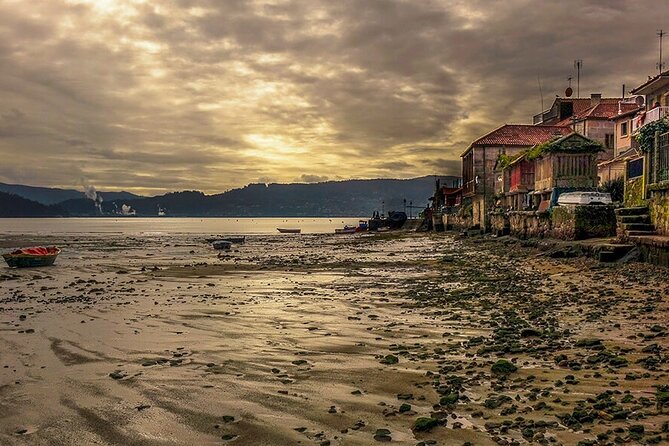
After the boat, you head to O Grove for a short guided walk along the coastline. This area is known for seafood, and you’ll pass a small inshore port with the fish market and plenty of small bars and restaurants.
The tour window here is about 1 hour 30 minutes, and the key part is that you get free time to eat in the villa. Since lunch isn’t included, this is your chance to decide what you want and where you want it—no forced set menu.
What I like about structuring it this way is simple: you still get guidance and context, but you control the meal. If you like oysters, mussels, or local fish, this is the moment to follow your appetite and pick a place that looks busy and clean.
Because the day is long, keep your meal efficient. Order, eat, and be back on time. If you linger too much here, the last stop can feel rushed.
Combarro’s Horreos Area: Photo-Worthy, Often Time-Compressed
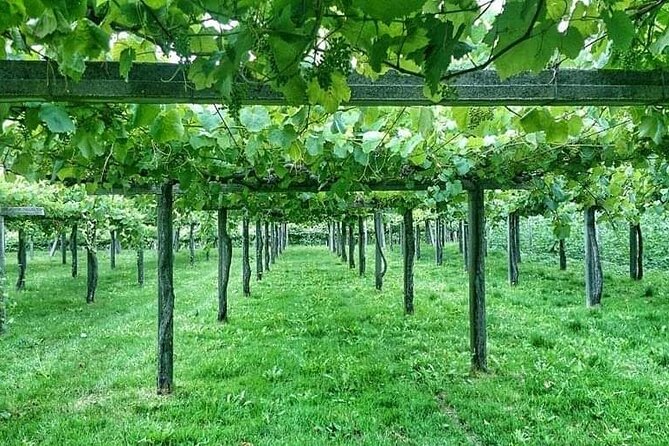
Your final stop is the Los horreos de Combarro area—Combarro as a fishing village. You get about 1 hour 15 minutes.
This is the kind of place you want to slow down in, because the charm is in details along the waterfront. But with a tour day like this, it can become a “see it well enough” stop rather than a “wander for hours” stop.
If you’re particularly attached to Combarro (or you want more than one photo angle), be ready to move quickly. Start with the main cluster, get your shots, then do a second round only if you have time.
It’s a good last stop because it balances the sea-food focus with local village life. It just may not be the best moment for people who want to linger endlessly.
Price and Value: Where $66.52 Really Works
At $66.52 per person, this is priced like a value-focused day trip, not a luxury private tour. The math makes sense if you care about three included items: the winery visit and Albariño tasting, the catamaran route through the estuary, and the boat experience with mussels plus drinks.
The boat part alone is doing a lot of work. Eating mussels all you want with local wine and soft drinks inside a scheduled itinerary is not something you’ll replicate easily by yourself without planning transport and a similar tour.
Where the value might not land:
- If you don’t eat shellfish, this tour loses its biggest payoff.
- If you’re expecting a big multi-wine tasting lineup at the winery, the tasting can feel more limited than you’d hope.
- If language is your top priority and you want full English narration nonstop, you may find some parts run Spanish-first and become clearer in English later.
But if you want a practical sampler day—wine, coastal sights, scallop-shell church, estuary farming, and a seafood meal—this price can feel like a bargain.
Who Should Book This Rías Baixas Tour (And Who Should Skip)
This tour is especially suited for:
- First-time visitors who want an efficient overview of the Rías Baixas highlights from Santiago.
- People excited by seafood—especially mussels—and who don’t mind a long day.
- Travelers who like structured time and want someone else handling transport and timing.
I’d think twice if:
- You’re hoping for relaxed village time. The day is packed, and stops can feel squeezed.
- You need heavy English narration throughout. English is offered, but some commentary may start in Spanish before English catches up.
- You prefer wine tastings with multiple different pours and long explanations. The winery stop is guided, but it may not be as deep as a wine-dedicated half-day.
One more plus if you get the right guide: some departures are led by Martín, and his approach is known for being friendly and information-forward. That kind of guiding makes the fast pace feel less stressful.
FAQ
How long is the Rías Baixas tour?
It runs about 9 to 10 hours.
Where does the tour start, and what time is departure?
The start point is Capela do Pilar, Av. de Xoán Carlos I, 6, 15701 Santiago de Compostela, Spain. The start time is 10:00 am.
Is lunch included?
No. Lunch is not included.
What’s included with the mussels and boat trip?
The tour includes the boat trip through the Arousa estuary, and it comes with mussels (all you want), wine, soft drinks, and water, plus shots of pomace.
Is the tour offered in English?
Yes. The tour is offered in English.
Can I cancel for a full refund?
Yes. You can cancel up to 24 hours in advance for a full refund. The tour also requires good weather, and if it’s canceled due to poor weather, you’ll be offered a different date or a full refund.
Should You Book This Rías Baixas Day Trip?
Book it if you want the classic Rías Baixas combo: Albariño, a scallop-shell church, and an estuary catamaran where the seafood is a real experience, not a side dish. It’s also a great choice if you’re coming from Santiago and don’t want to sort out transport between Cambados, the coast, and Combarro.
Skip or adjust expectations if you dislike tight schedules, you need constant English narration, or shellfish and winery time aren’t your priorities. If those sound like you, you may still love the region—but a different format might fit better.