REVIEW · SANTIAGO DE COMPOSTELA
Santiago de Compostela: Finisterre, Costa da Morte, Ézaro, Muros & Carnota
Book on Viator →Operated by Santiago Excursiones · Bookable on Viator
End-of-the-world coast, minus the hassle. This guided day trip ties together Finisterre and the wild Costa da Morte with a smooth round-trip bus from Santiago and stops that feel linked to the Camino. You’ll go from fishing villages to a river waterfall hitting the sea, then to lighthouse viewpoints and a final pilgrimage stop.
I especially like two things about it. First, the comfortable bus makes the long coast drive feel manageable, not like a chore. Second, the narration tends to be bilingual (Spanish and English), with guides such as Lucia, Ana, and Noelle showing up in the guide lineup you might experience.
One possible drawback: the day runs on a tight schedule. Some stops are short, and if weather turns ugly, you may lose the dramatic coastline/lighthouse views you hoped for.
In This Review
- Key highlights worth planning for
- Why this Finisterre–Costa da Morte day trip makes sense from Santiago
- Getting started at Capela do Pilar and riding for a full day
- Muros fishing village: the 30-minute Galician palate cleanser
- Carnota horreo: granite granary views near the longest beach
- Ézaro waterfall: when a river drops into the Atlantic
- Fisterra free time: streets, port life, and Camino ending energy
- Faro de Fisterra lighthouse: Ara Solis and 0 km viewpoints
- Muxía and the Sanctuary of la Barca: pilgrimage stones and setting
- Ponte Maceira’s Gothic bridge and mills: a Camino stop you can actually walk
- Time, pace, and what to pack for a smooth day
- Price and value: is $59.28 a good deal?
- Who should book this Santiago to Finisterre tour
- Should you book? My practical take
- FAQ
- How long is the Santiago de Compostela to Finisterre and Costa da Morte tour?
- What is the price per person?
- What does the tour include?
- Is lunch included?
- What language is the tour offered in?
- Where do I meet for the tour?
- What time does the tour start?
- How many travelers are in the group?
- Does the tour require good weather?
- Can I cancel for a full refund?
Key highlights worth planning for
- Comfort-first round-trip transport from Santiago, built for a one-day hit at the coast
- Bilingual guide time (Spanish and English) so you can actually enjoy the history and stories
- Ézaro waterfall: a rare river that spills into the sea near Mount Pindo
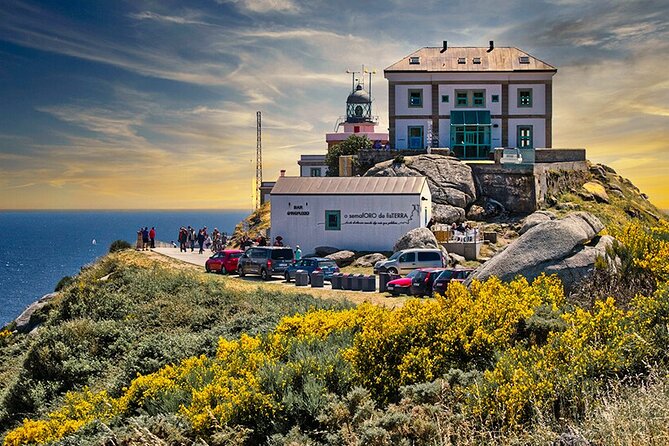
- Fisterra Faro viewpoint time at the lighthouse area with famous end-of-the-Camino symbolism
- Muxía pilgrimage setting at the Sanctuary of Nuestra Señora de la Barca
- A stop for Camino-era architecture at Ponte Maceira (Gothic bridge and mills)
Why this Finisterre–Costa da Morte day trip makes sense from Santiago
Santiago de Compostela is great, but it’s not where you get the full movie-version Atlantic coastline. This tour does the hard part for you: it strings together the highlights of the Costa da Morte region in one day, starting and ending back in Santiago.
The logic is strong if you’re short on time or don’t want to piece together buses and trains. You get a guided pass through key places that many people associate with finishing the Camino, plus Galician coastal variety in one outing.
I also like that the stops aren’t random. They’re the kind of places you remember: a historic granary, a waterfall-to-the-sea moment, lighthouse viewpoints, and pilgrimage stones.
You can also read our reviews of more tours and experiences in Santiago de Compostela.
Getting started at Capela do Pilar and riding for a full day
The tour starts at Capela do Pilar on Av. de Xoán Carlos I, with a 9:00 am departure. It runs about 9 hours, and the group max is 55 travelers, which usually keeps it from feeling chaotic.
You’ll board a comfortable bus for round-trip transit. That matters because the coast drive takes time, and having one vehicle plus a planned route saves you from the stress of transfers.
One practical tip: pickup can be confusing if you’re not at the right exact spot. A few accounts mention being sent to different addresses early on, so I’d treat this like a “show up early and confirm your pickup location” day. If the operator contacts you (some do through WhatsApp), follow the message closely so you don’t lose precious morning time.
Muros fishing village: the 30-minute Galician palate cleanser
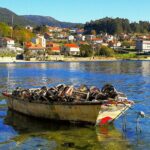
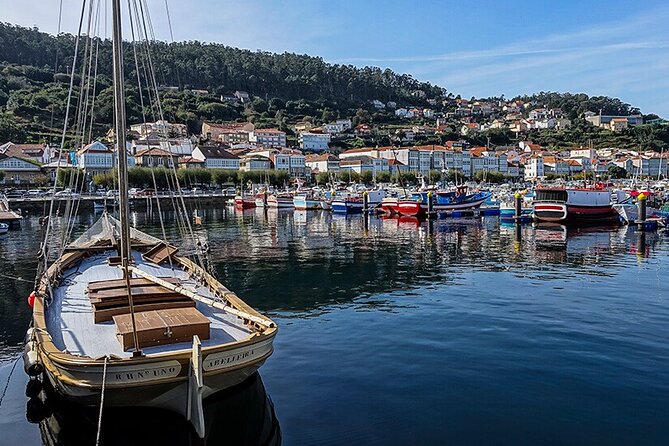
First stop is Muros, a classic fishing village with intricate streets and small fish stalls. You’ll get about 30 minutes, so think “walk and look,” not “do everything.”
This is a good opening stop because it slows the pace after the bus ride. You can stretch your legs, spot traditional harbor life, and do a quick wander through the older lanes. If you want something informal, this is also where you can snack without committing to a full meal.
Possible drawback: 30 minutes goes fast, especially if you stop for photos every few steps. If you’re the type who likes to linger, plan to come back later or accept that this portion is more atmosphere than deep dive.
Carnota horreo: granite granary views near the longest beach
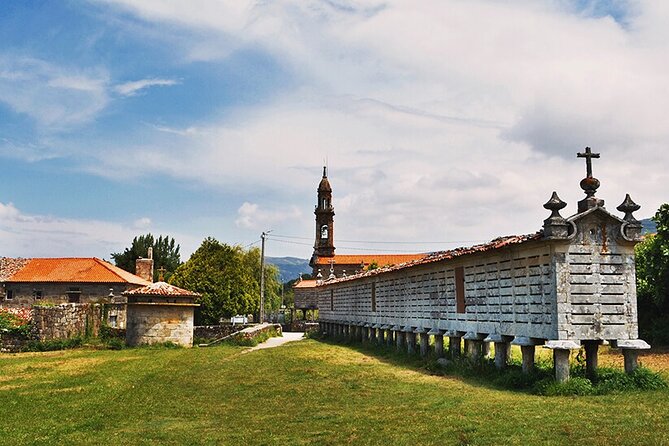
Next up is Horreo de Carnota, one of the key monuments of the Costa da Morte. It dates from the 18th century and is built in granite, set near what’s described as the longest beach of Galicia.
You’ll have around 20 minutes here. That’s enough time to understand what you’re looking at—then move on while the day is still running.
This stop is valuable because horreos are practical archaeology. They’re not just decorative ruins. They’re part of how Galicia stored food long ago, and seeing one in its landscape context (granite, coast proximity, beach access) makes the story click.
Ézaro waterfall: when a river drops into the Atlantic
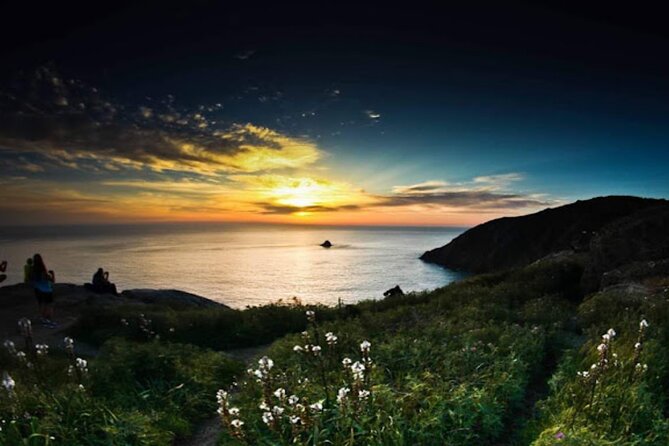
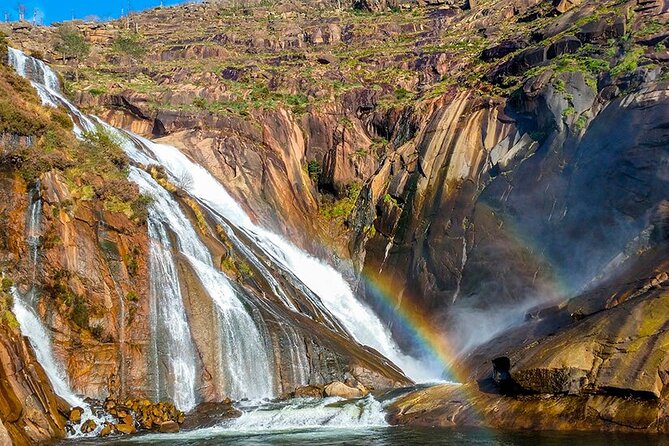
Stop 3 is the star-style moment for many people: Fervenza de Ézaro. You’ll have about 45 minutes, and this is where the Costa da Morte earns its reputation for dramatic nature.
The big detail here is the rarity: it’s described as the only southern European river with a waterfall that flows into the sea. It sits in an area framed by Mount Pindo, also linked in local storytelling to Celtic Olympus, plus fishing villages and beaches nearby.
What I like about this stop is the way it connects water, rock, and coast in one scene. You don’t need hiking boots to feel the impact. You just need decent footing and time to find a viewing spot.
Weather is the wildcard. If it’s raining, you may still see the waterfall, but the full “Atlantic drama” feeling can soften. If skies clear up, the views tend to feel more worth the full 45 minutes.
Fisterra free time: streets, port life, and Camino ending energy
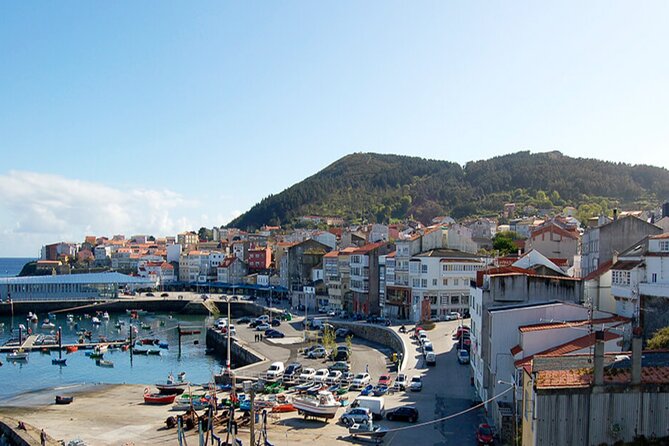
Then you reach Fisterra (Finisterre) itself, with 1 hour 30 minutes of free time. This is your chance to eat, wander the small streets, and visit the perquero port area.
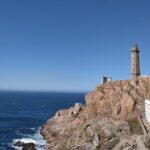
This stop is popular for the symbolism. Faro de Fisterra is tied to the idea of the end of the Roman world and pre-Christian cults linked to Ara Solis, and it’s also connected to kilometre zero of the Camino de Santiago. Even if you don’t chase every marker, being in the area is what makes the day feel like a “finish line.”
A practical note: because you have free time, you can pace yourself. If you want photos first, do that. If you want food first, do that. If you get rain and the pavement is slick, focus on quick walks and choose where you stand carefully.
Some guides also tend to help with lunch choices in Finisterre, which can be handy since you’re limited by your schedule. If you’re picky about seafood, ask for a recommendation before everyone splits.
Faro de Fisterra lighthouse: Ara Solis and 0 km viewpoints
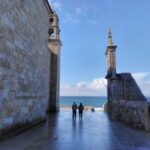
After Finisterra, you’ll head to Faro de Fisterra for about 40 minutes. This is the lighthouse area with special viewpoints over the Atlantic, and it’s the place where the story really lands.
The tour frames the site as more than a lighthouse. It’s presented as the point marking the end of the Roman world, tied to Ara Solis and pre-Christian cult practices, and it’s linked to the kilometre zero theme of the Camino.
What you’ll likely enjoy most here is the mix of “symbol + view.” Even if you don’t memorise the ancient details, you’ll feel why people come: it’s a physical end point, and the Atlantic sets the mood.
Watch the weather on this part. Lighthouse and coast viewpoints depend on visibility. If fog or rain shuts down the horizon, it can still be worthwhile, but your photos may look less dramatic than you imagined.
Muxía and the Sanctuary of la Barca: pilgrimage stones and setting
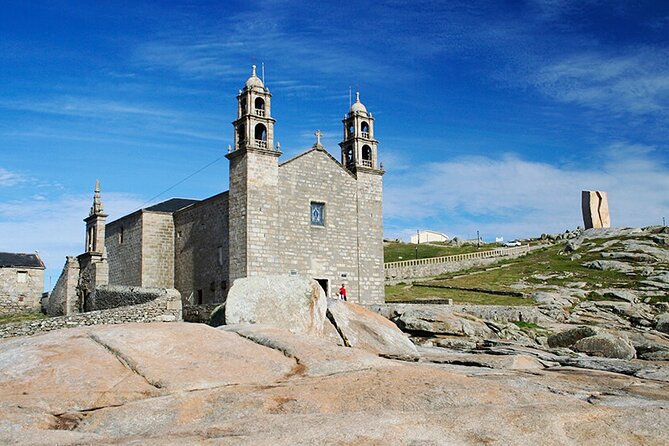
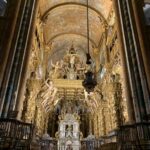
Stop 6 is Muxía, with a visit to the Sanctuary of Nuestra Señora de la Barca. You’ll get about 40 minutes.
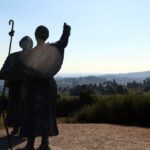
This is a pilgrimage stop tied to the Camino, with a dramatic setting plus holy stones and a route area described as the Skin way. Even with limited time, the vibe here is different from the lighthouse stop: calmer, more ritual-focused, and often more about place than pure scenery.
I like that this stop balances the day. You’ve had big coastal nature energy, then you shift to faith and pilgrimage context. It’s a nice mental reset, especially if you’ve just finished walking days on a Camino route.
Potential drawback: time is tight. If you want longer quiet time at the sanctuary or deeper wandering, you may want to plan a return trip on your own.
Ponte Maceira’s Gothic bridge and mills: a Camino stop you can actually walk
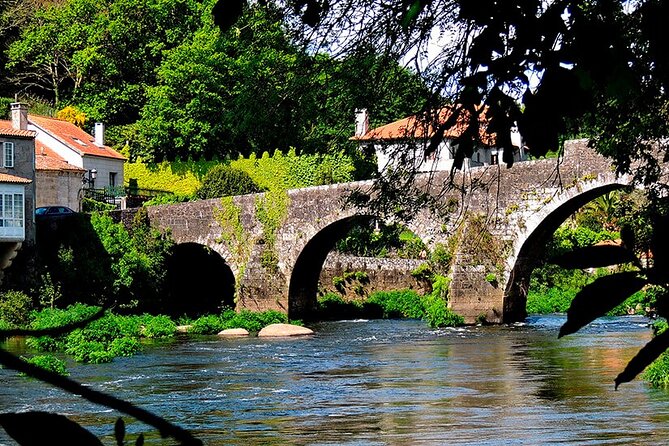
The final stop is Ponte Maceira, about 30 minutes. It’s described as a medieval town founded in the 13th century, and it’s considered an essential stop on the Camino route.
Here you’ll see the famous Gothic bridge and nearby mills, plus a guided explanation of the history. This is one of those places where short timing still works because the key features are close together and easy to appreciate without long hikes.
For me, the value is the connection back to the Camino, not just the far-west end. The day ends with a more “human-scale” stop after big coast scenes.
Time, pace, and what to pack for a smooth day
This trip is built as a highlights circuit, so the pace can feel quick. Some people love that it’s efficient; others find it a bit rushed when they want more time at each location.
A few practical ways to make it better:
- Plan your priorities. If you want photos at Ézaro or at Faro, decide where you’ll stand before the crowd thickens.
- Wear shoes with grip. Coastal paths and wet sidewalks are common in Galicia in shoulder seasons.
- Bring a small layer. Even on sunny days, the wind near the Atlantic can be chilly.
Also, the experience requires good weather. If it’s cancelled due to poor weather, you should expect an alternate date or a full refund, so keep your schedule flexible if possible.
Price and value: is $59.28 a good deal?
At $59.28 per person, this is priced like a value-driven day trip. What makes it feel fair is what you’re buying: round-trip bus, guided narration in Spanish and English, and all insurances—plus multiple major Costa da Morte stops that would be a hassle to coordinate on your own.
Lunch isn’t included, so you’ll still want to budget for food. But with 1 hour 30 minutes in Fisterra, you’re given a real window to eat without rushing through other stops.
From a “value per hour” angle, the tour also avoids dead time. Even when a stop is short (like 20 minutes at Carnota), you’re getting a distinct sight category: coastal monument, nature spectacle, lighthouse symbolism, pilgrimage context, and finally a medieval bridge stop.
If your goal is to “see the coast and move on” in one day, I think this price works.
Who should book this Santiago to Finisterre tour
This tour fits best if you:
- Want a one-day coast itinerary from Santiago without renting a car
- Are interested in the Camino finishing points around Fisterra and the broader region
- Prefer guided context, not just scenic driving
- Like a day with varied stops rather than one long hiking session
You might want to choose a different plan if you:
- Hate short stop times and need long breaks to slow down
- Are mainly there for one site and care less about the rest
Should you book? My practical take
If you want an efficient, guided “greatest hits” day of Finisterre, Costa da Morte, and Camino-related places, I’d book this. The structure makes it easy to feel like the day meant something, not just a bus ride to a few photo spots.
I’d book with the weather in mind. If the forecast looks miserable, you may still enjoy the villages and stories, but your lighthouse/coast views could disappoint.
Finally, plan to show up ready for a full day: comfortable shoes, a light layer, and a flexible attitude about timing. Do that, and you’ll walk away with a coast day that’s practical, memorable, and actually worth your time.
FAQ
How long is the Santiago de Compostela to Finisterre and Costa da Morte tour?
It runs for about 9 hours.
What is the price per person?
The price listed is $59.28 per person.
What does the tour include?
The tour includes a guided tour in Spanish and English and all insurances.
Is lunch included?
No. Lunch is not included.
What language is the tour offered in?
The tour is offered in English, and the guided tour is in both Spanish and English.
Where do I meet for the tour?
You meet at Capela do Pilar, Av. de Xoán Carlos I, 6, 15701 Santiago de Compostela, A Coruña, Spain.
What time does the tour start?
The start time is 9:00 am.
How many travelers are in the group?
The tour has a maximum of 55 travelers.
Does the tour require good weather?
Yes. It requires good weather. If it’s canceled due to poor weather, you’ll be offered a different date or a full refund.
Can I cancel for a full refund?
Yes. You can cancel up to 24 hours in advance for a full refund. Cancellation within 24 hours of the start time is not refunded.