REVIEW · SANTIAGO DE COMPOSTELA
Santiago de Compostela: Finisterre, Muxía & Costa da Morte
Book on Viator →Operated by Toxo Travel · Bookable on Viator
The Camino ends, then the coast goes mythic. This full-day loop takes you from quiet riverside villages to Finisterre and Muxía, with legends, granite cliffs, and dramatic sea views. I love the mix of real, walkable towns plus big nature stops, and I also like how the day stays organized with time that feels built for photos. One thing to watch: it’s a long 9-hour day, and if you’re tired (like after the Camino), you may wish you had a shorter version.
You’ll ride in an air-conditioned coach, hear the story in English, and get a “how it all connects” view of Galicia’s maritime culture and sacred sites. Guides you might meet on this route include Andrea, Daniel, Christian, Reuben, Dani, and Nago (spelling may vary), and they’re repeatedly praised for keeping things moving and understandable in both English and Spanish. Main drawback to plan around: audio tech can be hit-or-miss on some days, and lunch is not included.
In This Review
- Key highlights that make this tour click
- A 9-hour coast circuit that feels like a finish line
- Ponte Maceira and Muros: easy mornings before the drama
- Cascada del Ézaro: the 40-meter stop with real payoff
- Faro de Fisterra: Ría de Corcubión views and the end-of-the-world mythology
- A quick photo strategy
- Finisterre town time: wander the port and eat smart
- Muxía: Sanctuary of the Boat, sacred stones, and Monte Corpiño
- How the tour runs on the ground: pacing, coach comfort, and guides
- Price and value: what $59.28 buys you (and what it doesn’t)
- Things to watch for on a full-day Costa da Morte trip
- Should you book this Finisterre, Muxía & Costa da Morte day trip?
- FAQ
- How much does the Santiago de Compostela to Finisterre and Muxía tour cost?
- How long is the tour?
- What time does the tour start?
- Is lunch included?
- Is the tour offered in English?
- Where is the meeting point in Santiago de Compostela?
- What is the maximum group size?
- Do I get a mobile ticket?
- What happens if the weather is bad or I need to cancel?
Key highlights that make this tour click
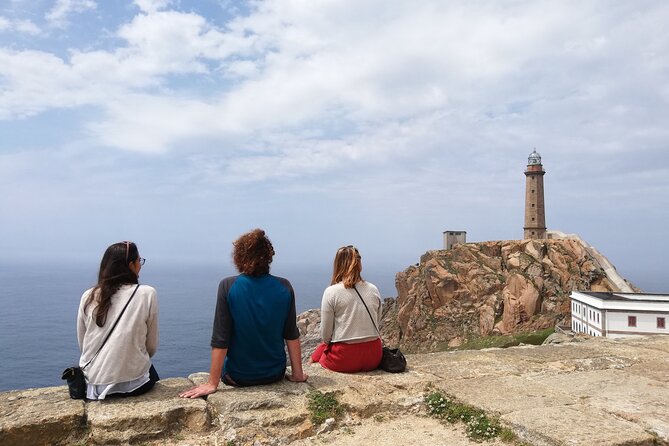
- End-of-the-World stop at Faro de Fisterra with panoramic coastline views
- Cascada del Ézaro: a big 40-meter waterfall moment on the way
- Real fishing villages at Muros and Finisterre, with time to wander on your own
- Muxía’s sacred stones and Sanctuary of the Boat plus a scenic short walk
- Air-conditioned coach and a tight schedule that maximizes coastline in one day
A 9-hour coast circuit that feels like a finish line
This is the kind of day trip you book when you want closure after the Camino, but you don’t want to manage trains, transfers, or a driving headache. You start in Santiago de Compostela at 9:00 am and spend about nine hours tracing Galicia’s Costa da Morte—famous for rugged coast, strong folklore, and ocean that looks like it’s in a mood.
The route works well because it blends three kinds of moments:
- Tiny places you can actually stroll (cobbled streets, ports, village centers).
- Nature stops that hit hard visually (waterfall and sea cliffs).
- Myth + meaning at Finisterre and Muxía, where religious and maritime stories overlap.
And yes, this is a lot for one day. But if you’re okay with a full schedule and like seeing several places without long logistics, it’s a strong value at $59.28 per person—especially because the tour includes transport and doesn’t make you buy paid entry tickets for the stops.
You can also read our reviews of more tours and experiences in Santiago de Compostela.
Ponte Maceira and Muros: easy mornings before the drama
You begin with Ponte Maceira, a riverside village near Santiago where the headline is a 14th-century bridge over the Tambre River. Even if you only have a short stop here, it’s the right kind of start: slow, scenic, and full of small details. You also get to see mills of medieval origin, and the cobbled streets give you that classic Galicia street texture without feeling rushed.
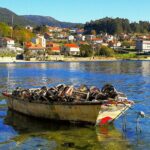
Then the day shifts to Muros, a fishing village with a 16th-century historic center and a working port vibe. This is where you get to reset your eyes. Instead of cliff views and stone legends, it’s boats, seafood rhythms, and streets you can wander at an easy pace. The port area and the old center are both worth a quick loop—don’t just snap one photo and move on. Give yourself time to browse what’s around you.
A small caution here: some people find the early stops a bit calmer than the big coastal hits later. If you’re the type who came for maximum scenery, just know Muros is more about atmosphere and wandering than big “wow” geology.
Cascada del Ézaro: the 40-meter stop with real payoff
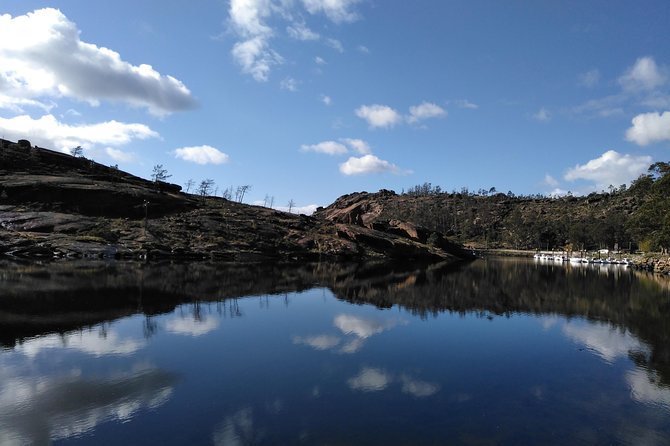
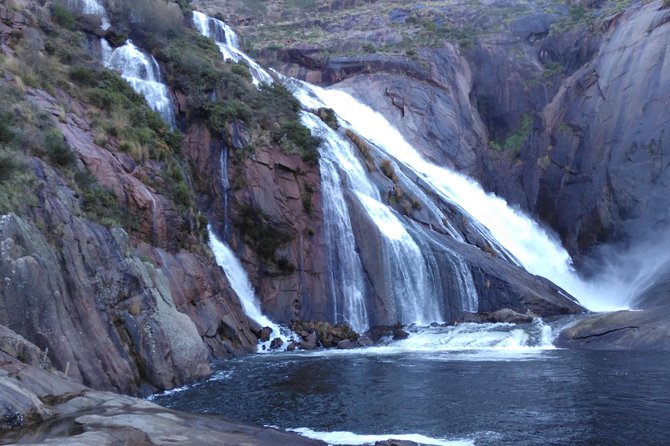
Next comes Cascada del Ézaro, where the Xallas River finishes its run by dropping into the sea from about 40 meters high. The setting matters. It’s not an isolated waterfall in the middle of nowhere—it’s tied to Monte Pindo foothills before the water hits the coast.
This is one of those stops that changes how you experience the rest of the day. Once you’ve seen a waterfall that powerful, the coastal scene feels even sharper. Water is already doing its storytelling, and then the ocean takes over.
Practical note: expect a short window. You’ll want to plan your photos fast—arrive, look, shoot, then take a slow minute to soak in the sound and scale before moving on.
Faro de Fisterra: Ría de Corcubión views and the end-of-the-world mythology
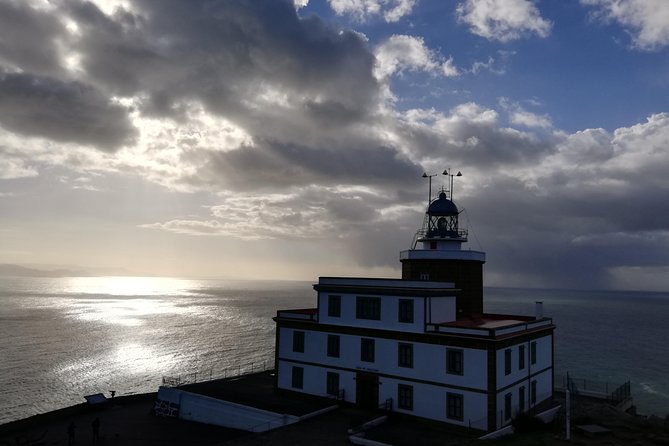
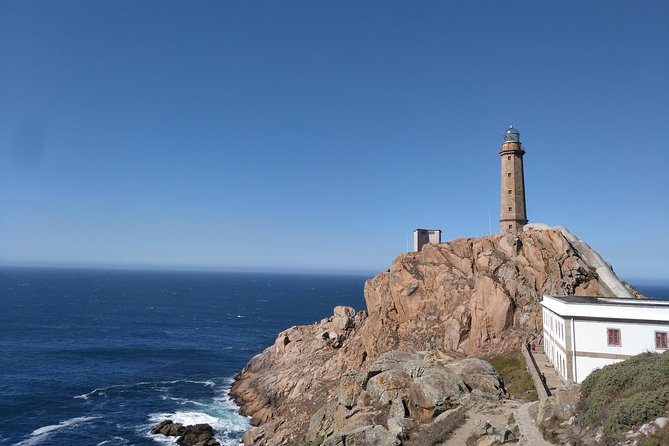
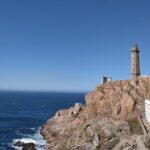
Now you reach Faro de Fisterra (Cape Finisterre, or Fisterra)—a place Greeks and Romans linked to the End of the World. Whether you’re religious, skeptical, or somewhere in between, this stop has a strong pull because the meaning layers on top of the scenery.
From the lighthouse surroundings, you get impressive panoramic views over the Ría de Corcubión and the Carnota Coast. On clear days, you can make out the granite complex of the O Pindo Mountains. That combination—wide ocean water plus hard stone ridges—helps explain why this spot keeps showing up in legends for centuries.
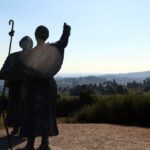
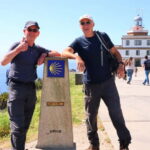
If you’re coming with Camino memories, this part tends to land emotionally. People often extend their walk from Santiago specifically toward Finisterre, following the roughly 98 kilometers that separate the two. In other words: you’re not just sightseeing; you’re stepping into the story many pilgrims treat as a final chapter.
A quick photo strategy
If you care about pictures (and who doesn’t), bring some kind of phone-battery backup. One review tip that keeps repeating: you’ll use your camera more than you think.
Finisterre town time: wander the port and eat smart
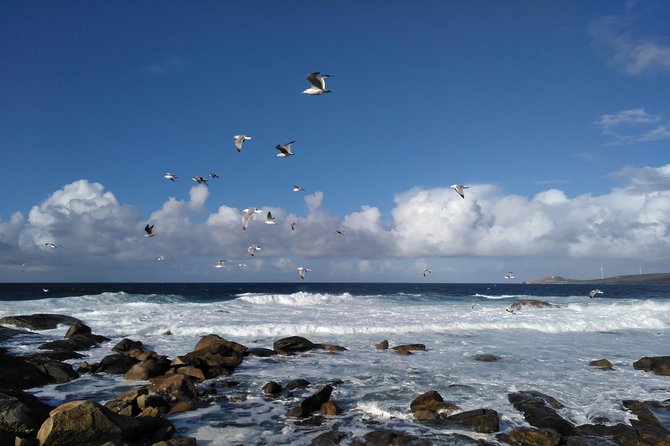
After the lighthouse viewpoint, you get time in Fisterra (Finisterre) town, a classic fishing village with charming alleys and a working port. This is where you can shift from “guide talking” mode to “you decide” mode.
The tour gives you about 1 hour 30 minutes for free time. That’s enough to:
- walk the alleys near the port,
- peek into how the fishing area works,
- and find a meal without panic.
Lunch is not included, so you’re choosing from what’s nearby. A common practical takeaway from the experience: the lunch suggestion can be okay, but it may not be the best value or taste on a given day. If you want to eat well, use your free time to check options yourself—especially because seafood quality can vary block to block in places like this.
My advice: arrive with a light plan. Decide whether you want a sit-down meal or something quicker, then don’t spend the whole 90 minutes hunting. You’ll lose time you’d rather use for strolling by the port.
Muxía: Sanctuary of the Boat, sacred stones, and Monte Corpiño
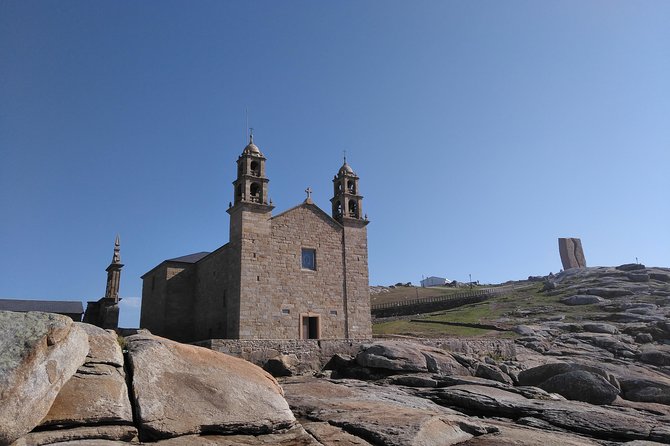
If Finisterre is the big dramatic endpoint, Muxía often becomes the emotional and spiritual favorite for many people. It’s farther north, and it feels different: more stone, more sea, and more sacred objects tied directly to the coast.
The heart of Muxía is the Sanctuary of the Boat, raised at the foot of the sea. Nearby you’ll hear about and see the Pedra de Abalar, Pedra dos Cadrís, and the Piedra del Timón—sacred stones tied to legend and devotion.
After the sanctuary, you take a short path up toward Monte Corpiño. This isn’t a marathon hike; it’s a scenic walk with the payoff of wide views. From up there you can see:
- the estuary,
- Cabo Vilán,
- and the beaches of Leis and Lago,
- plus Monte Facho.
This stop is one of the best places on the trip to slow down. The sea is constantly moving, the stones feel ancient, and the viewpoint helps you understand why people come back again and again.
How the tour runs on the ground: pacing, coach comfort, and guides
Logistics matter because this is a lot of stops. The ride starts at Toxo Travel at Rúa dos Bautizados, 12 in Santiago. You board the coach and head out with an air-conditioned vehicle, which is a relief on hot days and also nice when weather turns.
Group size is capped at 50 travelers. Some days may feel smaller inside the bus, but the key is the tour stays organized. You get clear guidance at each stop, and guides often switch between English and Spanish so you don’t feel locked out.
Guide quality can be a big factor on day trips like this, and the names that come up often are Andrea, Dani/Danny, Christian, Daniel, Reuben, and Nago/Nagore. The best guides do two things well:
- explain what you’re about to see (so the place makes sense),
- then keep the group moving on time so you don’t lose daylight.
Also, your bus driver matters. Reviews mention careful handling on curvy coastal roads—exactly what you want when you’re heading toward cliffs and viewpoints.
Price and value: what $59.28 buys you (and what it doesn’t)
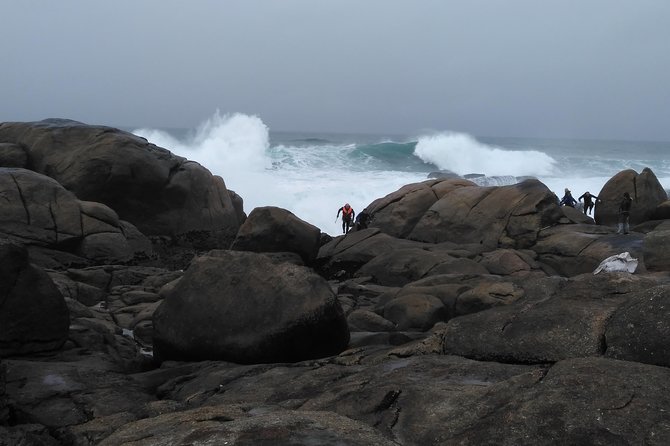
At $59.28 per person, you’re paying mostly for transport, guided interpretation, and a schedule that hits multiple high-demand sites in one day. You’re not paying for lunch, and you’re not paying separately for paid attraction entries at these stops (each stop lists free admission ticket).
So the value math is pretty simple:
- If you tried to do this solo, you’d spend time and money on getting between coastal towns.
- If you rent a car, you’d pay for gas, parking, and the stress of narrow coastal roads.
- This tour gives you a guided route plus time blocks to explore on your own.
Where the value can slip is if you’re picky about where lunch happens. Because lunch is on you, you have control over the quality of your meal, but you need to choose deliberately instead of assuming the first option will be great.
Things to watch for on a full-day Costa da Morte trip
This is where I’d plan a little buffer.
First: it’s long. About nine hours means real “sit + walk + photo” time. If you’re coming off the Camino and your energy is low, you may feel time pressure later in the day. One practical strategy: keep your expectations flexible. You can’t do deep conversations at every stop, but you can still get meaningful impressions.
Second: weather can change everything. The experience requires good weather. If conditions are poor, it can be canceled, with an offer of a different date or a full refund. For waterfall and coastal viewpoints, this matters.
Third: audio may not always be perfect. Some days can involve microphone problems, and when that happens the guide may repeat messages in multiple languages. It’s usually handled, but it can slow the vibe down if you’re easily annoyed by tech hiccups.
Fourth: lunch choices vary. You may be directed to a specific place. If you care about food quality, do some quick scanning yourself rather than treating the first suggestion as a guaranteed win.
Should you book this Finisterre, Muxía & Costa da Morte day trip?
If your goal is to see the coast efficiently, hit the Finisterre lighthouse area, and then add Muxía for the sacred stone-and-sea atmosphere, this tour is a solid pick. It’s also a good match if you want interpretation in English, prefer an air-conditioned coach, and like having free time in real fishing towns rather than only viewpoints.
I’d book it if:
- you have limited time in Santiago and want maximum coastline in one day,
- you want Camino-style closure at Finisterre without doing another long hike,
- you’re comfortable with a full schedule and short-to-medium walking at each stop.
I’d think twice if:
- you’re extremely tired and want something shorter,
- you’re sensitive to audio tech issues,
- or you want complete control over every meal stop.
FAQ
How much does the Santiago de Compostela to Finisterre and Muxía tour cost?
It costs $59.28 per person.
How long is the tour?
The duration is approximately 9 hours.
What time does the tour start?
It starts at 9:00 am.
Is lunch included?
No, lunch is not included.
Is the tour offered in English?
Yes. The tour is offered in English.
Where is the meeting point in Santiago de Compostela?
The meeting point is Toxo Travel, Rúa dos Bautizados, 12, 15702 Santiago de Compostela, A Coruña, Spain.
What is the maximum group size?
The tour has a maximum of 50 travelers.
Do I get a mobile ticket?
Yes, the tour uses a mobile ticket.
What happens if the weather is bad or I need to cancel?
The experience requires good weather. If it’s canceled due to poor weather, you’ll be offered a different date or a full refund. You can also cancel for a full refund up to 24 hours in advance.
If you want, tell me your travel dates and whether you’re coming straight after the Camino—I can help you decide if the full 9 hours will feel comfortable for your pace.