REVIEW · MADRID
Spanish Civil War start of 2 World War, Guernica Franco
Book on Viator →Operated by Tours Madrid | TOURSTILLA · Bookable on Viator
Madrid’s scars start here. This 2.5-hour Spanish Civil War route links real landmarks to the buildup of the conflict and the way it spilled into World War II. I like that it keeps the story human and concrete, not just dates—stuff you can point to on the street as you go.
What I really like is the way the tour uses maps, images, audio, and videos to explain big ideas without burying you in jargon. The main consideration is that the topics are heavy—bombings, propaganda, and dictatorship—so you should expect a serious mood more than a casual sightseeing stroll.
In This Review
- Key things you’ll notice on this Madrid Civil War walk
- Why this Civil War route hits harder than a museum
- Price and value: why this one is priced unusually low
- Route and timing: what a 2.5-hour format really means
- Stop 1: Plaza del Callao and the shock of central bombings
- Stop 2: Palacio del Senado and how a civil war hardens
- Stop 3: Plaza de España and Franco’s 900-day siege of Madrid
- Stop 4: Templo de Debod and the money-and-ideas engine of war
- Stop 5: Paseo del Pintor Rosales—Picasso, Guernica, and art under fire
- Stop 6: Cuartel General del Ejercito del Aire and the war-to-world shift
- Stop 7: Arco de la Victoria—destroy or preserve?
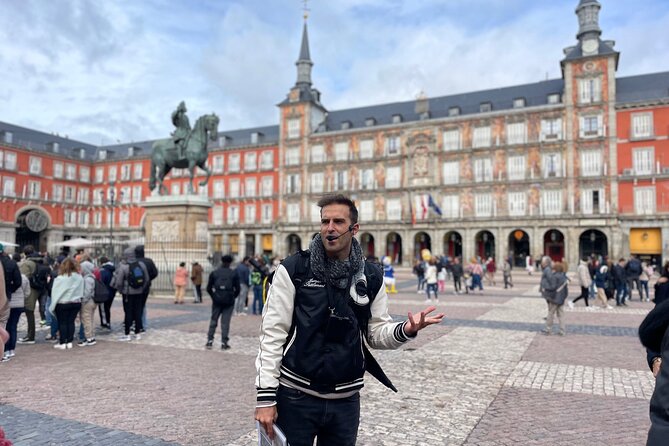
- The guide experience: why the delivery matters (Victor, Maikel, Guillermo, Adria, Chato)
- Who should book this tour—and who might feel it’s too much
- Should you book this Madrid Civil War walk?
- FAQ
- How long is the tour?
- What language is the tour offered in?
- Do I need to pay entry fees to see the sites?
- What’s included in the tour price?
- Is there a mobile ticket?
- Where does the tour start and end?
- How big is the group?
- Are service animals allowed?
- Can I cancel for a full refund?
- Are tips included?
Key things you’ll notice on this Madrid Civil War walk
- Plaza del Callao’s central bombings and the visible traces on nearby buildings
- The divided Spain framing at Palacio del Senado, showing how the conflict starts and hardens
- Franco and the 900-day siege explained at Plaza de España in plain language
- Ideas-versus-money themes at Templo de Debod, including propaganda and who funded the war
- Guernica’s civilian bombing echoes as you connect Picasso to Madrid landmarks
- Arco de la Victoria’s monument debate, with a focus on what to do with wartime symbols
Why this Civil War route hits harder than a museum
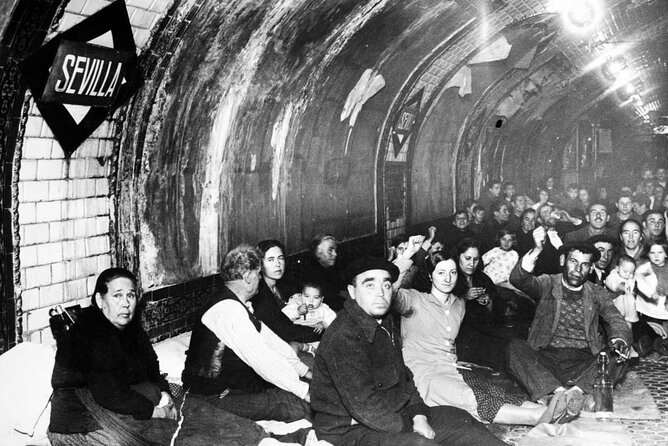
Madrid is one of those cities where history didn’t just happen in the past—it left fingerprints in the streets. This tour moves you through key places tied to the Spanish Civil War’s escalation, the bombing experience, and the political story that eventually feeds into the later dictatorship era.
You also get something practical: short stops, clear prompts, and an “on-the-ground” storyline. You’re not stuck listening to one long lecture. Instead, each stop works like a chapter—bombardment, division, siege, propaganda, art under fire, and finally the argument over monuments.
And because it’s led by a local guide, you’re not just learning facts. You’re learning how to read Madrid like a living document—how people talked about the war, what the culture carried forward, and why certain symbols remain controversial.
You can also read our reviews of more tours and experiences in Madrid.


Price and value: why this one is priced unusually low
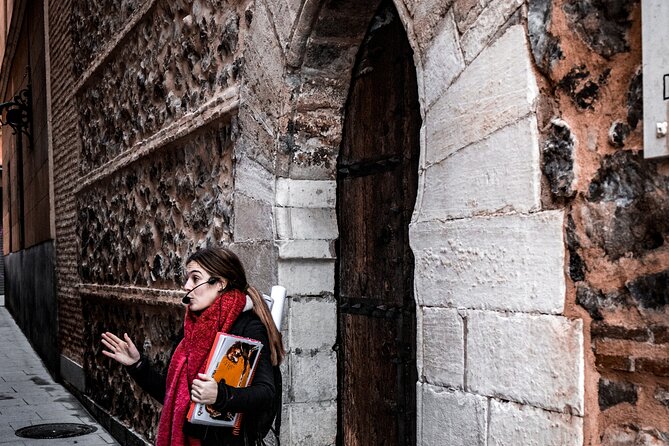
The price is listed as $3.62 per group (up to 15), for about 2 hours 30 minutes. Even if you assume group size varies, it’s still strikingly low compared with many guided city experiences.
Where the value comes from isn’t just the walking. It includes an actual guide, plus exclusive materials like maps, images, audio, and videos. You also get a link for personalized recommendations after the tour, which is a small thing—but it helps you turn your first impressions of Madrid into a real plan.
One more detail that matters: site entry fees are not required, so you’re not paying extra just to understand what happened here. You can keep your budget stable while still getting the full narrative.
Route and timing: what a 2.5-hour format really means
You start at C. del Postigo de San Martín, 26 (Centro) and end at Arco de Moncloa, Av. de la Memoria, 32 (Moncloa – Aravaca). It’s offered in English, and the tour uses a mobile ticket.
That timing—2h30—works well for this topic. The Spanish Civil War can sprawl into a complicated web, but a tight route forces the guide to focus on the most teachable turning points. The format also means you’ll likely be moving at a comfortable pace between stops, with breaks built into the storytelling.
The tour is capped at a maximum of 30 travelers, which tends to keep things from feeling like a stadium event. And it’s noted that most travelers can participate, with service animals allowed and the route being near public transportation.
Stop 1: Plaza del Callao and the shock of central bombings
Plaza del Callao is your opening jolt. This is where the tour frames how the war reached deep into the city, not just remote battlefields. You’ll look at bombing impacts in central Madrid and hear how those scars shaped daily life and public psychology.
The prompt here leans into the uncomfortable question of how war reorganizes normal culture. The stop calls out the idea of the life of a Spaniard at war and even plays with the question of whether you’d go to the movies—basically, what people chose to consume when everything around them was unstable.
Why it’s a smart first stop: it immediately connects the Spanish Civil War to the later reality of 20th-century total warfare. You’re seeing the “how,” not only the “who.”
Stop 2: Palacio del Senado and how a civil war hardens
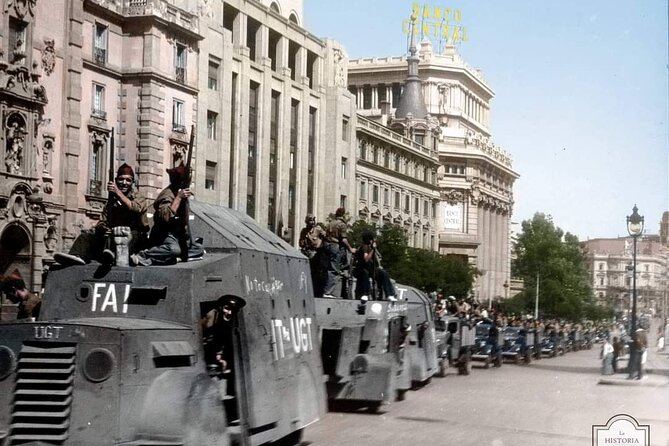
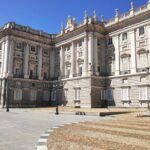
Next is Palacio del Senado, where the tour focuses on the core mechanism behind the conflict: two divided Spains. The story here is not just political rivalry; it’s how polarization becomes a system, then becomes conflict.
This stop also frames the Civil War as a kind of rehearsal for the broader 20th-century catastrophe—there’s an explicit mention of Spain as a World War II test range. That matters because it helps you understand why the conflict drew so much attention beyond Spain’s borders.
A potential drawback to consider: this tour doesn’t treat the Spanish Civil War like a sealed historical exhibit. It keeps crossing into wider European conflict logic. If you’re hoping for a purely Spain-only story, you’ll still get that—but with consequences added.

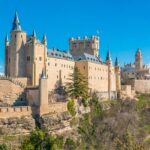



Stop 3: Plaza de España and Franco’s 900-day siege of Madrid
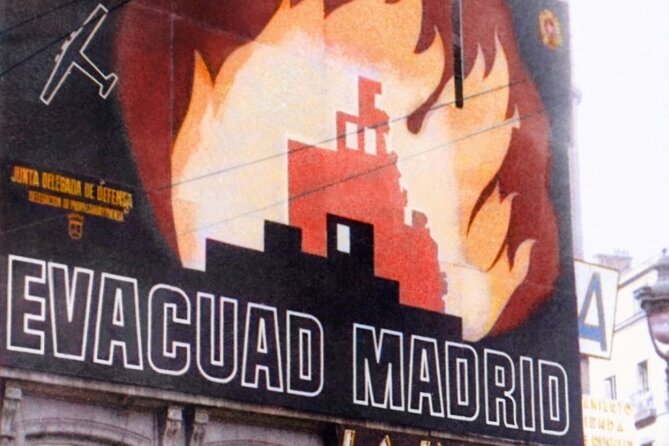
At Plaza de España, the focus shifts to Francisco Franco and the defense of the capital: 900 days of siege. This is the stop where the war becomes endurance. Not one event. Not one battle. A long grind that changes food, schedules, moods, and public language.
You’ll also hear about Madrid under pumps and what people did (and said) to survive inside a city under pressure—plus a look at wartime sayings. That kind of detail makes the siege feel like lived experience rather than a headline.
If you want context you can carry into the rest of Madrid, this is the hinge point. After this stop, later places—especially those involving propaganda and art—make more emotional sense.
Stop 4: Templo de Debod and the money-and-ideas engine of war
Then you reach Templo de Debod, and the tour zooms out to a wider question: not only who fought, but who paid for the war and why messaging mattered.
This stop includes themes like propaganda and the war of ideas, plus mention of a sculpture to the Fallen of the Civil War. That gives you both sides of the story: how governments shape belief, and how societies mourn (or argue) about the dead.
Why I’d put this stop right here in the walk: it prevents the tour from becoming only battlefield-focused. You get the political machinery—money and narrative—so the rest of the route doesn’t feel like random monuments.
Stop 5: Paseo del Pintor Rosales—Picasso, Guernica, and art under fire
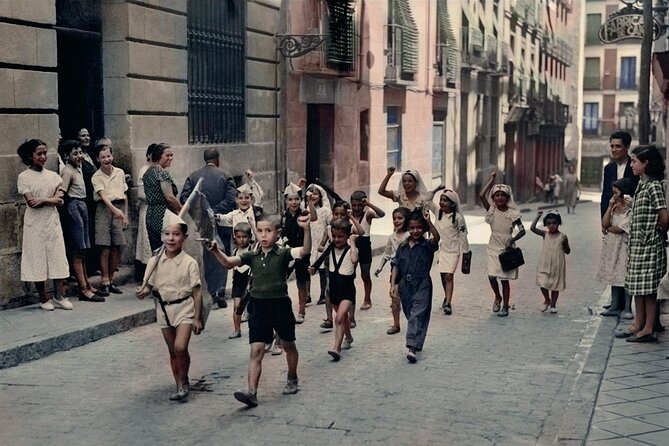
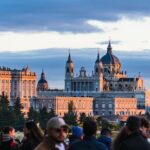
At Paseo del Pintor Rosales, the tour connects a major world symbol to Spanish suffering: Picasso and Guernica and the bombing of civilians.
It doesn’t treat Guernica as a museum-only object. The stop ties the painting to the broader idea of art under fire—how civilian bombing shows up in culture, and how culture becomes evidence of what happened.
There’s also a lighter thread: Christmas in Tregua: a breather. The concept here is important for your understanding of human conflict. Even amid brutal conditions, people search for moments of relief. That emotional contrast keeps the story from becoming one-note tragedy.
If you’re worried you’ll get overwhelmed, this is one of the stops that helps reset your head before the tour ends with monuments and legacy.
Stop 6: Cuartel General del Ejercito del Aire and the war-to-world shift
The next stop is Cuartel General del Ejército del Aire, which turns from city life to the wider machinery of war and the transition after it.
This part highlights the idea that the end of the war begins World War II and dictatorship—not in a vague way, but as a direct historical progression. The tour also brings in unusual specifics, including music tied to the theme They won’t happen and a reference to Life in the Middle of Death through 1st Remote Blood Transfusion.
Even if you don’t retain every detail, those prompts help you see what changes during wartime: technology, communication, medicine, and storytelling all adapt to crisis.
Stop 7: Arco de la Victoria—destroy or preserve?
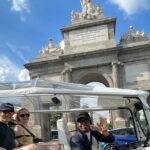
Finally, you arrive at the Victory Arch (Arco de la Victoria), and the tour ends where the argument never fully ends: destroy or preserve it.
This is about how societies handle controversial monuments—how to think about symbols that were built from authoritarian victory narratives. The stop is framed as reflections of wars, which is a polite way of saying: you can’t separate the monument from what it represents.
Practical tip for your brain here: stand back and look at the monument as an object in public space, not only as a “history lesson.” Then you’ll understand why people still debate it.
The guide experience: why the delivery matters (Victor, Maikel, Guillermo, Adria, Chato)
This tour’s ratings are unusually strong—5/5 with 462 reviews and 100% recommendation. The most praised ingredient isn’t the route alone. It’s how the guide handles tone and clarity.
Different guides are named in the feedback—Victor, Maikel, Guillermo, Adria, and Chato—and the common threads are consistent. Guides are described as friendly and welcoming, with presentations that feel clear and story-driven, yet still sensitive. One guide even ran a bit over the 2h30 mark to add more context, which tells you the team doesn’t treat this like a rush job.
What you should take from that, as a decision-maker: this is not a basic facts walk. It’s a guided interpretation of how the war works—causes, actions, and impact on society—delivered in a way that keeps you engaged instead of shutting down your questions.
Who should book this tour—and who might feel it’s too much
This is a strong fit if you:
- Want context for major Madrid symbols connected to the Civil War and its aftermath
- Prefer a walk where you can connect story to real places quickly
- Like tours that use visual materials (maps, images, audio, videos) to make complex topics easier
It may be less ideal if you:
- Prefer light entertainment over heavy, political and human tragedy themes
- Don’t want any mention of how the Civil War connects to broader European conflict logic
One more practical thing: because it’s a route ending near Moncloa, you can often chain the rest of your day easily—especially if you’re already planning to explore that area after your tour.
Should you book this Madrid Civil War walk?
I’d book it if you’re trying to understand Madrid beyond pretty streets. The value is hard to ignore: a low listed price for a 2h30 guided experience, no site-entry fees needed, and a delivery style built to connect turning points across the conflict.
You’ll also leave with a better “reading lens” for the city. Bombing scars, siege endurance, propaganda and money, Picasso’s civilian bombing echo, medical and wartime shifts, and the monument debate—each stop feeds into the next.
If your travel style is straightforward and practical—short stops, clear storytelling, real locations—this one fits. Just mentally prep for a serious, emotionally grounded walk through a war that still shapes how Spain talks about its past.
FAQ
How long is the tour?
It lasts about 2 hours 30 minutes.
What language is the tour offered in?
The tour is offered in English.
Do I need to pay entry fees to see the sites?
No. Site entries are not included because the tour is designed so that entries are not necessary to understand the stops.
What’s included in the tour price?
You get a local guide, exclusive material (maps, images, audio, videos, and more), and a link to personalized recommendations for what to do in Madrid.
Is there a mobile ticket?
Yes. The experience includes a mobile ticket.
Where does the tour start and end?
It starts at C. del Postigo de San Martín, 26, Centro, 28013 Madrid and ends at Arco de Moncloa, Av. de la Memoria, 32, Moncloa – Aravaca, 28040 Madrid (Metro Moncloa).
How big is the group?
The experience has a maximum of 30 travelers. The pricing is listed as $3.62 per group (up to 15).
Are service animals allowed?
Yes. Service animals are allowed.
Can I cancel for a full refund?
Yes, with free cancellation. You can cancel up to 24 hours in advance for a full refund.
Are tips included?
No. Tips are not included.