REVIEW · BARCELONA
Barcelona 2-Hour Gothic Walking Tour
Book on GetYourGuide →Operated by Turisme de Barcelona · Bookable on GetYourGuide
Cobblestones here carry real drama. In just two hours, this guided stroll strings Roman clues and Gothic grandeur together through the Barri Gòtic’s streets and squares, step by step. I especially like how the walk brings the Barcelona Cathedral and the cloister to life, and it also highlights big-picture stories behind places like Saló del Tinell that you’d likely miss on your own.
The other reason I’m a fan is the focus on what you’re actually looking at. Guides in the crowd have been praised by name (like Jordi, Pilar, Olga Escribano, and Alex), and that same attention to detail shows up in the way stops connect—Roman remnants tucked into medieval courtyards, royal halls like Palau Reial Major, and the mood of squares such as Plaça del Rei.
One consideration: it’s still a full two-hour walk, so wear shoes you trust, and plan for the usual city variables (weather, crowds, and your own pace).
In This Review
- Key takeaways before you go
- Why the Barri Gòtic makes sense with a guide
- Meeting at Plaça Seu: start close to the action
- Getting oriented fast in the Gothic Quarter
- Barcelona Cathedral and the cloister: more than a facade
- Santa Àgata, Saló del Tinell, and Palau Reial Major
- The Roman Temple of Augustus: the past hidden in plain sight
- Museu d’Historia de Barcelona: anchoring the streets
- Plaça Sant Felip Neri: the quiet square with a serious past
- Museu Frederic Marès: the smart English-tour bonus
- Price and value: why $32 can feel like a bargain
- What to bring (and what to expect from a 2-hour walk)
- Should you book the Barcelona Gothic Walking Tour?
- FAQ
- How long is the Barcelona Gothic Walking Tour?
- How much does it cost?
- What language is the tour in?
- Where do I meet the guide?
- What does the tour include besides walking?
- Is Museu Frederic Marès included?
- What areas of Barcelona will I see?
- Where does the tour end?
- Can I cancel and get a refund?
- Can I book without paying right away?
Key takeaways before you go
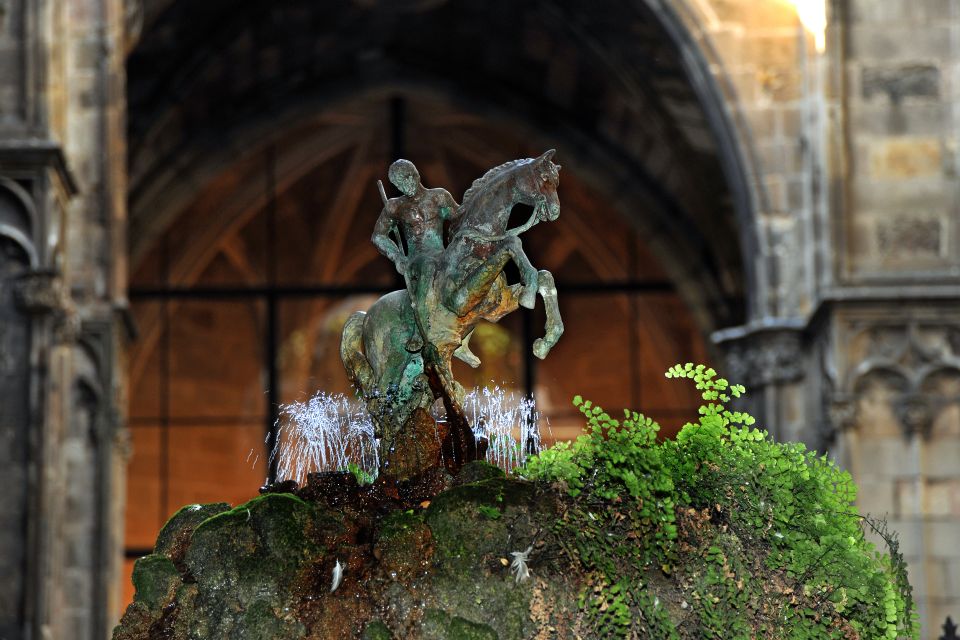
- Cathedral cloister time: you get closer than a quick photo stop.
- Roman-to-Gothic layering: you’ll see how Barcino’s past hides inside later buildings.
- Santa Àgata and striking interiors: you’re guided into the sites, not just around them.
- Carrer del Bisbe and Plaça del Rei: atmospheric streets and squares that feel like a set.
- Plaça Sant Felip Neri: a quieter, moving pause in the middle of the action.
- English bonus museum: free Museu Frederic Marès after the walk (for English tours).
Why the Barri Gòtic makes sense with a guide
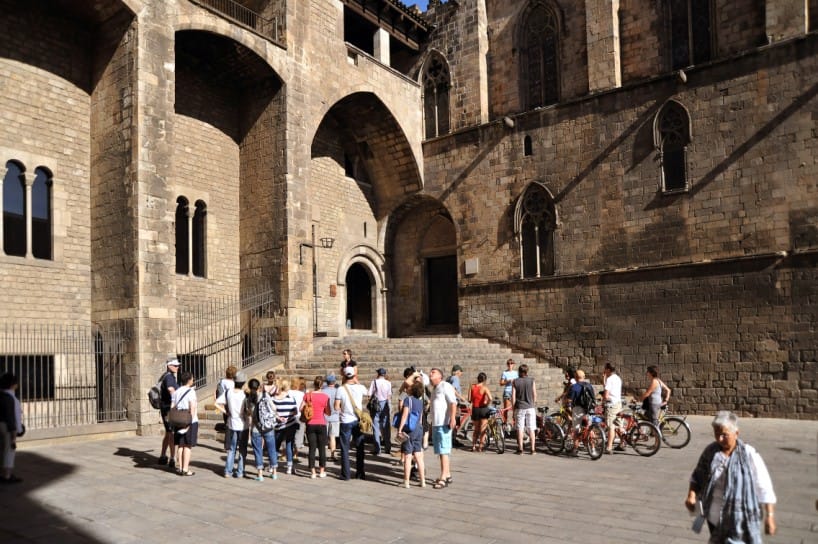
Barcelona’s Gothic Quarter is one of those places where “pretty” is the easy part. The real payoff comes when you understand what you’re seeing. This tour is built for that moment: the guide links the streets and buildings you pass to the layered timeline of the area—Roman Barcelona, then medieval development, then the Gothic period, with stories that explain why certain corners feel so charged.
You’ll walk through a compact part of town where the architecture keeps changing from block to block. One minute you’re in a medieval street scene; the next, you’re hearing how a Roman temple fragment sits tucked away in a medieval setting. That kind of explanation turns a maze into a readable map.
And because it’s paced like a guided conversation, you don’t need to be a history nerd. The guide’s job is to help you notice. If you’ve ever looked at a church facade and thought, I have no idea what I’m looking at—this tour is designed for that exact feeling.
You can also read our reviews of more walking tours in Barcelona



Meeting at Plaça Seu: start close to the action
You meet at the tourist information office at Plaça Seu, 2—look for the small i symbol. The listing notes two nearby starting options, but it’s all in the same starting area, so don’t overthink it: just find the tourist office and the meeting point staff mark.
This matters because the tour is concentrated. You’re not traveling across the city in segments. You’re stepping into the Gothic core right away, which helps if it’s your first time in Barcelona and you want to get your bearings fast.
Getting oriented fast in the Gothic Quarter
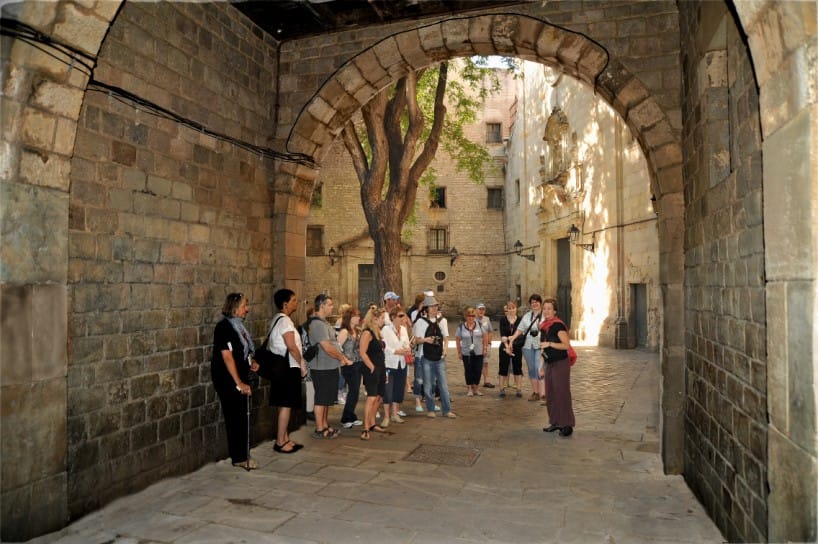
The early portion of the walk is about mental orientation. You’ll be pointed toward key landmarks and then shown how they connect to the smaller lanes and plazas around them. That’s where the guided format pays off: the Gothic Quarter is famous for twisting streets and narrow passages, but it’s also full of human-scale details—balconies, street levels, courtyards—that don’t announce themselves.
A couple of names and places help anchor the experience. You may hear about Plaça del Rei as one of the most atmospheric squares in Europe, and Carrer del Bisbe for those classic Gothic facades and flower-filled balconies. Then you’ll get turned toward the quieter spaces where the quarter shifts tone.
I like that the guide doesn’t treat this as a checklist. The route is built to make you look around and recognize patterns: which buildings were public spaces, which were tied to royal power, and which were shaped by later centuries.
Barcelona Cathedral and the cloister: more than a facade
The cathedral stop is the one that changes how you see the rest of the neighborhood. From outside, the Gothic style is dramatic enough. Inside, the story becomes specific—especially with the guided visit to the cloister.
Why the cloister matters: it’s a quieter architectural pocket where the details do the talking. Cloisters often feel like transition spaces, a place between public movement and reflective life. Here, that means you get a calmer lens on the Gothic design language while still staying in the heart of the medieval complex.
If you only do one guided church interior in Barcelona, this is the kind of stop that makes the rest of the city feel more legible afterward. You’ll start noticing Gothic elements in other buildings more confidently—spires, stonework rhythm, and the way spaces are shaped for movement and gathering.
Santa Àgata, Saló del Tinell, and Palau Reial Major
This tour doesn’t just linger on one era. It jumps across time in ways that keep it interesting.
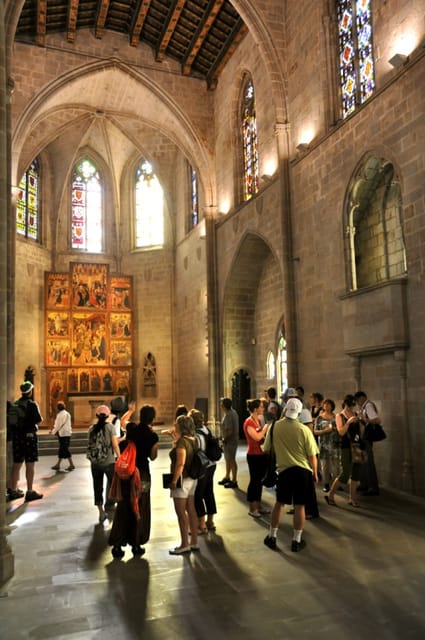
One highlight is the Chapel of Santa Àgata. It’s often the kind of place people pass without understanding the significance. A guided visit helps you slow down and look for what the chapel is communicating—because the details don’t shout on their own.
You may also visit or reference interior/landmark spaces tied to the city’s medieval power structure, including Saló del Tinell, known in the highlights. That stop is great because it turns “old building” into “old institution.” It’s where you can grasp how the city functioned, not just what it looked like.
Another meaningful element is the Palau Reial Major, presented as a former royal palace tied to Catalan kings. The tour description includes a famous connection: Ferdinand and Isabella receiving Columbus after his New World voyage. Whether you already know that story or not, it helps you place Barcelona in the wider political universe of its time.
A few more Barcelona tours and experiences worth a look





The Roman Temple of Augustus: the past hidden in plain sight
The Roman layer is one of the most satisfying parts of the Gothic Quarter experience. The tour points out the Roman Temple of Augustus, described as a relic of Barcino (Roman Barcelona) tucked away in a medieval courtyard.
This is the exact kind of moment that makes a walking tour worth it. A Roman structure in a medieval setting can feel like a trick of architecture. With a guide, it becomes a clue: it tells you the city kept building on itself instead of starting over. That’s why the quarter feels so different from a newer historic district. You’re not looking at a theme park; you’re seeing continuity.
When you understand that continuity, the small courtyards and odd transitions between buildings start to make sense. You’ll probably find yourself doing the classic tourist reflex—stopping to look back at what you just walked past.
Museu d’Historia de Barcelona: anchoring the streets
At some point you’ll have a guided stop at Museu d’Historia de Barcelona. Even without spending hours inside, a museum visit here works like a grounding tool. Streets can feel endless; a museum gives you a framework so the architecture stops being a blur.
I like that this tour mixes outdoor sightlines with an indoor pause. It’s a good rhythm choice for a two-hour window: you get the drama of the quarter, then a focused moment where the story becomes more structured.
Plaça Sant Felip Neri: the quiet square with a serious past
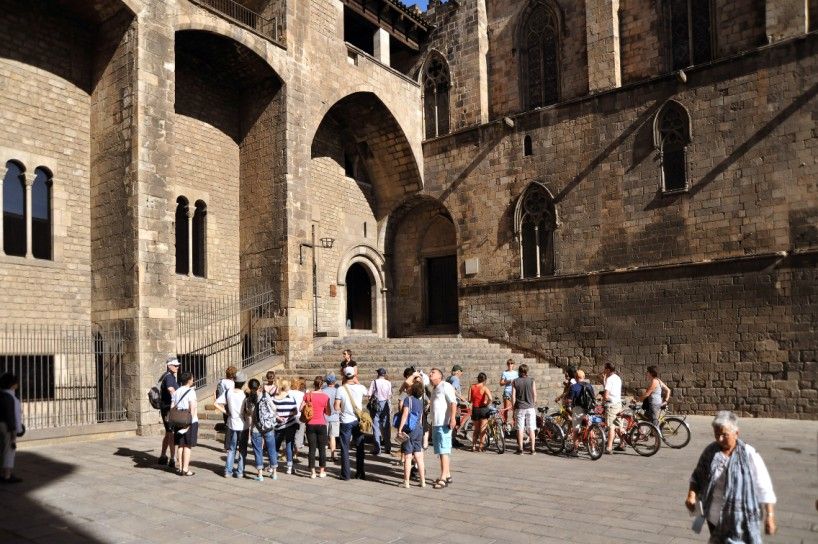
After the louder iconic sites, you get a shift in tone at Plaça Sant Felip Neri. This is described as a tranquil square, home to a baroque church, with pockmarked walls from Spanish Civil War bombings. Then—very importantly—the present-day use of the space is part of the emotional impact: children play there, and musicians often fill the air.
This stop hits different because it avoids turning the quarter into a single-era postcard. You’re reminded that historic neighborhoods are lived-in spaces. The square doesn’t just preserve the past; it carries it.
If you want your Gothic Quarter experience to include more than stone and spires, this is one of the best places for that.
Museu Frederic Marès: the smart English-tour bonus
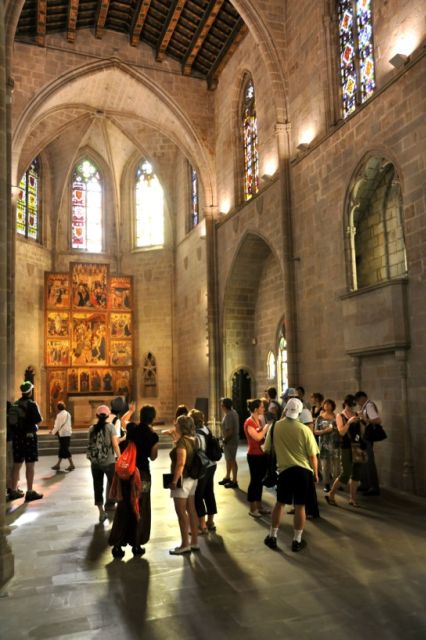
If you book the English version, you get free admission to Museu Frederic Marès after the walking tour. This is a strong bonus because it extends the experience without forcing you to plan extra tickets.
The museum is housed in a medieval palace, and the collection is described as a standout mix: sculptures, antique curiosities, and personal artifacts gathered by artist Frederic Marès. You’ll walk through atmospheric galleries that range from medieval religious art to everyday objects from the 19th century.
Here’s why I think this bonus works for most people: a Gothic walking tour can stay focused on churches and stone. This museum adds variety and context. You’re still in the same historical neighborhood vibe, but the museum helps connect the built environment to the objects people used, believed in, collected, and valued.
Price and value: why $32 can feel like a bargain
At $32 per person for a two-hour live-guided experience, the value comes from how much is included beyond surface sightseeing.
You’re paying for:
- An official local guide who interprets the streets and buildings
- Guided access/attention at major sites like the Cathedral (including the cloister) and the Santa Àgata area
- A visit/stop tied to Museu d’Historia de Barcelona
- And, for English tours, free entry to Museu Frederic Marès after the walk
Could you do the Gothic Quarter on your own? Sure. You can wander, take photos, and read signs. But if you’ve ever done that and ended the day feeling like the city was beautiful yet confusing, you already know what you’re buying here: guidance that turns the area into something you can explain to yourself while you’re walking.
The tour also tends to be efficient because it’s built around a compact area. When time is tight in Barcelona, that’s where a guided route can beat DIY.
What to bring (and what to expect from a 2-hour walk)
This is a city walking tour. The experience is concentrated, so you don’t have to hike across town—but you should still plan to be on your feet for the full two hours.
A few practical tips based on how the tour is described and how guests talk about it:
- Bring water and a small snack if you tend to get hungry while sightseeing
- Wear comfortable shoes you can handle on stone streets
- If it’s rainy, you may find that listening aids (mentioned in past feedback) help a lot so you don’t miss details
Also, heads-up on expectations: because the tour is time-limited, you won’t have the kind of free-roam wandering that you might do if you explored on your own all day. The trade-off is that you’ll cover key moments and come away with understanding.
If you prefer a slower pace, the best move is to ask the guide about what you can linger on during stops. Some guides have been noted as flexible about pacing for different needs, but don’t assume that for every group.
Should you book the Barcelona Gothic Walking Tour?
Book it if you want your first look at the Barri Gòtic to feel like a story, not a maze. This is especially worth it if you like architecture but want help understanding the why behind the stone—cathedral interiors, cloisters, chapels like Santa Àgata, and the Roman layer hidden inside medieval courtyards.
Don’t book it (or at least adjust expectations) if your idea of a great tour is lots of free time to roam without structure. This one is intentionally guided, fast-paced, and focused on a set of core stops.
Finally: if you’re doing it in English, take the Museu Frederic Marès bonus seriously. That free museum time can turn a good walking tour into a full cultural half-day.
FAQ
How long is the Barcelona Gothic Walking Tour?
It lasts 2 hours.
How much does it cost?
The price listed is $32 per person.
What language is the tour in?
The tour is offered in English.
Where do I meet the guide?
You meet at the tourist information office at Plaça Seu, 2, and you should look for the i symbol.
What does the tour include besides walking?
You’ll have guided stops that include the Barcelona Cathedral (including the cloister), the Chapel of Santa Àgata, and a guided visit tied to Museu d’Historia de Barcelona. For English tours, the Museu Frederic Marès visit with free admission happens after the walking tour.
Is Museu Frederic Marès included?
Yes, free admission to Museu Frederic Marès is included after the walking tour for the English tour.
What areas of Barcelona will I see?
You’ll explore the Gothic Quarter and related Gothic-area streets and squares, plus the main guided sights mentioned above.
Where does the tour end?
The drop-off is listed at Plaça Seu, 2 (same address area as the meeting point).
Can I cancel and get a refund?
Yes. You can cancel up to 24 hours in advance for a full refund.
Can I book without paying right away?
Yes. The option listed is Reserve now & pay later.