REVIEW · BARCELONA
Barcelona Historical Walking Tour: Gothic Quarter and El Born
Book on Viator →Operated by Carpe Diem Tours · Bookable on Viator
Old streets, sharp stories. This small-group walk links Barcelona’s oldest layers, from Roman-era traces to medieval squares, with stops you’d miss on a bus. I like that the route mixes big names like Picasso and Gaudí with quieter details you can actually walk up to, and I really like the small group size that keeps the pace relaxed. One thing to plan for: a couple of major churches have admission not included.
You also get a guide who can hold a room. In the reviews, names like Juan, David, Thami, Jorge, Sonia, and Lidia come up again and again for energy, clear explanations, and good Q and A, which helps the neighborhoods click fast. My only caution is audio—one review noted a guide who was hard to hear—so if you want louder commentary, try to stay toward the front.
In This Review
- Key Highlights You’ll Feel on This Walk
- Why This 2-Hour Walk Works for First-Timers
- Meeting in Ciutat Vella, Ending at the Sea-Church
- Els 4 Gats: Where Picasso and Gaudí Belonged in the Story
- The 1714 Connection at El Mon Neix En Cada Besada
- Catedral de Barcelona and Eulalia: Gothic Faith With a Roman Twist
- Casa de l’Ardiaca: Where Gothic Meets Roman Stone
- Pont del Bisbe: Bishop Street and a Legend You’ll Remember
- Plaça Sant Felip Neri: The Quiet Square With a Heavy Past
- MUHBA – El Call: Narrow Streets, Medieval Architecture, and Synagogue Stories
- Plaça de Sant Jaume and Plaça del Rei: Government and Power in Stone
- Plaça de l’Àngel: Wheat Square to Angel’s Legend
- Basílica de Santa Maria del Mar: A Catalan Gothic Finish by the Sea
- What I’d Watch For in the Guide Style
- Price and Value: Is $30.25 a Smart First Step?
- Should You Book This Tour?
- FAQ
- FAQ
- How long is the Barcelona Historical Walking Tour?
- How much does the tour cost?
- Is the tour offered in English?
- What is included in the tour price?
- Are there any stops where admission is not included?
- Where do I meet the guide and where does the tour end?
- How large is the group?
- Can I cancel for a full refund?
- Is the tour near public transportation and easy enough for most people?
Key Highlights You’ll Feel on This Walk
- Picasso and Gaudí connections at a historic Art Nouveau meeting spot
- Roman Barcino traces, including a vertical Roman wall and aqueducts
- A Catalonia story told through a 2014 photomosaic tied to Sept 11, 1714
- Church stops that explain Barcelona’s patron saint Eulalia and local maritime ties
- El Call Jewish quarter streets and synagogue-related legends in the old city
- Small group cap (max 20) for better attention and easier pacing
Why This 2-Hour Walk Works for First-Timers
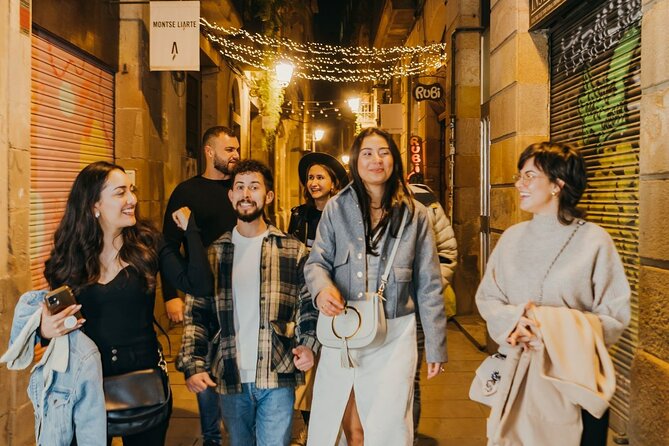
This tour is built for the first days in Barcelona. You get a guided route through Ciutat Vella, hitting the Gothic Quarter and El Born without wasting time on wide avenues that bus tours prefer. At about 2 hours and priced at $30.25 per person, it’s a strong way to get your bearings fast and build a mental map for the rest of your trip.
I also like that it keeps your group small, with a maximum of 20 travelers. That matters here because the old streets can get tight, and you want a guide who can keep everyone together without rushing you past the interesting bits.
Another value point: lots of the stops are free to view from the street or in public areas. You’ll still want to budget for the two church visits that list admission as not included.
You can also read our reviews of more walking tours in Barcelona



Meeting in Ciutat Vella, Ending at the Sea-Church
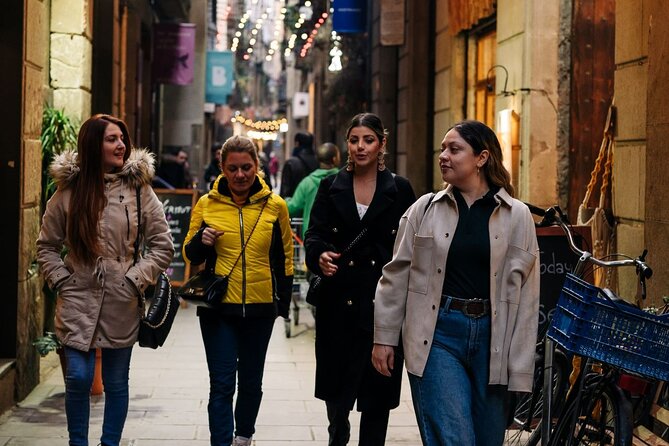
The tour starts at Plaça del Vuit de Març in the old city and ends at Basílica de Santa Maria del Mar. That setup is handy: you move through the neighborhood logic step by step, then finish at a landmark that feels like a natural “last chapter” of old Barcelona.
The walk is described as easy and doable for most people, and one smart tip from a review is to go in the morning. Morning usually means cooler weather and fewer crowds on narrow streets. It also helps you concentrate on the details the guide points out instead of dodging foot traffic.
Expect a pace that leaves room for photos. Multiple reviews mention the pace as slow enough to see, ask, and capture the views without feeling like you’re speed-walking to a checklist.
Els 4 Gats: Where Picasso and Gaudí Belonged in the Story
Your tour kicks off at Els 4 Gats, a historic café and restaurant with an Art Nouveau look. This place matters because it connects Barcelona’s artistic circle to real names—reviews and the stop notes point to Pablo Picasso and Antoni Gaudí as part of the story.
Even if you don’t go inside, you’re standing in a setting that helps explain why the city’s art scene grew the way it did. It’s also a nice “warm-up stop” because it sets the tone: you’re not only seeing buildings, you’re learning how people used to meet, talk, and invent ideas in the streets around you.
This stop runs about 10 minutes, and admission here is listed as free.
The 1714 Connection at El Mon Neix En Cada Besada
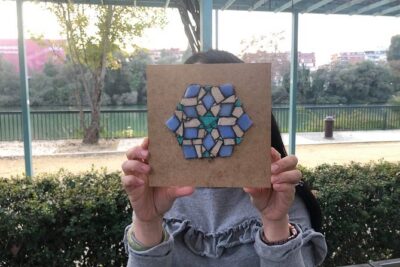
Next you’ll see El Mon Neix En Cada Besada, a photomosaic installed in 2014. The guide ties it to the Catalan defeat on September 11, 1714, during the War of Spanish Succession, and then connects that event to how people commemorate La Diada (Catalonia Day).
What I like about this stop is that it’s not just “a monument.” It’s a shortcut into Barcelona’s identity and why some places feel emotional even if they’re visually modern. You also get a clear example of how the city uses public art to keep history readable from street level.
Time here is about 10 minutes, and admission is free.
Catedral de Barcelona and Eulalia: Gothic Faith With a Roman Twist

Then comes Catedral de Barcelona—a Gothic-style church in the center of the old city. The tour focuses on Saint Eulalia, including the story that she was tortured to death by the Romans.
This is one of the stops where you’ll want to pay attention to the guide’s framing. Without that context, it can feel like another Gothic church exterior. With it, the building becomes a marker of what Barcelona honored—and how it narrated suffering, faith, and patronage over time.
Admission for this cathedral is not included, so plan for that if you want to go inside rather than just view from outside. The stop is about 10 minutes.
You can also read our reviews of more historical tours in Barcelona




Casa de l’Ardiaca: Where Gothic Meets Roman Stone
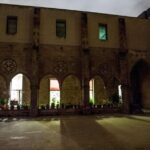
At Casa de l’Ardiaca, you get a true architecture mash-up: Gothic and Renaissance elements together in one spot. The reason this stop feels real, not just decorative, is that it houses the vertical face of a Roman wall and aqueducts.
This is the kind of location that makes the whole city feel layered. One minute you’re looking at medieval shapes; the next, the story takes you back to Roman engineering details still built into the landscape.
This stop is listed as free, and it’s roughly 10 minutes—short enough that you don’t get bored, long enough to soak up what makes the place odd in the best way.
Pont del Bisbe: Bishop Street and a Legend You’ll Remember

The route continues to Pont del Bisbe on Carrer de Bisbe (Bishop Street). The notes explain that this street served as a main thoroughfare in Roman-occupied Barcino. Then the guide brings in the bridge itself: Neo-Gothic style, plus a superstition legend linked to the spot.
Legends are tricky in real life; you either tune out or you get pulled in. Here, it works because the guide connects the legend to the setting, not just to random folklore.
Admission is free, and this stop is about 10 minutes.
Plaça Sant Felip Neri: The Quiet Square With a Heavy Past
Next is Placa Sant Felip Neri, tucked away in the Gothic Quarter. This square has sombre ties to the Spanish Civil War, and the tour points out that scars remain as a visible reminder of the tragedy.
I appreciate this stop for balance. Most city walking tours focus on pretty facades. This one also makes room for places that hold grief, so you understand that the old city isn’t only “historic,” it also remembers.
The stop runs about 10 minutes, and admission is free.
MUHBA – El Call: Narrow Streets, Medieval Architecture, and Synagogue Stories
Then you’ll step into MUHBA – El Call, the Jewish quarter of Barcelona. Expect narrow streets and medieval architecture, with the guide highlighting a synagogue and sharing legends connected to the area.
This is another stop where the guide’s voice matters. El Call can feel like a maze if you explore on your own, but the tour gives you a path and a reason to look at doorways, street shapes, and the way the neighborhood was laid out.
Time here is about 10 minutes, and admission is listed as free.
Plaça de Sant Jaume and Plaça del Rei: Government and Power in Stone
From the Jewish quarter, the tour opens up to Placa de Sant Jaume, a busy square that acts as a hub for government activity. The notes also mention it’s surrounded by historical buildings, which helps you see how civic life used to cluster in one place.
Then you move to Placa Del Rei, a square tied to the Royal Palace and described as having a dark past. Even if you don’t walk through the palace itself, the setting helps you understand how power, control, and public space overlap in the old city.
Both stops are about 10 minutes each, and admission is free for these viewpoints.
Plaça de l’Àngel: Wheat Square to Angel’s Legend
Your penultimate old-city stop is Plaça de l’Àngel. This place used to be the Wheat Square, a major hub for grain trading, and it carries a legend that explains why it’s called Angel’s Square.
This is a good example of how the tour mixes practical city function with story. Grain trading sounds boring until you remember that food supply equals power, survival, and growth. The legend adds the human layer on top.
Admission is listed as free, and it’s about 10 minutes.
Basílica de Santa Maria del Mar: A Catalan Gothic Finish by the Sea
The walk ends at Basilica de Santa Maria del Mar. This is described as Catalan Gothic and tied to Barcelona’s maritime history, which gives the whole route an elegant finish. You start with artist cafés and Roman and medieval layers, then end at a church shaped by a city that lived off the sea.
Admission for this basilica is not included, so decide whether you want to pay to go in. Even if you only view from outside, the basilica works as a strong “close the loop” moment, because it feels like the old city’s public life turned toward trade and sailors.
This is the tour’s final stop, so it’s also a natural point to ask your guide for next steps in the area.
What I’d Watch For in the Guide Style
The overall guide feedback in the data is consistently positive, and specific names show up often. Reviews mention guides like Juan, David, Thami, Petra, Sonia, Jorge, Lidia, Darren, Vanesa, Jordan, Craig, Justin, Mariah, Sara, and Tammy, with common themes like energy, answering questions well, and using tools (one review mentions using an iPad for extra visuals).
If you want to maximize your experience, use that strength. Ask about connections you’re noticing, like how Roman traces show up in later street patterns, or why one square’s story feels different from another’s. On this tour, the guide isn’t just reciting dates; the commentary helps you read the city like a story.
Weather can also change how the day feels. One review mentions the guide continuing through downpours, so bring a light rain layer if you’re going in unsettled months.
And yes—this is a group walk. One review noted a guide being too soft-spoken, so if audio matters to you, stand where you can hear clearly. That small choice can make the difference between enjoying the stories and straining for them.
Price and Value: Is $30.25 a Smart First Step?
At $30.25, you’re paying for a guided route, a local guide, and a curated set of “city highlights” plus “hidden gems” included in the tour concept. You’re also getting the practical benefit of a small group (max 20) and a structured path through places that are easy to miss if you’re wandering alone.
The value calculation depends on whether you plan to go inside the two places marked as admission not included: Catedral de Barcelona and Basilica de Santa Maria del Mar. If you want those interior visits, the $30.25 becomes a bargain because the guide helps you understand what you’re looking at before you pay extra. If you’re skipping interiors and sticking to exterior viewing, the tour still pays off because the story behind each stop is the main event.
Also, the schedule is set for about 2 hours, which makes it a great “start of trip” purchase. You’ll likely get more from your later self-guided wandering because you’ll recognize what the guide taught you when you spot the Roman wall traces or those old squares.
Should You Book This Tour?
I’d book it if you’re:
- short on time and want a high-impact walk through the Gothic Quarter and El Born
- history-curious, but you don’t want a lecture—just clear stories tied to specific places
- the type who learns faster when a guide points out what to notice on the spot
I’d think twice if you:
- only want church interiors and hate paying extra on top
- dislike walking in older, narrow streets, even if the tour is described as easy
- prefer very loud, clear narration and tend to struggle when guides are quiet (a single review raised that concern)
If you’re even slightly unsure, treat this as a great orientation tool. It helps you stop guessing and start recognizing.
FAQ
FAQ
How long is the Barcelona Historical Walking Tour?
It runs for about 2 hours.
How much does the tour cost?
The price is $30.25 per person.
Is the tour offered in English?
Yes, it’s offered in English.
What is included in the tour price?
The tour includes a guided walking tour, a local tour guide, city highlights, hidden gems, and a mobile ticket.
Are there any stops where admission is not included?
Yes. Catedral de Barcelona and Basilica de Santa Maria del Mar list admission as not included.
Where do I meet the guide and where does the tour end?
You start at Plaça del Vuit de Març, Ciutat Vella, 08002 Barcelona, Spain, and end at Basílica de Santa Maria del Mar, Plaça de Santa Maria, 1, Ciutat Vella, 08003 Barcelona, Spain.
How large is the group?
The tour has a maximum of 20 travelers.
Can I cancel for a full refund?
Yes. You can cancel up to 24 hours in advance for a full refund. If you cancel less than 24 hours before the start time, the amount you paid is not refunded.
Is the tour near public transportation and easy enough for most people?
It’s near public transportation, and most travelers can participate.