REVIEW · MADRID
Historic Madrid Virtual Reality Experience with an Official Guide
Book on Viator →Operated by Fun and Tickets · Bookable on Viator
VR turns Madrid’s plazas into a time machine. I liked this Historic Madrid Virtual Reality walk because it mixes a live guided stroll with 3-D scenes you wear through VR glasses as you move between famous spots. It’s a fun way to make the city’s layers feel connected, not just like names on a map.
I also really appreciated the guide work: clear English and stories that made the landmarks easier to understand. A third plus for me was the pace—this is mostly easy, mostly flat walking, so you’re not fighting steep streets just to see the key squares.
One thing to consider: you’ll spend real time in the headset, so if you get motion discomfort or you hate wearing gear for long stretches, this might be less comfortable. If that’s you, it’s worth thinking ahead before you book.
In This Review
- Key highlights at a glance
- VR glasses meet real streets in central Madrid
- Where the tour starts and ends (and why that matters)
- Plaza de Oriente: royalty, theater, and the “before” effect
- Royal Palace of Madrid area: from the Alcázar to Spain’s monarchy
- Plaza de la Villa: medieval Madrid in miniature
- Plaza Mayor: Golden Age street life, Baroque buildings, and the market memory
- Puerta del Sol: Madrid’s crossroads and the clock everyone knows
- Price and value: what about $21.77 buys you
- Pacing, group size, and English comfort
- Tips to get the most from the VR moments
- Who should book this VR walk
- Should you book this Historic Madrid VR experience?
- FAQ
- How long is the Historic Madrid Virtual Reality experience?
- What is the price per person?
- Is the tour offered in English?
- What’s included in the tour price?
- Do I need a paper ticket?
- Where do you meet, and where does it end?
- How many people are in each group?
- Is there any admission cost at the stops?
- Can I cancel for a full refund?
- What VR tour format should I expect?
Key highlights at a glance
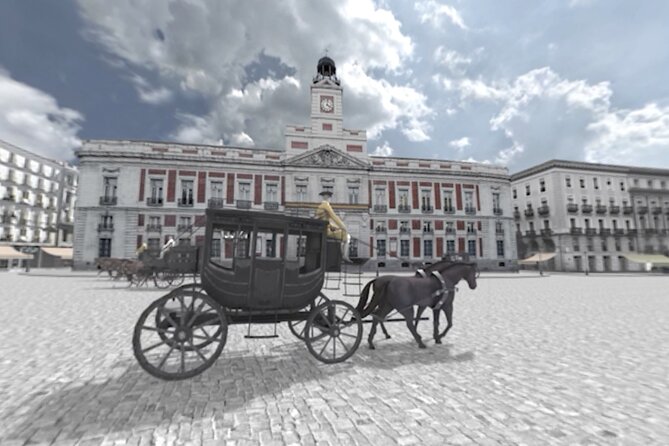
- VR glasses on a guided walk that pair real plazas with 3-D scenes of how the area changed
- Official guide in English with strong storytelling and clear explanations
- Easy, mostly flat route that links central Madrid without heavy climbing
- Five major stops from Plaza de Oriente to Puerta del Sol, all in a sensible order
- Good value at about $21.77 for a 1h45 tour that includes VR gear and guidance
VR glasses meet real streets in central Madrid
This is not a seated VR show. You walk between landmark squares while the guide keeps the story moving, and the glasses add the “then vs now” effect right when you’re standing in the location.
That combo is the point. You don’t just look at buildings from the sidewalk and guess what used to be there—you see it change in front of you. Then you turn your head and match the scene to what you’re actually seeing on the street.
The tour also makes the city easier to digest. Madrid can feel like five different cities depending on the neighborhood. Here, the route stays in the center and moves through a timeline you can follow: royal court, medieval civic life, Golden Age squares, and the city’s main crossroads.
You can also read our reviews of more guided tours in Madrid



Where the tour starts and ends (and why that matters)
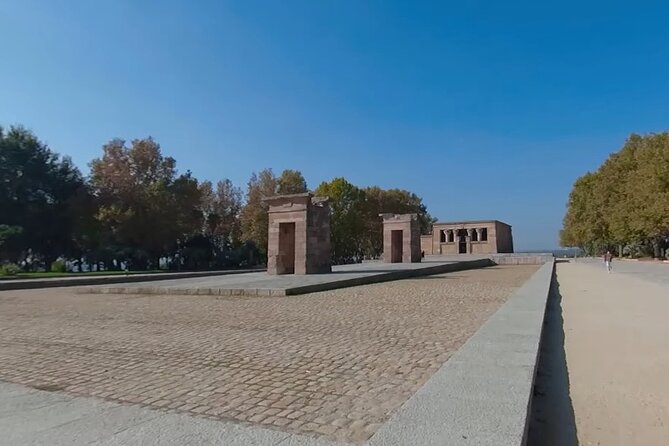
You start at a parking garage at Pl. de Ote., 1, Centro, 28013 Madrid, and you finish at Puerta del Sol.
That end point is practical. Puerta del Sol is a hub for getting around, grabbing a snack, or continuing your day to nearby sights like the Royal Palace area, Gran Vía, or more walking into the neighborhoods. Finishing there also helps if you’re trying to structure your day around public transit.
Also, the tour runs in a group of up to 30 people, which is large enough to feel lively but small enough that the guide can still manage the pacing. The info notes it’s near public transportation, which usually means you won’t spend your whole morning figuring out how to reach the start.
Plaza de Oriente: royalty, theater, and the “before” effect
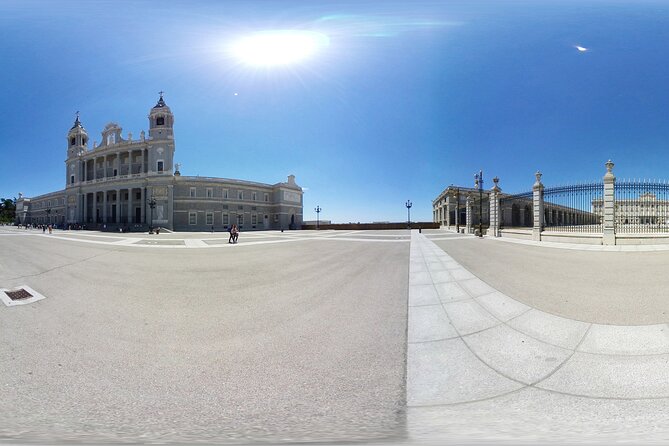
The first stop is Plaza de Oriente, with the Royal Palace and the Royal Theater framing the square.
This is one of the smartest places to start because the palace atmosphere is visible right from the beginning. Even if you’re not a total royal-scheme fan, the layout helps you understand why this area mattered. The guide ties it to court life and the stories behind the people who lived in the power center.
With VR in the mix, the square stops feeling like a pretty view and starts feeling like a stage. You’re meant to notice the space, then see how it might have looked when the monarchy was the main engine of the city.
What to watch for: as you stand there, look for visual anchors—major building edges, open space lines, and where crowds would have moved. When the VR scene shifts, those anchors help your brain connect the past to the present.
Possible drawback: Plaza de Oriente can be busy at peak times. If your main goal is quiet photos, arrive with the mindset that you’re here first for the guided story and the VR timing.
Royal Palace of Madrid area: from the Alcázar to Spain’s monarchy
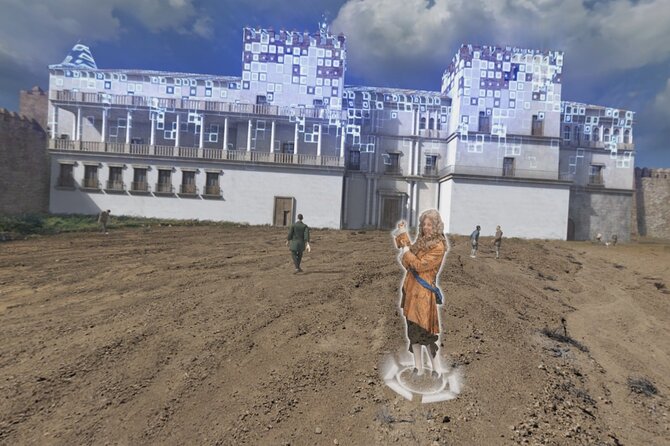
Next you move to the Royal Palace of Madrid area, tied to the history of the old Royal Alcázar. The tour’s focus here is less about a single room and more about the military weight of the site and how it connects to the Spanish monarchy.
That emphasis helps because the palace complex can be confusing if you only treat it like a museum stop. Here, you get a clearer sense of why this spot is tied to strategy and power—why it mattered beyond decoration.
In VR terms, this stop is meant to add scale. When you see the environment through 3-D transformation, it’s easier to understand that you’re standing in a place shaped by earlier structures, not just one neat building plan.
Practical tip: take a moment before the headset goes on to look at the immediate surroundings. When you’re already orienting yourself visually, the VR effect feels more like “confirmation” and less like “guessing.”
Plaza de la Villa: medieval Madrid in miniature
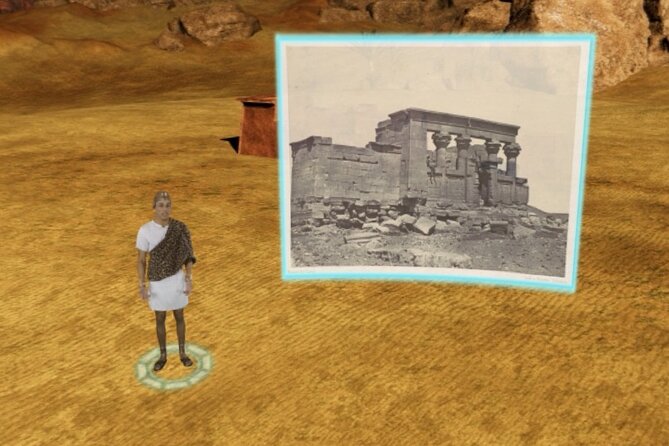
After the palace area, you head to Plaza de la Villa, described as a medieval square with some of Madrid’s older buildings, including the Casa de la Villa.
This is where the tour shifts gear. The story moves from monarchy-centered power to civic life—how the city organized itself in earlier centuries. The square feels like a break from grand royal statements, more human-scale and more focused on how Madrid worked day to day.
VR is especially helpful here because medieval Madrid is hard to picture from street corners alone. The guide’s job is to connect the atmosphere to the buildings and the roles they played, rather than expecting you to memorize names on plaques.
What I liked about this stop: it gives your brain variety. If your only Madrid plan is museums, you can end up with a lot of indoor time. This keeps the learning tied to walking spaces and outdoor context.
Consideration: if you’re someone who only cares about one iconic building, you might feel the medieval square stop is less dramatic. But that’s also what makes the overall route make sense.
You can also read our reviews of more historical tours in Madrid





Plaza Mayor: Golden Age street life, Baroque buildings, and the market memory
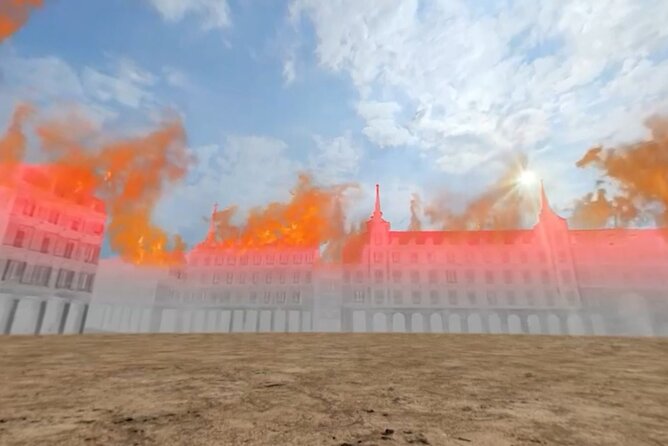
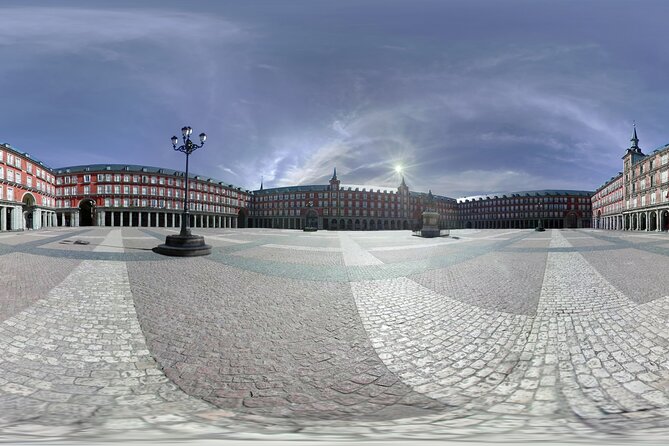
Then you reach Plaza Mayor, framed by Baroque architecture and linked to 17th-century Madrid.
This stop is built around daily life. You’re guided through the idea of a marketplace that served the city for generations—merchants, artisans, music, dance, and performances that would have brought energy to the square long before modern crowds.
With VR, this square becomes more than an architectural photo stop. You’re encouraged to think about the square as a working room for the city—people arriving, trading, watching, and talking. That mental picture is hard to build from architecture alone, which is why the 3-D scenes help.
What to notice: scan the facades and then imagine crowd movement. If the VR scene shows people gathering, your job is to connect that movement to entrances and open space.
This is also an easy place to pause mentally because Plaza Mayor is well known and visually satisfying. If you want to take a quick break after the headset, this is one of the more comfortable spots to do it.
Puerta del Sol: Madrid’s crossroads and the clock everyone knows
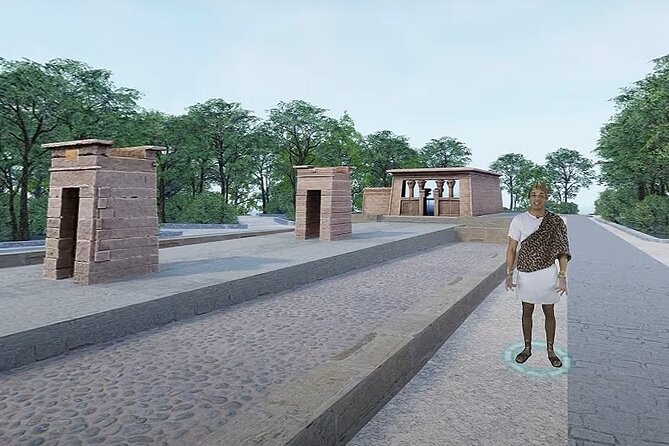
Finally, the tour ends at Puerta del Sol, Madrid’s famous crossroads with the iconic clock.
This stop is more about identity than architecture. Puerta del Sol works as a meeting point and a symbol for the city’s rhythm—an intersection where local life and visitor life overlap.
The guide connects the clock and the space to legends and city stories, including the sense that it’s always been a gathering place. That’s useful because it helps you understand why this square is constantly in your Madrid map, even when you’re not planning to go there.
This is also a smart finish because it matches your next step. After 1h45, you’re naturally set up to continue sightseeing without needing to retrace your route.
If you’re traveling with limited time: finishing at Puerta del Sol gives you options. You can head toward the Royal Palace area again, wander toward Gran Vía, or just grab food and regroup.
Price and value: what about $21.77 buys you
At about $21.77 per person for roughly 1 hour 45 minutes, the value comes from what’s included, not just the fact that it’s a bargain.
You get:
- a walking tour
- VR glasses
- an official guide (in English)
And the itinerary indicates admission is free at each listed stop. That matters because Madrid pricing can add up quickly when you mix walking with paid attractions. Here, you’re paying for the guide story and the VR tool, while the stops themselves are noted as not charging admission.
Is this tour only for first-timers? Not necessarily. I can see it working well for return visitors too, especially if you want a structured way to connect Madrid’s major squares to each other.
If you’re the kind of traveler who likes to learn while moving, this fits. If you prefer to do everything at your own speed with no headset, then you might prefer a traditional guided walking tour instead.
Pacing, group size, and English comfort
The tour runs with a max group size of 30, which is a good middle ground. You feel social, but you’re not stuck in a long line where no one gets attention.
The walking is described as mostly flat and easy to move through. That detail matters in Madrid. Some central routes feel straightforward on a map, but real streets can be rough on knees and calves.
Language is English, and the reviews highlight that the guide’s English was excellent. If you rely on clear narration to understand historical context, this is a strong point in the tour’s favor.
The other pacing element is the headset time. You’ll have stretches in VR, then transitions back outside. That rhythm helps keep focus, but it does mean you should plan to keep your attention split between the guide, the physical square, and the 3-D overlay.
Tips to get the most from the VR moments
A VR tour works best when you help it work. Here are a few ways to do that without overthinking it:
- Before the headset starts at each stop, take 10 seconds to look around. Identify one or two landmarks you can remember.
- Wear comfortable shoes. Even if the route is mostly flat, you’re walking a full tour duration.
- Keep your phone handy for quick reference photos after the VR scene ends. You’ll get better images once you know what you’re looking at.
- If you’re sensitive to motion or claustrophobic with gear, consider asking on the spot how long the headset segments last.
Also, since confirmation is sent at booking and you’ll have a mobile ticket, make sure your phone battery is healthy. Madrid days are long, and standing near meeting points is easier when your ticket is ready.
Who should book this VR walk
This is a great match if:
- you want to connect several Madrid squares into one story in a short window
- you like learning through visuals, not just listening
- you value an official guide and clear English narration
- you prefer a mostly easy walk through central areas
It may be less ideal if:
- you strongly dislike VR equipment or you’re worried about comfort with headsets
- you want a lot of free time at each stop for long museum-style viewing
Should you book this Historic Madrid VR experience?
I’d book it if you want an efficient, guided way to understand Madrid’s central power places, civic squares, and famous intersection all in one go. The combination of walking, official guidance, and 3-D scenes is what makes it feel worth the price for many people, especially when you’re trying to make history make sense fast.
I’d skip it only if VR gear is a dealbreaker for comfort or if you want purely free exploration with no guided structure. If you’re okay with the headset part and you like storytelling that turns streets into context, this is a smart use of 1h45.
FAQ
How long is the Historic Madrid Virtual Reality experience?
It’s about 1 hour 45 minutes (approximately).
What is the price per person?
The price listed is $21.77 per person.
Is the tour offered in English?
Yes, it’s offered in English.
What’s included in the tour price?
The tour includes a walking tour, VR glasses, and an official guide.
Do I need a paper ticket?
No. It uses a mobile ticket.
Where do you meet, and where does it end?
You start at the parking garage at Pl. de Ote., 1, Centro, 28013 Madrid, Spain, and you end at Puerta del Sol, Centro, Madrid.
How many people are in each group?
The maximum group size is 30 travelers.
Is there any admission cost at the stops?
The itinerary shows admission is free at each listed stop.
Can I cancel for a full refund?
Yes. You can cancel up to 24 hours in advance for a full refund.
What VR tour format should I expect?
You’ll walk with an official guide through central Madrid stops while using VR glasses.