REVIEW · MADRID
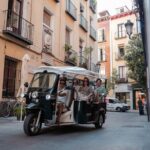
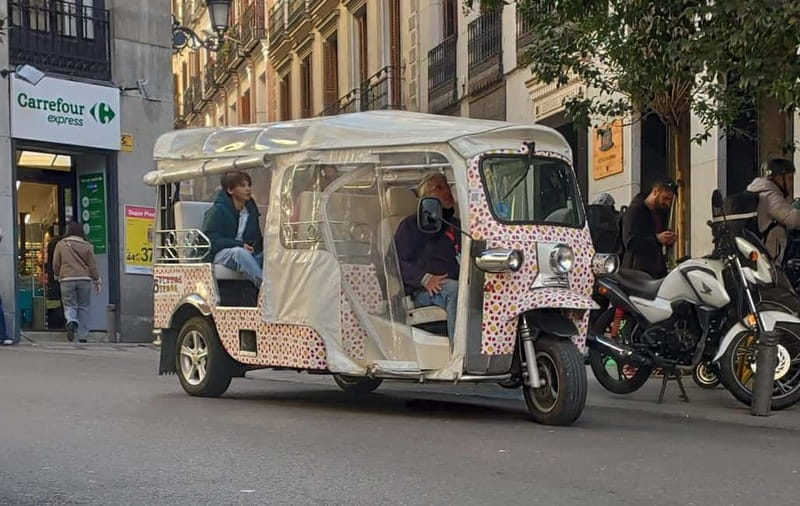
Madrid: City Tours – 6 seats private ecological tuk tuk
Book on GetYourGuide →Operated by Madrid Tuk Tours · Bookable on GetYourGuide
Madrid on a tuk tuk is a smart shortcut. You get a private ride through major sights with a local guide who tells the stories behind what you’re seeing. It’s also an easy way to cover a lot of ground without turning your day into a blister marathon.
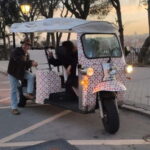
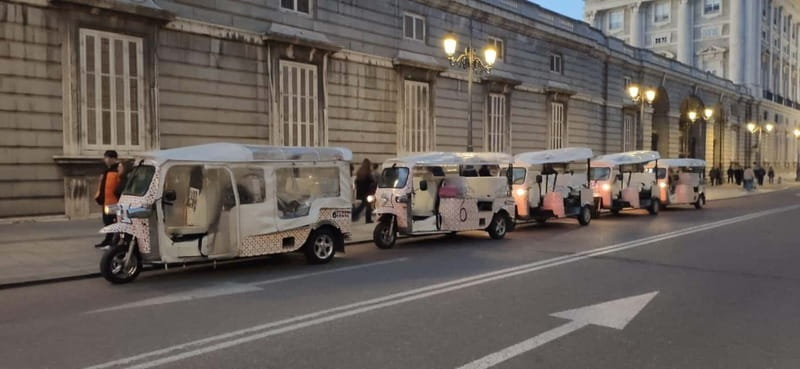
What I like most: the six-seat eco-friendly tuk tuk feels comfortable and playful, even when the city is busy. And the multilingual guide work is the real engine of the tour—people like David and Gerardo are praised for keeping things fun while still making history make sense.
One thing to consider: the seating setup can be a mixed bag if you end up facing inward or backward. Also, one review flagged driving style as a concern on their day, so if you’re sensitive to how rides feel, choose your seat wisely and speak up early.
In This Review
- Key highlights that make this tour worth your time
- Why a 6-seat eco tuk tuk is such a good match for Madrid
- Timing and ride comfort: how the 1–3 hour plan changes your day
- Meeting at C. de Vergara, 1 near Madrid Opera
- Royal Palace to Almudena Cathedral: kicking off the Austrias story
- Plaza de San Miguel and La Latina: markets and mood shifts
- Congress of Deputies, Neptune Fountain, and the city’s public face
- Museo del Prado and Jerónimos: art and architecture without the ticket hassle
- Retiro Park to Alcala Gate: big-city scale, but still manageable
- Torre Picasso to Plaza de Cibeles: modern silhouettes and iconic squares
- Gran Via to Plaza de España: Madrid at its loudest and brightest
- Temple of Debod with a sunset break: the payoff moment
- The guides are the secret ingredient (especially names like David and Gerardo)
- Price and value: is $53 per person fair for a private tuk tuk tour?
- Who should book this tuk tuk tour, and who should skip it
- My booking verdict: should you do it?
Key highlights that make this tour worth your time

- Private, multilingual guide: you’re not stuck listening to a script.
- 6 seats in an eco tuk tuk: comfortable, quick sight-to-sight transport.
- Covers old Madrid and modern Madrid: from the Austrias vibe to Gran Vía energy.
- Lots of photo stops: you’ll get clear moments without long walks.
- Stop-and-go pacing: ideal for hot days and first-day orientation.
- Guide flexibility: some guides adjust the route or drop-off when possible.
Why a 6-seat eco tuk tuk is such a good match for Madrid
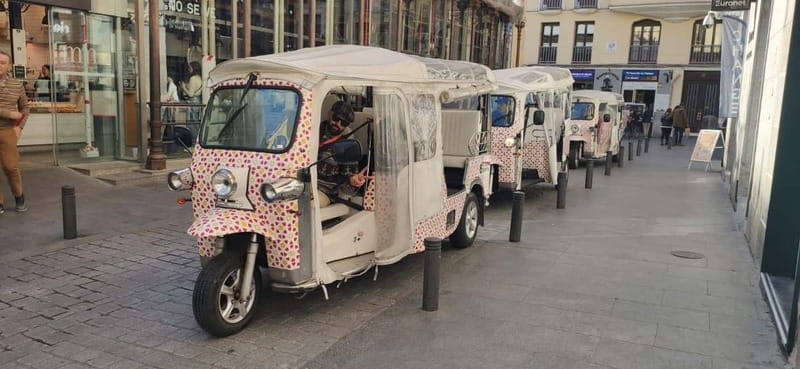
Madrid rewards people who move efficiently. This tour does that for you with a compact vehicle that can slip through areas where you’d otherwise walk, wait, or crisscross your route. You get to spend your energy on looking, listening, and getting your photos—less on logistics.
The six-seat format matters because it keeps the vibe social but not crowded. A family or a small group can actually talk with the guide, ask questions, and steer the conversation toward what you care about most. In reviews, groups of mixed ages (including teens and adults) stayed engaged, which tells me the guide style works across generations.
I also like that it’s ecological by design. It’s not just a marketing point—when you’re spending hours in the city center, a vehicle that’s framed as more eco-friendly feels like the right tool for the job.
You can also read our reviews of more city tours in Madrid

Timing and ride comfort: how the 1–3 hour plan changes your day
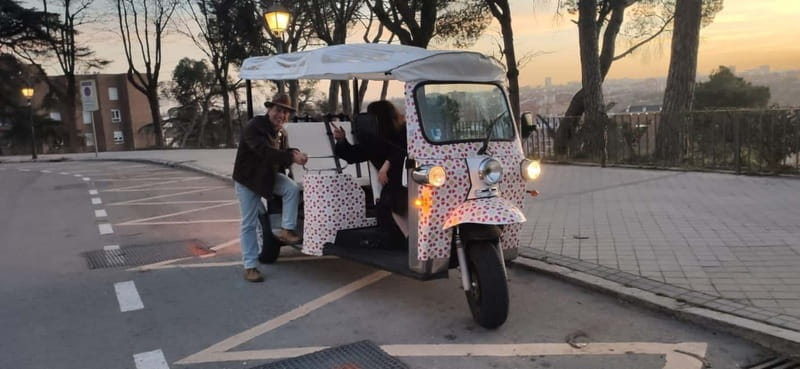
The tour runs 1 to 3 hours, which is perfect if you’re trying to fit Madrid into a busy schedule. If it’s your first day, you can go longer to build a mental map. If you’re short on time, a shorter option still gives you the key highlights without chewing up half your sightseeing day.
Comfort is also practical here. One review specifically called out the cooling effect while riding in hot weather, which makes sense—when you’re not doing long sidewalk stretches, you feel less drained. That’s a big deal in Madrid summers.
Now for the one caution: one reviewer felt the driver’s driving was a little scary and also noted that the seating arrangement puts people facing inward at a disadvantage. If you want the best view and the smoothest experience, arrive ready to politely ask where you’ll sit when you get on the tuk tuk.
Meeting at C. de Vergara, 1 near Madrid Opera
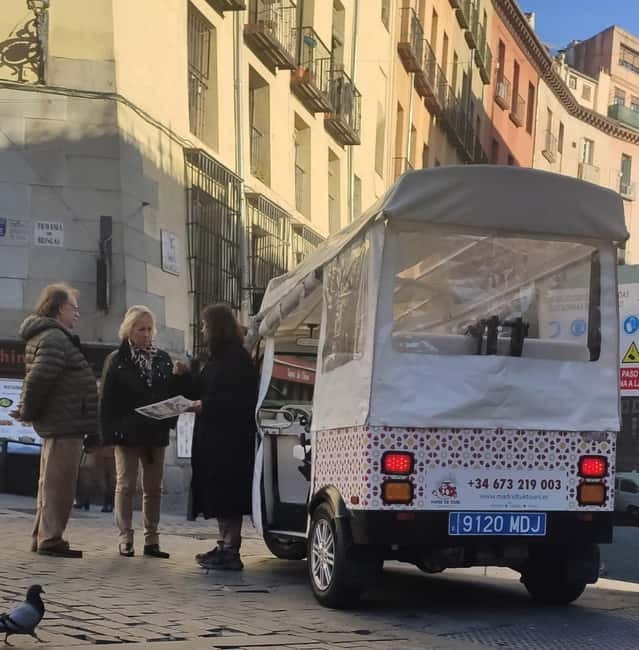
You meet next to the Madrid Opera, at C. de Vergara, 1. The location is close to the metro—about 20 meters from Opera station—so you don’t need a long walk just to start the day.
This is the kind of meeting point that works well if you’re also doing other central activities before or after the tour. Opera is a convenient hub, and you avoid the stress of getting deep into a neighborhood while you’re still trying to figure out your bearings.
If you’re arriving a few minutes early, you’ll likely have time to settle in and meet your guide without rushing. And that matters, because the tour starts with the guide’s setup: how they’ll structure the route, what you should look for, and where they’ll stop for photos.
Royal Palace to Almudena Cathedral: kicking off the Austrias story
The tour starts with a photo stop at the Royal Palace of Madrid. Even when you just snap pictures, this kind of beginning helps you switch into sightseeing mode. You’re not wandering randomly—you’re starting with a headline landmark that signals the tone of the area.
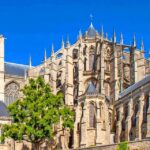
Next comes Almudena Cathedral, where you’ll get a photo stop plus a guided segment. This is one of the moments where the guide really earns their keep. A good guide doesn’t just point; they connect the building to the wider Madrid story, so the city stops feeling like a list of monuments.
Then it’s on to Plaza de la Villa, again with both a photo moment and a guided tour. I like these square-and-building clusters because you get a quick contrast: wide open space, then architectural detail, then back to street-level life. It’s a pattern that keeps the tour from feeling repetitive.
Plaza de San Miguel and La Latina: markets and mood shifts
After Plaza de la Villa, you hit the Market of San Miguel. Expect a photo stop plus a guided stop. This is a smart inclusion because markets show you Madrid’s everyday rhythm. Even without buying anything, you get a sensory sense of what locals might do in a normal day.
From there, the tour shifts into La Latina, with a photo stop and guided touring. La Latina is the kind of neighborhood where the atmosphere changes faster than you can walk it in one go. You’ll see that street-to-street feel—different vibes, different textures, different kinds of corners.
Next is Iglesia de San Isidro, another photo stop plus guided tour. Churches can sound like a box-tick until a guide gives you a reason to look—where to stand, what details to notice, and how it fits into the broader city evolution.
Then you roll to Plaza de Tirso de Molina for photo and guided touring, and the tour continues to Las Letras Quarter for a photo stop with a guided element (around 10 minutes). This is a good stretch for people who like city texture: you’re not just looking at monuments; you’re getting placed inside neighborhoods.
You can also read our reviews of more private tours in Madrid



Congress of Deputies, Neptune Fountain, and the city’s public face
The tour includes Congress of Deputies with a short photo stop and guided touring (about 5 minutes). This is a quick stop, but it’s valuable. It shifts the theme from old-world grandeur to the civic heartbeat of Madrid. If you like understanding what a city runs on, this kind of stop gives you context.
Then it’s Neptune Fountain, Madrid for photo and guided touring. Fountains are great photo anchors, but the guide’s job is to help you notice why the location matters and what it represents in how the city looks and moves.
After that, you’ll reach Paseo del Prado for sightseeing time. This part is about strolling visually, even while you’re still on the route. It’s one of those long central stretches where the city feels like it’s presenting itself in an orderly way.
Museo del Prado and Jerónimos: art and architecture without the ticket hassle
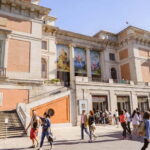
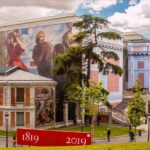
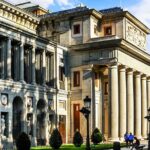
The tour continues to Museo del Prado for a photo stop plus guided tour. Important practical note: the tour does not include monument entry tickets, so you’re mostly getting the exterior and guide-led orientation rather than a full museum visit.
That said, a guide-focused museum stop is useful if your goal is to decide later whether you want to go in. You’ll leave knowing why it’s worth your time, without losing your entire day inside.
Next is Jerónimos with photo stop and sightseeing. Again, the value here is not the ticket angle—it’s the guided perspective and the way the ride stitches these stops into a coherent story.
Then you’ll move to Retiro Park for a photo stop plus guided touring. Parks are where the tour feels like a breath break. You’re still sightseeing, but the pacing shifts from monuments to space—views, open areas, and that calmer Madrid rhythm.
Retiro Park to Alcala Gate: big-city scale, but still manageable
After Retiro, the itinerary includes Alcala Gate for a photo stop. Gates and major entrances are great for understanding scale. They show how the city grew outward and how today’s skyline connects to older urban ideas.
Then the tour continues along Paseo de la Castellana for sightseeing. This stretch shifts the tour again—away from the older stone feel and toward the long, modern Madrid feel you associate with big boulevards and wide views.
From there you’ll reach Plaza Colon, Madrid for a photo stop. It’s another photo anchor that helps you keep your orientation even as the city’s style changes.
Torre Picasso to Plaza de Cibeles: modern silhouettes and iconic squares
Next up: Torre Picasso with photo stop and sightseeing. This is a clean contrast moment. If your mind is still stuck on older architecture from earlier stops, a modern landmark resets your perspective fast.
Then it’s Santiago Bernabeu Stadium for photo stop and sightseeing. Even if you’re not attending an event, this kind of stop helps you understand Madrid’s modern identity and how deeply sports can shape a city’s map.
After Bernabéu, you’ll reach Plaza de Cibeles with photo stop plus guided touring. Cibeles-style central squares can be picture-perfect, but the guide’s narration makes the square feel like a point in a bigger journey instead of just a stop.
Gran Via to Plaza de España: Madrid at its loudest and brightest
The tour heads to Gran Via for photo stop and guided touring. This is the city’s major show-street energy. You’ll see why it’s famous just from the way the streets feel here—more movement, more storefronts, more visual noise.
Next is Plaza de España for a photo stop and sightseeing. It’s a useful capstone to the Gran Vía experience, giving you a big open area to refocus.
And then you’re not done: the final highlight is Temple of Debod.
Temple of Debod with a sunset break: the payoff moment
The last stop is Temple of Debod. You’ll have a break time here—photo stop, sightseeing—and the tour is timed for the best light, including sunset when it works with your schedule.
This is a smart way to end. After hours of moving, looking, and hopping from landmark to landmark, you need a calm moment to just breathe and take photos. The guide-led time at Temple of Debod gives you a visual payoff that feels different from the earlier photo stops.
If you want your final hours to feel less rushed, Temple of Debod is where that happens. You can linger for a bit, look at the view, and let the whole day settle into place.
The guides are the secret ingredient (especially names like David and Gerardo)
The biggest praised aspect is the guide experience itself. In the reviews, guides like David, Gerardo, César, Alexander, Juan, Armando, Rommel, and Juan Manuel get singled out for making the tour feel one-of-a-kind, staying fun while still giving solid context, and tailoring what you see.
I also love the pattern that shows up across reviews: guides don’t just talk; they steer the experience toward what your group wants. One family-style review described keeping teenagers engaged, which tells me the delivery style isn’t boring for people who don’t usually love monuments.
A few reviews also mention practical help, like being flexible with timing or even adjusting the drop-off to a nearby destination. That kind of service matters because it reduces the friction between sightseeing and your next plan.
Price and value: is $53 per person fair for a private tuk tuk tour?
At $53 per person for a 1–3 hour private ride, you’re paying for three things at once: transport, a live guide, and the ability to see a lot without walking yourself into exhaustion.
Is it a budget price? No. But it can be a good deal depending on your group.
Here’s the value math I’d use: if you’re traveling with 4–6 people, a private tuk tuk often makes more sense than paying for separate tickets and guides, because you’re splitting the experience. If you’re only two people, it’s still worthwhile if you’re using the tour as a first-day orientation and you value comfort and speed.
The biggest value driver is time. This route stacks major central areas and neighborhood changes into a single ride. For most people, that’s the difference between seeing Madrid and just bouncing between a few icons.
Who should book this tuk tuk tour, and who should skip it
This tour is a strong fit if you want:
- a first-day overview of Madrid’s key areas
- a comfortable way to cover lots of ground
- a private, multilingual guide who can tailor pace and focus
- lots of photo opportunities without long walking stretches
You might skip it if:
- you’re traveling with children under 6 (legal limits prevent transportation)
- you use a wheelchair (the tour is not suitable)
- you’re very sensitive to how rides feel, since at least one reviewer mentioned a concern about driving style and seating orientation
Also, if you’re the type who loves museum time, you should know this is not presented as an admission-included museum tour. It’s more about exterior orientation and guided context.
My booking verdict: should you do it?
Yes—if you want a fun, practical way to get your bearings quickly, this private eco tuk tuk tour is a solid choice. The repeated praise for guides like David and Gerardo isn’t just about facts—it’s about keeping the experience lively, understandable, and tailored to real groups.
I’d book it early in your trip so the route gives you a map you can use later. And when you board, be ready to choose the best seat available for your comfort and viewing angle.
If you want Madrid without the walking tax—and you like your history delivered by a human who can read the room—this one fits.