REVIEW · MADRID
Madrid: The Spanish Inquisition Walking Tour
Book on GetYourGuide →Operated by Sandemans Tours - Spain · Bookable on GetYourGuide
Madrid has a darker side, and this tour goes there fast. It turns ordinary streets into a guided lesson on how the Spanish Inquisition worked in real life, and why the story spread far beyond Spain. I love the way the walk is paced like a story, with clear cause-and-effect, not just dates; and I especially love the Royal Monastery of La Encarnación stop, which adds a serious sense of place.
The biggest payoff for me is that you’re not just hearing theory. You also see the kind of physical landmarks that made fear feel real: a jail tied to the Inquisition era and a mass trial location in central Madrid. One consideration: it’s a heavier topic, and it involves walking through older areas of town, so wear comfortable shoes and don’t pick it if you want a light, feel-good afternoon.
If you’re into how beliefs become institutions—and how power operates in cities—you’ll get a lot out of this 2-hour route and the smart context around myths like the Black Legend.
In This Review
- Key things that make this tour worth your time
- Why the Spanish Inquisition Still Haunts Madrid Streets
- Meeting at Plaza Mayor: Finding Your Red Umbrella
- From Origins to the Black Legend: The Story Your Guide Builds
- The Mass Trial Site in Madrid: Where Fear Turned into Theater
- Royal Monastery of La Encarnación: Faith Meets Control in One Complex
- An Old Inquisition Jail: Seeing the Physical Side of Repression
- How the Tour Fits a Tight Two Hours
- Price and Value: Is $31 Worth It?
- Who Should Book This Tour (and Who Might Skip It)
- Final call: Should you book this Spanish Inquisition walking tour?
- FAQ
- Where do I meet the guide?
- How do I get to the meeting point by Metro?
- How long is the tour?
- What is the price per person?
- What’s included in the tour?
- What should I wear or bring?
- Is the tour in English?
- Is the tour wheelchair accessible?
- Are hotel pickup or drop-off included?
- Are children charged?
- What’s the cancellation policy?
Key things that make this tour worth your time
- Plaza Mayor start, easy to reach: Meet right by the Tourist Information Center on Plaza Mayor and find your guide with a red umbrella.
- La Encarnación visit, not just “view from the street”: You’ll go inside the Royal Monastery area as part of the experience.
- Real Madrid locations tied to trials and prisons: You’ll visit a mass trial site plus a jail used during the Inquisition.
- Black Legend context: Learn how the Inquisition’s image abroad was shaped by myths and propaganda.
- Short, focused format: In about two hours, you get the origins, the logic of control, and the impact on Madrid.
- Guides make it human: Many guides are praised for strong storytelling and the ability to answer questions on Spain’s wider history.
Why the Spanish Inquisition Still Haunts Madrid Streets
The Spanish Inquisition wasn’t some distant, ghost-story era. It was an organized system that claimed it was protecting Catholic orthodoxy, while using fear, repression, and punishment to control people. On this walk, Madrid’s streets act like a map of how that control played out city by city.
What I like is the balance the tour aims for: you learn the brutality and the human cost, but you also get the machinery—who ran it, what it was trying to do, and why it lasted so long. The tour frames it as a long shadow over Spanish history, with claims of more than 3,000 deaths over roughly four centuries.
And then there’s the “outside Spain” angle. You’ll hear how the Inquisition became famous abroad through narratives that were not always accurate—especially the myth behind the so-called Black Legend. That part matters because it explains why the Inquisition has such a global reputation, even today.
You can also read our reviews of more walking tours in Madrid


Meeting at Plaza Mayor: Finding Your Red Umbrella
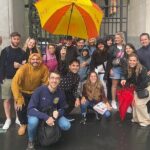
You’ll start at the Tourist Information Center on Plaza Mayor, Madrid. It’s a good meeting point because it’s central and easy to anchor your plans around.
If you’re coming by Metro, take lines 1, 2, or 3 to Sol station, then walk about 400 meters to Plaza Mayor. When you arrive, look for your guide wearing a red T-shirt and holding a red umbrella—that detail saves time when you’re juggling a new city and a tight start.
One practical note: there’s no hotel pickup or drop-off. That’s normal for a walking tour, but it means you’ll want to build a little buffer so you don’t feel rushed.
From Origins to the Black Legend: The Story Your Guide Builds
The tour’s backbone is the story of how the Inquisition started and how it evolved into an institution with its own momentum. You’ll learn the origins of the Spanish Inquisition and what it was trying to enforce—religious “purity” and conformity—at a time when Spain’s society was complicated, mixed, and politically sensitive.
I like that it doesn’t treat the Inquisition as one single event. It’s presented as an ongoing system that grew into a routine of investigation and punishment. That helps you understand why it could weigh on daily life for so long.
Then the tour shifts to perception. You’ll explore the myth of the Black Legend and how it influenced how the Spanish Inquisition was seen abroad. Even if you’ve heard the term before, this kind of framing helps you separate “what really happened” from “how the story traveled.”
Expect time for questions. Many guests highlight guides who keep people engaged and willing to talk, which is especially helpful with a topic that brings up religious history, politics, and culture all at once.
The Mass Trial Site in Madrid: Where Fear Turned into Theater
One of the most striking elements is that you visit a site of a mass trial in Madrid. It’s the kind of stop that changes how you see the area around you, because a normal city landmark suddenly becomes an evidence board.
The point of the visit isn’t to shock you for shock’s sake. The tour focuses on motives and consequences—why the tribunal acted, who benefitted from enforcing compliance, and how punishment could become a public warning. You’ll hear about the ruthless founders overseeing torture, repression, and banishment, all presented as religious orthodoxy.
A useful way to approach this stop: look for how power is staged in cities. Even if you don’t see dramatic remnants, the location helps you imagine how crowds, authorities, and moral narratives could work together. That “place + explanation” combo is what makes a walking tour different from reading alone.
Royal Monastery of La Encarnación: Faith Meets Control in One Complex
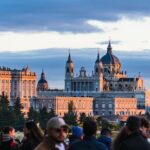
The tour’s included highlight is a visit to the Royal Monastery of La Encarnación. This is where you get out of “street-level history” and into a setting that still feels tied to ceremony, rules, and authority—exactly the kinds of tools institutions used during the Inquisition era.
What you’ll take away here is how religious life and religious control could overlap. The monastery becomes more than a beautiful building; it’s part of the context for how the Inquisition era made morality into enforcement.
There can be a practical lighting issue on some visits. One guide-facing reality from past guests: exterior views near closed-convent areas can feel dark on certain evenings, so if you’re visiting at night or in cooler seasons, come prepared to see what you can—and don’t assume every angle will be bright.
Still, going to La Encarnación is a big value add. The tour doesn’t rely only on plaques or distant viewpoints. You get a real destination that anchors the story.




An Old Inquisition Jail: Seeing the Physical Side of Repression
Another major stop is a jail used during the Inquisition. This is the part of the tour that makes the history feel less abstract, because prisons are the blunt instrument of any system built on fear.
Even if the building doesn’t scream medieval horror from the outside, you’ll learn what the space was used for, and why a “processing” system matters as much as the ideology. The tour frames the jail as a piece of the Inquisition’s darker infrastructure—where people could be detained and where punishment became a tool of social control.
One consideration for you: this is not a “made-for-kids” subject. It’s educational, but it treats suffering as real. If you’re sensitive to topics involving persecution, you’ll still likely find the tone thoughtful, but plan your comfort level ahead of time.
The good news? The tour often stays focused on process and impact rather than turning into graphic spectacle. That keeps it more like a history lesson in the street than a horror attraction.
How the Tour Fits a Tight Two Hours
This experience is two hours long, and that time limit shapes everything. You cover key themes—origins, tribunal activity, the myth-making around the Black Legend—and you see the highest-value physical stops: a mass trial location, the Royal Monastery, and a jail used during the Inquisition.
Many guests highlight that it’s engaging without turning into a lecture you can’t shake off. That comes from two things:
- The route is built around changing settings, so you don’t get stuck staring at the same streetscape for long.
- Guides often tie Madrid’s history into broader Spanish context, which helps the Inquisition feel like part of the country’s story rather than a separate “dark chapter.”
Expect walking throughout, including older parts of central Madrid. Comfortable shoes are not optional if you want to enjoy the details. Also, if your group gets a shorter or longer stop duration, the itinerary can shift based on what the guide thinks works best for the group.
Price and Value: Is $31 Worth It?
At $31 per person for a 2-hour guided walk that includes a Royal Monastery visit, this is priced like a solid city-history value. You’re not just paying for someone to tell you a story while you pass monuments—you’re paying for:
- a planned route through key Madrid locations tied to the Inquisition era,
- a live English guide,
- and entry/visit time connected to La Encarnación.
You’re also not paying extra for hotel pickup, which keeps the total cost down. The trade-off is that you handle your own way to the meeting point (which, honestly, is easy enough from Sol).
Who gets the best value? You’ll feel it if you like history that connects buildings to events. If you mostly want “famous landmarks only,” you might find the tone too dark or too specific. But if you enjoy understanding how cities work socially and politically, this price looks fair for the amount of guided context you get.
Who Should Book This Tour (and Who Might Skip It)
I’d point you toward this tour if:
- you enjoy history that explains systems, not just scandals,
- you like walking through cities with a clear storyline,
- you want Madrid context that goes beyond art museums and royal squares,
- you’re curious about myths like the Black Legend and how international reputations form.
You might skip it if:
- you’re looking for a light, casual sightseeing afternoon,
- you don’t want heavy topics tied to persecution,
- or you’re uncomfortable with walking for the length of a short tour and then focusing on serious subject matter.
Wheelchair access is listed, so if you use a mobility device, it’s worth considering. The itinerary can vary by guide and group, which can matter for comfort and route choices.
Final call: Should you book this Spanish Inquisition walking tour?
If you want a Madrid experience with teeth—history that explains how power and belief can become a system—you’ll likely be happy you booked. The mix of a mass trial site, a Royal Monastery visit at La Encarnación, and an Inquisition jail stop gives the story real physical anchors, not just background talk.
I’d especially recommend it if you’re the type who looks at a city and asks, What happened here? And if your idea of a great tour includes thoughtful storytelling, good pacing, and time to ask questions, this one fits.
If you’d like, tell me your travel dates and whether you prefer morning or evening walking, and I can help you time it alongside your other Madrid hits.
FAQ
Where do I meet the guide?
Meet your guide in front of the Tourist Information Center on Plaza Mayor in Madrid.
How do I get to the meeting point by Metro?
Take Metro lines 1, 2, or 3 to Sol station, then walk about 400 meters (1,300 feet) to Plaza Mayor.
How long is the tour?
The tour lasts 2 hours.
What is the price per person?
The price is $31 per person.
What’s included in the tour?
It includes a walking tour, a local guide, and a visit to the Royal Monastery of La Encarnación.
What should I wear or bring?
The tour involves walking, so wear comfortable shoes and bring what you need for basic comfort during a two-hour walk.
Is the tour in English?
Yes, the live tour guide provides English.
Is the tour wheelchair accessible?
Yes, it is listed as wheelchair accessible.
Are hotel pickup or drop-off included?
No, there is no hotel pickup or drop-off.
Are children charged?
Children under 13 go free with a valid ID.
What’s the cancellation policy?
There’s free cancellation up to 24 hours in advance for a full refund.