REVIEW · MADRID
Madrid: Discover the City by Private Electric Tuk Tuk
Book on GetYourGuide →Operated by TUK TUK MADRID, S.L. · Bookable on GetYourGuide
Madrid looks different at tuk-tuk speed. This private electric ride with a storyteller guide turns big sights into walkable, picture-ready moments.
I love the close-up photo stops where you can actually see details, not just rooftops. I also like that the tour is private with a bilingual live guide who can steer the day around what you care about. The main consideration: because it’s still a small vehicle, the schedule can feel tighter than a long, slow bus day—plus there can be occasional hiccups with the vehicle that may require a quick swap.
You’ll get a comfortable, safe ride (there are seatbelts for all seats), and you can tailor the experience with options that include a Prado Museum stop and/or tapas. If you want a first-day “get your bearings fast” tour that doesn’t trap you in crowds, this is a strong bet.
In This Review
- Key things to know before you ride
- Why a private electric tuk-tuk is the smart way to see Madrid
- Royal Palace to Calle Mayor: getting your bearings at street level
- Mercado de San Miguel to Plaza de Cibeles: iconic Madrid without the distance problem
- Prado Museum focus plus San Jerónimo el Real photo views
- Las Letras and La Latina: literary streets and old-city character
- Salamanca and Gran Vía: the shift from classic streets to big-city drama
- Puerta de Alcalá, Retiro Park, and the Bank of Spain finish feel
- Price and value: what $105 per group buys you in practice
- Who this tuk-tuk tour is best for (and who should choose something else)
- Should you book this tour? My honest take
- FAQ
- How much does the private electric tuk-tuk tour cost?
- How long is the tour?
- Does the tour include hotel pickup and drop-off?
- What languages is the live guide available in?
- Is there a Prado Museum stop, and do you skip the ticket line?
- Is this a private tour or shared group?
- Where do we meet the guide?
- What should I bring?
- Is the tour suitable for young children?
Key things to know before you ride
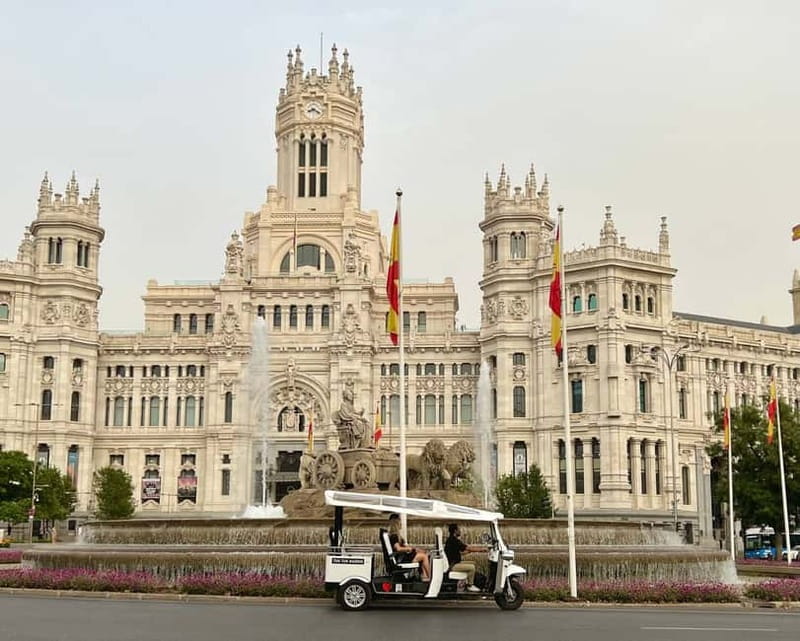
- Private eco-friendly electric tuk-tuk: small, nimble, and able to slip into streets bigger vehicles can’t reach
- Photo stops at major landmarks: you stop for pictures and short guided moments, not just pass-by sightings
- Bilingual live storytelling: English and Spanish with guides like Carlos, Louisa, Rafael, and Javier called out for energy and clarity
- Prado Museum time with skip-the-line: a focused visit instead of a full museum day
- Historic neighborhoods in one loop: Las Letras, La Latina, Jerónimos, and Salamanca, plus iconic Madrid centers
- Comfort and safety: seatbelts for all seats, and a driver-guide who takes care of the ride
Why a private electric tuk-tuk is the smart way to see Madrid
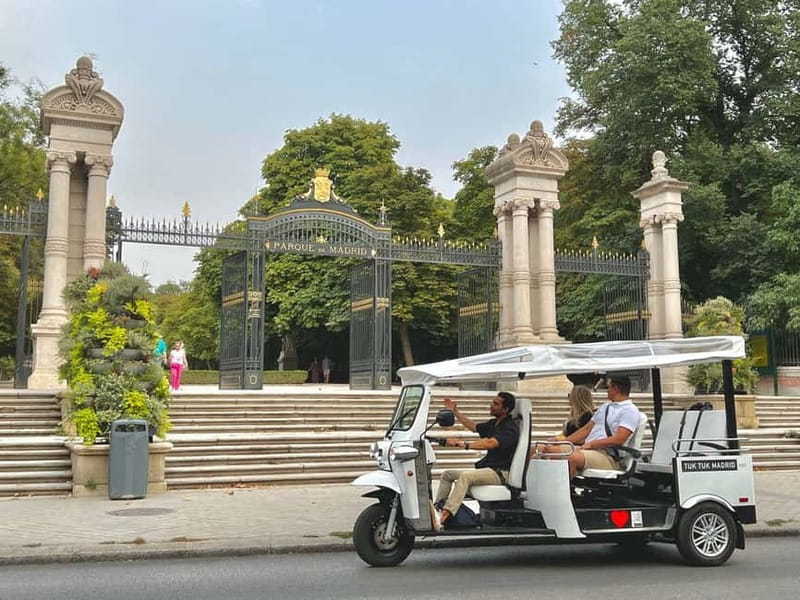
Madrid is big enough that you can waste daylight just getting from one “must-see” to the next. This tour fixes that with a private electric tuk-tuk that keeps you moving while still letting you stop on key corners. You’re not stuck at bus stops or buried behind a wall of tour groups.
The format is the real value. You get short guided moments, then a chance to take your own photos and soak in what you’re seeing. That matters in Madrid, where the city’s personality shows up in small things: a narrow street that suddenly opens onto a plaza, a façade detail you’d miss from a distance, or the way a neighborhood changes as you ride five minutes down the road.
Also, the private guide style helps. In the accounts you’ll hear, guides like Carlos and Louisa are praised for being attentive and personable, and Rafael is noted for customizing the route around where you want to finish. That’s not just nice—it makes the whole day feel less like a script and more like a plan you can use.
One more practical point: tuk-tuks are open-air experiences, so you’ll feel the weather. Bring sun protection and plan your clothing accordingly.
You can also read our reviews of more city tours in Madrid


Royal Palace to Calle Mayor: getting your bearings at street level
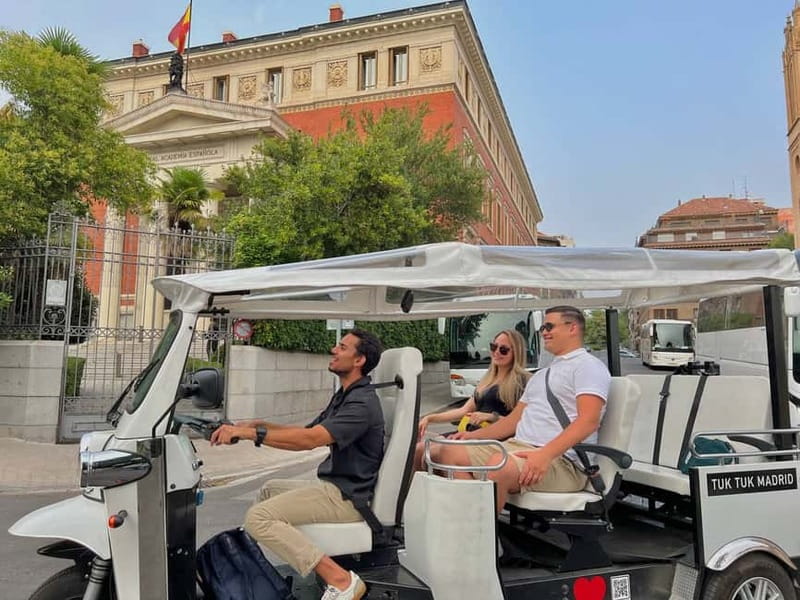
The first big theme of the tour is “Madrid up close.” You start with pickup (depending on the option you choose), and then the route quickly lands you near the Royal Palace of Madrid. You’ll get a photo stop plus a short guided segment. Even if you don’t do a full palace visit, this gives you the right mental map for the area—what’s ceremonial, what’s nearby, and which streets radiate out from the center.
Then you move to Calle Mayor, which is one of those Madrid streets that works at multiple times of day. The guided stop here is short, but that’s the point: you’re learning how to read the city while you’re actually in it. Watch for how the street feels wider or narrower as you go, and how it connects into plazas and markets.
A small detour that makes this segment more useful is the Parque del Emir Mohamed I stop. It’s not just a scenic break; it helps you shift from palace-zone formality to a more open, ride-friendly rhythm. If you’re coming from a morning of transit or you want to shake off jet lag without staring at a museum ticket, this kind of reset is helpful.
Practical tip: Comfortable shoes matter here. Even though you’re riding a lot, you’ll likely step out for photos and brief guided stops—then you’ll want your feet to handle it without complaint.
Mercado de San Miguel to Plaza de Cibeles: iconic Madrid without the distance problem
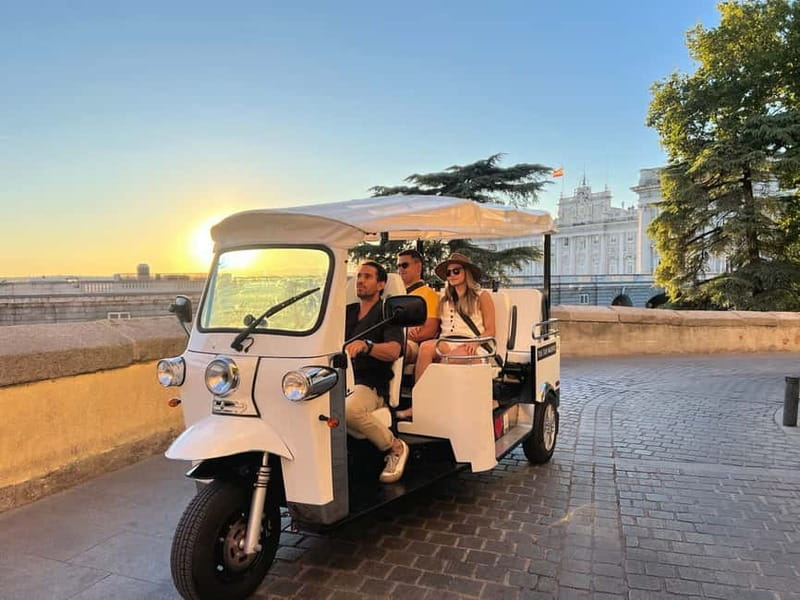
Next comes one of the most useful parts of the tour for first-timers: you’re guided through the city’s “center stage” spots, but you’re not only looking from afar.
The Market of San Miguel is built for people-watching, so the stop is designed as a quick guided moment with a scenic ride component. You get context on what you’re looking at, then you can decide if you want to spend extra time later on your own.
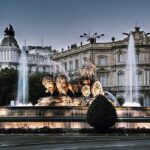
From there, the route moves toward Plaza de Cibeles, which is where Madrid’s monumental axis really shows up. You’ll pass by, with a short window to take photos and orient yourself. This plaza area is a great reference point for later self-exploration, because you can feel the way different neighborhoods pull away from it.
What I like about this pacing is that it keeps you energized. A mistake many sightseeing plans make is trying to do too much on foot with long transfers. Here, you’re mixing a few guided minutes with motion, so you’re learning while you stay comfortable.
If you’re a photographer, focus on the corners. Madrid’s best shots often come from street-level angles—railings, steps, lamp posts, and building lines that guide your eye toward the plaza. You’ll have photo moments for that exact reason.
Prado Museum focus plus San Jerónimo el Real photo views
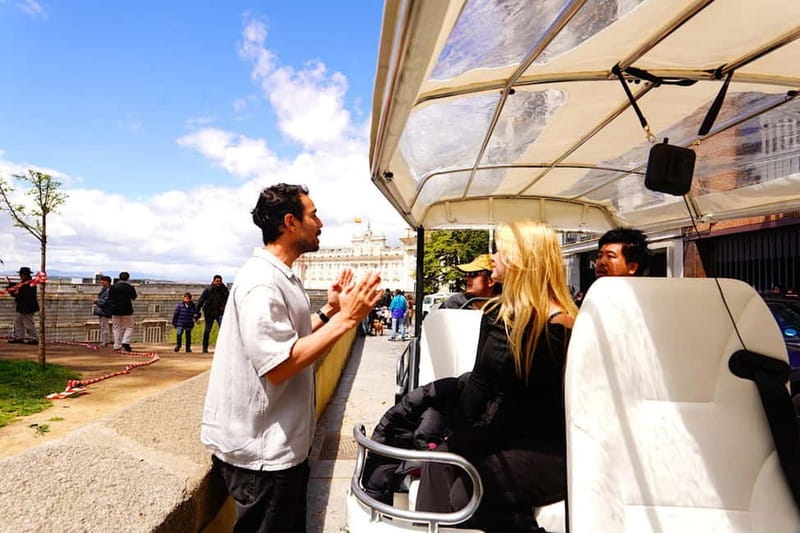
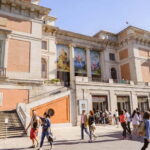
One of the best-value upgrades here is the Prado Museum option. Prado is easy to overplan on your own because it’s so massive, and you can end up either rushing or missing the famous works that anchor the museum’s reputation.
This tour gives you a photo stop plus time inside with a guided segment. You also get skip-the-ticket-line, which is a real time-saver in busy seasons. In plain terms: you’re buying a focused experience so you don’t lose your day to queue time.
You’ll also stop near San Jerónimo el Real. This part is about perspective. The stop includes a guided segment and photo time, with scenic views on the way. It’s a quieter, more atmospheric contrast to the palace-and-boulevard feeling elsewhere on the route. You’ll likely come away noticing how Madrid can swing from official grandeur to calmer, contemplative architecture in a matter of minutes.
If you’re the type who wants at least one major museum hit but still wants to see neighborhoods after, the structure works well. You’re not trapped doing a full museum day with no time left for streets.
Practical tip: If you choose Prado, treat it like a curated highlight visit, not a deep-dive into everything. Wear layers, keep your water handy, and decide in advance what you want most so you don’t burn out before the best rooms.
Las Letras and La Latina: literary streets and old-city character
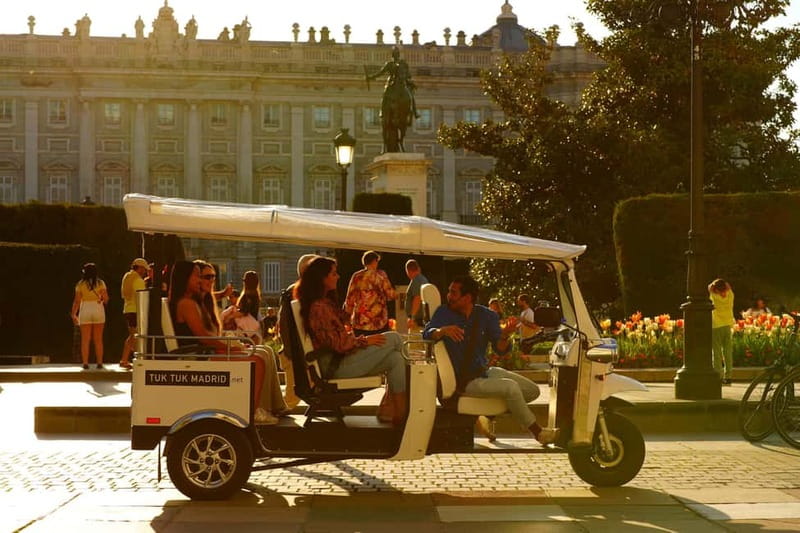
The tour’s neighborhood selection is where it becomes more than landmark sightseeing. You’ll spend time in Las Letras, also known as the Literary Quarter. Expect a guided segment, then sightseeing that includes self-guided time. This is a smart design: a storyteller gives you the meaning behind the streets, and then you walk it with your own eyes for a few moments.
After that, you move into La Latina, an area that feels lived-in and historic at the same time. The guided approach here helps you read what you’re seeing without needing an advanced degree in Madrid history. You’ll also have time passing through and scenic ride segments that keep the rhythm moving.
This is the part of Madrid where “what you remember later” kicks in. Not because every corner is dramatic, but because the streets are personal. You start noticing the building materials, the street layouts, and the way cafes and small storefronts sit right where you’d expect them.
A small, useful detail: one guide strength noted in experiences is customizing pacing. If you’re more interested in wandering photos than listening for long, you’ll likely get a guide who can adjust. If you want more explanation, guides like Rafael have been praised for personalization, including steering the itinerary toward where the group wants to finish.
Tip for your photos: In Las Letras and La Latina, shoot in bursts. Park your attention on a doorway, then swing your camera up and over—Madrid often rewards that movement with better composition than just standing still.
You can also read our reviews of more private tours in Madrid


Salamanca and Gran Vía: the shift from classic streets to big-city drama
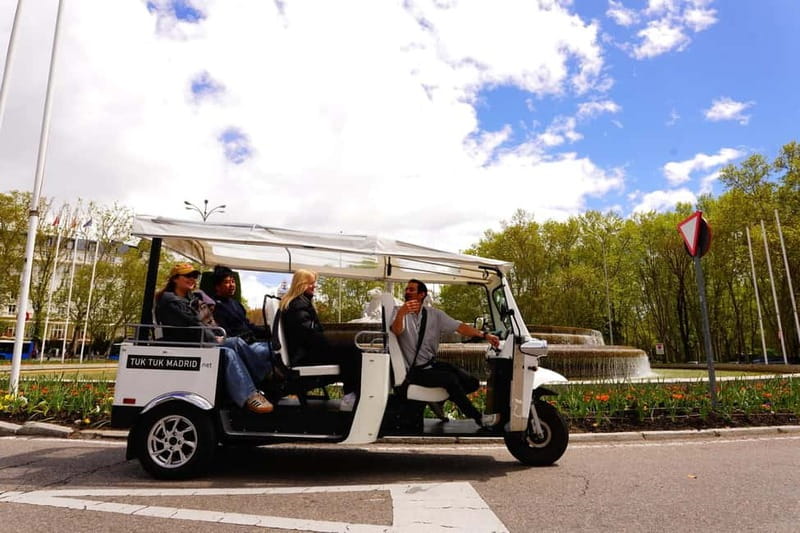
Not every day in Madrid should be stone alleys and plazas. The Salamanca District brings a more polished, elegant feel, and the tour uses a scenic drive + viewpoints to give you the impression quickly without forcing a long walking detour.
Then comes Gran Vía, a boulevard that works like Madrid’s stage. You’ll have a guided moment here, short but aimed at what to notice: the scale, the design language, and the way this avenue signals a different side of the city. It’s also a good contrast after older neighborhoods, so your brain can sort the city into “moods.”
You’ll also pass toward areas of government and formal architecture, including Palacio de las Cortes. That stop is brief, but the point is to see how Madrid organizes power and beauty in the same spaces—an important context if you’re trying to understand the city beyond the postcard scenes.
Plaza de la Villa is another quick guided segment plus scenic views. It helps connect the “old Madrid” feeling with the formal urban plan around it.
This section is ideal if you want a one-day tour that doesn’t just repeat the same look. You’ll end up with a range of images: literary streets, monumental plazas, and then that Gran Vía scale.
Puerta de Alcalá, Retiro Park, and the Bank of Spain finish feel
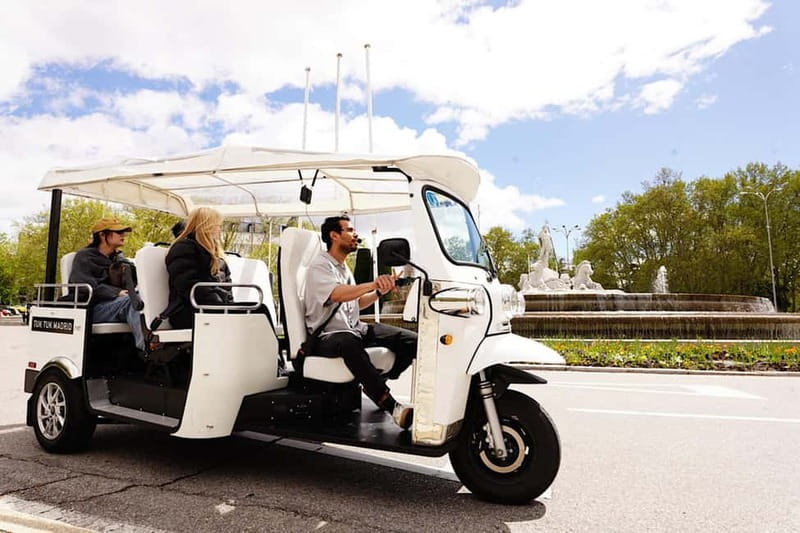
The final stretch brings you to iconic symbols and calmer green space. Puerta de Alcalá is covered with guided and pass-by viewing time, plus scenic viewpoints on the way. This is one of those Madrid moments that helps your whole trip feel coherent. It’s like a bookmark at the edge of the city’s story.
Then Retiro Park appears briefly with guided touring and scenic views. Even if it’s only a short segment, it breaks up the day and gives you a breath of greenery. It’s a nice change of pace if you’ve been riding and stopping mostly in dense central streets.
You’ll also pass the Bank of Spain with a short guided moment and scenic viewing. That stop is quick, but it adds context for the formal architecture and “financial Madrid” vibe that sits alongside the cafés and markets.
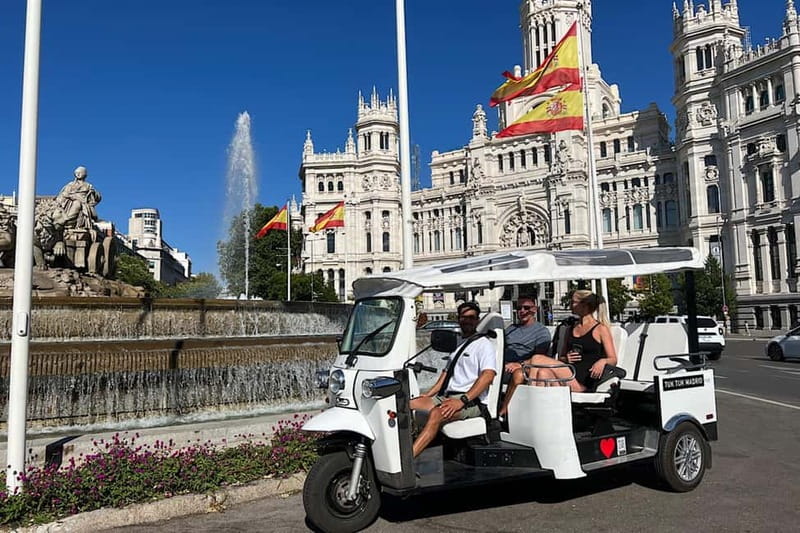
Cibeles Fountain is handled again as a guided, scenic-view moment. That’s not redundant if you treat it as a revisit from a slightly different angle and with more context already in your head. By this point in the loop, you’ll recognize the streets and feel like you’re moving through a map you understand.
The tour finishes at C. de Vergara, 1, which is a useful anchor if you’re planning dinner nearby.
Price and value: what $105 per group buys you in practice
This tour is priced at $105 per group up to 4. That sounds like a straightforward rate, but the value comes from the format: you’re paying for private time, a guide who tells stories, and transportation that gets you from area to area without the friction of parking, walking long distances, or wrestling with multiple transit hops.
Compared to shared hop-on buses, the biggest advantage is control. You can pause where the light is right, spend an extra minute with a photo stop, or keep things moving if you’re ready to roll. And because the vehicle can go through streets bigger vehicles can’t, you’re not just seeing Madrid from the same wide corridors again and again.
Also, the Prado option and skip-the-line matter. A museum day can balloon fast when queues eat the morning. Here, you’re buying time efficiency plus interpretation, which usually ends up feeling like better use of your paid vacation hours.
If you’re traveling as a couple, the cost is also easier to justify because you get private guide attention. If you’re solo, it can still be worth it if you want a guided circuit that doesn’t turn into a scavenger hunt for tickets and directions.
Just keep the “small vehicle reality” in mind. It’s not a slow, full-day wander on foot. It’s a curated route with a steady pace.
Who this tuk-tuk tour is best for (and who should choose something else)
This experience fits well if you:
- want a guided overview on your first or second day to reduce decision fatigue
- like photo stops and short guided moments rather than long lectures
- prefer private attention over crowded group pacing
- want a practical Prado visit without committing to a full museum day
- enjoy neighborhood variety: Literary Quarter, La Latina, Salamanca, and central Madrid icons
You might choose something else if:
- you want long, unbroken time inside a museum or a very slow, walking-heavy plan
- you’re extremely sensitive to open-air weather during stops and rides
Should you book this tour? My honest take
If your goal is to see Madrid with less walking stress and more story context, I’d book it. The combo of private electric transport, bilingual guide storytelling, and photo-ready stops hits a sweet spot for getting oriented and building a mental map.
I’d especially consider it if you’re trying to fit Prado into a tight schedule. Skip-the-line plus guided time usually feels less chaotic than planning the museum from scratch while also trying to squeeze in neighborhoods.
My one “think twice” note is about expectations for vehicle pacing. It’s fast enough to cover a lot, but it won’t replace a slow weekend of wandering. If you want a day that’s part guided route, part photo mission, and part neighborhood discovery, this is the right kind of ticket.
If you can, bring a simple offline map on your phone. A guide can drive and explain, but having your own tracking makes the whole loop feel even easier.
FAQ
How much does the private electric tuk-tuk tour cost?
The price is $105 per group, up to 4 people.
How long is the tour?
The duration runs from 1 to 6 hours, depending on the option and timing available.
Does the tour include hotel pickup and drop-off?
Yes, hotel pickup and drop-off are included.
What languages is the live guide available in?
The live tour guide is available in English and Spanish.
Is there a Prado Museum stop, and do you skip the ticket line?
Prado Museum time is included when that option is selected, and the tour includes skip-the-ticket-line service.
Is this a private tour or shared group?
It is a private group tour.
Where do we meet the guide?
The meeting point is Calle de Vergara 1, next to Madrid’s Royal Theatre and in front of Café Vergara.
What should I bring?
Bring comfortable shoes, sunglasses, a sun hat, a camera, sunscreen, and comfortable clothes.
Is the tour suitable for young children?
It is not suitable for children under 2 years old.