REVIEW · BARCELONA
Private discovery bike tour of Barcelona
Book on Viator →Operated by Visites Guidées de Barcelone · Bookable on Viator
Barcelona clicks faster on a bike.
This private 3-hour discovery ride lets you “tour the city” without exhausting your feet, hopping from Gothic lanes to modernist icons and finishing at the waterfront. The biggest win is the storytelling from your guide, especially Jean-Pierre, who keeps the route relaxed while explaining what you’re looking at.
I especially love how much you cover without feeling rushed—major stops like Sagrada Familia and the modernist “block of discord” show up in a single morning-style loop. You’ll also like the private format: it’s just your group, so you can ask questions and even make small route tweaks when it makes sense.
One thing to keep in mind: the ride goes through real city streets and pedestrian-heavy areas, and at least one guest noted the guide can be a bit hard to hear if the ambient noise is high, so don’t be shy about moving closer if you need to.
In This Review
- Key highlights worth marking on your map
- Starting at Plaça Reial: instant Barcelona mood
- Private bike touring: why it works so well in Barcelona
- Plaça de Sant Jaume: politics and power right next to the old streets
- Catedral de Barcelona: Gothic lines plus Roman leftovers
- Palau de la Música Catalana: modernisme with real stage energy
- Passeig de Gràcia’s modernist showcase: Mansana de la Discordia
- La Pedrera (Casa Milà): Gaudí’s big, sculptural statement
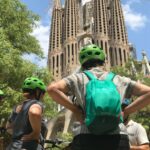
- Sagrada Familia: the must-see, even from the outside
- Arc de Triomf and the Ciutadella Park zone: history meets open air
- Port Olímpic and the seaside push: bike legs, sea air
- Price and value: is $48.37 per person a good deal?
- What to expect from the ride: pace, safety, and comfort
- Who this tour suits best
- Should you book this bike tour?
- FAQ
- FAQ
- How long is the private discovery bike tour of Barcelona?
- Where does the tour meet, and where does it end?
- Is this tour private?
- What language is the tour offered in?
- Are tickets included for all the sights?
- What happens if the weather is poor?
- Is there a cancellation window for a full refund?
Key highlights worth marking on your map
- Plaça Reial as a glamorous start with the Three Graces fountain and Gaudí street lamps
- Expert pacing: easy, low-energy cycling that still covers serious landmarks
- Modernisme stops along Passeig de Gràcia, including the Mansana de la Discordia
- Gaudí’s essentials in one run: La Pedrera and a drive-by view of Sagrada Familia
- Green-to-sea finish through Parc de la Ciutadella, Port Olímpic, and the beachfront
- Private group flexibility with a guide who adjusts when your interests shift
Starting at Plaça Reial: instant Barcelona mood
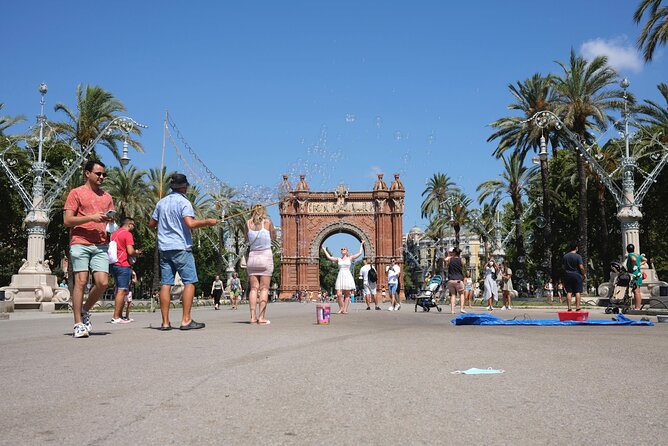
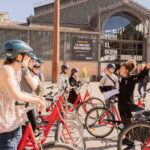
Your tour starts at Plaça Reial (in Ciutat Vella), and that’s a smart choice. The square feels dramatic right away: the central fontaine des Trois Grâces anchors the view, and the nearby street lamps designed by Antoni Gaudí give you that signature Barcelona “the city has ideas” feeling.
This opening stop matters because it sets the visual language for the whole ride. You’re not just speeding past landmarks; you’re learning how Barcelona telegraphs its personality—old-world elegance, modernist flair, and street life all in the same frame.
You’ll meet here, pick up your bikes, and get oriented. Since the meeting area is near public transportation, you can also arrive calmly instead of stress-running across town.
You can also read our reviews of more cycling tours in Barcelona
Private bike touring: why it works so well in Barcelona
In Barcelona, walking can turn into a lot of stop-and-start. On a bike tour like this, you get momentum. The ride is designed to feel doable for most people, and guests specifically describe it as low energy and easy to follow.
The private setup is a real advantage. You’re not dealing with a huge group funneling everyone forward. That means:
- You can pause for questions.
- You can adjust the pace if your group needs a breather.
- Your guide can steer you around things that are extra busy on the day.
And yes, Barcelona is very bike-friendly in parts. One recurring theme in the feedback is that there are plenty of bike lanes, so the route doesn’t feel like you’re fighting traffic for three hours.
Plaça de Sant Jaume: politics and power right next to the old streets
From the glamour of Plaça Reial, you roll into Plaça de Sant Jaume, a square where civic buildings basically announce themselves. Here you’ll see the Ajuntament de Barcelona (Barcelona’s city hall) and the Palau de la Generalitat—the Catalan government palace.
This isn’t a “look, a building” stop. It’s a good context stop. Barcelona’s identity isn’t just architecture and beach days; it’s also governance, language, and local pride. Even if you only catch a quick explanation, it helps when you later see how people talk about Catalonia in museums, on street signs, and in neighborhood conversations.
Catedral de Barcelona: Gothic lines plus Roman leftovers
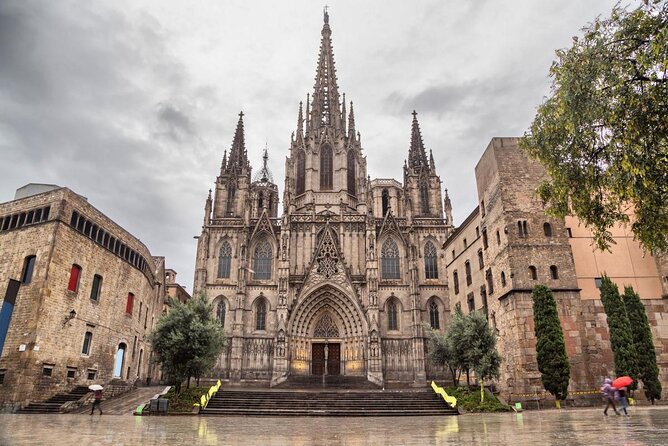
Next is the cathedral area: the Catedral de la Santa Creu i Santa Eulàlia. The name is a mouthful, but the impact is straightforward. The cathedral is largely gothic and neo-gothic, and it brings that classic “Barcelona went big here” feeling to the center of the city.
What makes this stop more interesting is that the forecourt includes visible vestiges of a Roman wall. That’s a powerful reminder: the layers of Barcelona aren’t theoretical. They’re right under your eyes if you know where to look.
A practical note: the cathedral entry isn’t included, so you can either enjoy the outside viewpoints during the tour or plan a separate time for a deeper visit if you want the interior experience.
Palau de la Música Catalana: modernisme with real stage energy
You’ll then reach Palace of Catalan Music (Palau de la Música Catalana)—a concert hall designed by Lluís Domènech i Montaner. It’s one of Barcelona’s most famous modernist showcases, and it’s also a UNESCO site (listed in 1997).
Even without stepping inside, this stop is worth it because the building tells a story through detail. Modernisme here isn’t just decoration—it’s a kind of civic pride, built to honor music and public culture.
Again, entry isn’t included here, so treat this as a stop for architecture appreciation from the outside and the guide’s context. If you want the full interior with the full acoustic vibe, you’ll need to plan that separately.
You can also read our reviews of more private tours in Barcelona
Passeig de Gràcia’s modernist showcase: Mansana de la Discordia
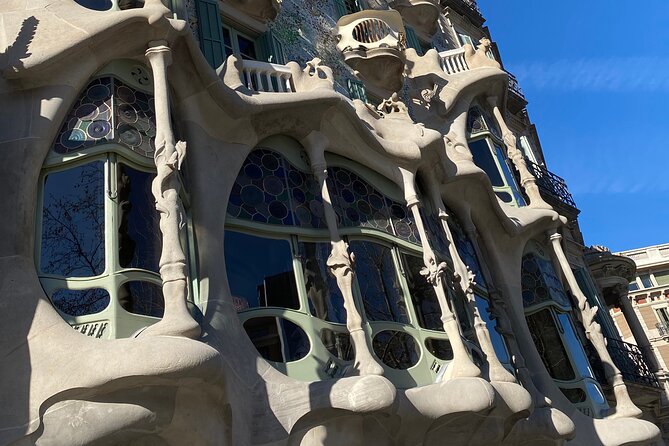
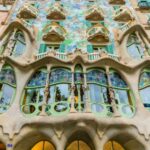
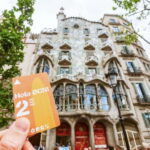
Now you hit one of the most fun “wow, they really did that” stretches: La Mansana de la Discordia on Passeig de Gràcia.
This block is famous because several modernist masterpieces sit close together:
- Casa Batlló (Antoni Gaudí)
- Casa Ametller (Josep Puig i Cadafalch)
- Casa Lleó i Morera (Lluís Domènech i Montaner)
Because these buildings are so near each other, your eyes can compare styles fast. And a good guide helps you notice the differences that you’d likely miss on your own—small design choices that make each facade feel like its own character.
This stop includes free admission for the tour time here, which means you can focus on seeing and learning without worrying about ticket logistics for this specific segment.
La Pedrera (Casa Milà): Gaudí’s big, sculptural statement
After the Mansana de la Discordia, you roll toward La Pedrera – Casa Milà, described as Gaudí’s last major work and one of his most imposing. It sits along Passeig de Gràcia, a fancy avenue that gives you the sense you’re moving through Barcelona’s fashion and money moments, even as the buildings remain wildly imaginative.
This is another stop where you’ll likely enjoy the exterior even if you don’t enter. The architecture is sculptural and dramatic, and it looks even more alive when you see it from the moving angle of a bike.
Entry isn’t included for this stop. If you want to go inside, you’ll need to arrange that separately.
Sagrada Familia: the must-see, even from the outside
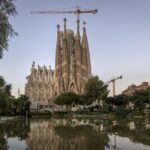
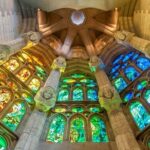
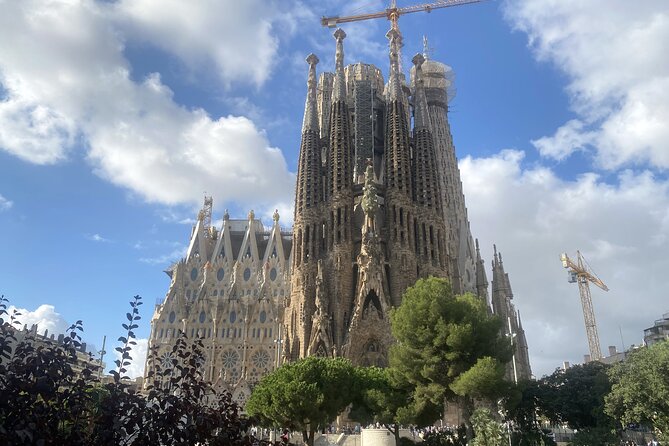
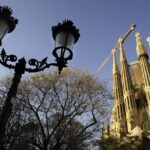
Then comes the big magnet: Basilica de la Sagrada Familia. This is described as Gaudí’s most important work and is still incomplete to this day—one of those reality-based features that makes it feel current, not like a finished museum prop.
Even without included entry, it’s still a major “yes, I’m in Barcelona” moment. The guide’s job here is to help you understand what you’re seeing, so the structure doesn’t read as just another big church. You’ll get the why behind the form, and that changes the experience.
Entry isn’t included, so if you want to go in, plan tickets for a separate visit.
Arc de Triomf and the Ciutadella Park zone: history meets open air
After Gaudí and modernisme, you shift gears into a more open feel. You stop at Arco di Trionfo, a portal tied to the first Universal Exposition of Barcelona held in Parc de la Ciutadella.
This is a great change of pace. On a bike tour, one of the best skills is pacing yourself, and open spaces help reset your brain after dense architecture.
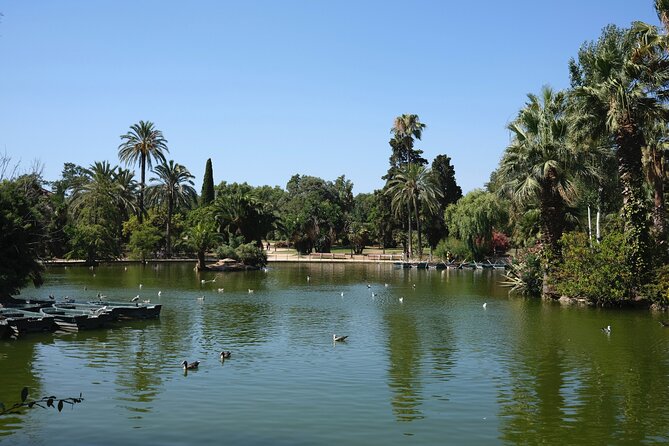
Then you reach Parc de la Ciutadella, once the site of an old citadel and later developed into a park in the late 19th century. Your time here includes several highlights you can spot or enjoy:
- the greenhouse
- an ombrière (a covered area for shade)
- the Natural Sciences Museum
- a Geology Museum
- preserved citadel buildings
- the park’s zoo area
- and a well-loved fountain
Most of these are free for the tour time, and even if you don’t do museum visits in the middle of a 3-hour tour, the park segment makes the ride feel more like a real day out than a checklist.
Port Olímpic and the seaside push: bike legs, sea air
From the park, you head toward the water with Port Olímpic. This is where Barcelona starts to feel more like a coastal city than an architecture city. The Olympic-Port area changes the vibe instantly, and it’s a nice way to break up the older neighborhoods you’ve been pedaling through.
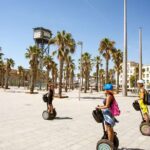
Then you glide to Platja de Sant Sebastià, a promenade along the beachfront near Barceloneta. The sea breeze helps, and the route gives you a clear line of sight toward the working beach energy of the city.
Finally, you reach Port Vell (Old Port) for a last harbor-side stretch. That finish is smart because it helps you end with a different kind of impression: less stone-and-symbols, more motion and boats and views.
Price and value: is $48.37 per person a good deal?
At $48.37 per person for about 3 hours, this tour is in the “high value if it’s your first day” category.
Here’s why I think it’s good value:
- You’re getting a private group experience rather than a crowded bus-style overview.
- The route hits major sights efficiently, including Gaudí landmarks and the city’s institutional square.
- The tour is built around a guide who helps you understand what you’re seeing—many guests highlight how Jean-Pierre adapts and answers questions.
- Bikes make it easier to cover ground without the fatigue that can ruin the rest of your day.
Could you do it cheaper by DIY? Sure. But you’d lose the built-in explanations and the route design that keeps you from wasting time finding your way through dense neighborhoods.
If your goal is orientation plus highlights, this is a cost-effective way to buy that experience up front.
What to expect from the ride: pace, safety, and comfort
I’ll be honest: a bike tour in Barcelona still means sharing the road with real people. One guest noted that biking through crowded pedestrian streets can take getting used to. That’s normal.
The good news is that multiple reviews mention a safe, relaxed ride—also that Barcelona’s bike lanes help a lot. Jean-Pierre is repeatedly praised for keeping the group feeling safe and for maintaining an easy pace.
Bike comfort looks generally solid. Still, at least one person mentioned the bikes can feel a bit heavy or creaky. If you have strong preferences about bike feel, plan to mention it at the start and ask for the best fit.
Also keep in mind one feedback point: if the guide’s voice is soft, you might need to drift closer for the full effect. That’s not a deal-breaker—just a good “use your travel brain” reminder.
Who this tour suits best
This is a great pick if:
- it’s your first visit and you want the city’s big picture quickly
- you want less walking fatigue but still want story-based sightseeing
- you like asking questions and getting local tips
- you’re traveling with family members or older kids who can ride
It may be less ideal if:
- you’re not comfortable cycling on city routes
- your group is sensitive to noise levels and might struggle to hear in busier areas
- you want long, timed-entry museum visits during the tour (most entries are not included)
Should you book this bike tour?
If you want to feel Barcelona fast—its old quarters, modernisme facades, and then the sea—this tour is a smart use of time. The private format and the guide’s flexibility (including small itinerary adjustments) make it more than a “go here, take a photo” ride.
Book it if you can ride comfortably for about three hours and you’re in town for a decent-weather day. With that, you’ll come away with a clean mental map of Barcelona—and a better plan for what to explore next.
FAQ
FAQ
How long is the private discovery bike tour of Barcelona?
The tour is about 3 hours long.
Where does the tour meet, and where does it end?
You start at Plaça Reial in Ciutat Vella, and the tour ends back at the meeting point.
Is this tour private?
Yes. It’s a private tour/activity, and only your group participates.
What language is the tour offered in?
The tour is offered in English.
Are tickets included for all the sights?
No. Some sights have admission ticket free listed, while others (such as the Cathedral, Palau de la Música Catalana, La Pedrera, and Sagrada Familia) show admission ticket not included.
What happens if the weather is poor?
The experience requires good weather. If it’s canceled due to poor weather, you’ll be offered a different date or a full refund.
Is there a cancellation window for a full refund?
Yes. You can cancel up to 24 hours in advance for a full refund. If you cancel less than 24 hours before the start time, the amount paid is not refunded.